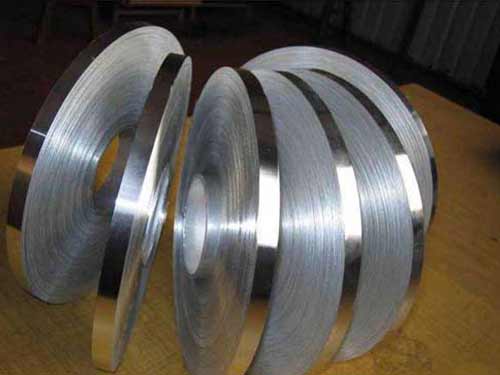
Application of 3003 Aluminium Alloy on Hollow Aluminium Strip
3003 aluminium alloy is one of the most practical materials for hollow aluminium strip because it combines reliable formability, moderate strength, corrosion resistance, and economical processing. For customers producing spacer bars, folded channels, lightweight hollow members, HVAC parts, decorative frames, or roll-formed components, 3003 offers a balanced answer: it is soft enough to shape into closed or semi-closed sections, yet stronger and more durable than pure aluminium grades such as 1050 or 1060.
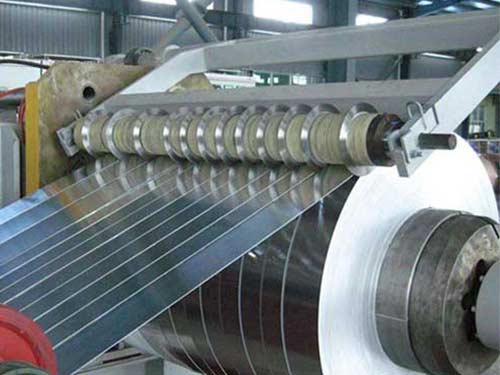
Hollow aluminium strip is not only a flat strip. It is usually slit, cleaned, formed, folded, welded, punched, or coated until it becomes a hollow section with controlled wall thickness and stable geometry. In this route, the strip must tolerate bending, edge compression, seam closing, and surface finishing without cracking. This is where 3003 aluminium alloy performs especially well.
Why 3003 Alloy Fits Hollow Aluminium Strip
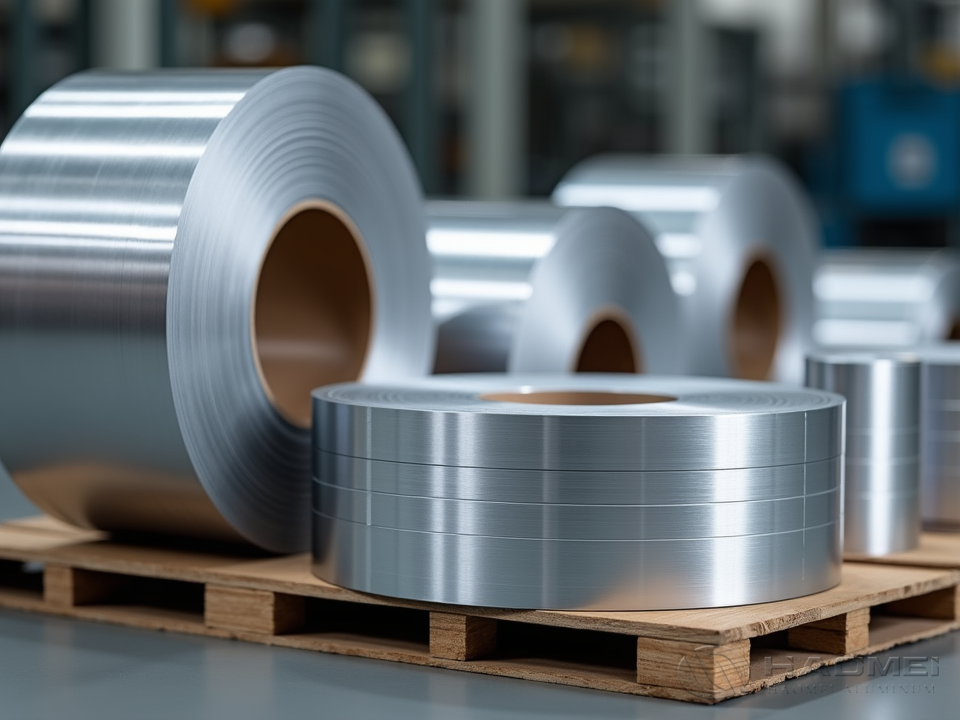
The strength of 3003 comes mainly from manganese, which improves mechanical performance without making the alloy difficult to form. It is a non-heat-treatable alloy, so its temper is controlled through cold rolling and annealing rather than solution treatment. This gives manufacturers predictable strip behavior during roll forming, stamping, folding, and tube making.
Compared with commercially pure aluminium, 3003 has better resistance to denting and deformation. Compared with harder alloys, it is easier to bend into tight shapes. For hollow strip products, this balance reduces forming defects and supports stable output on high-speed production lines.
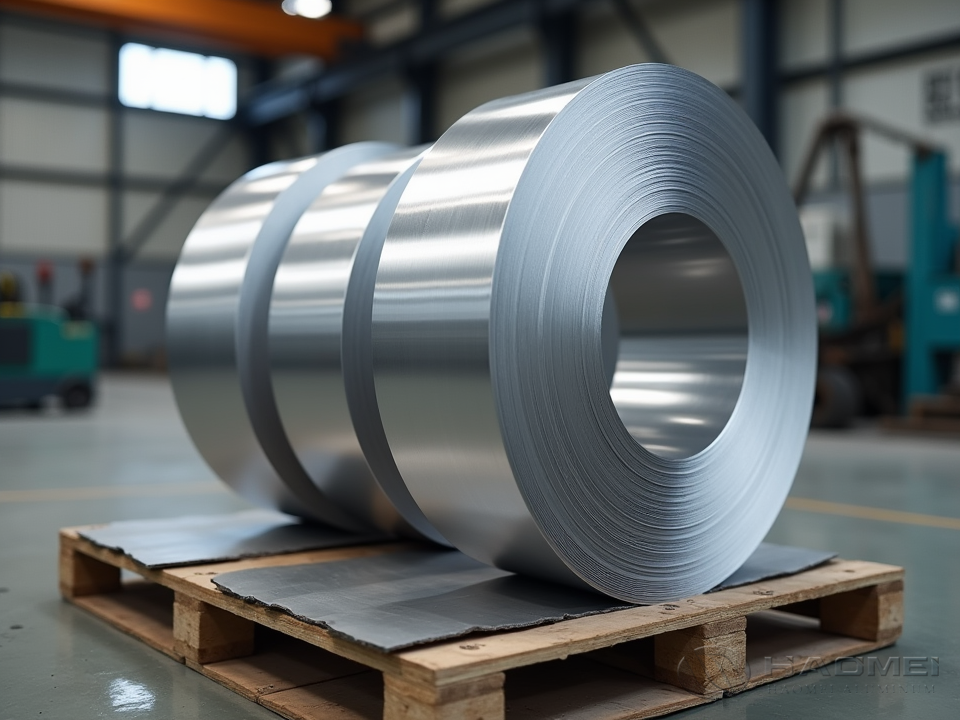
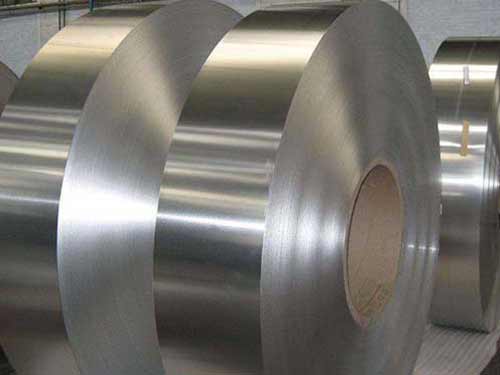
For customers sourcing 3003 Aluminum Strip, the most important point is consistency. Coil flatness, burr control, surface cleanliness, and temper uniformity directly affect the final hollow shape. A good strip does not fight the machine; it flows through the forming rolls with smooth edges, regular springback, and minimal adjustment.
Chemical Composition of 3003 Aluminium Alloy
| Element | Typical content, % | Function in hollow strip production |
|---|---|---|
| Aluminium | Balance | Provides low weight, workability, and natural oxide protection |
| Manganese | 1.00-1.50 | Improves strength and forming stability |
| Copper | 0.05-0.20 | Adds slight strength improvement |
| Iron | Max 0.70 | Common residual element, controlled for surface quality |
| Silicon | Max 0.60 | Affects flow and surface appearance when controlled properly |
| Zinc | Max 0.10 | Kept low to support corrosion resistance |
| Other elements | Max 0.05 each, 0.15 total | Controlled to maintain stable strip properties |
This composition makes 3003 suitable for damp indoor conditions, outdoor exposure, and many mildly corrosive environments. It is not designed for heavy marine immersion, but for building parts, appliance components, transport panels, spacer systems, ventilation products, and general fabricated hollow sections, it offers dependable service life.
Features Customers Notice in Use
| Feature | Customer benefit | Importance for hollow aluminium strip |
|---|---|---|
| Excellent formability | Easier roll forming and folding | Supports narrow radii and complex hollow profiles |
| Moderate strength | Better shape retention than pure aluminium | Reduces dents and handling damage |
| Good corrosion resistance | Longer service life | Suitable for humid, painted, or coated applications |
| Good weldability | Stable seam forming | Useful for closed hollow sections and welded strip parts |
| Smooth surface | Better coating, printing, and appearance | Important for visible frames, trims, and spacer bars |
| Lightweight | Lower part weight | Reduces transport load and installation effort |
| Recyclability | Lower material waste value loss | Supports sustainable production planning |
One practical advantage is the way 3003 responds to repeated forming steps. A hollow aluminium strip may be slit from coil, lubricated, passed through several roll stations, closed into a box or oval section, and then cut to length. If the strip has poor elongation or uneven hardness, cracks can appear along corners or seams. With the correct temper, 3003 helps maintain clean corner lines and stable hollow dimensions.
Temper Selection for Hollow Strip
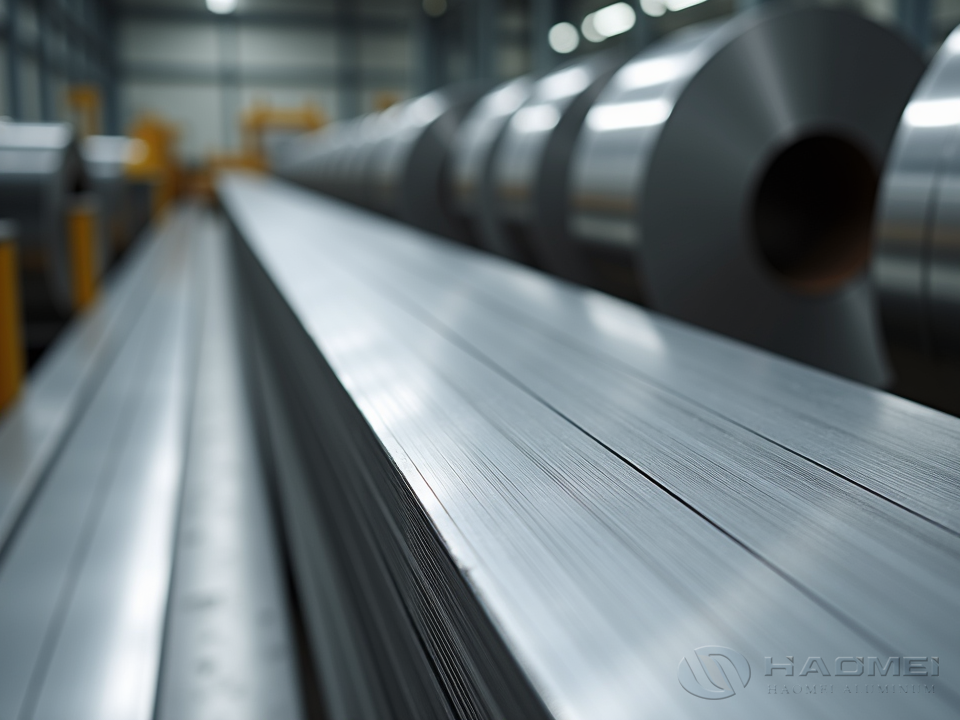
Temper choice depends on the final shape. Softer tempers allow deeper bending and tighter forming, while harder tempers give better final rigidity. In many hollow aluminium strip applications, H14 and H24 are common choices because they provide a good compromise between shaping and strength.
| Temper | Typical tensile strength, MPa | Forming character | Common hollow strip use |
|---|---|---|---|
| O | 95-130 | Very soft, high elongation | Severe bending, deep forming, complex profiles |
| H12 | 115-155 | Soft to medium | Light roll-formed hollow sections |
| H14 | 140-180 | Balanced strength and formability | Spacer bars, channels, folded hollow strip |
| H16 | 165-205 | Higher rigidity | Parts needing better dent resistance |
| H18 | 185 min | Harder, limited bending | Simple shapes with less forming demand |
For a small hollow profile with sharp corners, a softer temper may reduce cracking. For a wide hollow strip used as a protective rail or frame insert, a harder temper can improve stiffness. The best choice should be confirmed with bending radius, wall thickness, forming speed, and final coating process.
Processing Advantages in Production
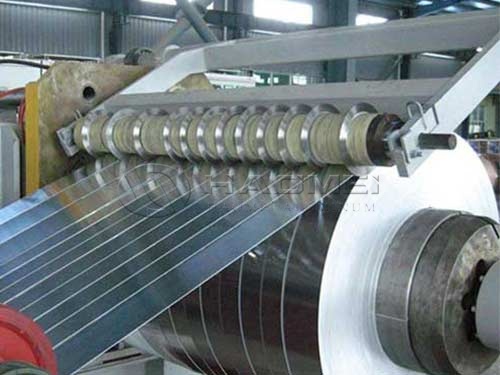
3003 aluminium alloy works well with common strip production and fabrication processes. It can be cold rolled to precise thickness, slit into narrow widths, degreased, brushed, coated, embossed, or laminated. During roll forming, it shows stable springback when the coil is produced with even mechanical properties across width and length.
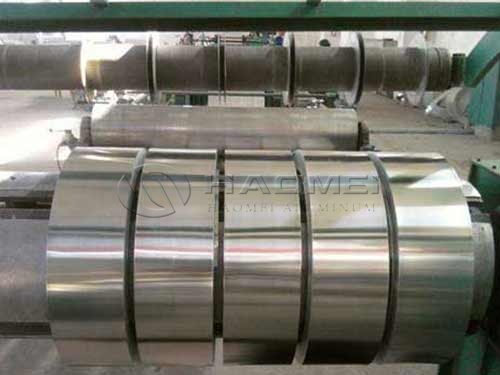
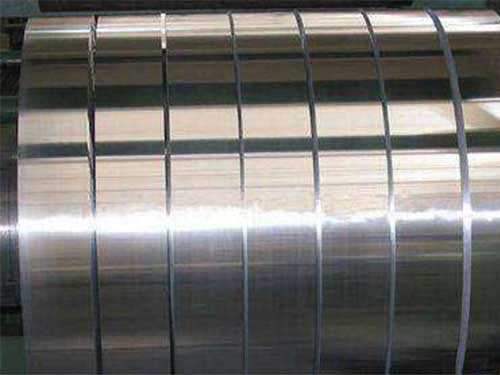
For welded hollow aluminium strip, edge quality matters. Burrs, waves, or poor flatness can disturb seam closing and cause leakage or visual defects. Precision slitting and controlled coil tension help the strip enter forming rolls evenly. Where adhesive bonding or sealant filling is required, surface cleanliness is also critical.
Customers comparing different materials within the Alloy Aluminum Strip range often select 3003 when they need more strength than 1xxx series aluminium but do not require the higher strength or cost of 5xxx and 6xxx alloys.
Main Applications of 3003 Hollow Aluminium Strip
| Application field | Typical product | Reason for using 3003 |
|---|---|---|
| Insulating glass systems | Hollow spacer strip and warm-edge related profiles | Good corrosion resistance, clean forming, stable coating surface |
| HVAC and ventilation | Air duct parts, folded channels, small hollow rails | Lightweight, easy bending, moisture resistance |
| Building decoration | Trim, frame inserts, ceiling strips, partition profiles | Smooth surface, good paintability, low maintenance |
| Appliance manufacturing | Refrigerator parts, air conditioner components, covers | Formability and attractive surface finish |
| Automotive and transport | Lightweight protective strip, interior support part | Weight reduction and moderate strength |
| Heat exchange and fluid guidance | Formed channels and non-pressure hollow sections | Good thermal conductivity and workable geometry |
| Packaging and industrial fittings | Reinforced edges, hollow supports, folded strip parts | Easy fabrication and efficient coil processing |
In insulating glass spacer production, hollow aluminium strip needs accurate width, stable folding behavior, and a surface that accepts coating or printing. 3003 is a strong candidate because it can be formed into narrow hollow bodies while maintaining enough rigidity to hold glass spacing. In HVAC systems, 3003 hollow strip resists moisture better than many carbon steel alternatives and is much lighter, which simplifies installation.
For decorative building components, the alloy also offers a clean metallic appearance. It can be anodized in some applications, although color matching should be tested because manganese-containing alloys may respond differently from pure aluminium. Painted and coated finishes are widely used, and 3003 provides a dependable base when pretreatment is properly controlled.
Purchasing Notes for Better Results
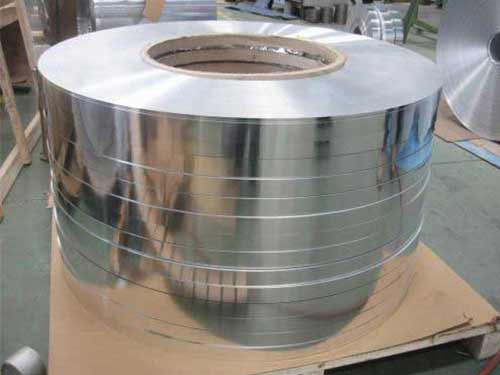
When ordering 3003 aluminium alloy for hollow aluminium strip, customers should confirm thickness tolerance, width tolerance, coil inner diameter, coil weight, temper, surface condition, edge condition, and packaging method. If the strip will be welded, bonded, or coated, oil type and surface cleanliness should be discussed before production.
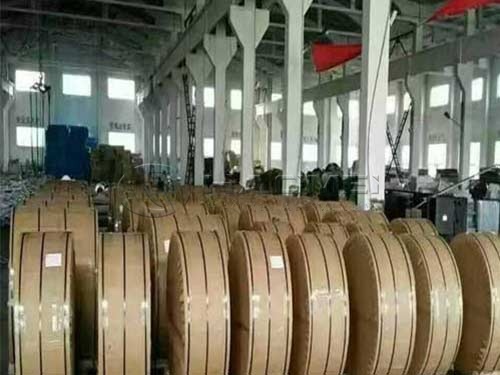
Typical thickness for hollow strip applications may range from 0.20 mm to 2.00 mm, while width depends on the developed size of the profile. Narrow coils require careful slitting to prevent camber and edge wave. For export shipments or long storage, moisture-proof packaging is important because water staining can affect appearance and downstream finishing.
Final Thoughts
The application of 3003 aluminium alloy on hollow aluminium strip is built on balance. It forms cleanly, resists corrosion, offers better strength than pure aluminium, and supports efficient coil-to-profile production. For customers who need a lightweight hollow strip material with stable processing and broad usability, 3003 aluminium alloy remains one of the most reliable and cost-effective choices.