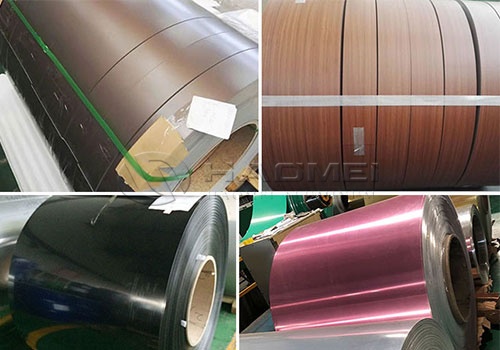
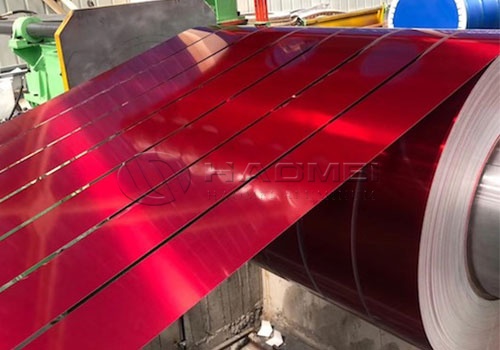
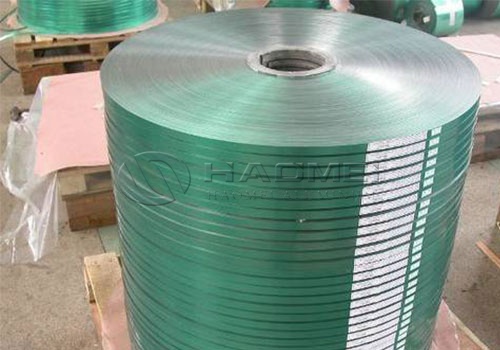
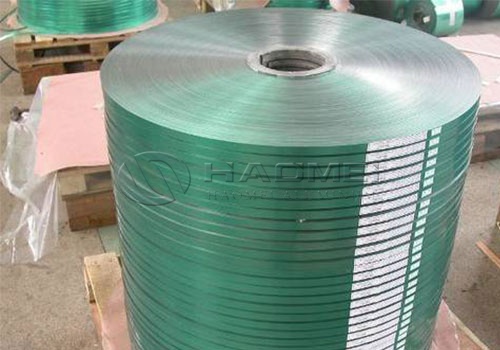
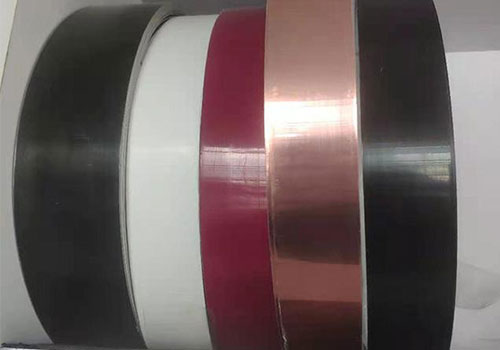
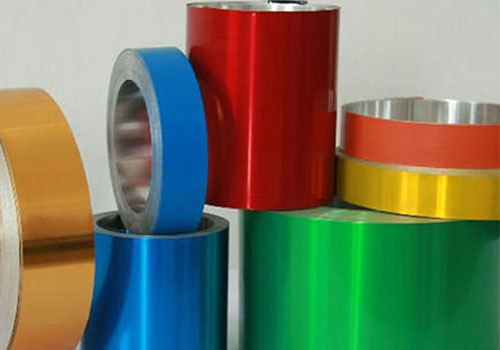
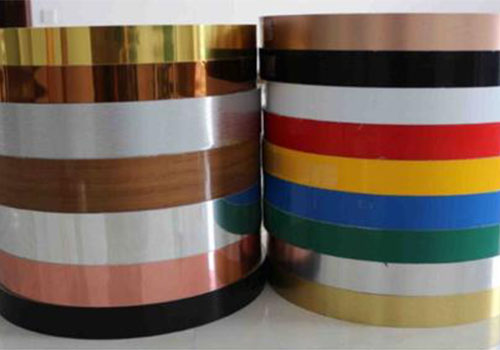
8011 Color Prepainted Aluminum Coil Strips
8011 color prepainted aluminum coil strips are not merely aluminum products with a decorative surface. They are engineered semi-finished materials in which alloy selection, temper, coating chemistry, curing control, and slitting accuracy work together. The result is a lightweight strip that can be stamped, bent, roll-formed, wrapped, or laminated while retaining a consistent colored finish.
For manufacturers, the value lies in moving surface preparation away from the final production line. Instead of cleaning, painting, drying, and inspecting individual finished parts, a factory can process ready-coated 8011 strip directly into caps, shutters, cable wraps, appliance trims, packaging closures, ducts, and decorative components. This shortens processing routes and provides better color consistency from batch to batch.
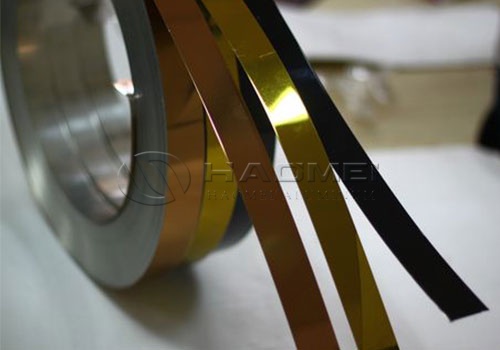
Why 8011 Alloy Works Well for Prepainted Strips
8011 is an aluminum-iron-silicon alloy from the 8xxx series. Its composition gives it favorable formability, moderate strength, low density, and stable performance in thin-gauge coil production. Compared with harder structural aluminum alloys, 8011 is more suitable where repeated bending, shallow drawing, embossing, or profile forming is required.
The alloy is especially effective as a painted strip substrate because a carefully prepared aluminum surface offers strong coating adhesion. Before painting, the coil is generally degreased, chemically pretreated, rinsed, and dried. A primer is then applied, followed by a topcoat and thermal curing. The coating is baked into a continuous protective layer rather than simply sitting on the metal as a temporary decorative film.
This combination allows 8011 color prepainted aluminum coil strips to perform two roles at once: the aluminum body provides shape and barrier protection, while the coating supplies color, weather resistance, stain resistance, and a smoother visible surface.
Chemical Composition of 8011 Aluminum Alloy
The chemical balance of 8011 supports stable processing and controlled mechanical properties. Values may be adjusted within applicable standards and buyer specifications.
| Element | Content, % |
|---|---|
| Silicon, Si | 0.50-0.90 |
| Iron, Fe | 0.60-1.00 |
| Copper, Cu | 0.10 max |
| Manganese, Mn | 0.20 max |
| Magnesium, Mg | 0.05 max |
| Zinc, Zn | 0.10 max |
| Titanium, Ti | 0.08 max |
| Other elements, each | 0.05 max |
| Other elements, total | 0.15 max |
| Aluminum, Al | Remainder |
Iron and silicon are the principal alloying elements. Their controlled presence contributes to the alloy's strength and processing stability without making the strip excessively brittle. This matters when painted material must pass through press tools or roll-forming equipment without coating cracks along the bend line.
Common Parameters and Supply Conditions
8011 prepainted coil strips can be tailored around the final fabrication method. Thin, soft material is commonly selected for deep drawing or wrapping. Harder tempers are chosen when the finished component needs better dent resistance or profile stiffness.
| Property | Typical Supply Range |
|---|---|
| Alloy | AA 8011 |
| Temper | O, H14, H16, H18, H19 |
| Thickness | 0.20-1.50 mm |
| Width before slitting | Up to 1,600 mm |
| Slit strip width | Commonly 10-1,250 mm |
| Coil inner diameter | 150 mm, 300 mm, 405 mm, or 508 mm |
| Coil weight | According to handling and equipment requirements |
| Surface finish | Glossy, matte, textured, embossed, brushed, or wood-grain pattern |
| Top coating | PE, HDPE, SMP, PVDF, epoxy, polyester systems |
| Coating thickness | Typically 12-30 microns, subject to system and application |
| Color | RAL, Pantone, custom color sample, or printed pattern |
Temper selection should be based on the forming route rather than appearance alone. O temper has the highest ductility and is suitable for severe forming. H14 provides a practical balance between strength and workability. H16, H18, and H19 offer increasing hardness for roll-formed trims, shutters, ceiling components, and applications where surface denting is a concern.
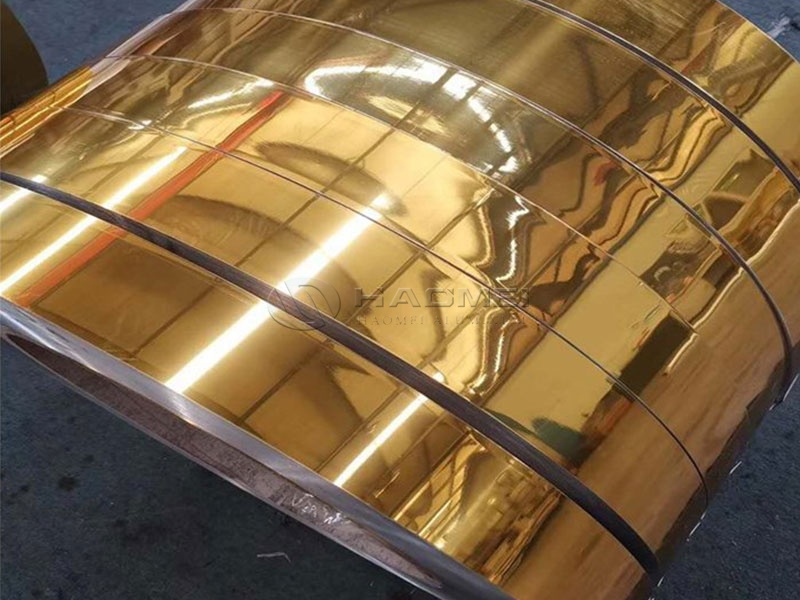
For applications needing general indoor durability and economical color finishing, PE Coated Aluminum Strip is often the preferred configuration. Where exterior sunlight, humidity, and long service life create more demanding conditions, a PVDF coating system may be selected for superior color and weather retention.
Coating Performance Is a Manufacturing Feature
The coating system should be treated as part of the functional design. Polyester coatings are widely used for indoor appliances, decorative ceiling strips, packaging components, and furniture accessories. They provide attractive color, smooth leveling, and economical processing. SMP coatings provide stronger outdoor durability than conventional polyester in many architectural uses. PVDF coatings are typically specified for high-exposure exterior panels, façade trims, and premium building products because of their excellent resistance to UV aging and chalking.
Coating flexibility is equally important. During bending, the film must elongate with the aluminum substrate. Insufficient flexibility can lead to micro-cracks around sharp corners, allowing moisture or contaminants to reach the metal. Therefore, paint adhesion, T-bend behavior, pencil hardness, impact resistance, gloss, and coating thickness should be confirmed before mass production.
A well-specified Color Coated Aluminum Strip can also reduce scrap. Consistent coating thickness and stable color across coil length allow automated equipment to produce visually uniform parts with fewer sorting issues.
Implementation Standards and Quality References
Production and inspection may follow several international standards depending on the destination market and customer contract. Aluminum chemical composition is commonly referenced against EN 573-3 or ASTM B209 requirements. Mechanical properties and dimensional tolerances may be controlled according to EN 485 series, ASTM B209, or GB/T 3880.
For painted surfaces, EN 13523 test methods are frequently used to assess coating properties such as gloss, color difference, film thickness, impact resistance, bending behavior, solvent resistance, and corrosion performance. ASTM testing methods may also be applied for adhesion, salt spray resistance, humidity resistance, and coating hardness.
A complete purchase specification normally identifies alloy, temper, thickness tolerance, strip width tolerance, coating type, total dry film thickness, gloss level, color tolerance, protective film requirement, coil weight, edge condition, and packaging method. These details prevent problems that can arise when a decorative material is evaluated only by its visible color.
Applications Where 8011 Prepainted Strip Adds Value
In building products, 8011 painted strips are used for roller shutters, ceiling grids, edge bands, insulation cladding, roof accessories, gutter components, and decorative architectural profiles. Their low weight reduces handling effort while the finished surface avoids secondary painting.
In consumer goods, the strip supports appliance trims, refrigerator panels, lighting fixtures, cookware packaging, storage systems, curtain tracks, and furniture edges. In packaging, it can be processed into bottle caps, closures, seals, and decorative wrapping components, where clean color and corrosion resistance improve shelf presentation.
Electrical and industrial uses include cable shielding wraps, transformer-related components, ventilation products, and protective housings. The chosen coating must match the operating environment, especially where heat, oils, cleaning chemicals, or outdoor exposure are present.
8011 color prepainted aluminum coil strips deliver more than a colored metal surface. With the right temper, coating system, dimensions, and inspection standards, they become an efficient production material that combines visual consistency, fabrication flexibility, and reliable long-term protection.