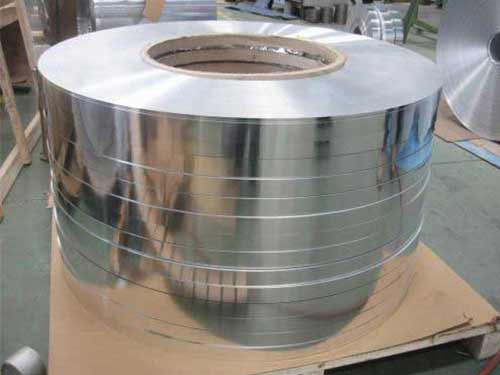
1060 1050 H24 H22 Series Aluminum Strip for Electrical
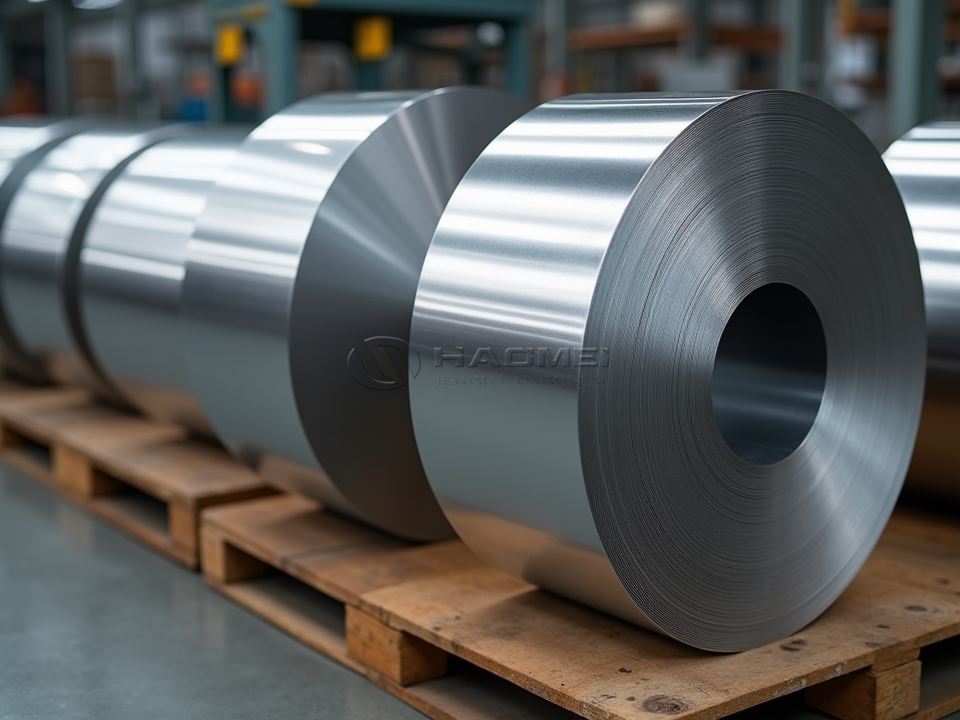
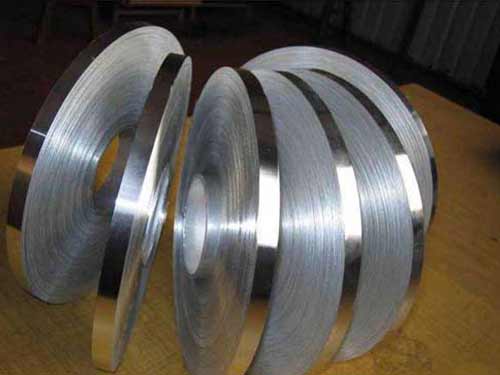
Electrical aluminum strip is often judged by conductivity alone, yet its real value is found in the balance between electrical flow, controlled hardness, surface quality, and processing stability. 1050 and 1060 aluminum strips in H22 and H24 tempers are designed for precisely this balance. They offer high aluminum purity, reliable corrosion resistance, light weight, and sufficient mechanical strength for winding, stamping, slitting, wrapping, and forming operations.
For electrical equipment makers, these strips function less like ordinary metal stock and more like a stable pathway for current, heat, and production efficiency. From dry-type transformer windings to cable shields and lamp components, the material must perform consistently from the first coil to the final installation.
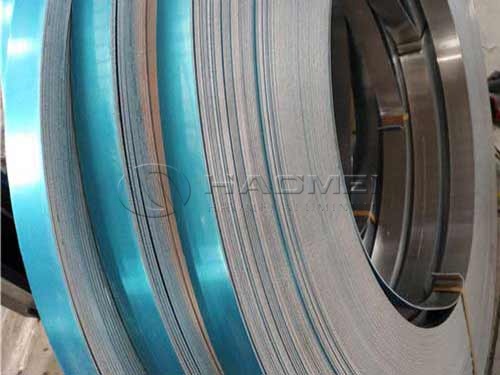
Why 1050 and 1060 Aluminum Strip Works in Electrical Systems
1050 and 1060 belong to the commercially pure aluminum family. Their aluminum content is higher than that of common alloyed grades such as 3003, 5052, or 6061. This high purity supports good electrical and thermal conductivity, which is especially important where current transfer and heat dissipation are continuous operating requirements.
1050 aluminum contains at least 99.50% aluminum, while 1060 contains at least 99.60%. The small difference in purity can affect conductivity expectations, surface cleanliness, and material selection for sensitive electrical applications. In practical use, 1060 is frequently selected when higher conductivity is prioritized, while 1050 remains an economical and dependable choice for many electrical and industrial components.
The H22 and H24 tempers add useful structure to soft aluminum. Fully annealed O temper strip is highly formable but can be too soft for processes that require shape retention. H22 and H24 provide strain-hardened strength with partial annealing, creating material that is easier to handle on automated equipment while still allowing bending, coiling, punching, and moderate forming.
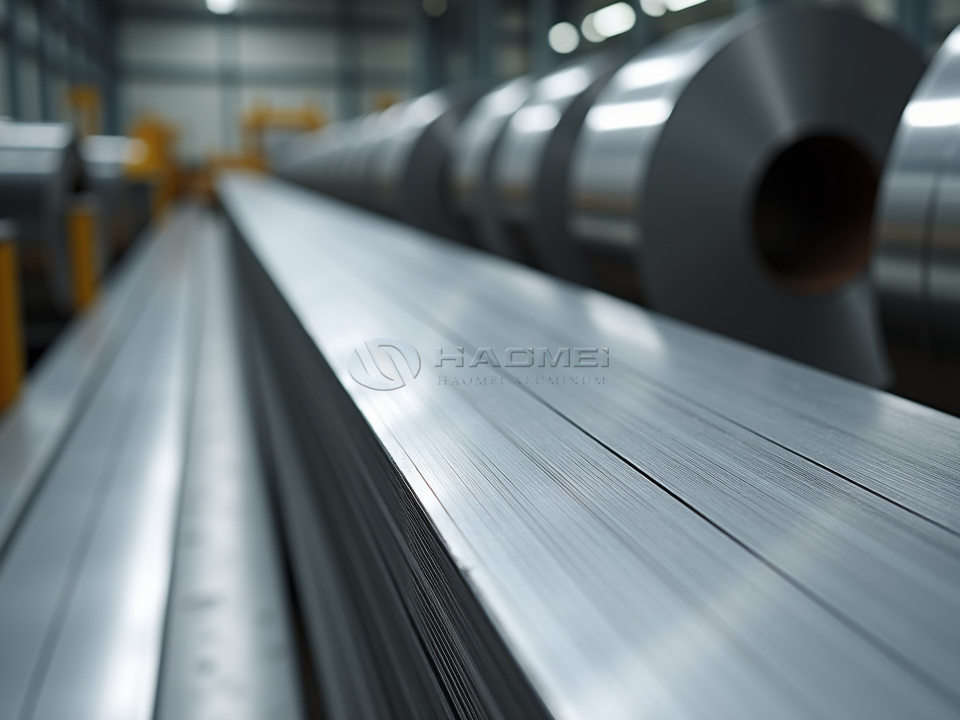
A properly selected 1050 / 1060 Aluminum Strip can reduce material cracking during fabrication and improve coil stability during high-speed production.
H22 and H24 Temper: Hardness with Working Flexibility
The temper designation describes how the aluminum strip has been processed after rolling. In H2 tempers, the strip is strain hardened and then partially annealed to achieve a specified final strength level.
| Temper | General Strength Level | Processing Character | Typical Electrical Use |
|---|---|---|---|
| H22 | Quarter-hard | Good flexibility with moderate shape retention | Transformer layers, cable wrapping, formed electrical parts |
| H24 | Half-hard | Higher strength and improved flatness stability | Busbar components, lamp caps, stamped parts, protective electrical shells |
H22 is commonly preferred when the strip must bend around cores, winding equipment, or curved profiles without excessive springback. It is suitable for transformer and reactor winding applications where uniform coil formation helps control insulation spacing and winding geometry.
H24 offers greater resistance to deformation. It is a practical choice for electrical stamped parts, support pieces, shields, enclosures, and components that must retain shape after forming. The right temper is not simply a matter of choosing stronger material; it is about matching the strip's response to the customer's tooling, bend radius, and end-use load.
Chemical Composition and Purity Control
Chemical composition influences conductivity, corrosion behavior, and rolling consistency. Iron and silicon are controlled because excessive amounts may reduce conductivity and change forming behavior. Copper is kept very low to preserve the corrosion-resistant character of commercially pure aluminum.
| Element | 1050 Aluminum Strip | 1060 Aluminum Strip |
|---|---|---|
| Aluminum, Al | 99.50% min | 99.60% min |
| Silicon, Si | 0.25% max | 0.25% max |
| Iron, Fe | 0.40% max | 0.35% max |
| Copper, Cu | 0.05% max | 0.05% max |
| Manganese, Mn | 0.05% max | 0.03% max |
| Magnesium, Mg | 0.05% max | 0.03% max |
| Zinc, Zn | 0.07% max | 0.05% max |
| Titanium, Ti | 0.05% max | 0.03% max |
| Other Elements | 0.03% each, 0.03% total max | 0.03% each, 0.03% total max |
Actual composition tolerances should be confirmed against the applicable specification and purchase agreement. For electrical coils and conductor-related products, customers may request tighter controls on impurity content, conductivity, burr height, edge condition, oil residue, and surface defects.
Typical Parameters for Electrical Aluminum Strip
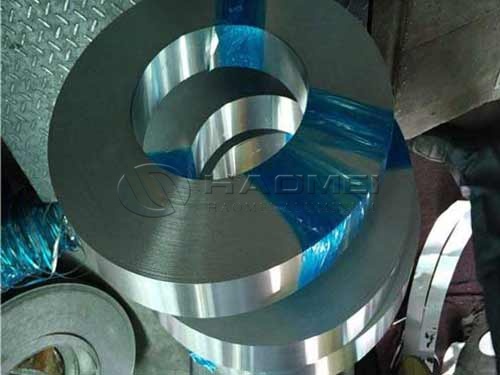
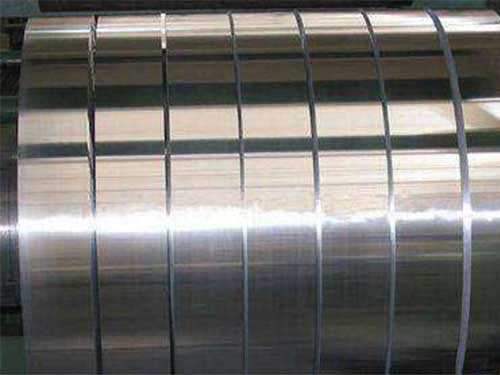
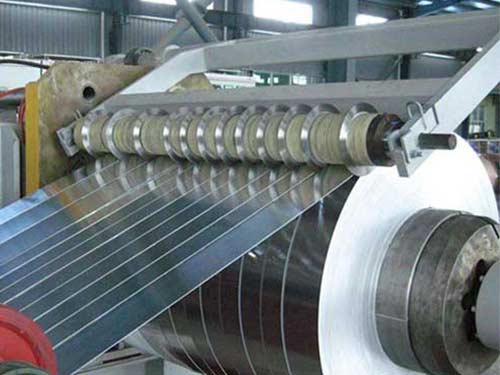
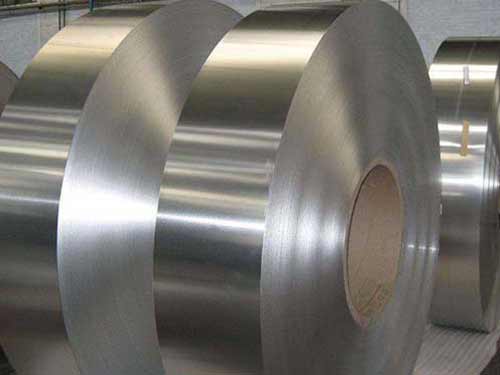
Electrical aluminum strip can be supplied in slit coils or custom-width coils. Dimensions are selected according to winding design, equipment clearance, electrical loading, and forming process requirements.
| Parameter | Common Supply Range |
|---|---|
| Alloy | 1050, 1060 |
| Temper | O, H12, H14, H22, H24 |
| Thickness | 0.10 mm to 6.00 mm |
| Width | 10 mm to 1,600 mm |
| Coil inner diameter | 150 mm, 300 mm, 400 mm, 500 mm, or customized |
| Coil weight | According to handling equipment and customer requirement |
| Surface | Mill finish, degreased, smooth, flat, free from harmful defects |
| Electrical conductivity | Typically about 61% IACS for 1050 and 62% IACS for 1060, subject to condition and testing method |
Thickness tolerance and width tolerance are especially important for transformer windings. Even small dimensional variation may alter winding tension, insulation fit, coil diameter, and production yield. For narrow slit products, clean edges and low burr are essential because sharp edges can damage insulating paper, film, or enamel during winding.
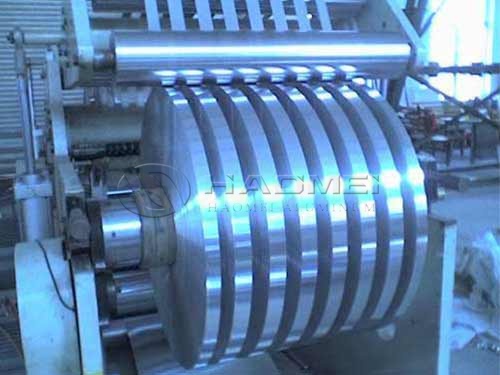
Electrical Functions Beyond Conductivity
In a transformer, aluminum strip carries current while managing heat generated by electrical resistance. Its broad, flat geometry can help distribute current efficiently and support compact winding arrangements. Aluminum's low density also reduces the weight of large coils compared with copper-based alternatives, which can simplify handling and lower overall equipment mass.
In power cables, aluminum strip can serve as shielding, armoring-related layers, moisture barriers, or conductive screening components, depending on cable construction. Its corrosion resistance is valuable in installations exposed to humidity or industrial atmospheres.
For lighting and electrical hardware, H24 aluminum strip can be stamped into lamp caps, reflectors, connection components, and housings. The material combines a bright metallic surface with good formability and a natural oxide layer that helps resist atmospheric corrosion.
Electrical manufacturers may also compare pure grades with Alloy Aluminum Strip when a project needs greater mechanical strength. However, for applications where conductivity and formability are the central requirements, 1050 and 1060 remain highly practical choices.
Standards and Quality Requirements
Production and inspection may follow international standards such as ASTM B209/B209M for aluminum and aluminum-alloy sheet and strip, EN 485 for tolerances and mechanical properties, EN 573 for chemical composition, and GB/T 3880 for aluminum sheet and strip products. Specific electrical applications can include additional customer requirements for conductivity testing, resistivity, surface cleanliness, flatness, coil winding direction, and packaging protection.
For transformer winding strip, a quality-focused supply program commonly examines coil telescoping, edge burr, camber, thickness consistency, surface scratches, oxide contamination, and moisture protection. These factors influence not only visual quality but also insulation safety and equipment reliability.
Selecting the Right Strip for the Job
1050 H22 aluminum strip is a strong option for applications needing easy bending and dependable electrical performance. 1060 H22 can be favored for conductor-oriented projects where slightly higher aluminum purity is beneficial. For stamped or shape-sensitive electrical components, 1050 H24 and 1060 H24 offer improved rigidity and handling stability.
The most suitable electrical aluminum strip is determined by more than alloy name and temper. It should match the current load, forming route, insulation system, edge requirement, coil dimensions, and applicable standard. When these details are specified early, 1060 and 1050 H24 H22 series aluminum strip becomes a dependable foundation for efficient electrical manufacturing.