1050 1060 Aluminum Strip Tape Cei
1050 and 1060 aluminum strip tape are often selected where conductivity, low weight, forming performance, and corrosion resistance must work together. In CEI-related electrical projects, these alloys are commonly used as winding strips, shielding tapes, cable components, transformer layers, heat-transfer parts, and fabricated conductive elements.
The value of this material is not simply that it is aluminum. Its real advantage is the balance between high aluminum purity and predictable processing behavior. Compared with higher-strength aluminum alloys, 1050 and 1060 strip tape remain easier to bend, slit, coil, stamp, and wrap around electrical or mechanical parts without excessive cracking.
CEI generally refers to Italian electrotechnical requirements and related application standards. It is important to understand that CEI compliance is usually determined by the complete electrical product or installation, rather than by aluminum alloy grade alone. For this reason, buyers should confirm the required conductivity, insulation arrangement, surface condition, dimensions, and documentation for the final CEI-related application.
Why 1050 and 1060 Strip Tape Performs Well
Both alloys belong to the 1xxx aluminum family. They contain very high levels of aluminum, with only small controlled amounts of silicon, iron, copper, manganese, magnesium, zinc, titanium, and other trace elements. Their purity gives them strong electrical and thermal conductivity compared with alloy families designed mainly for structural strength.
1050 aluminum strip contains at least 99.50% aluminum. It is widely appreciated for deep drawing, bending, welding, bright finishing, and stable corrosion performance. It is a practical choice for general electrical strips, lighting components, reflective surfaces, transformer parts, and flexible industrial tape.
1060 aluminum strip contains at least 99.60% aluminum. The slightly higher aluminum content can provide marginally improved conductivity and softness, making it especially suitable for electrical winding, cable shielding, conductive foil-laminated tape, and applications requiring close forming around a core or housing.
For buyers comparing the two grades, the decision is usually simple. Choose 1050 when balanced workability and cost control are important. Choose 1060 when conductivity and high-purity aluminum content receive greater attention. In many practical projects, both grades can meet the same dimensional and forming requirements.
Typical Parameters for Aluminum Strip Tape
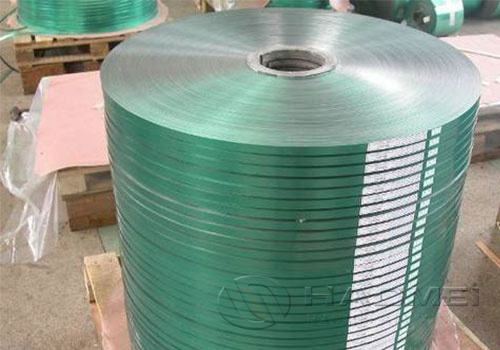
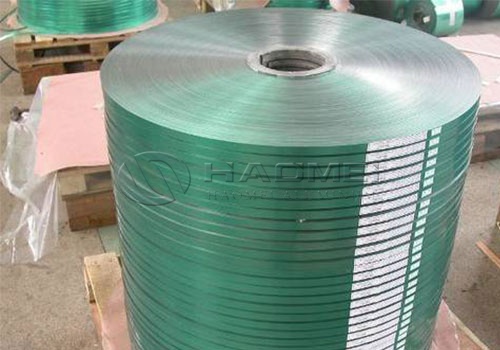
1050 and 1060 aluminum strip tape can be produced in coils, slit rolls, edge-trimmed strips, or customized tape widths. Final dimensions should be selected according to winding equipment, conductor design, insulation stack-up, and fabrication tolerances.
| Parameter | Common Supply Range | Notes |
|---|---|---|
| Alloy | 1050, 1060 | High-purity aluminum grades |
| Thickness | 0.05-3.00 mm | Thinner gauges are common for tape and shielding |
| Width | 10-1,600 mm | Slit widths can be tailored to customer equipment |
| Coil inner diameter | 150 mm, 300 mm, 400 mm, 500 mm | Selected to suit rewinding and processing lines |
| Coil weight | 50-5,000 kg | Depends on width, thickness, and handling method |
| Surface | Mill finish, bright, degreased, coated | Surface cleanliness matters for lamination and insulation |
| Edge condition | Slit edge, deburred edge, round edge | Burr control is important in electrical winding |
For tape applications, thickness tolerance is often more important than appearance. Even a small variation may affect winding tension, insulation spacing, or the overall diameter of a finished coil. A consistent strip profile helps prevent telescoping, uneven winding, and localized stress during processing.
Chemical Composition Table
The chemical composition of 1050 and 1060 aluminum strip is controlled to maintain their high-purity character. Values shown are typical maximum limits in percent by weight, except aluminum, which is the balance.
| Element | 1050 Aluminum Strip | 1060 Aluminum Strip |
|---|---|---|
| Aluminum, Al | 99.50 min | 99.60 min |
| Silicon, Si | 0.25 max | 0.25 max |
| Iron, Fe | 0.40 max | 0.35 max |
| Copper, Cu | 0.05 max | 0.05 max |
| Manganese, Mn | 0.05 max | 0.03 max |
| Magnesium, Mg | 0.05 max | 0.03 max |
| Zinc, Zn | 0.05 max | 0.05 max |
| Titanium, Ti | 0.03 max | 0.03 max |
| Other elements, total | 0.03 max | 0.03 max |
The low level of alloying elements supports conductivity and makes these grades responsive to bending and shaping. However, high purity also means that 1050 and 1060 should not be selected where heavy structural loading or high abrasion resistance is the primary design requirement.
Temper Conditions and Mechanical Behavior
Aluminum strip tape is supplied in several tempers, allowing users to match hardness with the intended operation. The temper affects bending radius, tensile strength, elongation, springback, and winding behavior.
| Temper | Material Condition | Typical Application Direction |
|---|---|---|
| O | Fully annealed, soft | Deep drawing, tight winding, complex forming |
| H12 | Quarter hard | Light forming with improved handling stiffness |
| H14 | Half hard | General strip tape, stamping, moderate bending |
| H16 | Three-quarter hard | Parts requiring greater rigidity |
| H18 | Full hard | Flat applications, stiff tape, limited forming |
| H19 | Extra hard | Specialized high-stiffness strip requirements |
The O temper is often preferred for transformer winding and wrapping applications because it bends smoothly and conforms well to curved surfaces. H14 is commonly used where the strip must remain stable during slitting, feeding, stamping, or assembly. H18 material provides more rigidity, but it should be used carefully when repeated folding or tight-radius forming is required.
Typical tensile strength for annealed 1050 or 1060 material may fall around 60-95 MPa, while harder tempers can reach approximately 110-150 MPa or more depending on thickness and mill practice. Elongation decreases as hardness rises. Material certificates should be requested when mechanical limits are critical.
Standards and CEI-Related Considerations
Common material references for 1050 and 1060 aluminum strip include EN 573-3 for chemical composition, EN 485 for mechanical properties and tolerances, ASTM B209 for aluminum sheet and strip, and ISO 6361 for wrought aluminum products. Specific requirements may also be defined by customer drawings, electrical product standards, or CEI and IEC documentation associated with the finished component.
For electrical applications, confirm these points before ordering:
- Electrical conductivity requirement and test method
- Temper and minimum bend radius
- Thickness, width, camber, and edge-burr tolerance
- Surface cleanliness for insulation, adhesive, or lamination processes
- Coil direction, coil weight, and inner diameter
- Certificate of analysis and inspection documentation
- Packaging protection against moisture, dust, and transit damage
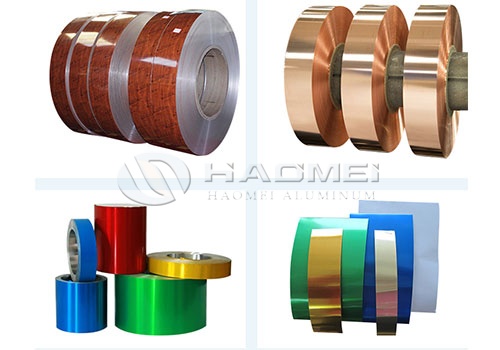
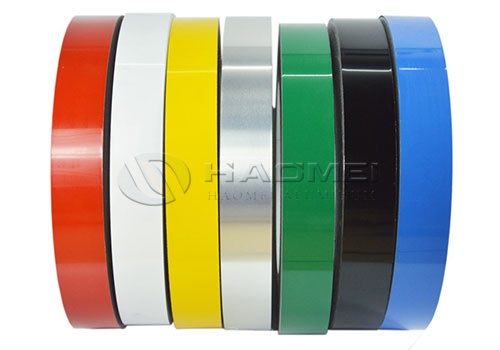
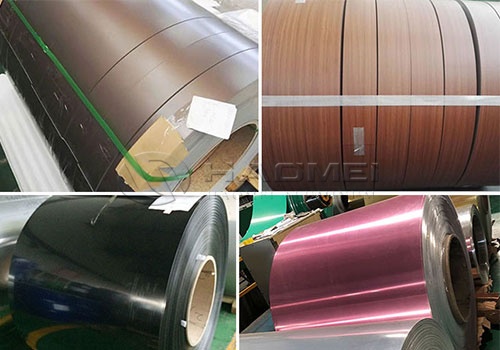
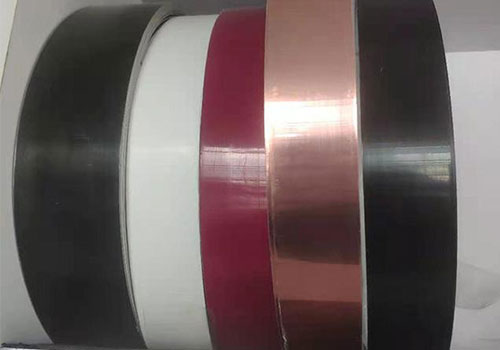
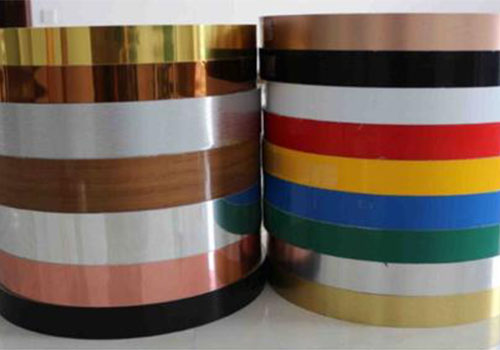
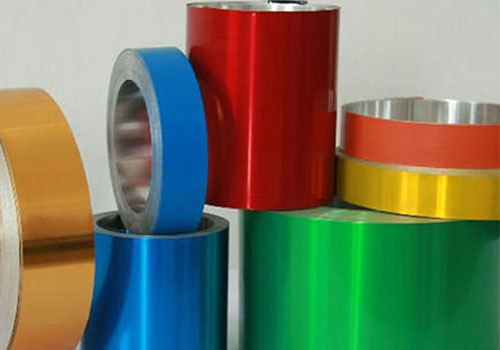
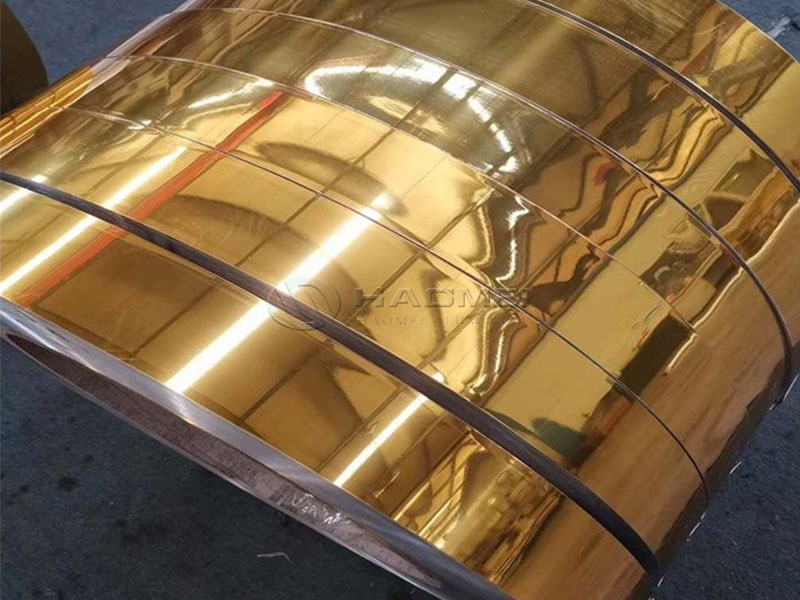
When a protective finish is required, a Coated Aluminum Strip can add surface protection or color identification. For cable markers, decorative electrical housings, and identification bands, Color Coated Aluminum Strip options can support visual differentiation while retaining aluminum's light weight and formability.
Selecting the Right Strip Tape
A successful 1050 or 1060 aluminum strip tape order begins with the processing method rather than alloy name alone. Winding operations need soft material, controlled burrs, stable thickness, and tightly managed coil geometry. Stamping may require H14 or H16 temper for cleaner feeding and better shape retention. Lamination requires a clean, dry surface with suitable roughness and adhesion compatibility.
For CEI-related electrical use, the strip should be treated as one part of a complete system. Conductivity, insulation class, electrical spacing, heat exposure, and assembly method all influence the final result. With the correct alloy, temper, edge finish, and coil specification, 1050 and 1060 aluminum strip tape provide a reliable, economical foundation for a wide range of electrical and industrial products.