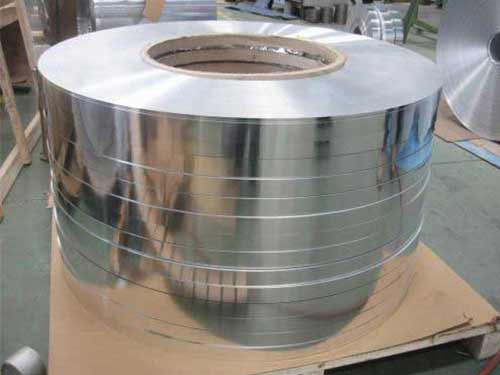
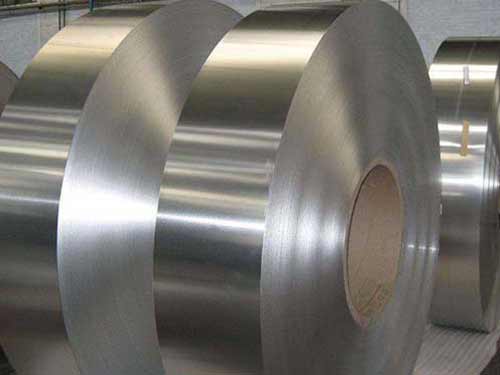
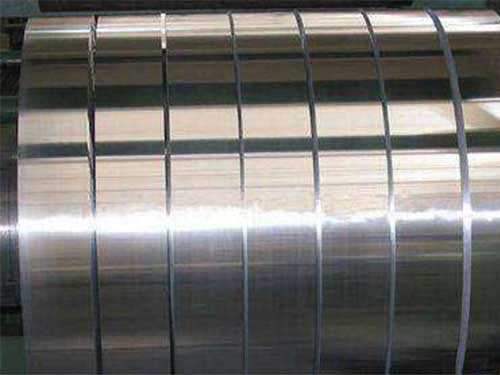
0.11mm Thickness Aluminum Strip Coils 8011
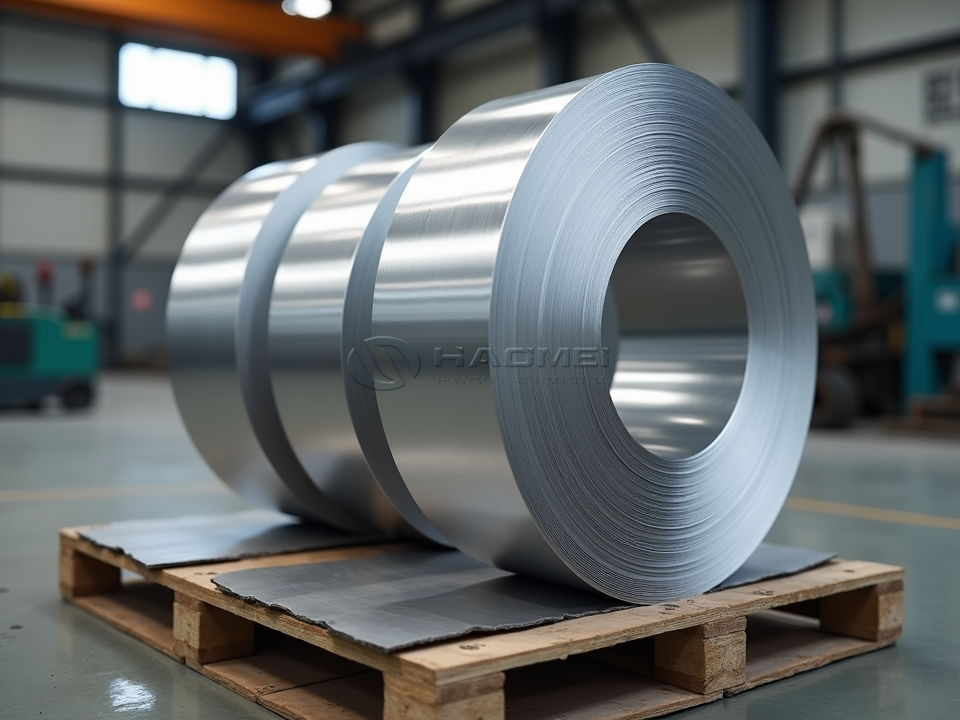
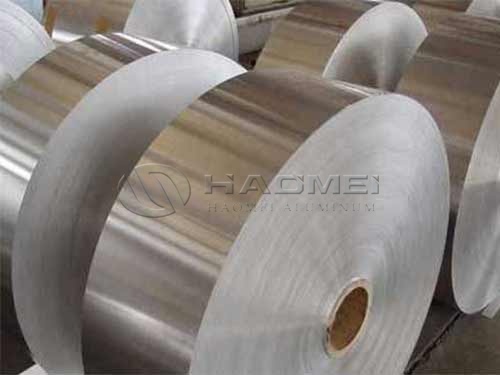
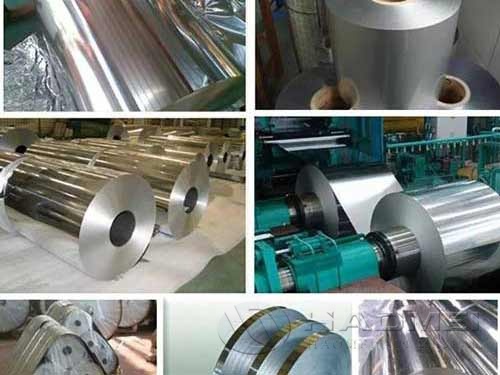
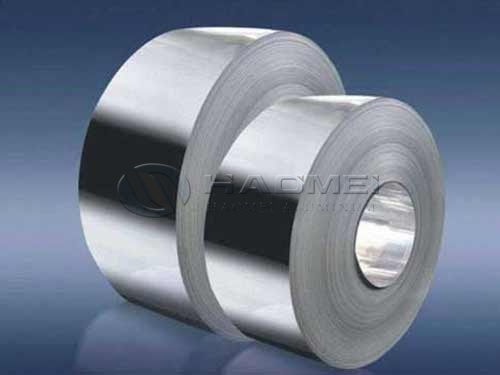
0.11mm thickness 8011 aluminum strip coils are precision-rolled aluminum products designed for lightweight converting, stamping, wrapping, and packaging operations. At this thin gauge, stable thickness control, clean surface quality, controlled temper, and reliable coil winding are essential. The material must run smoothly through high-speed equipment while retaining enough strength for handling and enough ductility for forming.
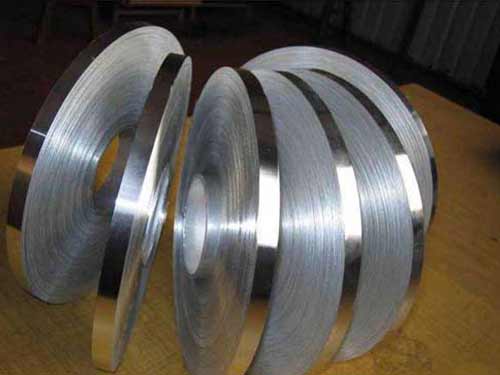
8011 is an aluminum-iron-silicon alloy widely used where corrosion resistance, formability, and economical processing are required. A 0.11mm strip provides a practical balance between metal-saving design and dependable mechanical performance. It can be slit into narrow widths, supplied in mill finish, or prepared for coating, printing, laminating, embossing, and other downstream treatments.
Why 8011 Performs Well at 0.11mm
Thin aluminum strip is more than simply a reduced-thickness coil. The rolling process must produce a uniform gauge across the strip width and throughout the coil length. For 0.11mm 8011 aluminum strip coils, this consistency supports stable tension during unwinding, accurate feeding into presses, and a more even appearance after coating or printing.
The iron and silicon additions in alloy 8011 contribute to strength while maintaining good workability. Compared with very soft commercial-purity aluminum grades, 8011 can offer better resistance to deformation during automated handling. It is especially suitable where a light but durable metal layer is needed for protective, decorative, or functional purposes.
Common customer requirements include burr-controlled slit edges, flat coil faces, a clean and oil-managed surface, and stable mechanical properties from one coil to the next. These details influence productivity directly. A strip with poor edge quality may create dust, cracking, or feeding interruptions, while unstable temper may lead to inconsistent forming results.
Typical Technical Specification
| Parameter | Common Supply Range or Requirement |
|---|---|
| Alloy | AA 8011 |
| Thickness | 0.11mm |
| Thickness tolerance | Available according to customer agreement and applicable standards |
| Width | Slit widths or master-coil widths, commonly customized |
| Temper | O, H14, H16, H18, or specified temper |
| Coil inner diameter | Commonly 150mm, 300mm, 400mm, 500mm, or customized |
| Coil outer diameter | According to coil weight, transport limits, and processing equipment |
| Surface | Mill finish, clean, smooth, free from severe scratches, dents, and oxidation marks |
| Edge condition | Mill edge or slit edge with controlled burr |
| Delivery form | Eye-to-wall or eye-to-sky, according to handling requirement |
For applications involving repeated bending, wrapping, or deep drawing, annealed O temper is often preferred because of its high elongation and soft forming behavior. For uses demanding greater stiffness and shape retention, H14, H16, or H18 tempers may be selected. The correct temper depends on the final converting route, tooling geometry, bend radius, and required surface finish.
Chemical Composition of 8011 Aluminum Alloy
8011 belongs to the aluminum-iron-silicon family. Its composition is controlled to produce a dependable combination of strength, corrosion resistance, and processing flexibility.
| Element | Typical Specified Range, % |
|---|---|
| Silicon, Si | 0.50-0.90 |
| Iron, Fe | 0.60-1.00 |
| Copper, Cu | 0.10 max |
| Manganese, Mn | 0.20 max |
| Magnesium, Mg | 0.05 max |
| Zinc, Zn | 0.10 max |
| Titanium, Ti | 0.08 max |
| Aluminum, Al | Balance |
Chemical composition may be verified through mill test documentation when requested. For sensitive packaging or coated-material projects, customers should also communicate applicable regulations, coating compatibility requirements, and surface cleanliness expectations during the inquiry stage.
Performance Characteristics
The most valued feature of 0.11mm 8011 aluminum strip is its efficient performance in thin-gauge conversion. Aluminum has a low density of approximately 2.7 g/cm³, making this strip considerably lighter than comparable steel-based materials. This supports lower product weight and convenient handling without sacrificing the barrier and corrosion-resistant benefits associated with aluminum.
Its natural oxide film gives 8011 good resistance to ordinary atmospheric corrosion. For more demanding environments, the strip can be painted, lacquered, laminated, or bonded with polymer layers. The metal surface also accepts many printing and coating systems when suitable pretreatment and process control are used.
Thermal and electrical conductivity are additional advantages. Although 8011 is not generally chosen as a high-conductivity electrical grade, it can still contribute useful heat transfer and shielding properties in selected constructions. Its non-magnetic nature is also valuable in packaging, lighting, and electronic-component applications.
Customers seeking alternative thicknesses, tempers, or slit configurations can review 8011 Aluminum Strip options for broader product matching. For projects that require a comparison among several alloy families, Alloy Aluminum Strip selections can help identify materials with different strength, corrosion, or forming profiles.
Applications for 0.11mm 8011 Strip Coils
Packaging is one of the most common destinations for 0.11mm 8011 aluminum strip. It may be processed into closures, caps, seals, decorative wraps, composite packaging layers, and various protective components. Its low gauge helps reduce material consumption, while its surface can be adapted for printing, coloring, embossing, or lamination.
In cap and closure production, the strip can be stamped and formed into bottle caps, cosmetic closures, pharmaceutical seals, and similar products. The selected temper must match the drawing depth and the shape of the tooling. Soft tempers support more demanding deformation, while harder tempers can improve rigidity in relatively shallow formed parts.
The material is also used in lamp-cap and lighting accessory production. Its formability permits shaping around dies, and its surface can be prepared for decorative or protective finishing. For household, consumer, and industrial goods, thin 8011 strip is often chosen for trim elements, nameplate bases, decorative bands, and lightweight stamped parts.
In cable and insulation-related constructions, aluminum strip can serve as a shielding or wrapping layer when designed to meet the electrical and mechanical needs of the finished product. It may also be laminated with paper, plastic film, or other substrates to build multi-layer structures with controlled moisture and light resistance.
Processing Guidance
A 0.11mm strip should be handled carefully to preserve its surface and dimensional accuracy. Coil storage areas should be dry, ventilated, and protected from condensation. Direct contact with water, corrosive chemicals, cement dust, or incompatible metals should be avoided. Coils are best stored on suitable supports rather than directly on the floor.
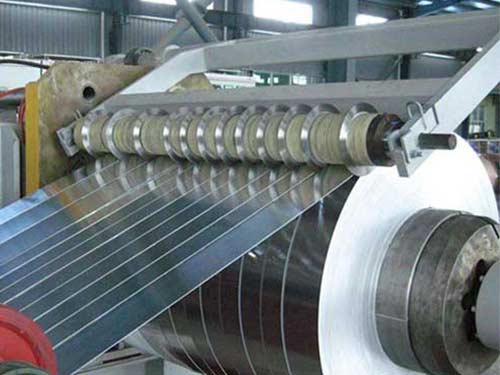
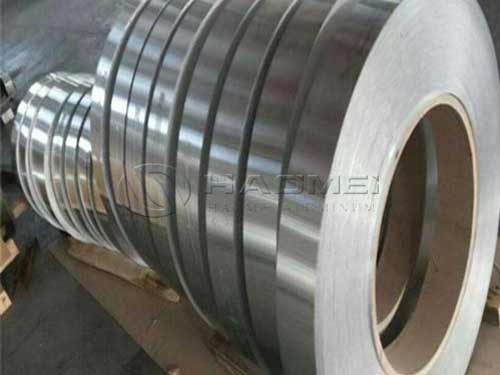
During slitting and stamping, equipment settings should be adjusted for thin gauge material. Excessive tension can create edge waviness or deformation, while insufficient tension may cause poor tracking. Sharp, well-maintained slitting knives help achieve smooth edges with limited burr. Clean rollers and guides are equally important because thin aluminum surfaces can show marks more readily than heavier gauges.
For coated or laminated products, trial runs are recommended to confirm adhesion, curing response, print appearance, and forming behavior. The final product performance depends not only on the aluminum strip but also on coating chemistry, adhesive selection, tooling design, and the conditions of the converting line.
Packaging and Quality Control
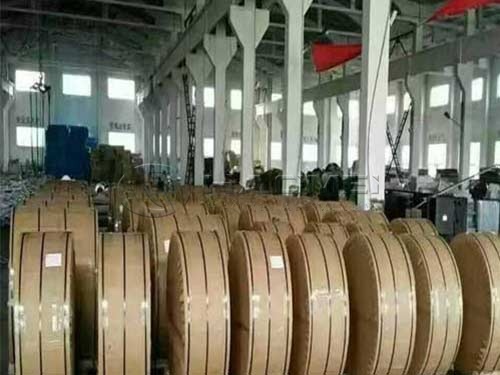
0.11mm 8011 aluminum strip coils are commonly protected with moisture-resistant wrapping, outer paper or film, edge guards, and reinforced pallet support where required. Export packing can be tailored for sea freight, container transport, or long-distance warehouse storage. Coil labels normally identify alloy, temper, dimensions, net weight, batch reference, and production details.
Quality inspection generally focuses on thickness, width, coil geometry, edge condition, surface appearance, temper, and composition. Customers with strict standards may request additional checks such as tensile testing, elongation testing, pinhole inspection where applicable, or confirmation of surface treatment requirements.
With the right temper, coil dimensions, and surface condition, 0.11mm thickness 8011 aluminum strip coils provide a lightweight, workable, and reliable material solution for modern packaging, stamping, wrapping, and decorative manufacturing.