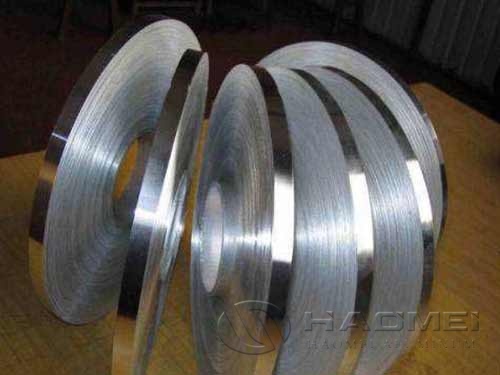
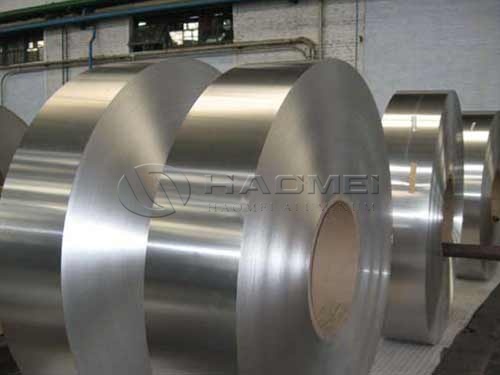
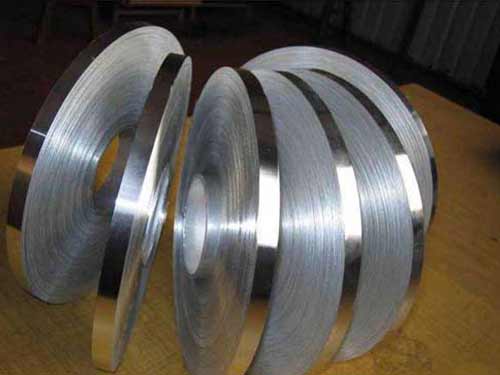
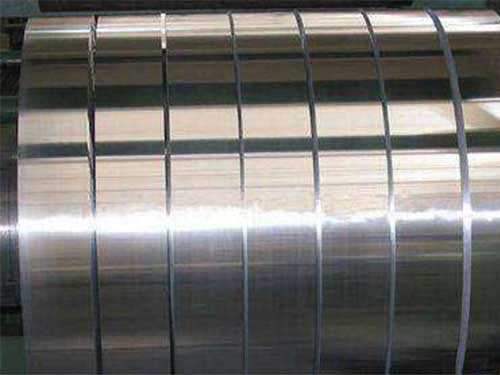
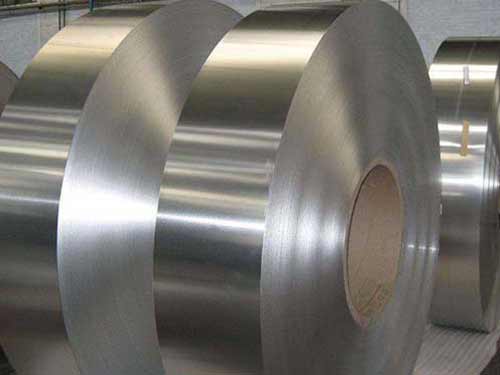
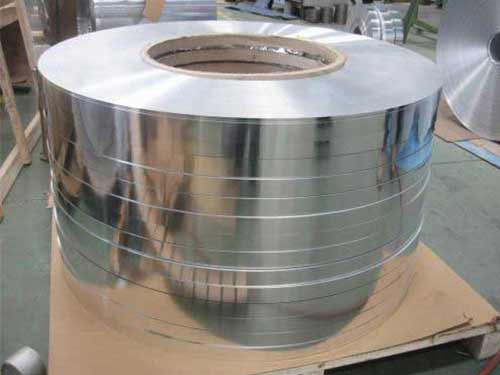
Light Reflector Mirror Aluminum Strip Coil
Light Is Directed, Not Simply Reflected
A light reflector mirror aluminum strip coil is more than a bright metal surface. In a lighting fixture, it acts as an optical routing layer: it captures light that would otherwise be absorbed inside the housing and redirects it toward the intended area. This function can improve fixture efficiency, reduce glare, support a slimmer lamp structure, and help designers achieve a cleaner distribution pattern.
Mirror aluminum strip is widely used in LED lamps, fluorescent reflectors, decorative lighting, solar-related optical components, display equipment, heat-reflective panels, and commercial luminaires. Its performance depends not only on reflectance, but also on the relationship between alloy purity, temper, surface treatment, flatness, and the forming method used by the customer.
The Surface Works Like an Optical Tool
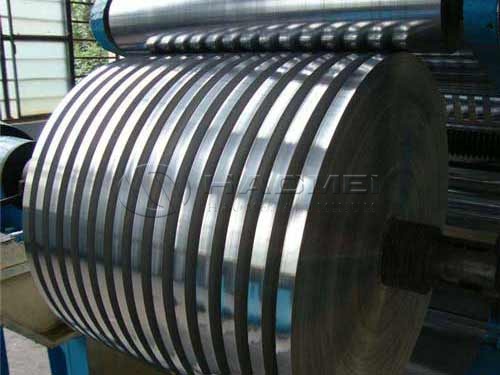
A matte aluminum strip scatters incoming light in many directions. A mirror-finished strip behaves differently. Its highly smooth surface produces more specular reflection, meaning light is redirected in a controlled direction rather than dispersed randomly. This is valuable in reflector cups, linear LED channels, downlights, grille lamps, and industrial high-bay fixtures.
For lighting applications, total reflectance alone does not tell the complete story. A reflector must preserve surface brightness after slitting, bending, stamping, and long-term use. Fine scratches, roller marks, edge burrs, coating defects, or uneven oxide layers can interrupt the reflection path and create visible dark zones in a finished lamp.
High-grade reflector strip coil is commonly supplied with polished, chemically brightened, anodized, coated, or laminated surfaces. An anodized mirror finish provides extra protection against oxidation and handling marks. Coated reflector aluminum may offer improved durability, color consistency, or resistance to humidity, while bare polished aluminum is often selected where economical processing and high initial brightness are the priority.
Common Product Parameters
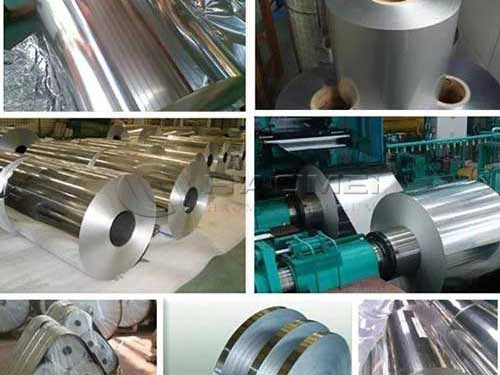
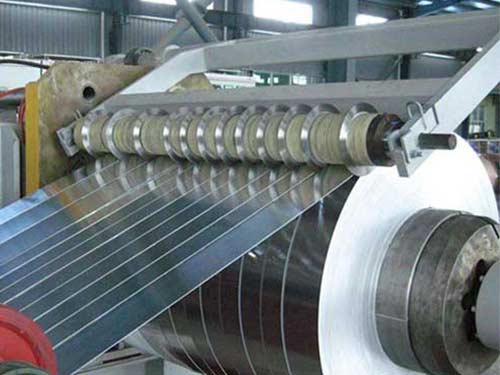
Light reflector mirror aluminum strip coil can be tailored to fixture geometry and production equipment. Narrow slit coils suit continuous roll-forming and automated lamp assembly, while wider coils are practical for stamping larger reflector panels.
| Parameter | Typical Range or Condition |
|---|---|
| Alloy | 1050, 1060, 1070, 1100, 3003 |
| Temper | O, H14, H16, H18, H22, H24 |
| Thickness | 0.20 mm to 2.00 mm |
| Width | 10 mm to 1,600 mm |
| Coil inner diameter | 150 mm, 300 mm, 405 mm, 508 mm, or customized |
| Surface finish | Mirror polished, bright, anodized, coated, embossed |
| Reflectance | Commonly 80% to 95%+, depending on finish and measurement method |
| Edge condition | Mill edge, slit edge, deburred edge |
| Flatness | Controlled according to end-use forming and optical demands |
Thickness selection follows the structure of the lamp. Thin material such as 0.30 mm to 0.60 mm is common for lightweight linear reflectors and decorative profiles. Thicknesses from 0.80 mm to 1.50 mm provide more rigidity for stamped housings, industrial fixtures, and parts that require stable shape after bending.
Alloy Chemistry and Its Effect on Reflection
High-purity aluminum alloys are preferred for mirror reflector applications because their lower alloying content supports a bright and uniform surface. The 1xxx series provides excellent corrosion resistance, high thermal conductivity, and favorable polishing behavior. For applications needing greater strength, 3003 alloy may be considered, particularly when the reflector is also a structural component.
| Alloy | Si + Fe | Cu | Mn | Mg | Zn | Al |
|---|---|---|---|---|---|---|
| 1050 | ≤ 0.40% | ≤ 0.05% | ≤ 0.05% | ≤ 0.05% | ≤ 0.05% | ≥ 99.50% |
| 1060 | ≤ 0.35% | ≤ 0.05% | ≤ 0.03% | ≤ 0.03% | ≤ 0.05% | ≥ 99.60% |
| 1070 | ≤ 0.20% | ≤ 0.04% | ≤ 0.03% | ≤ 0.03% | ≤ 0.04% | ≥ 99.70% |
| 1100 | ≤ 0.95% | 0.05%–0.20% | ≤ 0.05% | - | ≤ 0.10% | ≥ 99.00% |
| 3003 | ≤ 0.60% Si, ≤ 0.70% Fe | 0.05%–0.20% | 1.00%–1.50% | - | ≤ 0.10% | Remainder |
The aluminum content influences brightness and polish response, while iron, silicon, manganese, and copper affect strength, grain structure, and forming behavior. For demanding optical surfaces, 1050, 1060, and 1070 are frequently selected. Customers requiring soft, high-purity material for precision bending can consider 1050 / 1060 Aluminum Strip options with controlled surface quality.
Temper Is a Balance Between Shape and Strength
Temper determines how the strip responds during fabrication. O temper is fully annealed and offers the highest ductility. It is suitable for deep drawing, intricate bending, and shapes with small radii. However, softer material can be more vulnerable to handling marks during assembly.
H14 and H24 tempers offer a practical middle ground. They provide more stiffness than O temper while retaining good bendability for reflector channels, lamp louvers, and stamped components. H16 and H18 are harder conditions used where shape retention, panel rigidity, or resistance to deformation is more important than deep forming.
For example, a narrow LED reflector profile often benefits from H14 or H24 because it needs enough flexibility for roll forming but must remain straight after installation. A decorative mirror panel with limited forming may use H18 to maintain a crisp, stable surface.
Surface Protection Matters After Production
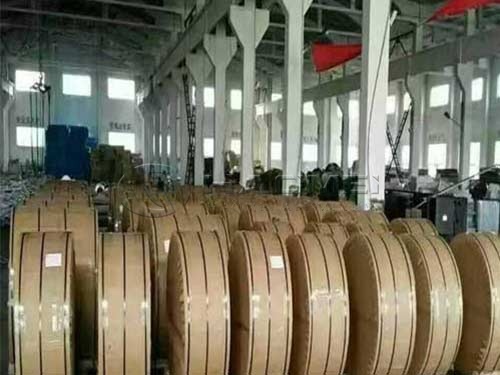
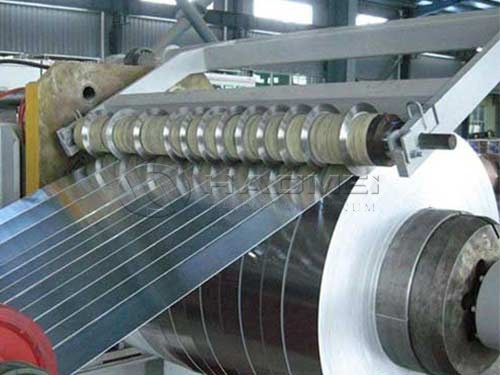
The brightest coil can lose value if it is poorly protected during transport, slitting, or fabrication. Mirror aluminum should be supplied with interleaving paper, protective film, moisture-resistant wrapping, reinforced edge protection, and stable coil packaging when required. Film selection must also match the subsequent process. Some films are designed for easy removal after bending, while others tolerate moderate stamping and forming without lifting.
Anodized mirror aluminum is often chosen for public lighting, kitchen lamps, bathroom fixtures, and humid environments because the oxide layer improves resistance to atmospheric corrosion. For indoor fixtures, polished bare aluminum can provide a cost-effective reflective solution when the product will remain protected inside a sealed lamp housing.
Applications Where Reflection Creates Value
In LED linear lamps, mirror aluminum strip coil increases the amount of light projected through the diffuser, allowing the fixture to produce more useful illumination from the same LED source. In downlights, the strip may be stamped or spun into reflector components that shape the beam angle. In commercial display lighting, a bright reflector helps focus light on products instead of wasting it inside the fitting.
Automotive interior lighting, solar lighting equipment, grow lights, emergency lamps, UV fixtures, and architectural illumination also use reflective aluminum surfaces. For stronger components that must resist deformation during fabrication, 3003 Aluminum Strip can be appropriate where mechanical stability carries more weight than maximum mirror brilliance.
Standards and Quality Conditions
Production can follow ASTM B209, EN 485, EN 573, JIS H4000, or GB/T 3880 requirements, depending on destination market and customer specifications. These standards address chemical composition, dimensional tolerances, mechanical properties, and delivery condition.
For reflector-grade coil, inspection should also cover surface brightness, coating uniformity, coil shape, thickness tolerance, width tolerance, edge quality, protective-film adhesion, and visible defect control. A practical purchase specification should state the required alloy, temper, thickness, width, surface finish, reflectance expectation, coil weight, packaging method, and final application.
Light reflector mirror aluminum strip coil performs best when specified as a complete optical material rather than a simple aluminum strip. When alloy chemistry, temper, surface treatment, and fabrication route are matched carefully, the coil becomes a durable reflector that helps lighting equipment deliver more controlled, efficient, and visually consistent illumination.