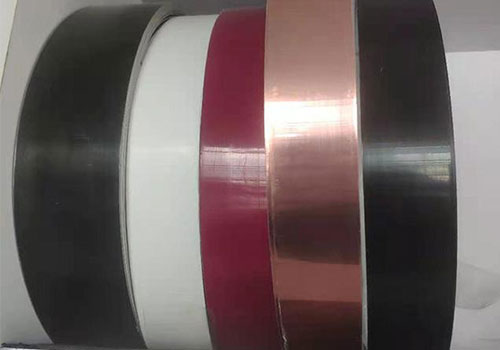
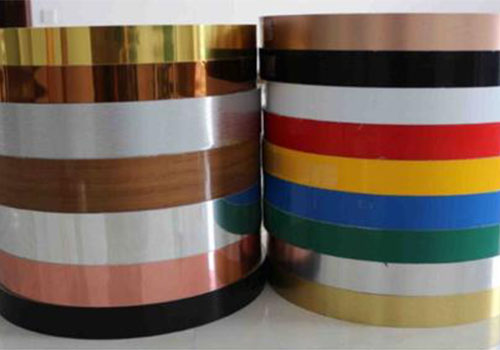
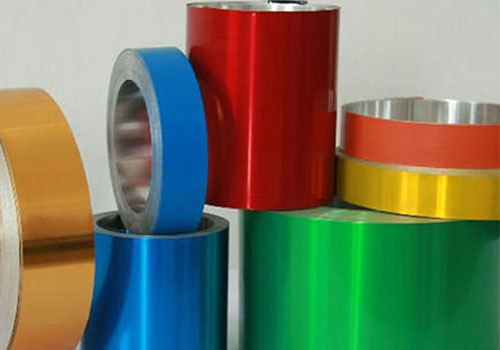
Wood Grain Colors Aluminum Strips 1060
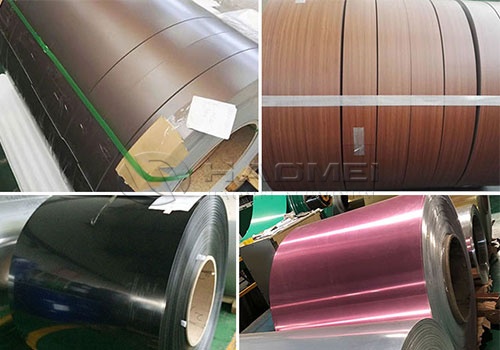
Wood Grain Colors Aluminum Strips 1060 bring the visual warmth of timber into applications where metal durability, light weight, and clean forming matter more than natural wood maintenance. Rather than trying to imitate lumber in a flat, artificial way, a well-finished 1060 aluminum strip uses grain direction, color depth, and surface texture to create a convincing decorative skin over a highly workable aluminum base.
This material is widely used for ceiling systems, wall cladding accessories, roller shutters, window trim, appliance panels, decorative edging, channel letters, and light-gauge fabricated profiles. It is especially suitable where humidity, insects, warping, or repeated cleaning would make real wood less practical.
Why 1060 Aluminum Is a Strong Base for Wood Grain Finishes
AA 1060 is a commercially pure aluminum alloy with a minimum aluminum content of 99.60%. Its low alloying content gives it excellent ductility and a stable surface for coating. For decorative strips, this matters because the substrate must bend, slit, roll-form, or stamp without creating visible cracks in the painted wood pattern.
Compared with harder aluminum grades, 1060 offers easier processing for lightweight architectural and decorative parts. It also provides good corrosion resistance in ordinary indoor and outdoor environments when paired with a properly selected coating system. The finished strip does not absorb moisture like wood, does not require repainting as frequently, and can maintain consistent color from one production batch to another when coating controls are carefully managed.
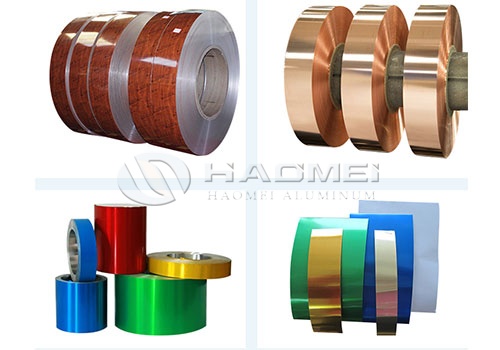
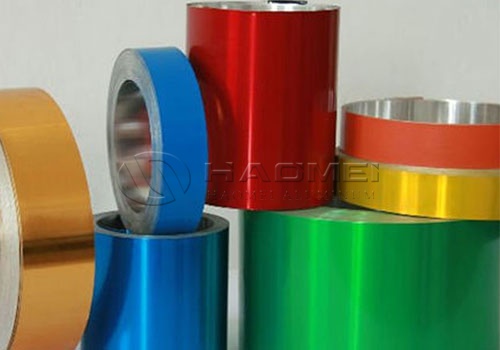
For projects requiring a broader selection of painted substrates, Color Coated Aluminum Strip options can provide solid colors, metallic finishes, stone patterns, and wood-look surfaces in different alloy grades and coating systems.
Wood Grain Color Technology and Surface Character
The wood effect is usually created through roller coating combined with thermal transfer printing, digital pattern printing, or specialized decorative film processes. A base coat establishes the background shade, such as oak, walnut, teak, cherry, maple, ash, or dark rosewood. The grain layer then adds linear detail, knots, tonal variation, and a more natural directional appearance.
The best wood grain colors are not simply dark lines printed on a brown surface. They balance contrast and irregularity. Excessively sharp grain can look repetitive after installation, while grain that is too soft may disappear under strong daylight. For long decorative strips, pattern continuity and grain direction should match the intended use. Vertical grain often suits wall battens and shutters, while horizontal grain can create a wider visual effect on ceilings or facade details.
Matte, satin, embossed, and lightly textured surfaces are available. A matte finish is often preferred for architectural trim because it reduces glare and produces a calmer wood-like appearance. Glossy wood grain can be used for interior accents, but it may reveal scratches more easily under direct lighting.
Common Product Parameters
Wood Grain Colors Aluminum Strips 1060 can be produced to suit coil-fed fabrication, press forming, or direct installation. Actual dimensions should be selected according to profile design, forming radius, coating type, and equipment capability.
| Parameter | Typical Range or Condition |
|---|---|
| Alloy | AA 1060 / EN AW-1060 |
| Aluminum content | 99.60% minimum |
| Temper | O, H14, H16, H18, H24 |
| Thickness | 0.20 mm to 2.00 mm |
| Width | 20 mm to 1,600 mm |
| Coil inner diameter | 150 mm, 300 mm, 405 mm, or customized |
| Coil outer diameter | According to weight and transport requirements |
| Surface treatment | Polyester coating, PVDF coating, wood grain transfer finish |
| Color options | Oak, walnut, teak, maple, cherry, ash, custom grain patterns |
| Film thickness | Commonly 18 to 25 microns for PE systems; higher for demanding service |
| Surface protection | Optional removable PE protective film |
H14 and H24 tempers are frequently selected where moderate rigidity and formability need to coexist. O temper provides the greatest softness for deep drawing or complicated bending, although it is more vulnerable to handling marks. H18 offers greater hardness for applications needing flatter strip behavior, but tight bends should be tested before volume fabrication.
Chemical Composition of 1060 Aluminum
The chemistry of 1060 aluminum is controlled to preserve the high-purity character that supports corrosion resistance, electrical conductivity, and easy forming. Values are normally expressed as maximum percentages unless stated otherwise.
| Element | Chemical Composition, % |
|---|---|
| Aluminum, Al | 99.60 min |
| Silicon + Iron, Si + Fe | 0.35 max |
| Copper, Cu | 0.05 max |
| Manganese, Mn | 0.03 max |
| Magnesium, Mg | 0.03 max |
| Zinc, Zn | 0.05 max |
| Titanium, Ti | 0.03 max |
| Other elements, each | 0.03 max |
| Other elements, total | 0.10 max |
Standards and Quality Conditions
Production and inspection can follow ASTM B209 for aluminum sheet and strip, EN 485 for wrought aluminum mechanical properties and tolerances, EN 573 for chemical composition, and GB/T 3880 where required by the customer or project market. Coating performance may also be evaluated through tests for film thickness, adhesion, pencil hardness, impact resistance, color consistency, bending performance, and resistance to salt spray or humidity.
For indoor decorative use, polyester coatings are often economical and visually effective. For outdoor trim exposed to strong sunlight, rain, pollution, or coastal air, a more durable fluorocarbon system may be appropriate. PVDF Coated Aluminum Strip is commonly considered for exterior conditions where color retention and weather resistance have greater importance.
Fabrication Notes for Better Finished Parts
Wood grain strip should be formed with attention to bend radius, tooling cleanliness, and grain direction. Tight corners can stress the coating, particularly on hard tempers or thick paint films. Protective film is helpful during punching, roll forming, and installation, but it should be removed within the recommended period to prevent adhesive residue.
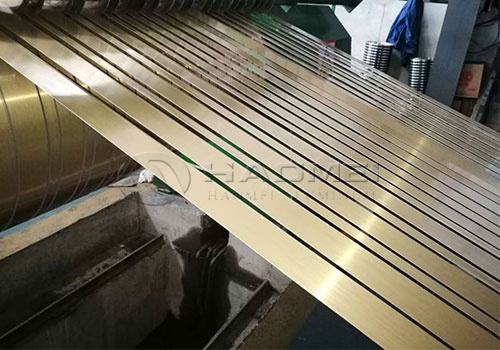
Slitting quality also affects the final appearance. Burr-free edges improve safety and allow cleaner assembly in trims, louvers, ceiling carriers, and shutter profiles. When matching several coils on one visible elevation, using material from the same coating batch helps control slight variations in tone and grain alignment.
Wood Grain Colors Aluminum Strips 1060 offer a practical design route for projects that need the atmosphere of wood without the weight, swelling, or upkeep associated with timber. With an appropriate temper, durable coating selection, and controlled fabrication process, the strip becomes more than a painted metal band: it becomes a dependable decorative building component.