Roll Shape Aluminum Coil Strips 1050
Roll shape aluminum coil strips 1050 are often chosen not because they are the hardest aluminum materials, but because they are among the most cooperative. This alloy bends smoothly, accepts deep forming, conducts heat and electricity efficiently, and can be supplied in coil form for continuous production. For manufacturers of insulation parts, lighting components, cookware accessories, cable wrapping, stamped pieces, and coated decorative products, 1050 aluminum strip offers a practical balance of purity, workability, and cost control.
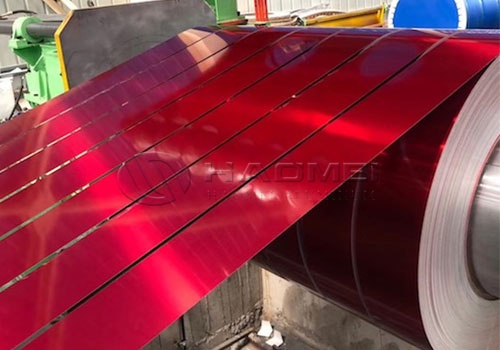
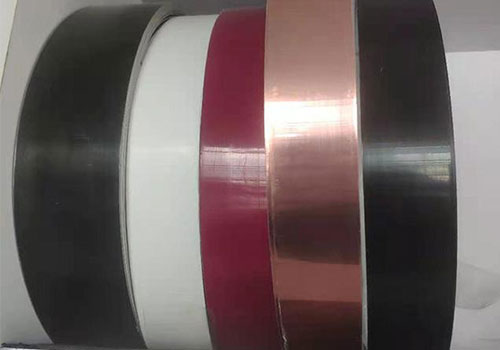
The term "roll shape" usually describes aluminum strip supplied as a wound coil. Instead of handling separate sheets, fabricators feed a continuous strip into roll-forming lines, punching equipment, slitting machines, press tools, or recoiling systems. This format reduces interruptions and supports stable processing speed. A properly slit 1050 aluminum coil strip also helps reduce burrs, edge cracking, and uneven forming during high-volume work.
Why 1050 Aluminum Performs Well in Coil Strip Form
1050 belongs to the 1000 series of commercially pure aluminum alloys. Its aluminum content is at least 99.5%, giving it excellent corrosion resistance and very good thermal and electrical conductivity. The alloy is not heat-treatable, so its strength is mainly adjusted through cold rolling and strain hardening rather than solution treatment or aging.
This behavior makes 1050 especially suitable where shaping matters more than structural strength. In an O temper, the strip is soft and highly ductile. It can be bent, folded, embossed, drawn, or wrapped around curved surfaces with a lower risk of fracture. In H14, H16, or H18 tempers, the material becomes firmer and offers improved resistance to deformation, which can be helpful for flat trims, reflective panels, general stamping, and roll-formed profiles.
From a production viewpoint, 1050 aluminum strip is often the material that keeps a line moving. It has a clean response to basic fabrication processes, including cutting, punching, bending, spinning, embossing, and adhesive lamination. It can also be anodized, painted, or coated when the project requires a decorative or protective surface.
Chemical Properties of 1050 Aluminum
The chemistry of 1050 aluminum is designed around high aluminum purity. Minor alloying elements are controlled at low levels to preserve conductivity, corrosion resistance, and forming behavior.
| Element | Standard Chemical Limit, % by Weight |
|---|---|
| Aluminum, Al | 99.50 min |
| Silicon, Si | 0.25 max |
| Iron, Fe | 0.40 max |
| Copper, Cu | 0.05 max |
| Manganese, Mn | 0.05 max |
| Magnesium, Mg | 0.05 max |
| Zinc, Zn | 0.07 max |
| Titanium, Ti | 0.05 max |
| Other elements, each | 0.03 max |
| Other elements, total | 0.03 max |
Actual mill certificates may show slightly different reporting formats according to the requested standard. For critical electrical, anodizing, or food-contact projects, buyers should specify the governing standard and require chemical test documentation with the coil.
Common Parameters for Roll Shape Aluminum Coil Strips 1050
A coil strip should be selected as a production input, not merely as a metal width and thickness. The coil inside diameter, strip edge condition, temper, surface quality, and winding direction can all affect equipment performance.
| Parameter | Common Supply Range or Condition |
|---|---|
| Alloy | 1050, 1050A, AA 1050 |
| Thickness | 0.20 mm to 3.00 mm |
| Strip width | 10 mm to 1,600 mm |
| Coil inner diameter | 150 mm, 300 mm, 405 mm, or 508 mm |
| Coil weight | Customized by handling capacity and order requirement |
| Surface | Mill finish, bright finish, stucco embossed, coated, or laminated |
| Edge condition | Mill edge, slit edge, deburred slit edge |
| Flatness | Controlled according to thickness, width, and processing need |
| Packaging | Eye-to-wall or eye-to-sky, moisture-proof export packing |
For narrow strips used on automated lines, edge quality deserves close attention. A slit edge that is too sharp can damage films, gloves, guide rollers, or tooling. A poorly controlled coil may also create telescoping, loose winding, or unstable feeding. These details are often more important to daily production than the alloy name printed on the label.
Alloy Tempers and Mechanical Behavior
Because 1050 is non-heat-treatable, temper selection is the main method for matching the strip to its final forming operation. Softer tempers support complicated bends and shaping. Harder tempers suit applications needing greater stiffness.
| Temper | Typical Condition | Typical Tensile Strength | Forming Character |
|---|---|---|---|
| O | Fully annealed | 65-95 MPa | Excellent ductility for deep drawing and bending |
| H12 | Quarter hard | 85-115 MPa | Easy forming with slightly higher stiffness |
| H14 | Half hard | 105-145 MPa | Popular for general forming and panel work |
| H16 | Three-quarter hard | 120-160 MPa | Better rigidity, moderate forming ability |
| H18 | Full hard | 135 MPa and above | Suitable for flatter, less demanding bends |
Mechanical values vary with gauge, production route, and applicable standard. A thin strip can show different elongation results from a heavier gauge even when both carry the same temper designation. When parts require a tight bend radius, it is wise to validate the chosen temper through a sample run before full-scale production.
Standards and Quality References
Roll shape aluminum coil strips 1050 can be produced in accordance with several recognized material standards. The required document depends on the destination market and intended application.
Common references include ASTM B209 for aluminum sheet and strip, EN 485 for tolerances and mechanical properties of wrought aluminum products, EN 573 for aluminum alloy chemical composition, and AA 1050 designation practices. In European specifications, 1050A may be shown as EN AW-1050A. Buyers can also request inspection documents such as EN 10204 3.1 certificates, dimensional inspection reports, coil weight records, and surface-quality confirmation.
For painted or decorative applications, the base metal can be converted into Coated Aluminum Strip with polyester, epoxy, or other functional coating systems. Coating thickness, gloss level, adhesion, flexibility, and color tolerance should be agreed before production, particularly for visible architectural or appliance-facing parts.
Surface Choices That Expand the Use of 1050 Strip
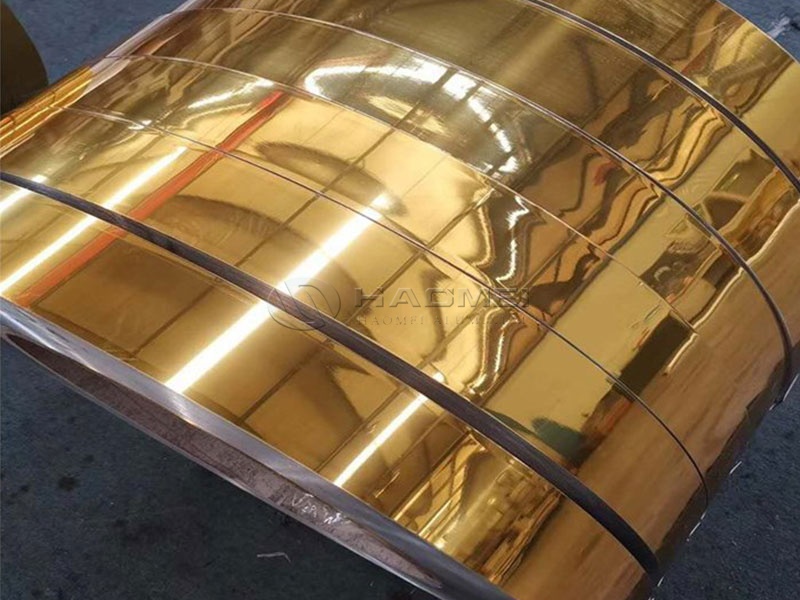
Mill-finish 1050 aluminum is suitable for industrial covers, insulation jackets, heat-transfer components, and general fabrication. Bright-finish material can improve light reflection for lampshades, reflectors, and decorative parts. Stucco embossed strip is frequently used where a textured surface improves appearance or reduces visible handling marks.
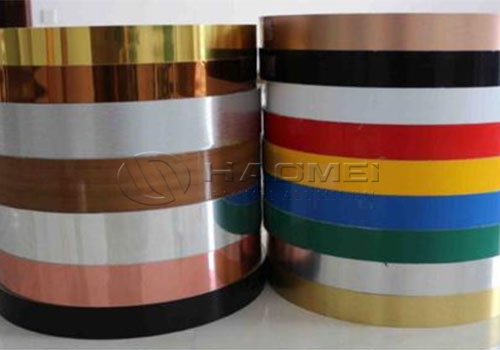
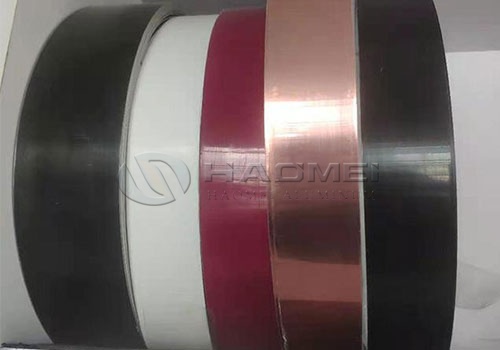
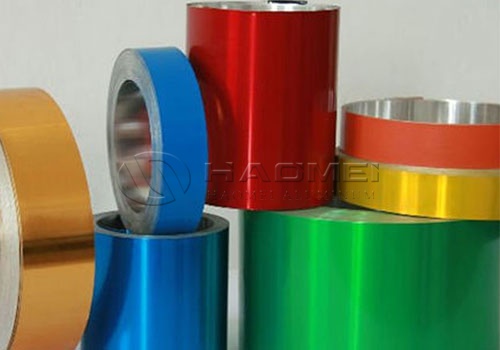
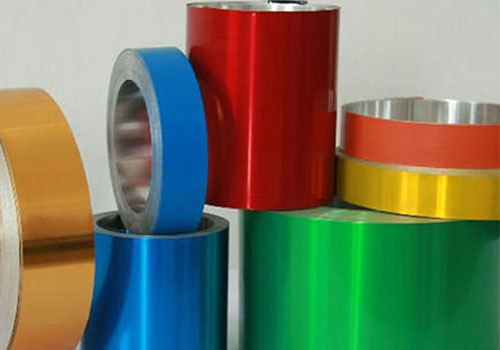
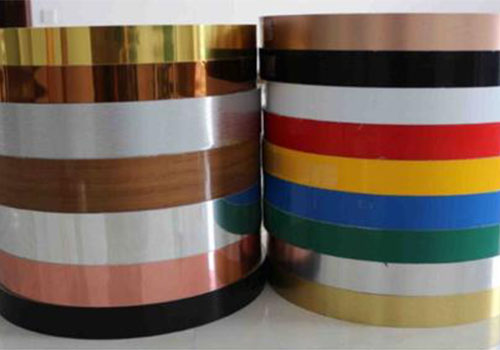
For branding and decorative work, Color Coated Aluminum Strip based on 1050 can provide gold, white, black, red, and other color options. The soft substrate helps coating lines and forming operations work together, provided the paint system has sufficient flexibility for the planned bend radius.
Practical Selection for Buyers
The best 1050 aluminum coil strip is not always the softest or the cheapest option. It is the one matched to the production method. Deep drawing favors O temper. Ordinary folded profiles often perform well in H12 or H14. Flat trims and stiff covers may benefit from H16 or H18. For continuous roll forming, confirm coil direction, inside diameter, maximum coil weight, strip camber tolerance, and edge requirement before placing an order.
1050 roll shape aluminum coil strips bring high-purity aluminum into a format made for speed. With the right temper, dimensions, surface, and coil control, they become a dependable material for efficient conversion from metal coil to finished part.