PE Coating Prepainted Aluminum Strip Coil
PE Coating Prepainted Aluminum Strip Coil: Color Applied Before the Product Takes Shape
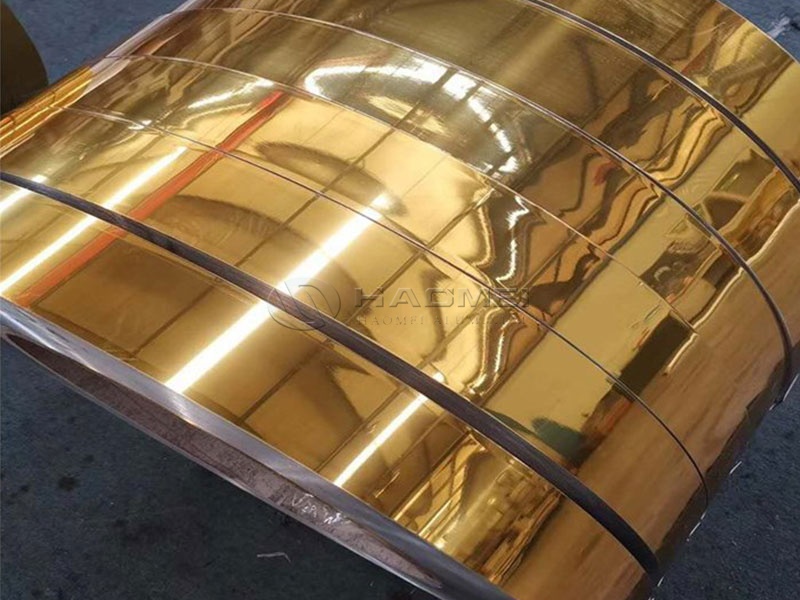
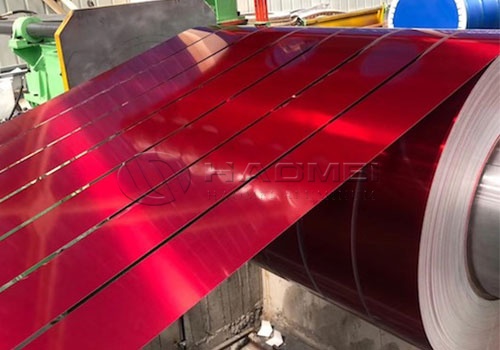
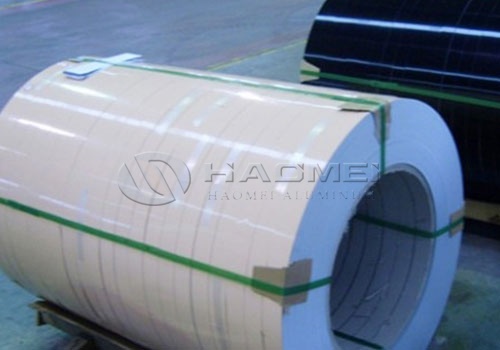
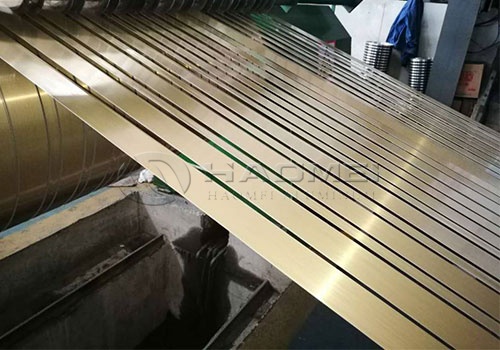
PE coating prepainted aluminum strip coil is more than aluminum with a decorative surface. It is a processed material designed to save downstream manufacturers time, labor, paint consumption, and quality-control effort. Instead of painting a finished part after bending, stamping, or roll forming, the aluminum strip is coated continuously while it is still in coil form. The result is a clean, uniform surface ready for fabrication.
This production approach changes the role of the material. The strip is not merely a substrate; it becomes a finished visual layer, a corrosion barrier, and a forming material at the same time. It is widely used for ceiling systems, shutter components, insulation cladding, decorative trim, channel letters, appliances, cable wrapping, lighting parts, and other products where appearance and efficient processing must coexist.
What PE Coating Means in Practical Use
PE refers to polyester coating, a commonly used organic coating system for indoor and moderate outdoor environments. It provides a smooth painted appearance, broad color selection, good flexibility, and dependable adhesion to properly pretreated aluminum.
A typical prepainted coil structure contains several working layers. The aluminum base provides light weight and formability. Chemical pretreatment improves coating adhesion and supports corrosion resistance. A primer helps connect the metal surface with the finish layer. The PE topcoat supplies color, gloss, and surface protection. A back coat may be applied to the reverse side when the application requires extra protection or a finished appearance on both faces.
For projects exposed to severe ultraviolet radiation, salt spray, chemical fumes, or long-term exterior weathering, a fluorocarbon system may be more appropriate. In those situations, PVDF Coated Aluminum Strip can offer stronger weather resistance. PE coating remains a practical choice when cost control, indoor durability, color consistency, and easy fabrication are the main concerns.
Typical Product Parameters
PE coating prepainted aluminum strip coil can be tailored according to the final part, forming method, and required finish. Common commercial parameters are shown in the table.
| Item | Common Range or Condition |
|---|---|
| Alloy | 1050, 1060, 1070, 1100, 3003, 3004, 3105, 5052 |
| Temper | O, H12, H14, H16, H18, H22, H24, H26, H32, H34 |
| Thickness | 0.20 mm to 1.50 mm |
| Width | 20 mm to 1,600 mm |
| Coil inner diameter | 150 mm, 300 mm, 405 mm, 505 mm, or customized |
| Coil weight | Usually 0.5 to 5 tons, depending on handling needs |
| PE topcoat thickness | Usually 15 to 25 microns |
| Back coat thickness | Usually 5 to 10 microns |
| Surface finish | Glossy, matte, semi-gloss, textured, embossed, or smooth |
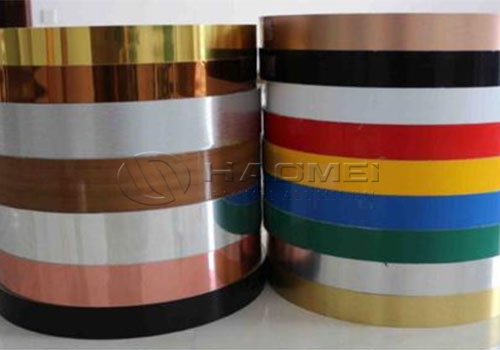
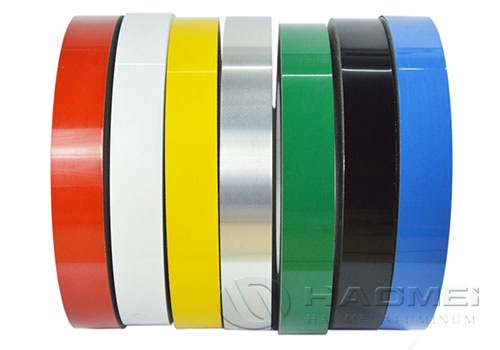
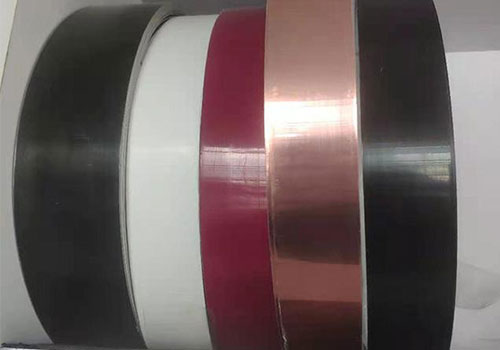
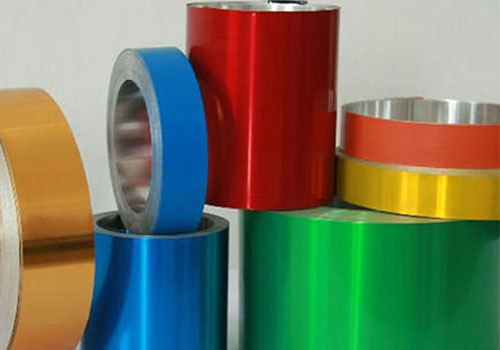
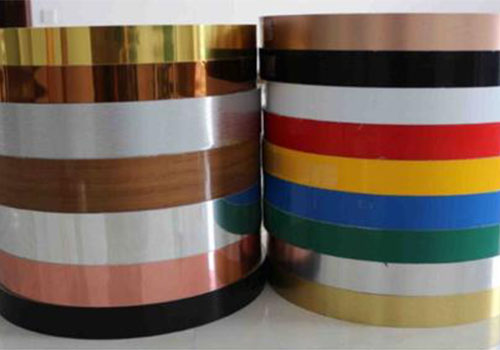
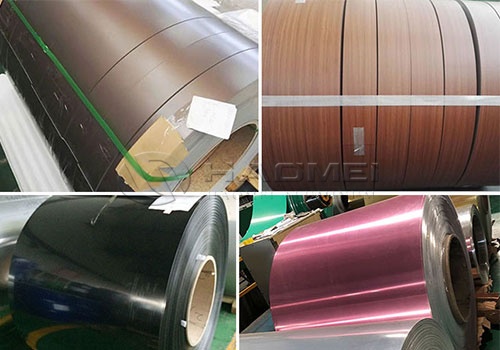
| Color | RAL colors, custom samples, wood grain, metallic, and special finishes |
| Film protection | Optional removable PE protective film |
Thickness and temper should be selected together rather than separately. A thin strip in H18 temper may provide better stiffness for a flat decorative profile, but it has limited deep-bending capability. An O-temper or H24 strip has better ductility and is more suitable for tight radii, roll forming, pressing, and curved components.
Alloy and Temper Selection
The 1000 series is valued for high aluminum content, bright surface quality, and excellent workability. Alloys such as 1050 and 1060 are commonly selected for decorative strips, lighting reflectors, insulation accessories, and non-load-bearing profiles.
The 3000 series adds manganese to improve strength while retaining practical forming performance. Alloy 3003 is frequently used where a stronger painted strip is needed for ceilings, shutters, appliance panels, roofing accessories, and general architectural trim. Alloy 3105 is also widely used in coated coil applications because it balances formability, strength, and paint adhesion.
The 5000 series, particularly 5052, is suitable for applications requiring greater strength and corrosion resistance. It can be considered for marine-adjacent environments, transportation components, and formed parts exposed to more demanding service conditions.
| Alloy | Main Alloying Element | Typical Strength Level | Suitable Applications |
|---|---|---|---|
| 1050 / 1060 | Aluminum | Low to medium | Decorative strips, lighting, cladding accessories |
| 1100 | Aluminum | Low to medium | Formed trim, signs, general painted parts |
| 3003 | Manganese | Medium | Ceiling systems, shutters, appliance panels |
| 3105 | Manganese | Medium | Building trim, siding accessories, formed profiles |
| 5052 | Magnesium | Medium to high | Transport, humid environments, stronger components |
For products that require color variety and efficient roll forming, Color Coated Aluminum Strip provides a practical material route with multiple finish options.
Chemical Composition Reference
The chemical composition of the aluminum substrate influences corrosion behavior, mechanical strength, and forming response. Values shown are typical maximum limits or nominal ranges, expressed as percentage by weight.
| Alloy | Si | Fe | Cu | Mn | Mg | Zn | Ti | Al |
|---|---|---|---|---|---|---|---|---|
| 1050 | 0.25 | 0.40 | 0.05 | 0.05 | 0.05 | 0.05 | 0.03 | Balance |
| 1060 | 0.25 | 0.35 | 0.05 | 0.03 | 0.03 | 0.05 | 0.03 | Balance |
| 1100 | Si + Fe 0.95 max | - | 0.05 to 0.20 | 0.05 max | - | 0.10 max | - | Balance |
| 3003 | 0.60 max | 0.70 max | 0.05 to 0.20 | 1.0 to 1.5 | - | 0.10 max | - | Balance |
| 3105 | 0.60 max | 0.70 max | 0.30 max | 0.30 to 0.80 | 0.20 to 0.80 | 0.40 max | 0.10 max | Balance |
| 5052 | 0.25 max | 0.40 max | 0.10 max | 0.10 max | 2.2 to 2.8 | 0.10 max | - | Balance |
Standards and Quality Conditions
PE coating prepainted aluminum strip coil may be produced in accordance with ASTM B209, EN 485, EN 573, GB/T 3880, JIS H4000, or customer-specific technical agreements. The suitable standard depends on the destination market, alloy, dimensional tolerance, and inspection method.
Coating quality is usually assessed through film thickness, color difference, gloss, adhesion, pencil hardness, bend performance, impact resistance, solvent resistance, and surface appearance. For normal production, the painted strip should show consistent color from coil to coil, no visible pinholes, no coating cracks after agreed bending tests, and no exposed aluminum at trimmed edges beyond acceptable processing limits.
A reliable coil also needs stable flatness and controlled edge condition. Burrs, camber, telescoping, oil marks, and uneven tension can interrupt automatic lines even when the paint itself looks good. For this reason, coil winding quality matters as much as surface color.
Processing Guidance for Better Results
PE-coated aluminum strip is generally compatible with slitting, stamping, bending, punching, roll forming, and moderate drawing. The most common processing concern is damage to the painted surface. Clean rollers, polished dies, correct clearance, and proper protective film selection reduce scratches during fabrication.
Bending should match the selected temper. Softer material accepts smaller bend radii, while harder tempers require more generous radii to avoid coating stress and substrate cracking. It is also advisable to test the actual color and thickness before large-scale production, especially when the design includes sharp corners, embossed patterns, or high-speed roll forming.
PE coating prepainted aluminum strip coil delivers its best value when the coating system, alloy, temper, and fabrication method are chosen as one package. With the right match, manufacturers gain a material that arrives ready to form, ready to display, and ready to support consistent finished-product quality.