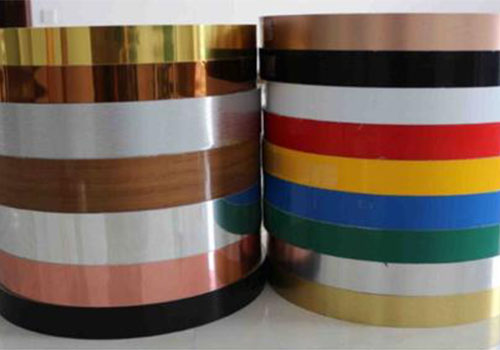
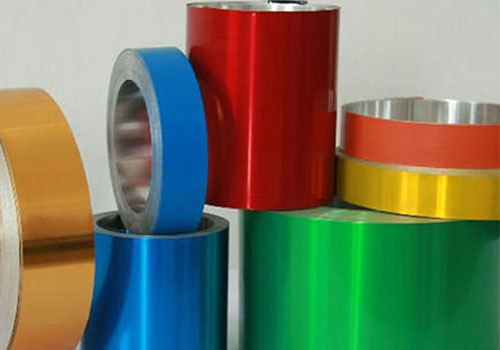
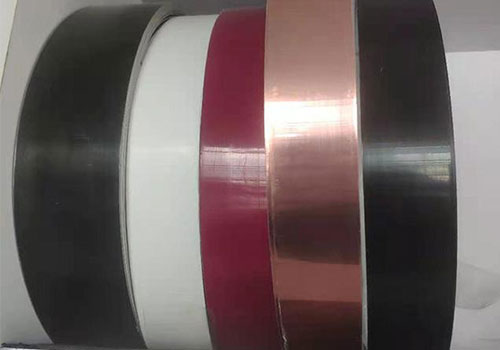
PVDF Coated Aluminum Strip
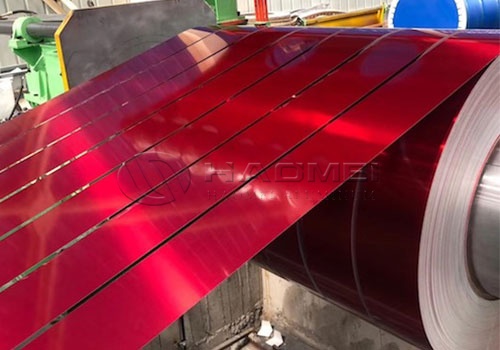
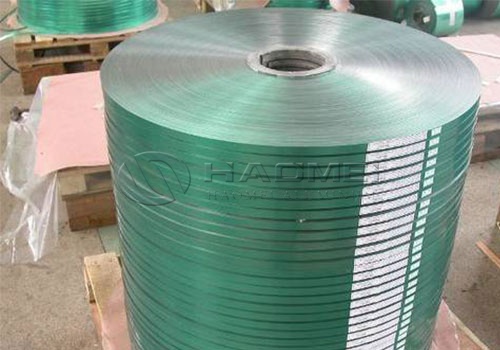
PVDF coated aluminum strip is a pre-finished aluminum material coated with polyvinylidene fluoride resin, a fluorocarbon coating system known for long outdoor life, excellent color retention, and strong resistance to ultraviolet radiation. It is produced by cleaning, pretreating, primer coating, PVDF top coating, baking, cooling, and precision slitting aluminum coil into narrow strip widths.
For customers who need a material that combines light weight, clean appearance, corrosion resistance, and easy fabrication, PVDF coated aluminum strip is a practical choice. It is widely used in exterior building trim, ceiling systems, rainwater goods, blinds, composite panel edges, signage, insulation jacketing, and other products exposed to sunlight, humidity, wind, and temperature variation.
What Makes PVDF Coating Different
PVDF coating contains fluorocarbon resin with very stable carbon-fluorine bonds. This chemical structure helps the coating resist chalking, fading, cracking, and erosion caused by weather. Compared with ordinary polyester coating, PVDF coating is better suited for harsh outdoor environments, especially coastal areas, high-rise buildings, industrial zones, and regions with intense sunlight.
A typical PVDF coating system uses a primer plus topcoat structure. For demanding architectural use, a three-coat or four-coat system may also be selected, especially when metallic colors, pearlescent finishes, or enhanced protection are required. The coating bonds tightly to the aluminum surface after chemical pretreatment and high-temperature curing, forming a smooth, dense, and flexible film.
Customers already familiar with Color Coated Aluminum Strip will notice that PVDF grades are designed for longer outdoor service and better color stability where appearance matters for many years.
Main Features Customers Care About
PVDF coated aluminum strip is valued because it keeps the advantages of aluminum while adding a highly durable surface. The base metal provides low weight and good formability, while the coating provides color, protection, and surface performance.
| Feature | Customer Benefit |
|---|---|
| Long weather resistance | Suitable for exterior parts exposed to sun, rain, and temperature cycling |
| Excellent color retention | Reduces visible fading on building facades, trims, and outdoor products |
| Good corrosion resistance | Helps protect the aluminum base from moisture, salt, and industrial atmosphere |
| Smooth coated surface | Creates a clean and modern appearance for decorative components |
| Strong flexibility | Can be slit, bent, roll formed, and stamped with proper tooling |
| Light weight | Easier transport, installation, and handling than many steel alternatives |
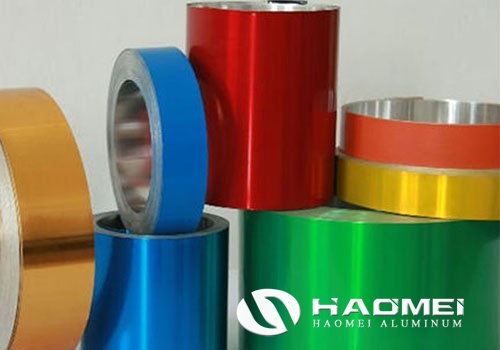
| Wide color selection | Supports solid, metallic, matte, glossy, and customized finishes |
| Low maintenance | Surface can be cleaned easily under normal service conditions |
The coating is not simply decorative. It acts as a protective barrier while allowing the strip to be processed into final parts. Good coating adhesion is especially important because many aluminum strip applications require bending or roll forming after coating.
Typical Product Specifications
PVDF coated aluminum strip can be supplied in different alloys, tempers, thicknesses, widths, and coating structures according to the final application. The table gives common reference ranges used in the market.
| Parameter | Common Range or Option |
|---|---|
| Base alloy | 1100, 3003, 3004, 3105, 5005, 5052 |
| Temper | O, H14, H16, H24, H26, H32 |
| Thickness | 0.20 mm to 2.00 mm, with project-specific options |
| Strip width | Narrow slit widths to several hundred millimeters |
| Coating type | Two-coat PVDF, three-coat PVDF, special finish systems |
| Top coating thickness | Usually 20 microns to 30 microns or customized |
| Back coating | Service coating, primer, or protective back coat |
| Surface finish | Glossy, matte, satin, metallic, wood grain style on request |
| Color matching | RAL, Pantone, custom sample matching |
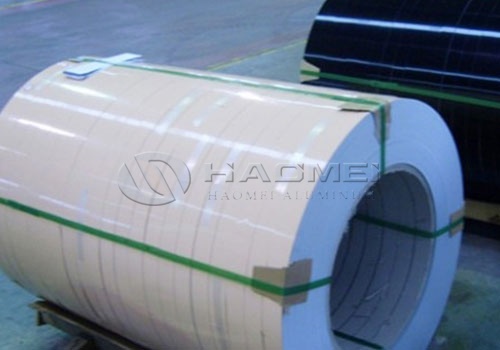
| Coil ID | Commonly 300 mm, 405 mm, 505 mm, or 508 mm |
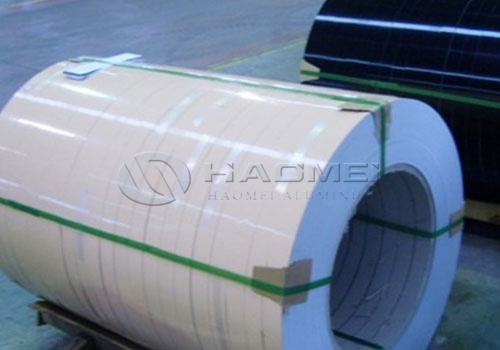
| Packaging | Eye-to-wall or eye-to-sky coil packaging with moisture protection |
For exterior architectural use, 3003, 3004, 3105, and 5005 alloys are frequently selected because they provide a balance of formability, strength, and corrosion resistance. For deeper forming or soft bending, temper selection must be reviewed carefully.
Chemical Composition Reference
The base aluminum alloy has a strong influence on mechanical behavior and forming performance. The following table shows typical chemical composition ranges for common alloys used in PVDF coated strip. Actual values should follow the applicable standard and mill certificate.
| Alloy | Si | Fe | Cu | Mn | Mg | Zn | Al |
|---|---|---|---|---|---|---|---|
| 1100 | Si + Fe <= 0.95 | Si + Fe <= 0.95 | 0.05-0.20 | <= 0.05 | <= 0.05 | <= 0.10 | >= 99.00 |
| 3003 | <= 0.60 | <= 0.70 | 0.05-0.20 | 1.00-1.50 | - | <= 0.10 | Balance |
| 3004 | <= 0.30 | <= 0.70 | <= 0.25 | 1.00-1.50 | 0.80-1.30 | <= 0.25 | Balance |
| 3105 | <= 0.60 | <= 0.70 | <= 0.30 | 0.30-0.80 | 0.20-0.80 | <= 0.40 | Balance |
| 5005 | <= 0.30 | <= 0.70 | <= 0.20 | <= 0.20 | 0.50-1.10 | <= 0.25 | Balance |
| 5052 | <= 0.25 | <= 0.40 | <= 0.10 | <= 0.10 | 2.20-2.80 | <= 0.10 | Balance |
Performance in Real Service
In outdoor use, the biggest challenge for coated metal is long exposure to sunlight, rainwater, dust, pollution, and thermal movement. PVDF coating is chosen because it remains stable under these conditions. A well-produced PVDF Coated Aluminum Strip can maintain a clean surface and stable appearance far longer than standard decorative coatings.
| Performance Item | Typical Expectation |
|---|---|
| UV resistance | Excellent for long-term exterior exposure |
| Salt spray resistance | Good to excellent, depending on pretreatment and coating thickness |
| Coating adhesion | Strong adhesion after proper pretreatment and curing |
| Pencil hardness | Commonly HB to 2H, depending on coating design |
| T-bend performance | Suitable for bending and roll forming when matched with correct alloy and temper |
| Gloss retention | Stronger than standard polyester coating in outdoor use |
| Cleaning behavior | Smooth surface helps reduce dirt attachment |
In practical production, performance depends not only on coating resin but also on pretreatment quality, oven curing control, coating thickness uniformity, slitting quality, and packaging. Burr control is important for narrow strip because sharp edges can affect downstream forming and assembly.
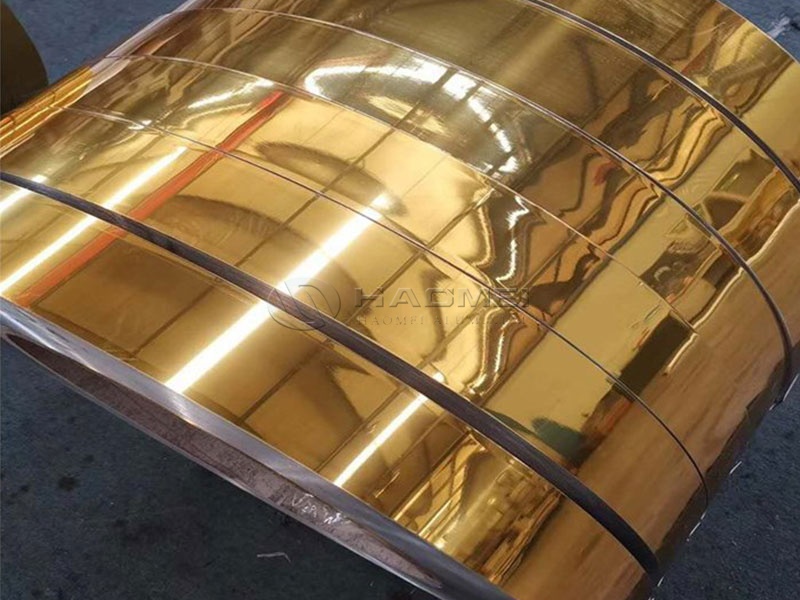
Applications of PVDF Coated Aluminum Strip
PVDF coated aluminum strip is used wherever a narrow, durable, attractive metal surface is required. Its combination of corrosion resistance and workability makes it suitable for both visible and functional parts.
Building decoration is one of the largest application areas. The strip can be formed into edge trims, ceiling strips, wall cladding accessories, window and door profiles, curtain wall parts, and decorative lines. Because exterior color consistency is important on buildings, PVDF coating helps maintain a uniform appearance over time.
Rainwater systems also benefit from PVDF coated strip. Gutters, downspouts, flashing, roof edge components, and drainage accessories need materials that can resist moisture and sunlight. Aluminum strip reduces weight, while PVDF coating improves service life and reduces repainting needs.
For signage and advertising panels, PVDF coated aluminum strip provides a flat, colorful, weather-resistant surface. It is suitable for borders, frames, letter edges, and outdoor display components. Metallic colors can create a premium visual effect without adding heavy material weight.
In HVAC and insulation systems, coated aluminum strip may be used for jacketing bands, protective wrapping edges, duct accessories, and thermal insulation covers. The coating protects the surface from industrial atmosphere and makes the installed system look cleaner.
Other uses include roller shutter parts, venetian blind components, lighting reflectors with special colors, vehicle decorative strips, household appliance trim, and prefabricated modular building components.
Selection Guidance
Choosing the right PVDF coated aluminum strip starts with the environment and forming method. Outdoor coastal projects may require thicker coating, better pretreatment, and careful alloy selection. Highly formed parts need softer temper and verified bend performance. Decorative products need strict color control, gloss control, and surface inspection.
For high-volume production, customers should confirm strip width tolerance, thickness tolerance, coil weight, inner diameter, color difference tolerance, protective film requirements, and edge condition. If the material will be roll formed, trial production is recommended before mass purchasing.
The best result comes from matching coating structure, base alloy, temper, and final part design. When these elements are properly selected, PVDF coated aluminum strip delivers a reliable balance of beauty, durability, processing efficiency, and long-term value.