1100 Aluminium Strip Tape Band
1100 aluminium strip tape band is often selected not because it is the strongest aluminium alloy, but because it behaves well where many materials become difficult to control. It bends smoothly, conforms to curved surfaces, resists everyday corrosion, reflects heat, and conducts electricity and heat efficiently. These characteristics make it a practical base material for aluminium tape, insulation banding, cable shielding, HVAC wrapping, building trim, and lightweight fabricated components.
The defining feature of 1100 aluminium is its high-purity composition. With aluminium content of at least 99.0%, this alloy belongs to the commercially pure aluminium family. It has no major alloying additions intended to maximize strength. Instead, its value lies in clean forming behavior, stable surface quality, and dependable performance in processes such as slitting, stamping, folding, embossing, laminating, and adhesive coating.
More than a tape backing
When made into tape band, 1100 aluminium strip acts as the functional skin of the finished product. The adhesive may provide bonding, but the aluminium layer supplies heat reflection, vapor resistance, flame-resistant metal coverage, electrical continuity, and mechanical protection. This distinction matters when specifying material. Adhesive type determines tack and temperature endurance, while the 1100 strip determines conformability, tear behavior, thickness consistency, and long-term metallic performance.
For duct sealing and thermal insulation joints, soft 1100 strip can follow seams, elbows, pipe bends, and irregular surfaces without excessive springback. In cable and communication products, the material can serve as a shielding layer or protective wrap because aluminium provides electrical conductivity and electromagnetic shielding potential. In lighting, heat-transfer assemblies, and reflector applications, its naturally bright surface helps manage heat and light.
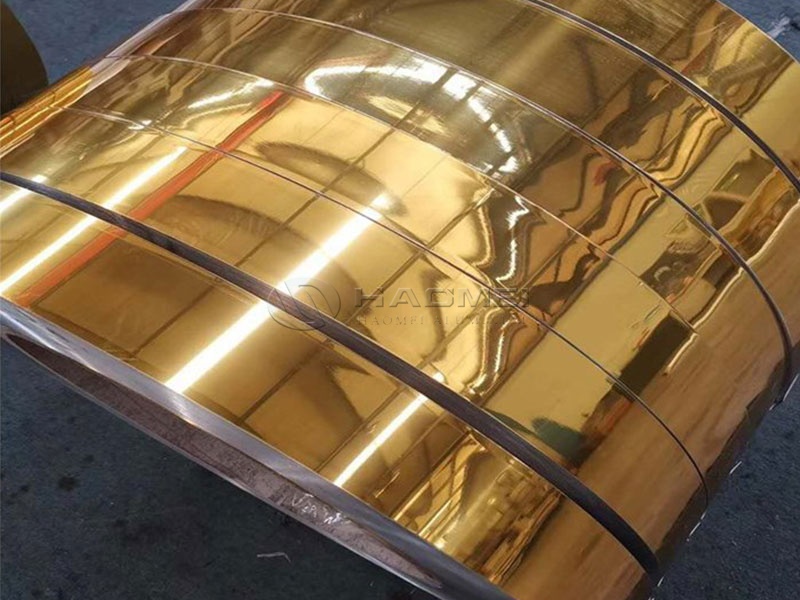
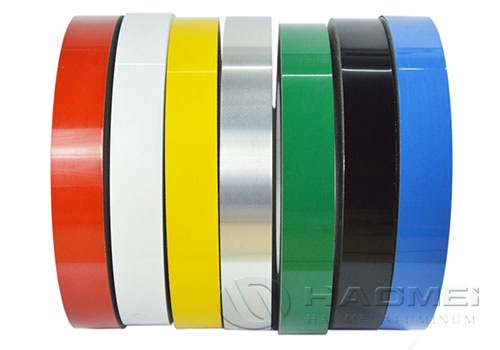
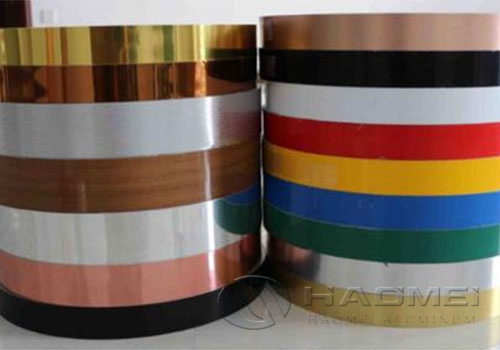
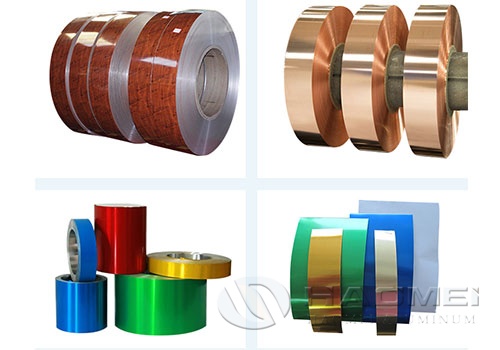
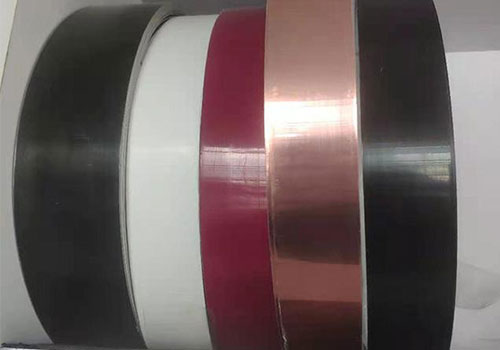
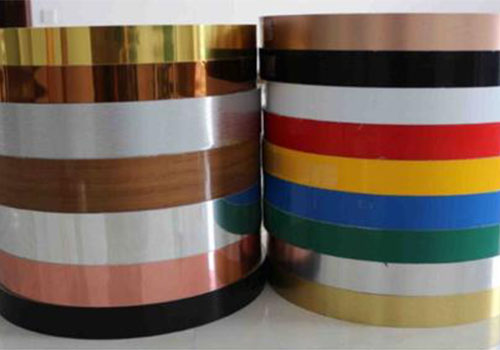
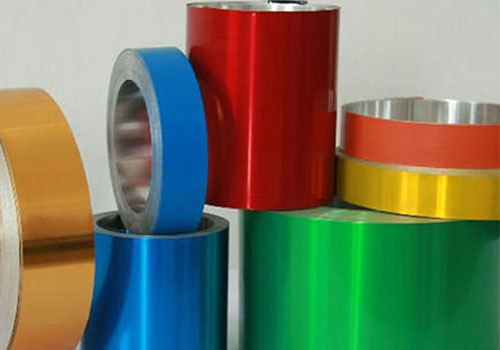
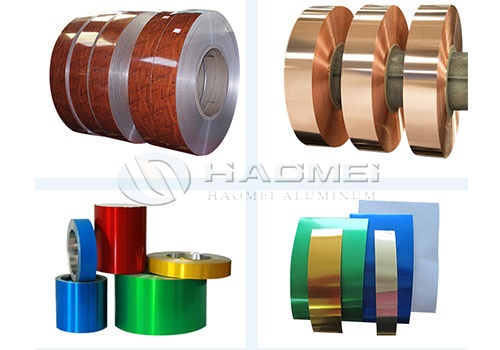
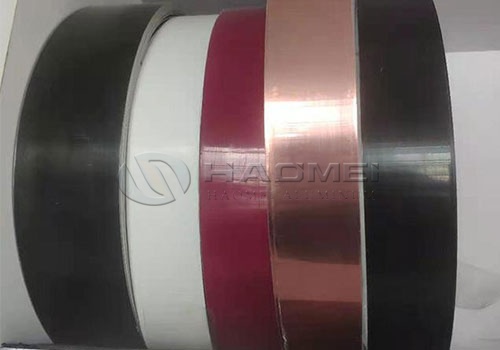
Where an exposed decorative surface is needed, the strip can also be painted, lacquered, embossed, or laminated. A suitable Color Coated Aluminum Strip option adds visual identification and surface protection for trim, appliance parts, packaging bands, and construction accessories.
Typical material parameters
1100 aluminium strip tape band is normally supplied in coils, slit coils, or small rolls prepared for tape conversion. Final dimensions should be matched to the adhesive coating line, forming method, and end-use environment.
| Parameter | Common Supply Range | Practical Significance |
|---|---|---|
| Alloy | AA 1100 / EN AW-1100 | Commercially pure aluminium with high formability |
| Thickness | 0.02-3.00 mm | Thin gauges suit foil tape; heavier gauges suit banding and fabrication |
| Width | 5-1,600 mm | Narrow slit widths are common for tape and edge band uses |
| Coil inner diameter | 150 mm, 300 mm, 505 mm or customized | Must match processing and rewinding equipment |
| Surface | Mill finish, bright, brushed, coated, embossed, laminated | Chosen for adhesion, appearance, reflectivity or grip |
| Edge condition | Slit edge, deburred edge, mill edge | Smooth edges support safe handling and stable tape winding |
| Flatness | Controlled according to thickness and width | Important for coating, laminating and precision slitting |
Thickness tolerance, width tolerance, coil weight, burr limits, oiling level, and surface cleanliness should be confirmed before production. For adhesive tape, a clean and stable surface is especially important. Excess rolling oil, deep scratches, dents, or edge waves can reduce coating consistency and create defects during winding.
Chemical composition of 1100 aluminium
The chemistry of 1100 is intentionally simple. Aluminium remains the dominant element, while iron and silicon are controlled as combined impurities. Copper is present in a small range and supports modest strength without changing the alloy's highly workable character.
| Element | Chemical Content, % by Weight |
|---|---|
| Aluminium, Al | 99.00 min |
| Silicon + Iron, Si + Fe | 0.95 max |
| Copper, Cu | 0.05-0.20 |
| Manganese, Mn | 0.05 max |
| Zinc, Zn | 0.10 max |
| Other elements, each | 0.05 max |
| Other elements, total | 0.15 max |
This composition supports excellent corrosion resistance in normal atmospheric conditions. However, aluminium can be affected by strongly alkaline chemicals, aggressive chloride exposure, and galvanic contact with more noble metals in wet environments. When tape band will operate outdoors, near salt spray, or in chemical processing areas, coating selection and joint design deserve the same attention as alloy selection.
Temper is the control dial for performance
1100 is not heat-treatable for strengthening. Its mechanical properties are adjusted mainly through cold rolling and annealing. In other words, temper controls the balance between softness and strength.
| Temper | General Condition | Typical Use in Tape Band and Strip Work |
|---|---|---|
| O | Fully annealed, soft | Deep forming, wrapping, curved duct seams, flexible foil tape |
| H12 / H14 | Light to half hard | General tape backing, trim, moderate bending and slitting |
| H16 / H18 | Harder cold-worked condition | Straight banding, stiff covers, applications needing improved dent resistance |
| H19 | Extra hard | Thin, rigid strip where forming demand is minimal |
O temper is frequently preferred for highly conformable aluminium tape because it bends closely around corners and uneven surfaces. H14 is a common middle ground when the strip must retain a cleaner profile after handling. Hard tempers are useful when the band should stay straight, but they are less suitable for tight-radius forming.
Standards and inspection references
Implementation standards vary by project location and customer specifications. Common reference documents for 1100 aluminium strip include ASTM B209 for aluminium and aluminium-alloy sheet and plate, EN 485 for mechanical properties and tolerances of wrought aluminium products, EN 573 for alloy designation and chemical composition, and GB/T 3880 for aluminium sheet and strip products.
For tape-converting material, purchase requirements may additionally define tensile strength, elongation, surface tension, coating adhesion, pinhole limits, burr height, and coil winding quality. A material certificate should identify alloy, temper, dimensions, heat or batch traceability, chemical composition, and applicable inspection standard.
Functions across different industries
In HVAC systems, 1100 aluminium strip tape band can cover insulation joints, protect vapor barriers, and provide a reflective exterior layer. Its soft temper helps installers achieve close contact along duct seams and pipe insulation.
In electrical uses, thin strip can support shielding wraps, transformer-related components, cable constructions, and conductive barriers. Aluminium has lower electrical conductivity than copper, but its low density makes it an efficient alternative where weight, width, and cost balance are important.
In packaging and appliances, 1100 strip offers a clean metallic finish and easy fabrication. It can be folded into edge bands, formed into tags, wrapped around products, or laminated with paper, plastic film, foam, or adhesive layers. For demanding exterior durability, a PVDF Coated Aluminum Strip can provide enhanced weather resistance while retaining the lightweight advantages of aluminium.
Selecting the right strip condition
A reliable specification starts with the application rather than the coil alone. Choose O temper when flexibility and close conformity matter most. Choose H14 when the tape or band needs a more stable shape. Select thickness based on handling, puncture resistance, and required flexibility; thinner material follows contours more easily, while thicker material provides stronger physical protection.
For adhesive tape conversion, confirm whether the surface requires chemical pretreatment, primer, lacquer, or laminate compatibility. For construction and insulation use, consider moisture exposure, outdoor ultraviolet resistance, and contact with dissimilar metals. For electrical work, confirm conductivity requirements and whether oxide removal or conductive adhesive is necessary.
1100 aluminium strip tape band brings a quiet but valuable form of performance: it adapts. Its purity supports smooth processing, its temper can be tuned for flexible or firmer handling, and its surface can be transformed for sealing, shielding, insulation, decoration, or protection. That adaptability makes 1100 strip a dependable material for products that must be light, workable, and ready for real installation conditions.