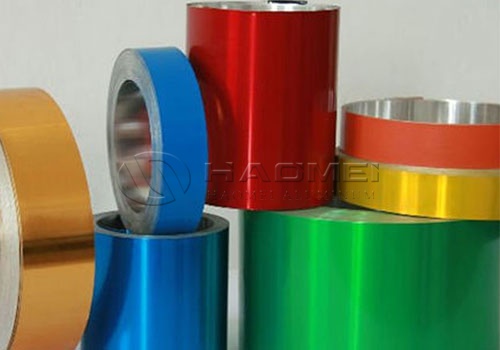
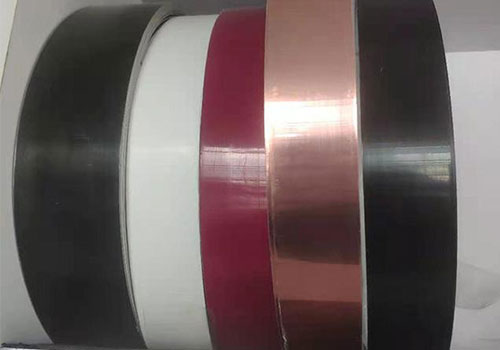
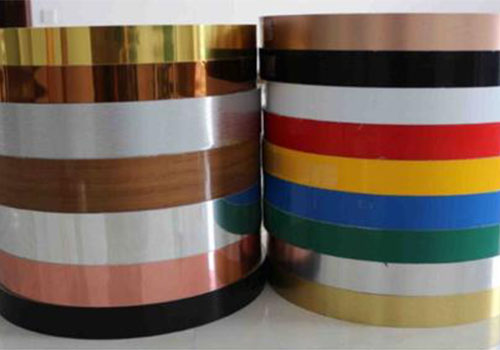
1060 Aluminum Tape Coil Strip
1060 aluminum tape coil strip is often selected not because it is the strongest aluminum alloy, but because it performs like a highly adaptable interface between heat, electricity, moisture, and mechanical forming. With a minimum aluminum content of 99.60%, this commercially pure aluminum strip provides excellent conductivity, high reflectivity, corrosion resistance, and soft forming behavior.
In practical production, 1060 strip acts less like a structural metal and more like a functional skin. It can wrap a cable, seal insulation, reflect heat around HVAC equipment, protect a surface, or become a stamped component with very little risk of cracking. This combination makes it valuable wherever the material must bend, conform, conduct, or shield.
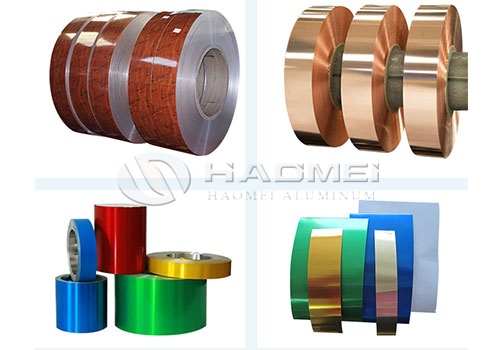
Why 1060 Aluminum Tape Coil Strip Performs Differently
The high aluminum purity of 1060 creates a material with a simple metallurgical character. Compared with manganese-, magnesium-, or copper-containing aluminum alloys, it has lower strength but greater ductility. That trade-off is often beneficial for tape coil applications.
A narrow aluminum strip frequently passes through slitting machines, stamping dies, wrapping equipment, laminating lines, or roll-forming tools. Harder alloys can resist deformation, but 1060 aluminum tape coil strip follows curved surfaces smoothly. It is especially useful when tight bends, folded edges, embossed patterns, or deep drawing operations are involved.
Its electrical conductivity is approximately 61% IACS, making it suitable for applications where current transfer or electrostatic control matters. Its thermal conductivity also supports heat spreading and heat reflection functions. In insulation assemblies, the bright aluminum surface can help reduce radiant heat transfer when properly installed.
The material naturally forms a thin oxide layer in air. This oxide layer helps protect the strip from normal atmospheric corrosion. For demanding environments, the strip can be lacquered, laminated, anodized, or converted into Coated Aluminum Strip for added chemical resistance and visual durability.
Chemical Composition of 1060 Aluminum
The chemistry of 1060 aluminum is controlled primarily by its high aluminum content and very low level of alloying elements. Exact limits can vary slightly by standard, order specification, and inspection method.
| Element | Typical Requirement for 1060 Aluminum, % |
|---|---|
| Aluminum, Al | 99.60 min |
| Silicon + Iron, Si + Fe | 0.35 max |
| Copper, Cu | 0.05 max |
| Manganese, Mn | 0.03 max |
| Magnesium, Mg | 0.03 max |
| Zinc, Zn | 0.05 max |
| Titanium, Ti | 0.03 max |
| Other elements, each | 0.03 max |
| Other elements, total | 0.03 max |
Low alloy content supports conductivity and workability. Silicon and iron are normally the main residual elements. Even though they are present in small amounts, they can affect elongation, surface finish, and forming consistency, especially in thin tape coils.
Common Parameters and Delivery Conditions
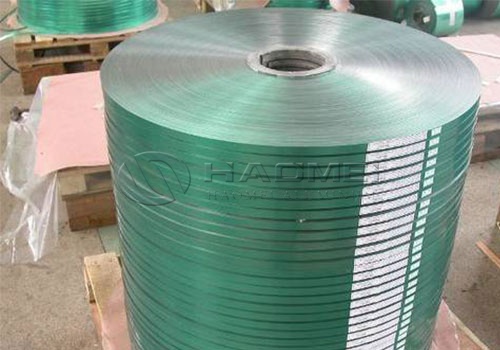
1060 aluminum tape coil strip can be produced in a broad range of dimensions. Narrow slit coils are common for cable wrapping, fin stock, transformer components, lighting parts, and insulation tape. Wider coils may later be slit by the customer according to production requirements.
| Parameter | Common Production Range |
|---|---|
| Alloy | AA 1060 / EN AW-1060 / Al99.6 |
| Thickness | 0.02 mm to 3.00 mm |
| Width | 10 mm to 1,600 mm |
| Coil inner diameter | 150 mm, 300 mm, 405 mm, 505 mm, or as required |
| Coil outer diameter | According to weight, handling equipment, and packing limits |
| Surface | Mill finish, bright finish, embossed, coated, laminated, or anodized |
| Edge condition | Mill edge, slit edge, deburred edge, rounded edge |
| Packaging | Eye-to-wall or eye-to-sky, moisture-proof export packing |
For tape applications, edge quality deserves special attention. A sharp burr can damage insulation film, scratch adjacent materials, or cause difficulties during high-speed winding. A clean slit edge and stable coil tension are therefore as important as nominal thickness.
Temper Selection: Matching Softness to Function
Temper determines how easily the strip bends and how much force it can resist. 1060 aluminum does not gain strength through heat treatment in the same way as certain aerospace alloys. Its condition is mainly controlled through annealing and cold working.
| Temper | Condition | Typical Use |
|---|---|---|
| O / H0 | Fully annealed, very soft | Deep drawing, folding, wrapping, embossing |
| H12 / H14 | Light to half hard | General tape, insulation jacketing, formed parts |
| H16 | Three-quarter hard | Stiffer strips requiring moderate formability |
| H18 | Full hard | Flat tape, rigid channels, applications needing higher tensile strength |
| H24 | Strain hardened and partially annealed | Balanced forming and strength requirements |
O temper is generally preferred when the strip must tightly follow irregular surfaces. H14 is widely used when the product needs greater stiffness during handling while still allowing ordinary bending. H18 can be effective for straight, flat applications, but it should not be selected for severe folding unless forming trials confirm suitability.
Implementation Standards and Quality Control
1060 aluminum tape coil strip may be manufactured and inspected according to internationally recognized material standards. The selected standard should be stated in the purchase specification because chemical limits, dimensional tolerances, and test requirements can differ.
Common references include ASTM B209 for aluminum sheet and strip, ASTM B479 for aluminum foil applications, EN 573-3 for aluminum chemical composition, EN 485-2 for mechanical properties, and GB/T 3880 for aluminum and aluminum alloy sheet and strip.
A complete order condition normally identifies alloy, temper, thickness, width, surface treatment, coil weight, inside diameter, allowable burr, and applicable standard. For electrical or thermal uses, conductivity testing may also be requested. For coated material, coating thickness, adhesion, gloss, color, and salt-spray expectations should be agreed before production.
Applications That Use Its Functional Strengths
In cable manufacturing, 1060 aluminum tape coil strip can serve as a shielding, wrapping, or moisture-barrier layer. It is frequently laminated with polymer films to create composite tapes that combine metal conductivity with dielectric separation. The aluminum layer may help limit electromagnetic interference while improving barrier performance.
In HVAC and insulation systems, the strip is used for pipe wrapping, thermal insulation facing, duct accessories, and reflective protective layers. Its ability to reflect radiant heat is useful when combined with insulation materials and correctly sealed joints.
For transformers, capacitors, lighting products, and electrical housings, 1060 strip offers a balance of conductivity and easy stamping. It can be punched into tabs, clips, reflective plates, and lightweight electrical components without complex forming steps.
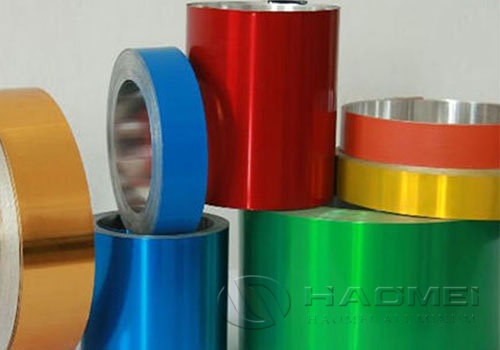
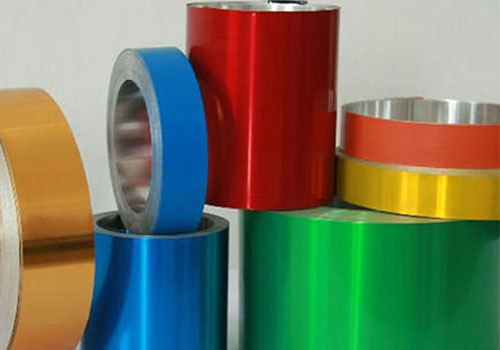
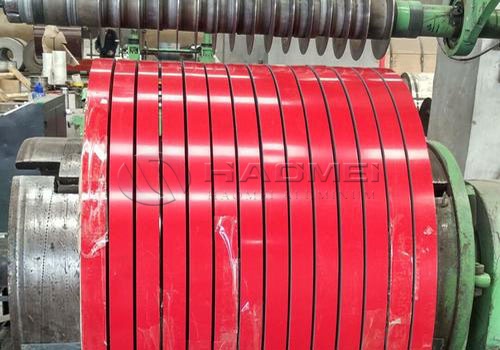
Decorative and appliance applications can use painted or laminated surfaces when appearance matters. A Color Coated Aluminum Strip option adds color stability and surface protection while retaining the lightweight, corrosion-resistant advantages of the aluminum base.
Choosing the Right Coil for Production
The most suitable 1060 aluminum tape coil strip is defined by the job it must perform. A cable wrapper may prioritize burr control, tensile consistency, and laminate adhesion. An insulation producer may focus on surface brightness, corrosion resistance, and coil width. A stamping operation may require O temper, stable thickness, and excellent elongation.
Rather than treating 1060 as simply a low-cost aluminum grade, it is more accurate to view it as a responsive material platform. Its value comes from the way purity, softness, conductivity, and surface adaptability work together. When alloy temper, edge condition, dimensions, and applicable standards are aligned with the end use, 1060 aluminum tape coil strip becomes a dependable solution for high-volume industrial processing.