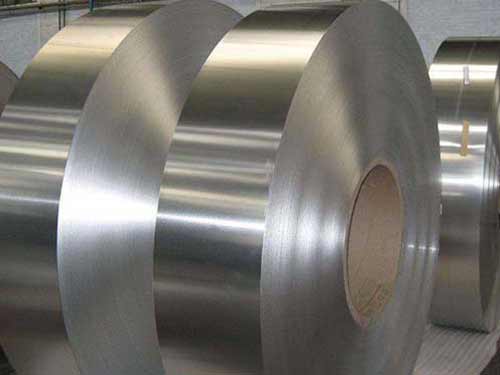
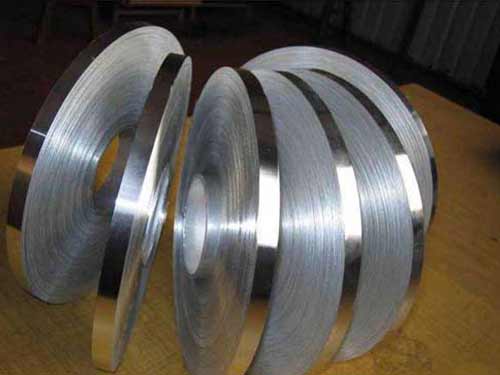
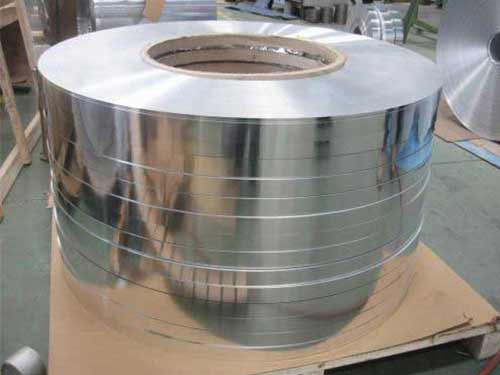
1050 1060 1100 Aluminum Coil Strip
1050, 1060 and 1100 aluminum coil strip are often selected not because they are the strongest aluminum alloys, but because they make manufacturing easier. These commercially pure aluminum grades bend, stamp, draw, reflect heat and carry electrical current with dependable consistency. In production lines where material must move smoothly through rollers, presses, winding machines or forming dies, their soft and clean-working character becomes a practical advantage.
The real value of 1050 1060 1100 aluminum coil strip lies in how it responds to processing. A transformer winding needs stable conductivity. A lamp cap needs a bright, drawable surface. A cable shield needs a strip that can be slit accurately and formed without frequent edge cracking. A deep-drawn component needs elongation rather than high hardness. These applications call for aluminum that behaves predictably under pressure.
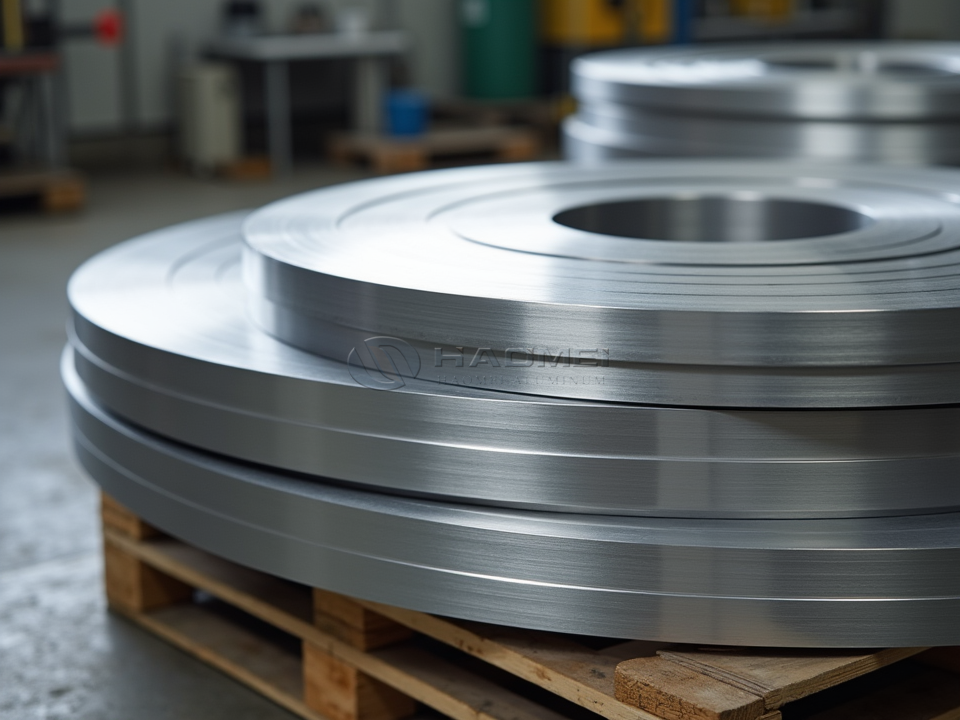
The Difference Between 1050, 1060 and 1100 Aluminum Strip
All three grades belong to the 1xxx aluminum family, meaning aluminum is the dominant element. Their alloying content is low, so they retain excellent corrosion resistance, thermal conductivity, electrical conductivity and formability. The difference is mainly the minimum aluminum content and the permitted amount of residual elements.
1050 aluminum contains at least 99.50% aluminum. It is widely used where high ductility and good conductivity are required at an economical cost. It is common in lighting components, chemical equipment, reflectors, cable strips and general sheet-metal fabrication.
1060 aluminum contains at least 99.60% aluminum and is frequently chosen for electrical applications. Its conductivity is especially valued in transformer windings, busbar-related products, capacitor shells and cable shielding. For buyers seeking material for electrical conversion and winding operations, 1050 / 1060 Aluminum Strip provides an effective balance of purity, processability and supply flexibility.
1100 aluminum contains at least 99.00% aluminum and permits a slightly higher level of copper than 1050 or 1060. This characteristic can provide marginally higher strength while maintaining excellent workability. It is a reliable choice for deep drawing, cooking utensils, decorative panels, heat exchangers, fin stock and chemical-processing parts.
Chemical Composition Requirements
The chemical composition should be verified through a mill test certificate, especially for electrical, deep-drawing and surface-sensitive products. Values shown are typical maximum limits in accordance with commonly used composition requirements for wrought aluminum alloys.
| Alloy | Al, min. | Si + Fe, max. | Cu, max. | Mn, max. | Mg, max. | Zn, max. | Ti, max. |
|---|---|---|---|---|---|---|---|
| 1050 | 99.50% | 0.40% | 0.05% | 0.05% | 0.05% | 0.05% | 0.03% |
| 1060 | 99.60% | 0.35% | 0.05% | 0.03% | 0.03% | 0.05% | 0.03% |
| 1100 | 99.00% | 0.95% | 0.05% to 0.20% | 0.05% | - | 0.10% | - |
Low levels of alloying elements help these grades remain highly formable. Iron and silicon can influence strength and surface behavior, while copper content is more relevant in 1100 aluminum. For electrical strip, purity, conductivity and a smooth surface are often more important than tensile strength alone.
Temper as a Manufacturing Instruction
Temper is not merely a label on a coil. It tells the processor how the material will react during bending, punching, drawing or winding. The same 1060 aluminum strip can serve very different functions depending on its temper.
| Temper | Condition | Typical Use |
|---|---|---|
| O | Fully annealed, soft | Deep drawing, bending, transformer winding, lamp caps |
| H12 / H22 | Quarter hard | Light stamping, moderate forming, general fabrication |
| H14 / H24 | Half hard | Roofing accessories, reflectors, cable strips, stamped parts |
| H16 / H26 | Three-quarter hard | Applications needing improved rigidity |
| H18 | Full hard | Fins, rigid trims, insulation cladding and non-deep-drawn parts |
O temper is often preferred when the strip must flow into a complex die shape. It has the highest elongation and lowest hardness. H14 and H24 tempers are practical middle positions: they offer more shape retention than soft material while still allowing ordinary bending and stamping. H18 material is harder and stronger, but it should not be selected for aggressive forming without confirming bend radius and tooling conditions.
Dimensions, Surface and Coil Conditions
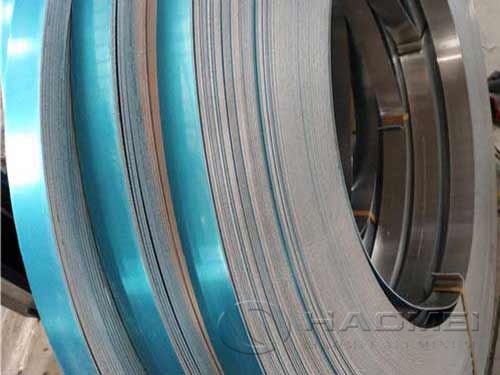
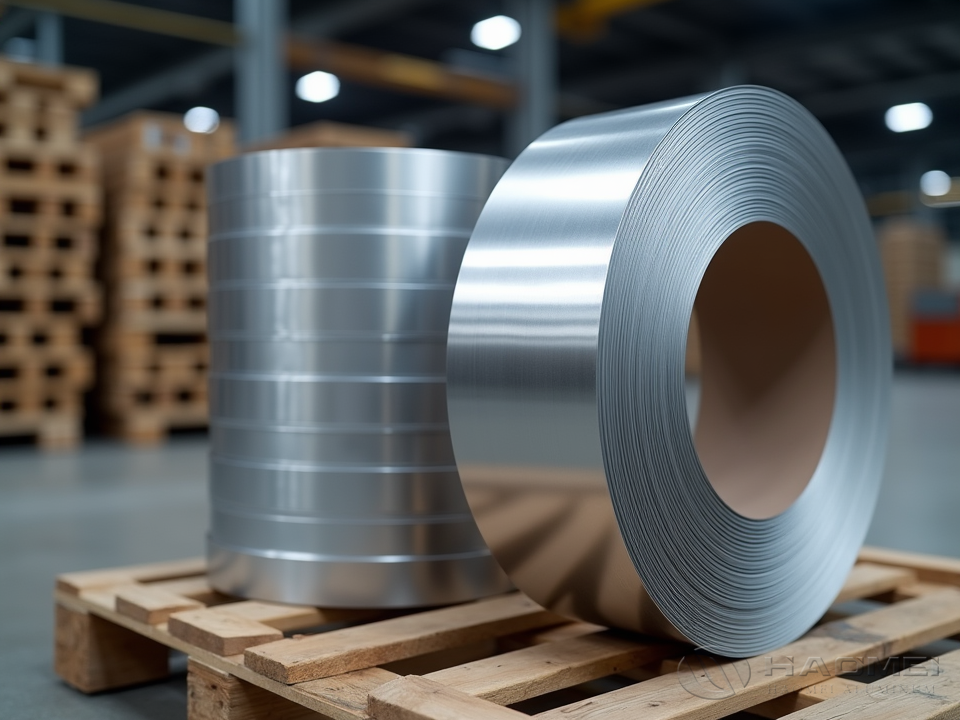
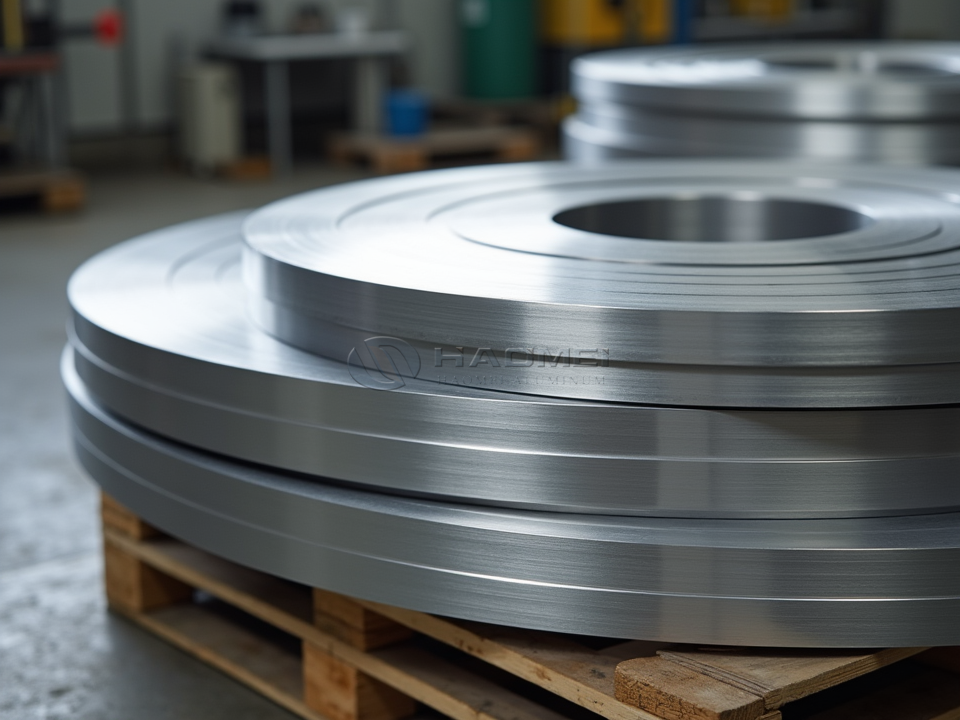
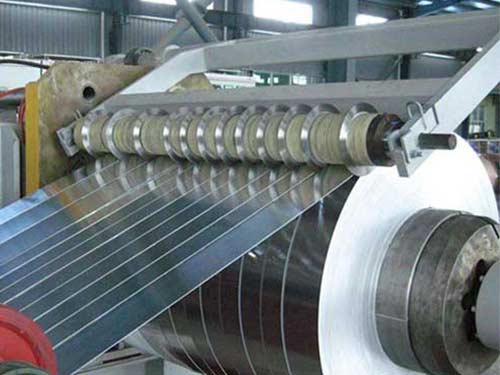
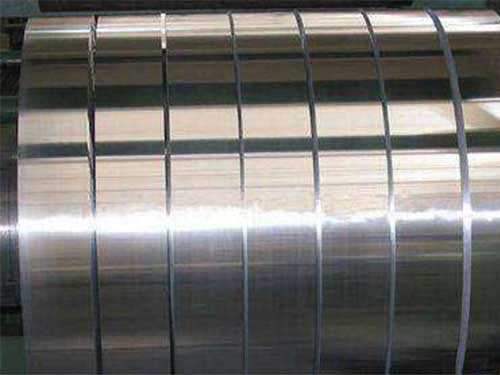
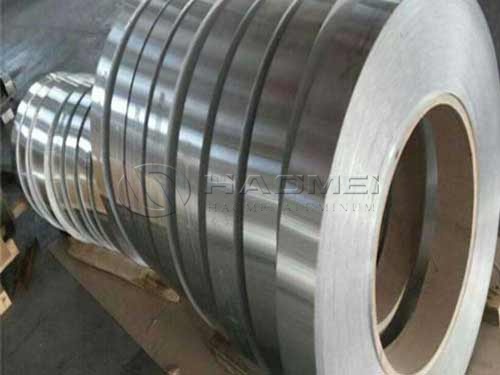
1050 1060 1100 aluminum coil strip is normally supplied as slit coil or edge-trimmed coil. Typical thickness ranges from 0.10 mm to 6.00 mm, while common strip widths range from 10 mm to 1,600 mm. Narrow strips are often used for winding, cable shielding and stamped fittings; wider coils are used for further slitting, panel processing and insulation cladding.
Important ordering parameters include alloy, temper, thickness tolerance, width tolerance, inside diameter, outside diameter, coil weight, edge condition and surface quality. Available edges may include mill edge, slit edge and deburred edge. For winding and stamping, burr control matters because rough edges can damage insulation layers, interrupt automatic feeding or cause handling injuries.
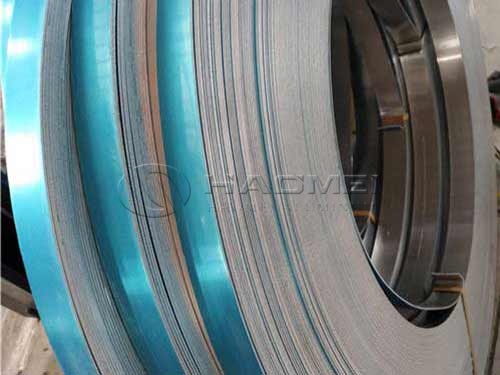
A standard mill finish is suitable for many industrial uses. Bright, polished, embossed, color-coated, PVC-laminated or paper-interleaved surfaces can be specified for decorative, protective or sensitive forming applications. Material intended for anodizing should be ordered with suitable surface requirements because surface consistency has a direct effect on final appearance.
Standards and Quality References
Common implementation standards for aluminum coil strip include ASTM B209 for aluminum and aluminum-alloy sheet and plate, EN 485 for tolerances and mechanical properties of wrought aluminum products, and GB/T 3880 for aluminum and aluminum-alloy sheets and strips. For chemical composition references, ASTM B209, EN 573 and GB/T 3190 are widely used depending on project location and contract requirements.
A complete purchase specification should state the applicable standard rather than relying on alloy designation alone. It should also identify whether conductivity, mechanical properties, flatness, surface treatment, protective film, coil packaging or special tolerance is required. This reduces variation between the coil received and the component being produced.
Applications Seen Through Function
In electrical work, 1060 aluminum strip is often used for transformer winding and conductive components because its high aluminum purity supports efficient current transfer. Surface cleanliness is vital here: oil residue, scratches and excessive burrs can affect insulation and winding quality.
In forming operations, 1050 and 1100 aluminum strip perform well in lamp caps, cookware, nameplates, decorative shells and deep-drawn housings. Their response to elongation enables manufacturers to create curved or hollow shapes with fewer splits. For products that need more corrosion resistance or strength than commercially pure grades can provide, an Alloy Aluminum Strip may be more appropriate.
In thermal and reflective applications, these strips support heat dissipation, light reflection and insulation facing. Their natural oxide layer offers good atmospheric corrosion resistance, while aluminum's reflective surface helps serve lighting reflectors, insulation jackets and appliance panels.
Selecting the Right Coil Strip
Choose 1050 when broad formability, corrosion resistance and economic efficiency are the main priorities. Choose 1060 when electrical conductivity and high purity are central to the application. Choose 1100 when a small increase in strength and excellent deep-drawing performance are desirable.
The most suitable 1050 1060 1100 aluminum coil strip is not defined by alloy alone. Thickness, temper, edge condition and surface quality determine whether the coil will run efficiently through the customer's equipment. Matching these details to the real manufacturing process turns a basic aluminum strip into a stable production material.