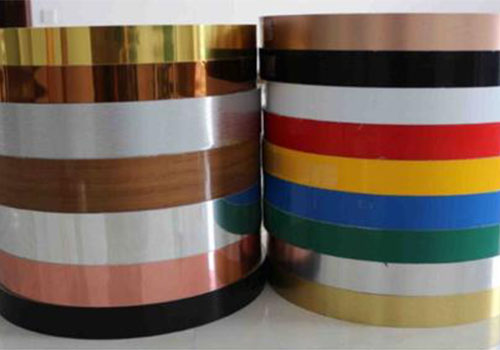
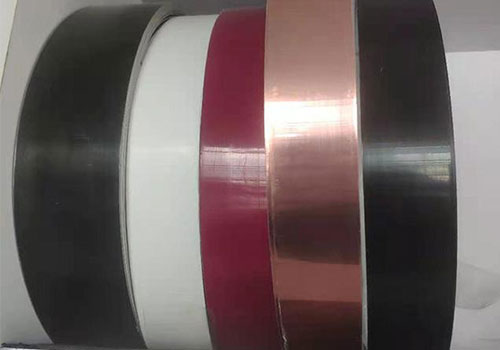
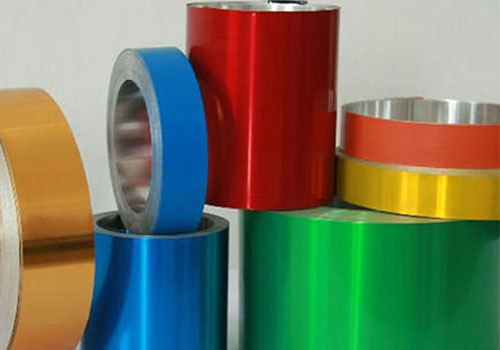
Stone Grain Colors Aluminum Strip
Stone Grain Colors Aluminum Strip is a pre-painted aluminum product designed to reproduce the visual character of marble, granite, sandstone, slate, travertine, and other natural mineral surfaces. It combines the warm, layered appearance of stone with aluminum's low weight, corrosion resistance, formability, and production efficiency.
Instead of cutting, transporting, and installing heavy stone panels, fabricators can slit, bend, roll-form, stamp, or laminate this decorative strip into finished building and industrial components. The result is a clean, consistent stone-style surface suitable for architectural trim, ceilings, doors, appliance panels, furniture edges, and cladding systems.
Decorative Surface Character
The stone grain is created through a controlled coating and printing process. A treated aluminum substrate receives primer, color layers, stone-pattern printing, and a protective topcoat. This layered finish gives the strip visual depth while maintaining a smooth, continuous metal base.
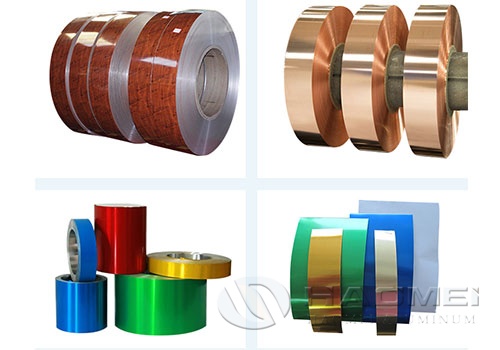
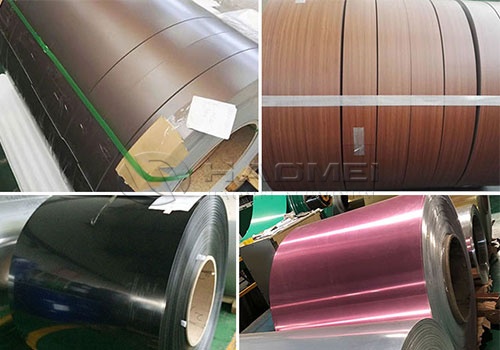
Available patterns can imitate light limestone, dark granite, white marble veining, beige sandstone, grey slate, or custom mineral-inspired graphics. Color tone, gloss, grain direction, repeat length, and protective coating can be adjusted to match project requirements.
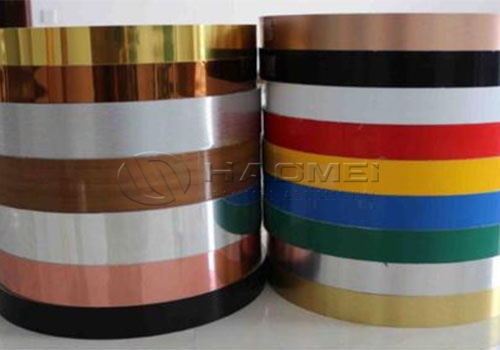
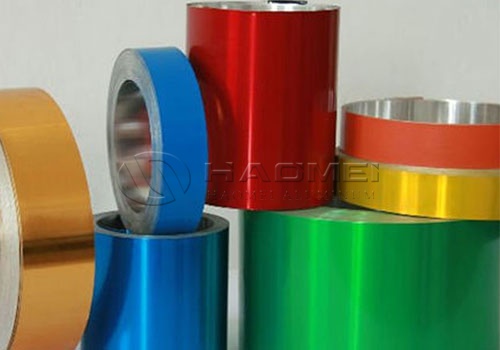
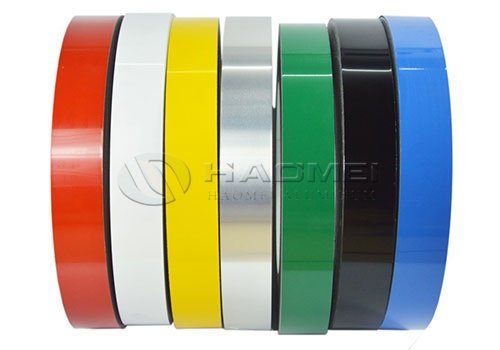
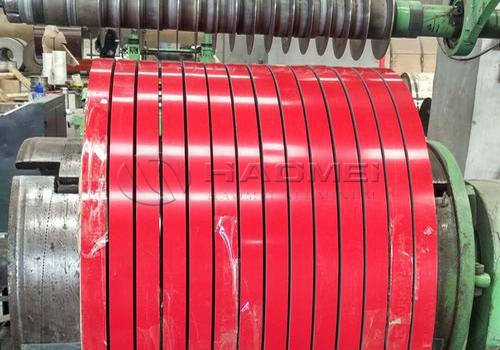
Compared with conventional solid-color coil, stone grain finishes provide greater design expression without adding substantial weight to the finished part. For customers seeking coordinated decorative metal, Color Coated Aluminum Strip options can also support matching solid colors for borders, accessories, and related components.
Product Features and Customer Benefits
| Feature | Performance Benefit | Customer Value |
|---|---|---|
| Stone-effect printed surface | Reproduces natural mineral texture and color variation | Creates a premium decorative appearance without natural stone weight |
| Aluminum substrate | Lightweight and naturally corrosion resistant | Easier transport, handling, fabrication, and installation |
| Multi-layer coating structure | Primer and topcoat improve adhesion and protection | Supports long-lasting surface quality |
| Excellent formability | Suitable for bending, slitting, roll forming, and stamping | Reduces cracking risk during component processing |
| Controlled gloss | Available in matte, satin, semi-gloss, or gloss finishes | Allows the surface to match modern, classic, or industrial designs |
| Coil and strip supply | Supplied in continuous lengths with precise dimensions | Improves manufacturing efficiency and material yield |
| Custom pattern capability | Color, grain, and repeat design can be developed for projects | Helps brands create coordinated product collections |
Typical Technical Specifications
Stone Grain Colors Aluminum Strip can be produced in several alloy and temper combinations. Final selection depends on required stiffness, forming depth, end-use environment, and coating system.
| Item | Typical Range or Option |
|---|---|
| Base metal alloy | AA 1050, AA 1060, AA 1100, AA 3003, AA 3105, AA 5052 |
| Temper | O, H12, H14, H16, H18, H24 |
| Thickness | 0.20-1.50 mm |
| Common thickness | 0.30 mm, 0.40 mm, 0.50 mm, 0.60 mm, 0.80 mm |
| Strip width | 20-1,600 mm |
| Width tolerance | Typically ±0.30 mm, subject to width and thickness |
| Coil inner diameter | 405 mm or 505 mm |
| Coil outer diameter | Up to approximately 1,800 mm, subject to weight limits |
| Coil weight | Typically 1-5 tonnes |
| Surface finish | Marble, granite, sandstone, slate, brushed stone, custom print |
| Gloss range | 10-80 GU at 60° angle |
| Protective film | Optional PE film, commonly 30-80 microns |
| Coating system | Polyester, SMP, PVDF, FEVE, epoxy primer systems |
Aluminum Chemical Composition
Chemical composition influences strength, corrosion resistance, and forming behavior. The following values are representative maximum limits for commonly used aluminum substrate grades. Exact certification should follow the applicable standard and purchase specification.
| Alloy | Si | Fe | Cu | Mn | Mg | Zn | Ti | Al |
|---|---|---|---|---|---|---|---|---|
| AA 1050 | 0.25% | 0.40% | 0.05% | 0.05% | 0.05% | 0.05% | 0.03% | Balance |
| AA 1060 | 0.25% | 0.35% | 0.05% | 0.03% | 0.03% | 0.05% | 0.03% | Balance |
| AA 1100 | Si + Fe 0.95% | Included | 0.05-0.20% | 0.05% | - | 0.10% | - | Balance |
| AA 3003 | 0.60% | 0.70% | 0.05-0.20% | 1.0-1.5% | - | 0.10% | - | Balance |
| AA 3105 | 0.60% | 0.70% | 0.30% | 0.30-0.80% | 0.20-0.80% | 0.40% | 0.10% | Balance |
| AA 5052 | 0.25% | 0.40% | 0.10% | 0.10% | 2.2-2.8% | 0.10% | - | Balance |
Mechanical and Coating Performance
The finished strip must perform both as metal stock and as a decorative surface. Harder tempers are practical for flat panels and rigid trims, while softer materials are preferred for profiles requiring sharper bends or deeper forming.
| Property | Typical Value | Test or Practical Meaning |
|---|---|---|
| Tensile strength, AA 3003 H14 | 140-180 MPa | Supports stable processing and moderate structural rigidity |
| Yield strength, AA 3003 H14 | 115 MPa minimum | Helps retain profile shape after forming |
| Elongation | 3-12% | Indicates bend and forming capability |
| Pencil hardness | 2H minimum, coating dependent | Resistance to light scratching and surface marking |
| T-bend performance | 0T-3T, coating dependent | Evaluates coating flexibility during bending |
| Adhesion | Grade 0-1 | Strong coating attachment to substrate after cross-hatch testing |
| Impact resistance | 50 kg·cm or specified level | Helps resist damage from handling and fabrication |
| Salt spray resistance | 500-1,000 hours or more | Indicates corrosion protection potential for coated systems |
| Humidity resistance | 1,000 hours or more | Evaluates coating stability in damp conditions |
For exterior-facing components, a fluoropolymer option such as PVDF Coated Aluminum Strip is often selected where long-term color retention, weather resistance, and UV protection are especially important.
Suitable Applications
Stone Grain Colors Aluminum Strip performs well where appearance, low maintenance, and efficient fabrication are all required. It is commonly converted into trim coils, folded channels, decorative profiles, ceiling grids, shutters, façade accessories, wall panel edges, and insulated panel skins.
In interior spaces, the material is suitable for suspended ceilings, partition systems, cabinet trims, elevator decoration, shop fittings, appliance housings, and furniture components. A marble or travertine pattern can introduce a natural visual effect while avoiding the weight and fragility associated with real stone.
For transportation and equipment uses, stone-pattern aluminum can be considered for caravan interiors, vehicle decorative panels, display structures, and lightweight enclosures. In packaging and consumer products, narrow strip formats can provide a distinctive finish for premium edging, casing, or branded metal parts.
Processing Guidance
Good fabrication begins with correct temper selection and careful surface protection. Use clean rollers, dies, and bending tools to prevent pressure marks on the painted face. Maintain an appropriate bend radius for the selected thickness and coating type. If protective film is supplied, remove it after installation rather than during intermediate processing whenever practical.
Adhesives, sealants, and cleaning agents should be compatible with the coating. Neutral cleaners and soft cloths are generally recommended for routine maintenance. Strong alkaline chemicals, abrasive pads, and aggressive solvents may dull gloss or damage the protective finish.
A Practical Decorative Metal Choice
Stone Grain Colors Aluminum Strip gives designers the visual richness of mineral surfaces while preserving the practical advantages of coated aluminum. Its light weight lowers installation demands, its continuous coil format supports high-volume fabrication, and its patterned finish adds visual character to spaces and products that require more than a plain painted surface.
With appropriate alloy selection, coating architecture, and thickness control, this material can deliver an attractive, durable, and economical solution for decorative metal applications across construction, interiors, consumer goods, and engineered components.