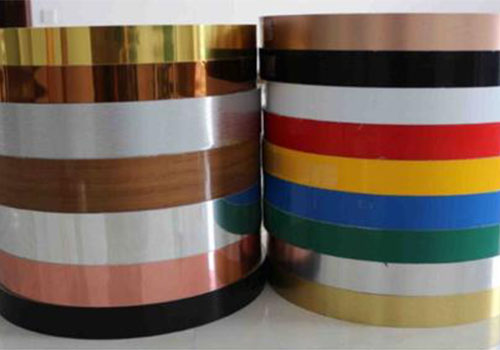
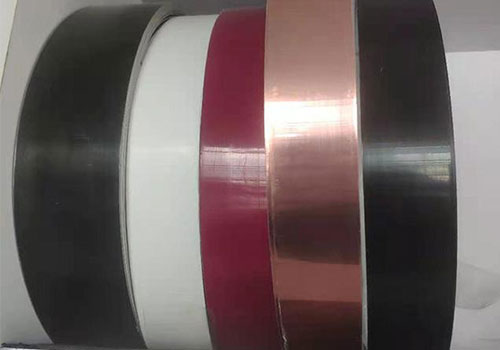
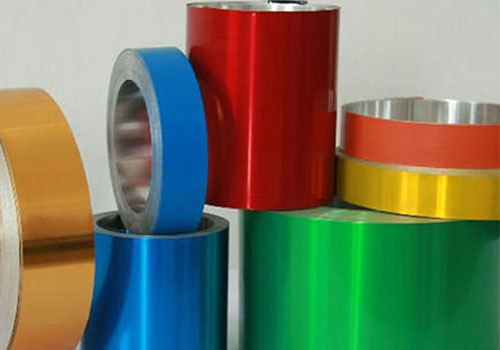
PVDF Feve Color Coated Aluminum Strip
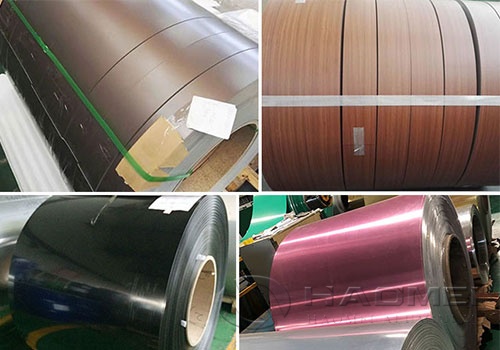
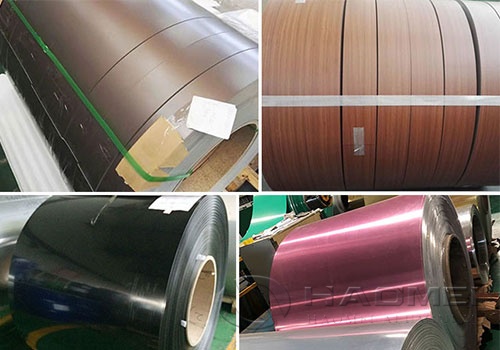
PVDF FEVE color coated aluminum strip is best understood as a thin metal carrier with a high-performance skin. The aluminum core supplies light weight, formability, thermal conductivity, and corrosion resistance. The fluorocarbon coating supplies the visible color, gloss control, weather resistance, stain resistance, and long outdoor service life. For buyers, the value is not only in the color, but in the way resin chemistry, alloy selection, pretreatment, coating thickness, and curing conditions work together.
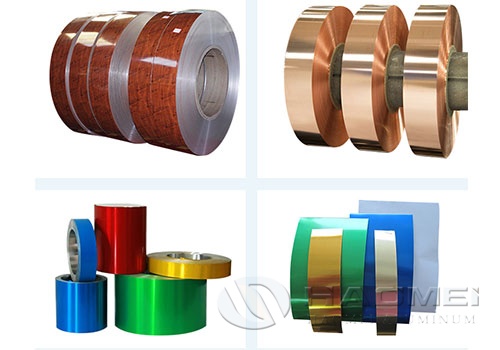
PVDF and FEVE are both fluoropolymer coating systems. PVDF coatings are widely used for exterior architectural metals because the carbon-fluorine bond resists UV degradation. FEVE coatings also contain fluorine chemistry but can offer higher gloss and wider appearance flexibility. When applied to aluminum strip by continuous coil coating, these systems create a material that can be slit, bent, stamped, roll formed, and assembled with stable color performance.
For projects centered on fluorocarbon durability, the specification often starts with PVDF Coated Aluminum Strip, while designers comparing broader color systems may evaluate Color Coated Aluminum Strip for matching indoor and outdoor requirements.
What the Strip Actually Does in Use
In a building envelope, the strip acts as a controlled surface. It prevents rain, industrial air, salt mist, and sunlight from directly attacking the aluminum substrate. In lighting, ceiling, and signage products, it gives consistent reflectivity or brand color while allowing high-speed forming. In HVAC fins, blinds, and composite panels, it offers a clean finish with reduced maintenance.
The function can be viewed through four practical roles:
- A weather barrier that slows UV, moisture, acid rain, and salt damage.
- A forming surface that survives bending without cracking when the alloy and temper are properly selected.
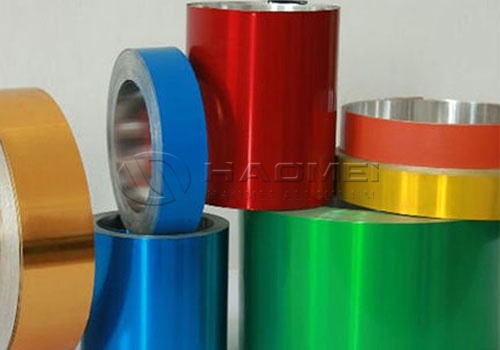
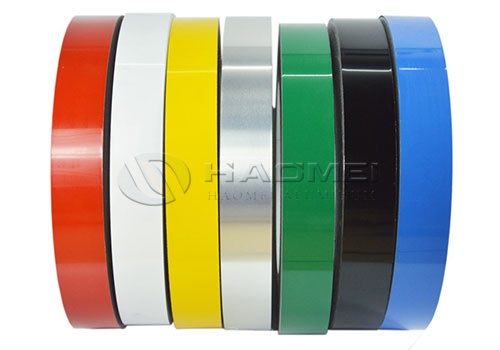
- A design layer that provides color, gloss, metallic effect, or matte texture.
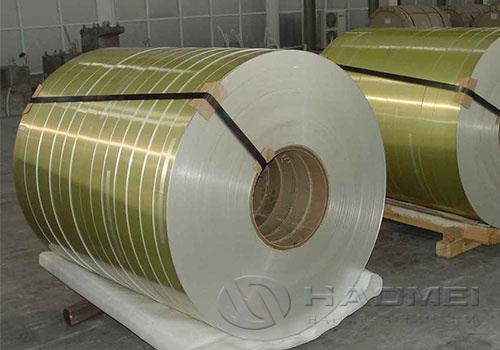
- A production material supplied in coils, enabling automated stamping, slitting, roll forming, and lamination.
PVDF is normally selected when long outdoor exposure, low chalking, and color retention are essential. FEVE is often chosen when the project needs stronger gloss, vivid colors, or transparent clear coats over metallic effects.
Typical Product Parameters
| Item | Common Range or Condition | Notes for Buyers |
|---|---|---|
| Aluminum thickness | 0.15 mm to 3.00 mm | Thinner gauges suit trims, caps, fins, and ceilings; thicker gauges suit panels and profiles. |
| Strip width | 20 mm to 1600 mm | Narrow strip is usually slit from coated coils. |
| Coil ID | 405 mm, 505 mm, 508 mm | Confirm compatibility with decoilers and forming lines. |
| Coating system | Primer plus PVDF or FEVE topcoat; optional back coat | Two-coat and three-coat systems are common. |
| Top coating thickness | 18 microns to 35 microns | Architectural exterior use often requires heavier coating. |
| Back coating thickness | 5 microns to 15 microns | Supports corrosion balance and bonding performance. |
| Gloss | Matte, low gloss, semi-gloss, high gloss | FEVE can reach higher gloss more easily than PVDF. |
| Color tolerance | Delta E commonly within 1.0 to 1.5 | Project control should define measuring method and light source. |
| Pencil hardness | HB to 2H typical | Depends on resin, curing, and film thickness. |
| T-bend | 0T to 3T typical | Softer tempers and optimized coating improve bending. |
| Salt spray | 1000 h to 3000 h, depending on system | Edge sealing and pretreatment greatly affect results. |
| Service temperature | Usually -40 C to 120 C | Actual limit depends on coating design and exposure time. |
Alloy and Temper Selection
The coating does not work alone. If the alloy is too hard for a tight bend, the coating may crack even if the paint chemistry is excellent. If the alloy is too soft, the finished component may dent or deform. The right pairing of alloy and temper is therefore central to performance.
| Alloy | Common Temper | Main Character | Typical Applications |
|---|---|---|---|
| 1050, 1060, 1100 | O, H14, H24 | High purity, excellent formability, high conductivity | Lighting parts, heat transfer parts, decorative trim |
| 3003 | H14, H16, H24 | Good corrosion resistance and moderate strength | Roofing accessories, gutters, ceilings, composite panels |
| 3004 | H24, H26 | Higher strength than 3003 | Curtain wall parts, roof panels, roll formed components |
| 3105 | H24, H26 | Good paintability and exterior performance | Building trim, siding, shutter strip, sign strip |
| 5005 | H24, H34 | Good anodizing and surface uniformity | Architectural decoration, high-grade panels |
| 5052 | H32, H34 | Higher strength and marine corrosion resistance | Transport parts, coastal applications, equipment housings |
For deep forming, O temper or H24 is often safer. For long straight trim or roll formed profiles, H26 or H34 may improve dimensional stability. When the strip will be folded sharply, buyers should confirm the minimum bend radius, coating direction, and T-bend test value before mass production.
Chemical Composition of Common Aluminum Substrates
The table gives typical composition ranges by weight percent. Exact limits should be confirmed against the selected standard and mill certificate.
| Alloy | Si | Fe | Cu | Mn | Mg | Cr | Zn | Al |
|---|---|---|---|---|---|---|---|---|
| 1050 | 0.25 max | 0.40 max | 0.05 max | 0.05 max | 0.05 max | - | 0.05 max | 99.50 min |
| 1100 | Si+Fe 0.95 max | Si+Fe 0.95 max | 0.05-0.20 | 0.05 max | - | - | 0.10 max | 99.00 min |
| 3003 | 0.60 max | 0.70 max | 0.05-0.20 | 1.00-1.50 | - | - | 0.10 max | Balance |
| 3004 | 0.30 max | 0.70 max | 0.25 max | 1.00-1.50 | 0.80-1.30 | - | 0.25 max | Balance |
| 3105 | 0.60 max | 0.70 max | 0.30 max | 0.30-0.80 | 0.20-0.80 | 0.20 max | 0.40 max | Balance |
| 5005 | 0.30 max | 0.70 max | 0.20 max | 0.20 max | 0.50-1.10 | 0.10 max | 0.25 max | Balance |
| 5052 | 0.25 max | 0.40 max | 0.10 max | 0.10 max | 2.20-2.80 | 0.15-0.35 | 0.10 max | Balance |
Coating Chemistry and Performance Indicators
PVDF coatings usually contain a high percentage of polyvinylidene fluoride resin blended with acrylic resin for adhesion and pigment wetting. Architectural grades commonly require at least 70% PVDF resin in the resin portion. FEVE coatings use fluoroethylene vinyl ether resin, combining fluorine durability with excellent pigment compatibility and gloss potential.
| Chemical or Surface Property | PVDF System | FEVE System | Practical Meaning |
|---|---|---|---|
| Main resin chemistry | Polyvinylidene fluoride | Fluoroethylene vinyl ether | Both resist UV through strong fluorine bonds. |
| Weathering behavior | Excellent color and chalk resistance | Excellent weathering with higher gloss potential | Select by exposure and appearance target. |
| Solvent resistance | Strong after full curing | Strong after full curing | Important for cleaning and fabrication. |
| Acid and alkali resistance | Good, but prolonged strong alkali should be avoided | Good, system dependent | Relevant for industrial air and cleaning agents. |
| Salt resistance | High with proper pretreatment | High with proper pretreatment | Important near coastal or road-salt areas. |
| Pigment compatibility | Best with inorganic and stable ceramic pigments | Broad color and gloss flexibility | Bright color design may favor FEVE. |
Pretreatment is a quiet but decisive layer. Chrome-free or chromate conversion treatment improves adhesion between aluminum and primer. Poor pretreatment can cause blistering or under-film corrosion even when the topcoat is premium.
Production Route and Quality Control
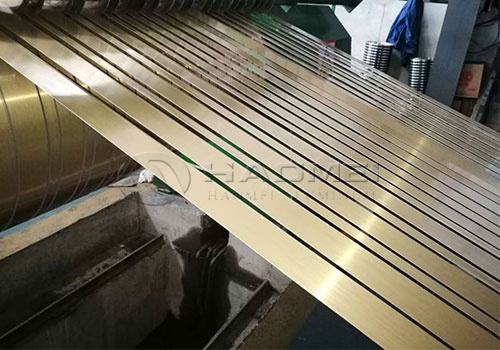
The strip begins as aluminum coil. It is degreased, chemically pretreated, primed, coated, baked, cooled, inspected, and recoiled. After coating, it can be slit to customer width. The curing window must be controlled carefully because under-cured coating loses chemical resistance, while over-curing may reduce flexibility.
Quality inspection normally includes film thickness, color difference, gloss, pencil hardness, adhesion, impact resistance, T-bend, MEK rubbing, salt spray, humidity resistance, and accelerated weathering. For visible exterior projects, color consistency from coil to coil is especially important. Buyers should request retained samples or batch color panels for large orders.
Implementation Standards
PVDF FEVE color coated aluminum strip is commonly produced and tested according to several international and regional standards, depending on market and end use.
| Standard | Scope |
|---|---|
| ASTM B209 | Aluminum and aluminum-alloy sheet and plate requirements. |
| EN 485 | Aluminum sheet, strip, and plate mechanical and dimensional requirements. |
| EN 573 | Aluminum alloy chemical composition designation. |
| EN 1396 | Coil coated aluminum sheet and strip for general applications. |
| AAMA 2605 | High-performance exterior coatings for architectural aluminum. |
| ECCA test methods | Coil coating tests for adhesion, gloss, flexibility, and durability. |
| GB/T 3880 | Chinese standard for aluminum and aluminum alloy plates, sheets, and strips. |
| RoHS and REACH | Chemical substance compliance for regulated markets. |
For architectural exterior panels, AAMA 2605-level PVDF or FEVE systems are often preferred. For indoor ceilings, appliance trim, and decorative parts, the required coating grade may be adjusted to reduce cost while keeping appearance stable.
Where It Is Applied
PVDF FEVE color coated aluminum strip is used in curtain wall trim, roofing accessories, gutter systems, aluminum composite panel skins, ceilings, blinds, rolling shutters, channel letters, sign frames, transportation interiors, household appliance trim, and HVAC components. In coastal cities, fluorocarbon coatings help resist salt-laden air. In commercial centers, they reduce fading on bright facades and signage. In factories, they improve cleanability and reduce repainting cycles.
The material is also valuable for modular construction. A prefinished strip removes the need for post-painting after forming, which saves labor, reduces solvent emission at the fabrication site, and improves batch consistency. The coil-coated surface arrives ready for the production line.
Purchasing Notes That Prevent Costly Mistakes
A complete inquiry should state alloy, temper, thickness, width, coil weight, inner diameter, coating type, top and back film thickness, color code, gloss, protective film requirement, application, forming method, and expected service environment. If the strip will be bent, stamped, or roll formed, samples should be tested under real tooling conditions rather than judged only by flat panel appearance.
PVDF FEVE color coated aluminum strip is not simply painted metal. It is a coordinated system of aluminum metallurgy, surface conversion, fluoropolymer chemistry, thermal curing, and precision slitting. When these factors are matched correctly, the result is a light, durable, colorful strip that performs reliably from factory line to finished building.