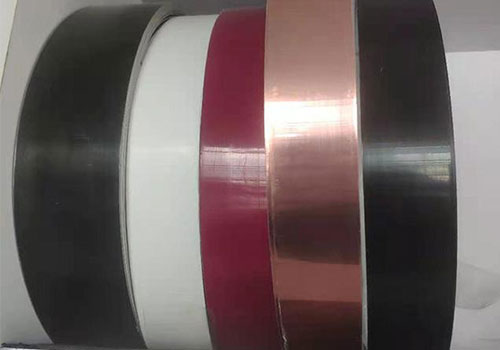
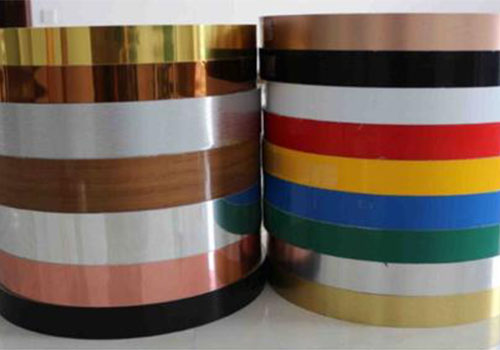
Discount Wood Grain Color Aluminium Strip
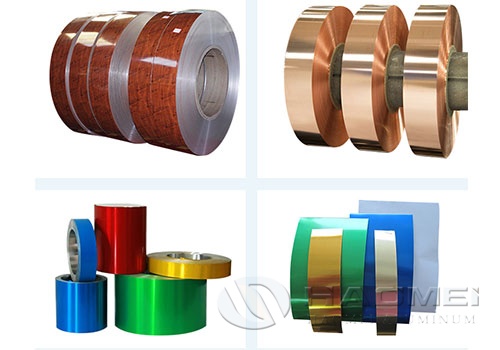
Discount wood grain color aluminium strip provides the visual warmth of timber while keeping the light weight, corrosion resistance, and forming flexibility of aluminum. It is designed for projects where real wood may crack, absorb moisture, fade, require frequent repainting, or add excessive weight. The strip is especially suitable for continuous fabrication processes, including roll forming, bending, slitting, stamping, and edge finishing.
The word "discount" should not be confused with low-grade material. In professional purchasing, it usually describes cost-efficient coil selection, stock-size availability, optimized coating systems, or production batches configured for high-volume decorative use. A properly specified wood grain strip can deliver a consistent decorative surface and stable mechanical behavior at a more practical project cost.
Why Wood Grain Aluminium Strip Works Differently from Wood
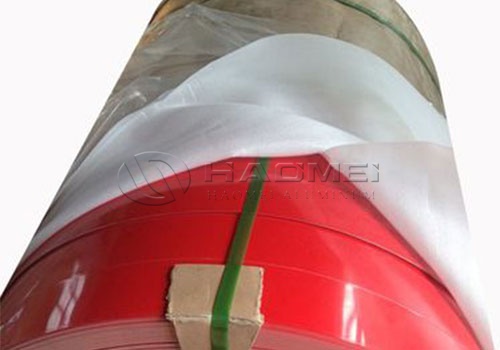
Natural wood is valued for its texture, but it changes with humidity, sunlight, insects, and temperature. Wood grain color aluminium strip reproduces timber-inspired patterns through coil coating, printing, transfer finishing, or laminated decorative films. The aluminum substrate remains dimensionally stable and does not rot, split, or support mold growth in the manner of organic wood products.
Its function is not merely decorative. The coating acts as a protective interface between the metal and the surrounding environment. In indoor conditions, a PE-coated finish commonly offers economical color protection and easy cleaning. For exterior panels, architectural trims, curtain-wall components, and highly exposed building systems, PVDF coating is often selected for stronger weathering and color-retention performance. Buyers comparing coating structures can review PE Coated Aluminum Strip options for indoor and moderate-environment applications.
The wood grain pattern can imitate oak, walnut, teak, maple, cherry, bamboo, or custom architectural textures. Pattern repeat, gloss, embossing depth, and color tolerance should be confirmed before mass production, particularly when strips will be joined across long façades or assembled into visible modular panels.
Typical Parameters for Purchase and Processing
Discount wood grain color aluminium strip is usually supplied in coils, slit coils, or cut-to-length strips. Common parameters are shown in the table.
| Parameter | Typical Range or Condition |
|---|---|
| Base metal thickness | 0.20 mm to 1.50 mm |
| Common widths | 20 mm to 1,600 mm before slitting |
| Coil inner diameter | 150 mm, 300 mm, 405 mm, or 505 mm |
| Coil outer diameter | Usually up to 1,800 mm, subject to weight limit |
| Coil weight | Commonly 1 to 5 tonnes |
| Surface finish | Wood grain printed, transfer-coated, laminated, or embossed |
| Coating thickness | PE: about 14 to 25 μm; PVDF: about 25 to 35 μm or as specified |
| Gloss level | Matte, satin, semi-gloss, or customized |
| Protective film | Optional, commonly 30 to 80 μm |
| Color consistency | Controlled by approved sample, coil batch, and production tolerance |
Thickness selection influences more than price. A thin strip can be economical for blinds, decorative edging, ceiling accessories, and light profiles. Medium-gauge material gives better stiffness for shutters, cladding trims, appliance panels, and door-frame systems. Heavier gauges are more appropriate where the strip will be deeply formed or required to resist deformation during installation.
Alloy and Temper Conditions
The alloy determines how the strip behaves in fabrication. Alloy 1050 and 1060 are frequently chosen when high aluminum purity, good bending performance, and corrosion resistance are required. Alloy 1100 is also widely used for decorative coated products due to its reliable workability.
For applications needing greater strength, 3003 aluminum alloy is often preferred. Its manganese content improves strength while preserving useful formability. Alloy 3004 may be selected for more demanding roll-formed shapes and panel structures. Alloy 5052 offers stronger corrosion resistance and higher strength, making it suitable for humid environments, transport components, and certain marine-adjacent uses, although cost and forming requirements should be evaluated carefully.
Common temper conditions include O, H14, H16, H18, H24, and H26. O temper is soft and suitable for complex bending. H14 and H24 provide a balanced combination of shape retention and fabrication flexibility. H18 is harder and can offer improved stiffness, but it is less suitable for tight-radius forming. The selected temper must match the intended bending radius, profiling design, and final load condition.
Chemical Composition of Common Aluminium Alloys
| Alloy | Al | Mn | Mg | Si + Fe | Cu | Other Elements |
|---|---|---|---|---|---|---|
| 1050 | ≥99.50% | ≤0.05% | ≤0.05% | ≤0.40% | ≤0.05% | Trace limits per standard |
| 1060 | ≥99.60% | ≤0.03% | ≤0.03% | ≤0.35% | ≤0.05% | Trace limits per standard |
| 1100 | ≥99.00% | ≤0.05% | ≤0.05% | ≤0.95% | 0.05% to 0.20% | Trace limits per standard |
| 3003 | Balance | 1.0% to 1.5% | ≤0.05% | ≤0.70% | ≤0.20% | Trace limits per standard |
| 5052 | Balance | ≤0.10% | 2.2% to 2.8% | ≤0.45% | ≤0.10% | Cr 0.15% to 0.35% |
Chemical composition values can vary slightly according to the applicable material standard and customer specification. Mill test certificates should be requested when composition control is critical for downstream forming, welding, anodizing compatibility, or corrosion-related service conditions.
Standards and Surface Performance
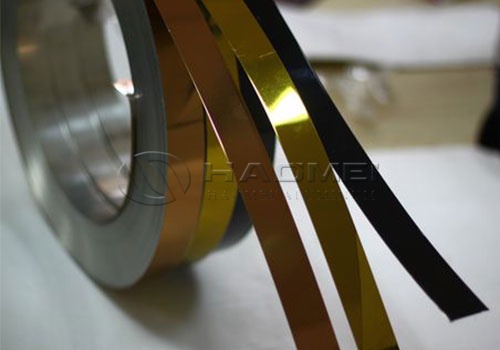
Production and inspection commonly follow ASTM B209, EN 485, EN 573, GB/T 3880, or customer-defined technical agreements. Coating quality may be assessed through film thickness, pencil hardness, T-bend performance, adhesion, impact resistance, gloss tolerance, color difference, and salt-spray testing where required.
A wood grain finish should be inspected as a system rather than as a color alone. The substrate must be clean and properly pretreated, usually through chemical conversion treatment, before primer and topcoat application. Inadequate pretreatment can reduce adhesion and create early coating failure around cut edges or formed areas. For high-exposure architecture, PVDF Coated Aluminum Strip provides a stronger option where long-term weather resistance is a priority.
Applications That Benefit from Cost-Efficient Wood Grain Strip
Wood grain aluminium strip is widely used in roller shutters, venetian blinds, suspended ceilings, wall panels, fascia systems, window trims, garage doors, furniture edging, appliance decoration, transport interiors, and commercial display fixtures. It is also processed into slats, channels, U-profiles, decorative frames, and composite panel accessories.
For exterior use, matching the coating to the climate is essential. Coastal, industrial, high-UV, and high-humidity zones may require PVDF systems, thicker coating films, enhanced pretreatment, and stricter cut-edge protection. Indoor furniture and ceiling systems often benefit from PE coatings because they balance decorative quality, processability, and cost.
A well-chosen discount wood grain color aluminium strip turns a visual requirement into a practical engineered material. By matching alloy, temper, thickness, coating system, pattern, and implementation standard to the final application, buyers can obtain a timber-style finish that is durable, efficient to fabricate, and dependable in service.