Color Aluminium Strip Coils For Light
Color aluminium strip coils for light are engineered for lighting manufacturers that need clean appearance, stable coating quality, accurate dimensions, and reliable forming performance. From LED panel frames to decorative lamp trims, the strip must look attractive while supporting heat control, corrosion resistance, and efficient production.
Unlike post-painted parts, pre-painted aluminium strip is coated before slitting and forming. This gives lighting factories a ready-to-use material with consistent color, smooth surface texture, and reduced painting work in the workshop. It is especially suitable for high-volume production where every meter of strip must bend, punch, roll, or snap into shape without cracking or obvious color variation.
What Makes It Suitable for Lighting Products
Lighting products are seen at close range, so the metal surface matters. A small scratch, waviness, or color difference can affect the perceived value of a lamp. Color aluminium strip coils combine the workability of aluminium with the decorative and protective function of an organic coating.
The base aluminium provides low weight, good thermal conductivity, and easy fabrication. The coating brings color, gloss control, stain resistance, and weather protection. For indoor lighting, PE coating is often selected for its cost efficiency, good flexibility, and attractive finish. For outdoor or high-humidity lighting, PVDF coating is preferred due to stronger UV resistance and longer color retention.
For manufacturers comparing options, Color Coated Aluminum Strip is often chosen when lamp housings, trim rings, linear light profiles, or ceiling light components require both decoration and repeatable forming quality.
Main Features Customers Care About
Color aluminium strip coils for light are valued because they reduce processing steps. The strip arrives painted, dried, slit, and packed, so it can move directly to roll forming, stamping, bending, or assembly. This improves production flow and helps control surface defects caused by manual painting.
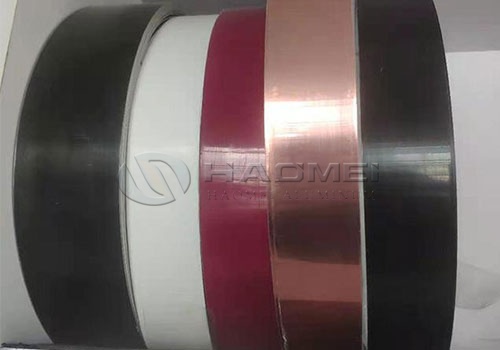
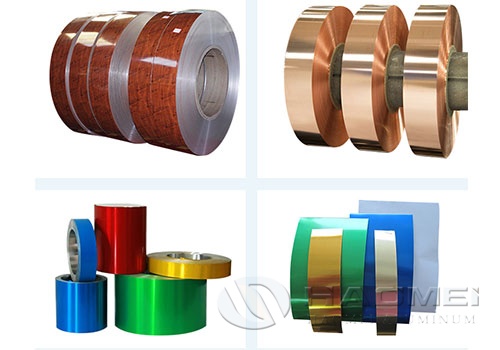
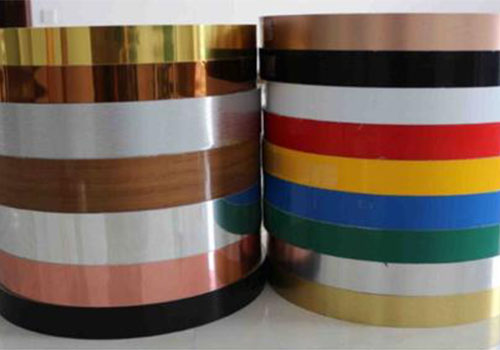
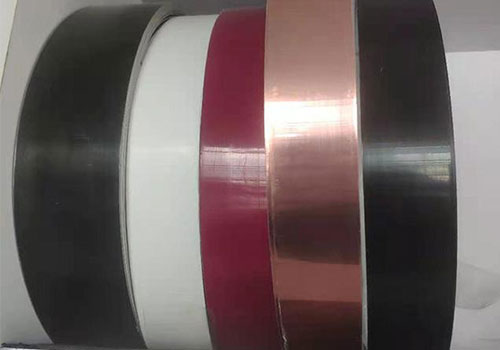
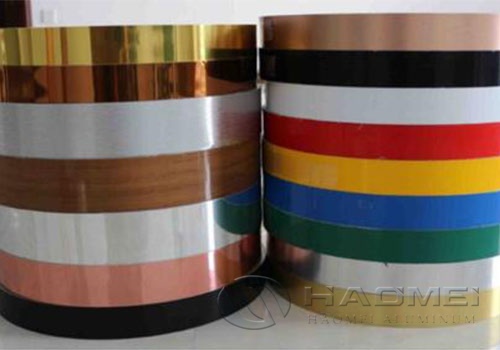
The material also supports elegant design. White and matte silver are common for clean architectural lighting, while black, gold, grey, red, and custom colors can create a stronger visual identity for commercial lamps. Gloss can be adjusted from matte to high gloss, depending on the final lighting style.
Another important feature is coating adhesion. During lamp frame production, the strip may pass through rollers, press tools, and bending stations. A well-pretreated surface and properly cured coating help prevent peeling, flaking, or edge cracking. Good strip flatness also supports better assembly accuracy, especially for long linear fixtures.
Heat performance is another reason aluminium is widely used in lighting. LED systems generate heat, and while coated aluminium is not always used as the main heat sink, it can assist thermal spreading in covers, housings, and structural parts. A thinner, lighter part can still feel rigid when the correct temper and profile design are selected.
Typical Technical Parameters
| Item | Common Range for Lighting Use |
|---|---|
| Alloy | 1050, 1060, 1100, 3003, 3004, 5052 |
| Temper | O, H14, H16, H18, H24, H26 |
| Thickness | 0.20 mm to 2.00 mm |
| Width | 10 mm to 1,600 mm, slit to order |
| Coating Type | PE, HDPE, PVDF, epoxy-based back coating |
| Coating Thickness | Front 15 to 25 microns, back 5 to 15 microns |
| Surface Finish | Glossy, matte, brushed effect, embossed option |
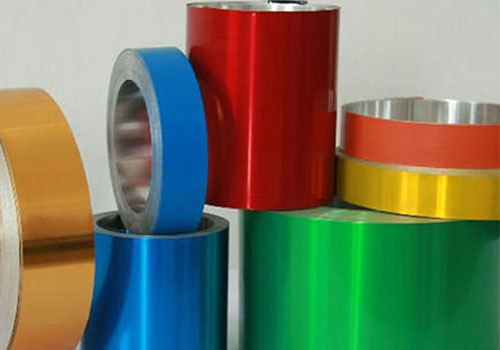
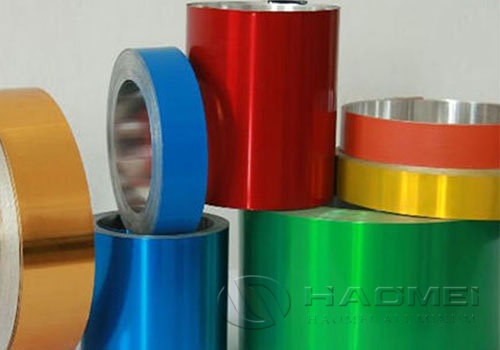
| Color Options | White, black, grey, silver, gold, red, blue, green, custom RAL colors |
| Coil ID | 300 mm, 405 mm, 505 mm, 508 mm |
| Packing | Eye-to-wall or eye-to-sky, moisture-proof export packing |
These values can be adjusted based on the lamp design, bending radius, corrosion environment, color requirement, and production method.
Alloy and Chemical Composition Reference
Lighting parts usually require a balance between softness, strength, surface quality, and corrosion resistance. Pure aluminium grades are easy to form and provide a bright base. Manganese alloy series materials improve strength and stability. Magnesium alloy options, such as 5052, are chosen when higher strength and better corrosion resistance are needed.
| Alloy | Al | Mn | Mg | Fe | Si | Cu | Typical Use in Lighting |
|---|---|---|---|---|---|---|---|
| 1050 | ≥99.50 | ≤0.05 | ≤0.05 | ≤0.40 | ≤0.25 | ≤0.05 | Decorative trims, reflectors, simple bent parts |
| 1060 | ≥99.60 | ≤0.03 | ≤0.03 | ≤0.35 | ≤0.25 | ≤0.05 | Soft strip, lamp covers, light-duty components |
| 1100 | ≥99.00 | ≤0.05 | - | ≤0.95 Fe+Si | - | 0.05-0.20 | Formed lighting shells and trims |
| 3003 | Balance | 1.00-1.50 | - | ≤0.70 | ≤0.60 | 0.05-0.20 | LED housing parts, channels, stronger formed parts |
| 5052 | Balance | ≤0.10 | 2.20-2.80 | ≤0.40 | ≤0.25 | ≤0.10 | Outdoor lamp parts, humid environments |
Coating Choices for Different Lamp Conditions
PE coated strip is a practical option for indoor lighting, furniture lighting, shop display lamps, and general decorative trims. It gives good color brightness, smooth processing, and attractive cost control. For ceiling lights, downlight rings, and LED panel side strips, PE coating is often enough when the product is used in a stable indoor environment.
PVDF coated strip is better for outdoor lamps, garden lights, signage lighting, coastal projects, and areas exposed to sunlight or rain. It resists chalking, fading, and chemical attack better than standard polyester coatings. If a lighting product is expected to hold its appearance for many years, PVDF Coated Aluminum Strip is a strong material choice.
Applications in Lighting Manufacturing
Color aluminium strip coils are used across many lighting categories because they are easy to slit, bend, roll, and assemble. They fit both functional and decorative needs.
Common applications include LED panel light frames, linear light housings, lamp shade rims, recessed light trims, ceiling lamp shells, downlight rings, emergency light casings, advertising light box edges, neon-style LED channel letters, display cabinet lighting parts, and decorative strips for architectural luminaires.
In LED strip channels, aluminium provides structure and a cleaner finished edge. In panel lights, pre-painted white or silver strip helps create a neat border with minimal finishing work. In decorative pendant lamps, colored strip can become part of the visual design rather than a hidden structural component.
For sign lighting and channel letters, bright colors such as red, yellow, blue, and green help match brand designs. For office and commercial lighting, white, black, grey, and brushed metallic tones are more common. A carefully selected coating can turn a simple aluminium strip into a visible design element.
Surface Quality and Production Control
Lighting customers often require strict surface control because many lamp parts are exposed. A qualified color aluminium strip coil should have a smooth coating, stable gloss, no obvious roller marks, no pinholes, no serious orange peel, and no large color difference between batches.
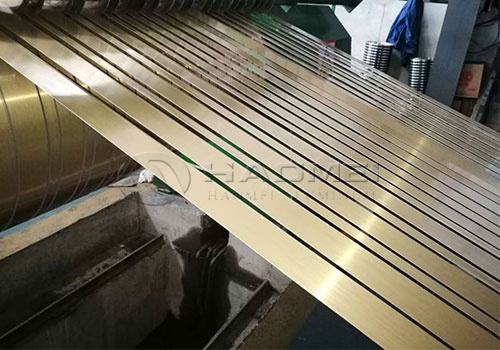
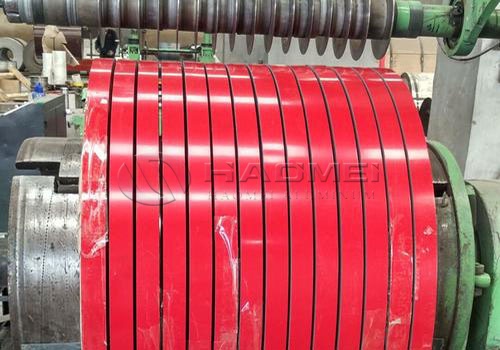
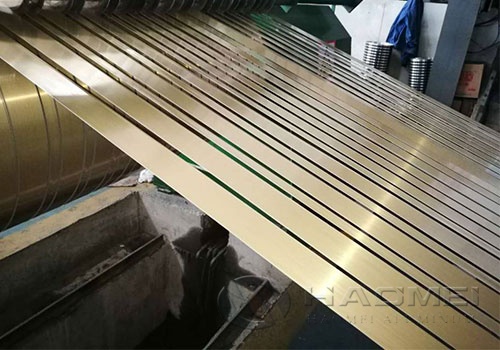
Good production begins with aluminium coil cleaning and chemical pretreatment. This step improves paint adhesion and corrosion resistance. The coating is then applied through precision rollers and baked at controlled temperature. After cooling, the strip can be slit to the required width. Slitting quality matters because burrs, uneven edges, or telescoping coils may cause problems during automatic forming.
Dimensional tolerance is equally important. Narrow lighting strips may run at high speed through roll forming machines. Width deviation, edge wave, or poor coil tension can interrupt production. For this reason, customers should confirm alloy, temper, coating type, color code, width tolerance, inner diameter, and packing method before ordering.
Benefits for Lighting Brands and Factories
Color aluminium strip coils help lighting factories shorten the path from raw material to finished product. The material is light, clean, consistent, and simple to process. It reduces painting labor, lowers solvent handling, improves surface repeatability, and supports large-scale automated fabrication.
For lighting brands, it offers design freedom. A lamp can be minimalist matte white, industrial black, warm champagne gold, or lively custom color without changing the base manufacturing concept. For installers and end users, aluminium parts are easy to handle and naturally resistant to rust, which is important for long service life.
Another practical benefit is recyclability. Aluminium can be recycled repeatedly, and lightweight coils reduce transport weight compared with many heavier metal alternatives. When paired with efficient coating systems and proper nesting or slitting plans, material waste can be controlled effectively.
How to Select the Right Strip
Start with the lamp environment. Indoor dry locations can usually use PE coating, while outdoor or wet locations should consider PVDF or other high-durability coatings. Then match the alloy and temper to the forming method. Soft tempers work well for deep bends and decorative trims, while harder tempers provide better shape stability for straight profiles.
Color should be confirmed by RAL number, physical sample, or approved color panel. If the lighting part will be assembled with plastic diffusers, screws, or other metal parts, gloss and shade matching should be tested under real light conditions. Bending tests and tape adhesion tests are also recommended before mass production.
Color aluminium strip coils for light are more than painted metal. They are a production-ready material system for modern luminaires, combining appearance, process efficiency, corrosion protection, and design flexibility in one coil.