Aluminum Strips for Car Edging
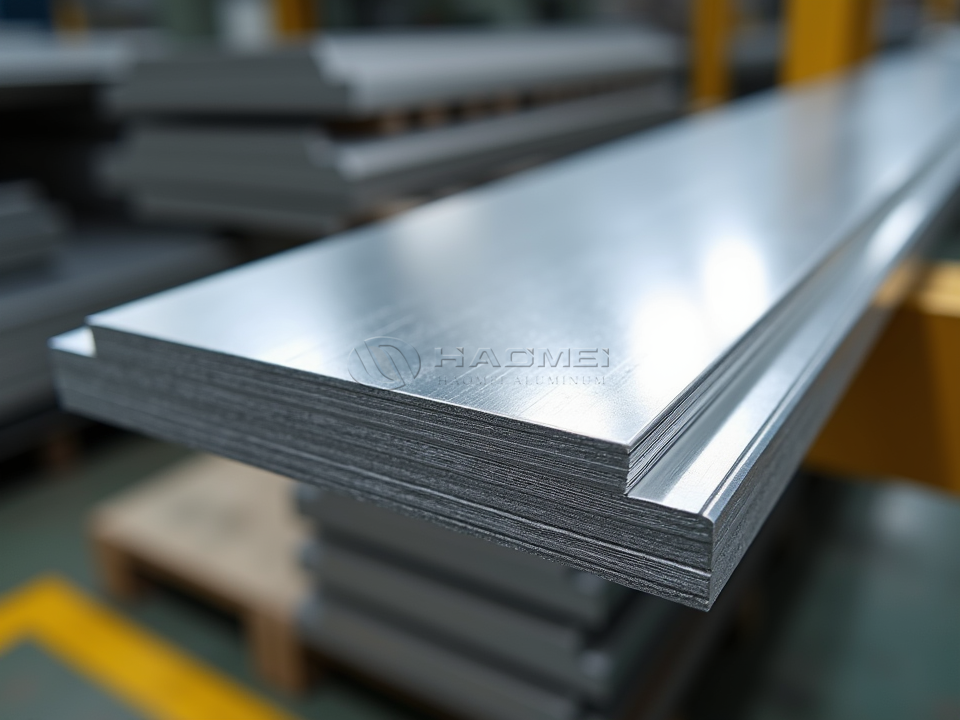
Aluminum strips for car edging are often treated as decorative trim, yet their real value lies at the boundary between appearance, protection, and assembly. A narrow strip can cover a sharp metal edge, reinforce a vulnerable seam, create a bright visual line, or provide a stable substrate for rubber, plastic, and adhesive components. In modern vehicles, edging strips appear around doors, windows, grilles, trunk openings, wheel arches, roof rails, dashboards, thresholds, and interior trim panels.
The most effective automotive edging strip is not simply the strongest material. It is the material that bends accurately, maintains a clean surface after forming, resists corrosion in outdoor service, and remains compatible with coatings, clips, sealants, or laminated decorative films. This makes aluminum strip a practical choice for both visible exterior trim and concealed structural finishing parts.
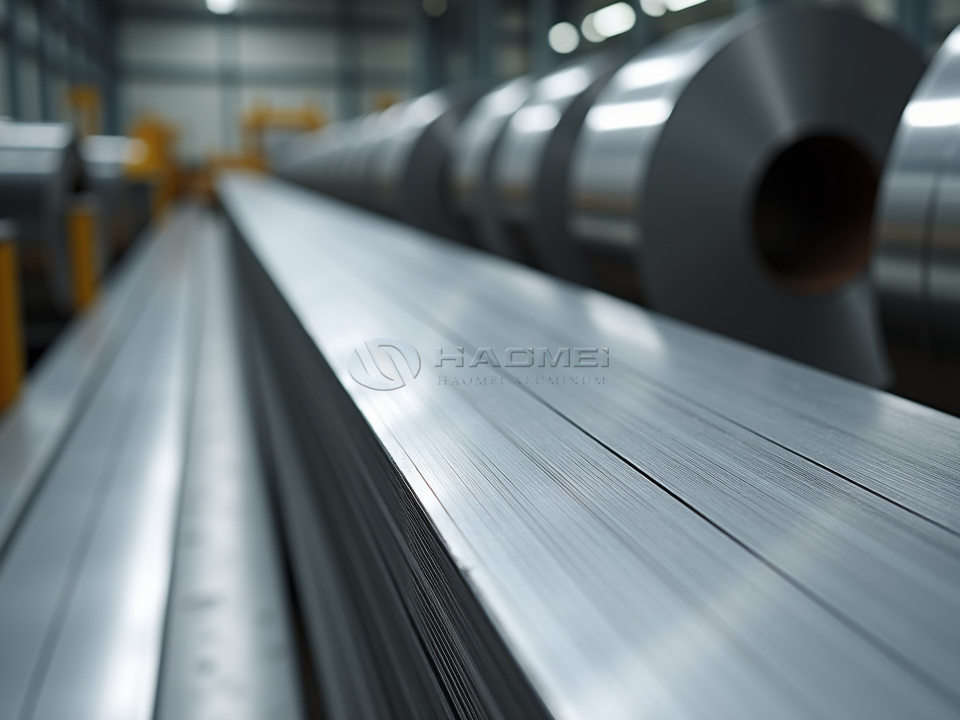
Functions Beyond Decoration
Car edging creates a controlled transition between two surfaces. On a door frame or trunk lid, it can hide an unfinished flange and reduce the risk of scratches during assembly or daily use. Around windows and body contours, aluminum trim provides a crisp line that visually separates painted panels, black sealing systems, and glass.
For exterior applications, a strip may be bright-finished, anodized, brushed, painted, powder-coated, or laminated with protective film. A polished surface gives premium visual impact, while a coated surface offers color matching and improved resistance to road salt, detergent, UV exposure, and stone-chip damage.
In interior applications, aluminum edging is used on console borders, speaker grilles, instrument panel accents, door insert frames, and seat-track covers. Here, the strip must form cleanly without surface waviness or cracking. It also needs stable dimensions so that clips and mating plastic parts fit consistently.
The material acts as a "precision skin" for the vehicle. Its thickness is small, but its visual and functional influence is significant.
Alloy Selection for Automotive Edge Trim
The alloy should be selected according to the required balance of formability, strength, corrosion performance, and finishing quality.
The 1xxx series, especially 1050 and 1060, offers excellent ductility and a bright, clean surface. These grades are suitable for lightly loaded decorative edging, reflective trim, and components requiring deep bending or roll forming. For soft, highly formable applications, 1050 / 1060 Aluminum Strip is frequently considered where strength demands are modest.
The 3xxx series, such as 3003, provides improved strength through manganese addition while maintaining good forming behavior. It is useful for painted edge trim, general-purpose automotive profiles, and stamped cover strips.
The 5xxx series is widely preferred for demanding exterior edging. Alloy 5052 combines medium strength, strong corrosion resistance, and dependable bendability. It performs well in humid conditions, winter road-salt exposure, and areas where the strip contacts rubber seals or painted steel. For durable exterior trim and formed protective edging, 5052 Aluminum Strip is a practical material option.
The 6xxx series, including 6061, is more suitable when a relatively rigid strip or profile is needed. It can be used for reinforced trim sections, roof-edge components, and machined accessories, although its forming window is generally narrower than soft 1xxx or 5xxx strip.
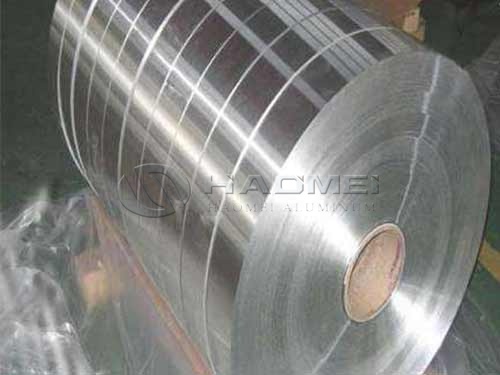
Common Parameters for Aluminum Strips for Car Edging
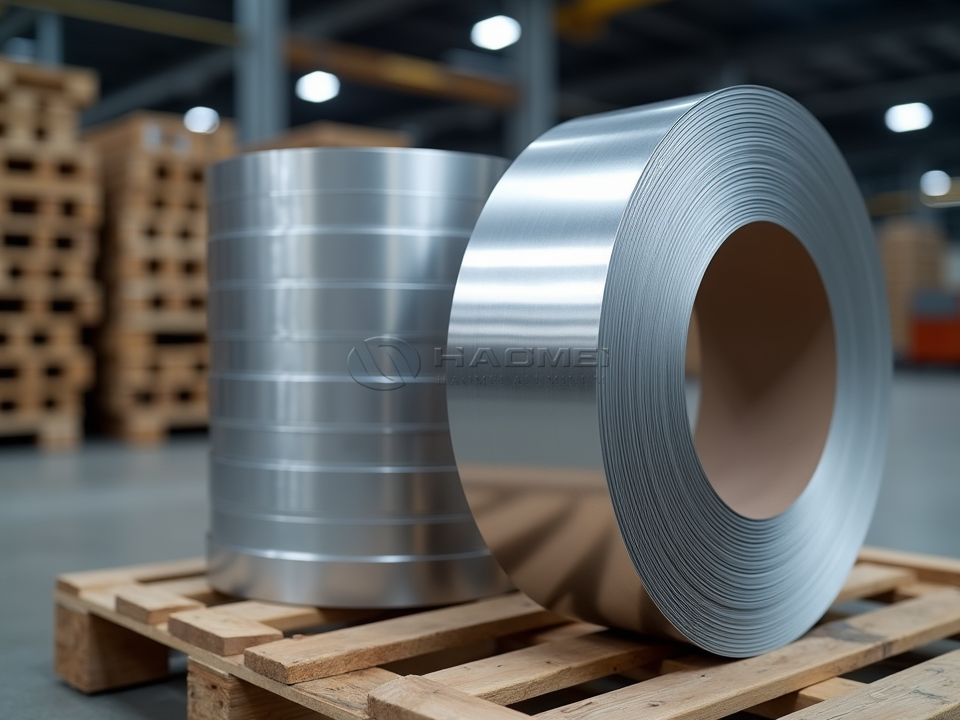
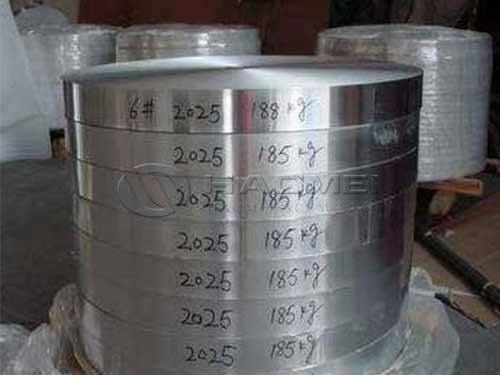
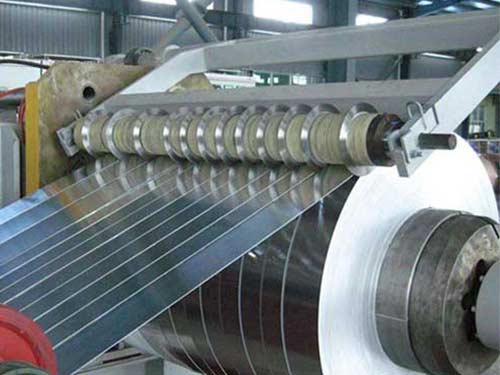
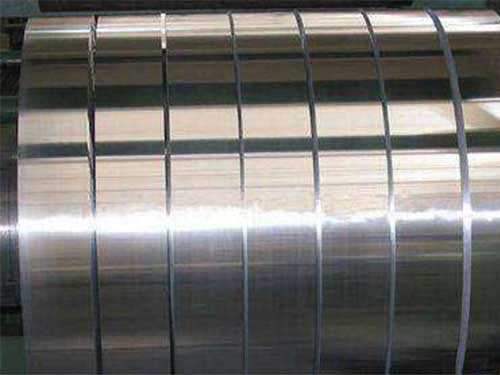
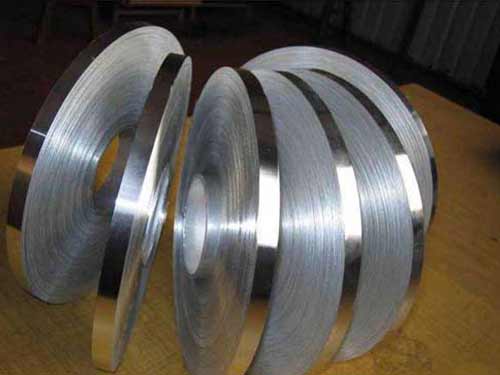
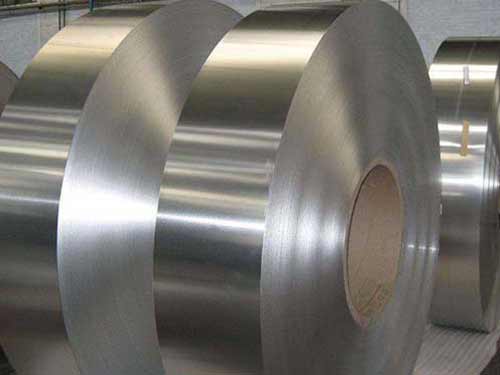
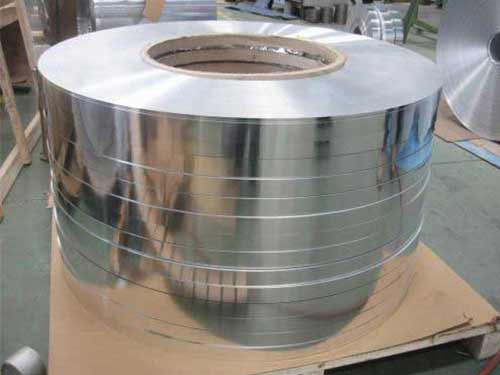
Automotive edging strip dimensions are usually tailored to the profile design, assembly method, and visible surface requirements. Narrow coils are commonly slit from wider master coils before stamping, roll forming, bending, or coating.
| Parameter | Typical Range or Condition |
|---|---|
| Alloy | 1050, 1060, 1100, 3003, 3105, 5052, 5754, 6061 |
| Temper | O, H14, H16, H18, H22, H24, H32, H34, T4, T6 |
| Thickness | 0.20-2.00 mm |
| Common thickness for decorative edging | 0.30-0.80 mm |
| Common thickness for protective profiles | 0.80-1.50 mm |
| Width | 10-300 mm, customized slit width available |
| Coil inner diameter | 150 mm, 300 mm, 405 mm, 505 mm, or customized |
| Surface options | Mill finish, bright finish, brushed, anodized, painted, laminated |
| Edge condition | Mill edge, slit edge, deburred edge, rounded edge |
| Flatness and camber | Controlled according to forming process and customer drawing |
Temper selection changes how the strip behaves on the production line. O temper is soft and suitable for complex bending, hemming, and tight-radius forming. H14 and H24 provide a balanced combination of stiffness and workability for conventional stamped trim. H32 is frequently selected for 5052 car edging because it retains good corrosion resistance and reasonable formability while offering more strength than annealed material. T4 and T6 tempers are used where dimensional stability and higher rigidity are more important than severe forming.
Chemical Composition and Why It Matters
Aluminum edging performs differently because alloying elements control strength, corrosion resistance, forming response, and surface behavior. The following table shows typical composition limits by weight percentage.
| Alloy | Si | Fe | Cu | Mn | Mg | Cr | Zn | Al |
|---|---|---|---|---|---|---|---|---|
| 1050 | ≤0.25 | ≤0.40 | ≤0.05 | ≤0.05 | ≤0.05 | - | ≤0.07 | Balance |
| 3003 | ≤0.60 | ≤0.70 | 0.05-0.20 | 1.00-1.50 | - | - | ≤0.10 | Balance |
| 5052 | ≤0.25 | ≤0.40 | ≤0.10 | ≤0.10 | 2.20-2.80 | 0.15-0.35 | ≤0.10 | Balance |
| 6061 | 0.40-0.80 | ≤0.70 | 0.15-0.40 | ≤0.15 | 0.80-1.20 | 0.04-0.35 | ≤0.25 | Balance |
Magnesium gives 5052 its useful combination of strength and corrosion resistance. Manganese strengthens 3003 and supports stable performance in formed components. Silicon and magnesium in 6061 enable heat treatment and higher strength, making it suitable for more rigid edging structures. High-purity 1050 relies on its aluminum-rich composition to provide excellent conductivity, surface quality, and ease of forming.
Standards and Production Control
Aluminum strip for automotive edge applications can be produced in accordance with ASTM B209, EN 485, EN 573, GB/T 3880, and customer-specific technical drawings. Material certification commonly includes alloy, temper, dimensions, mechanical properties, chemical composition, surface condition, coil weight, and inspection results.
For visible automotive trim, surface inspection is especially important. The strip should be free from severe scratches, dents, oil marks, edge burrs, roller marks, oxidation spots, and coating defects. If the strip will be anodized or polished, the starting surface must be consistent because minor imperfections can become more obvious after finishing.
Edge quality also affects assembly. A sharp slit edge may damage rubber seals, protective gloves, paint, or adjacent plastic components. Deburring, edge rounding, and controlled slitting are valuable when the strip will be inserted into a seal channel or snapped into a trim profile.
Processing Routes for Reliable Car Edging
A typical production route begins with aluminum coil selection, followed by slitting to the required width. The strip may then be annealed, cleaned, coated, laminated, embossed, stamped, roll formed, or bent into the final cross-section. Decorative trims can receive anodizing, painting, brushing, or mirror polishing before protective film is applied.
For bonded edging, the aluminum surface may require pretreatment to improve adhesive performance. For clip-mounted trim, dimensional consistency and springback control are more important. For rubber-lined edge guards, a smooth edge and accurate width help maintain reliable retention without cutting into the elastomer.
Aluminum strips for car edging bring together styling and engineering in a remarkably compact form. With the right alloy, temper, surface finish, and edge treatment, they protect exposed areas, elevate vehicle appearance, and support efficient automotive assembly from the body shop to final trim installation.