Aluminium Strip Aluminium Tape 8011
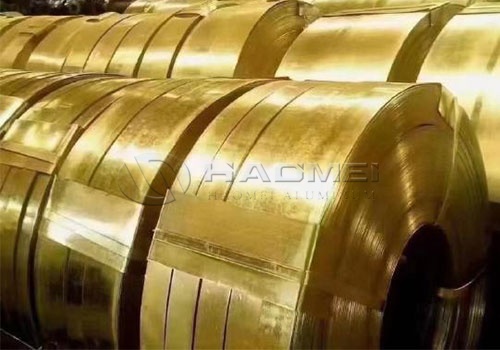
8011 aluminium strip aluminium tape is a practical material for applications requiring light weight, corrosion resistance, formability, and dependable barrier performance. Made from AA 8011 alloy, this strip is widely converted into self-adhesive aluminium tape, cable wrap, packaging foil, heat-insulation facing, HVAC sealing tape, and industrial protective laminates.
The alloy contains controlled amounts of iron and silicon that improve strength compared with high-purity aluminium grades while retaining the flexibility needed for slitting, embossing, bending, and tape conversion. It is a non-heat-treatable alloy, so its final mechanical condition is created mainly through annealing and cold rolling.
Why 8011 Aluminium Strip Performs Well in Tape Conversion
Aluminium tape normally consists of an 8011 aluminium strip backing, a pressure-sensitive adhesive, and a release liner. The metal layer provides the physical barrier and reflective surface, while the adhesive allows rapid installation on metal ducts, insulation boards, pipes, cable assemblies, and other surfaces.
For converters, 8011 offers stable gauge control and a clean rolling surface. These characteristics support consistent adhesive coating, neat die-cutting, and uniform winding. Soft O temper is preferred where deep flexibility and conformability are important, while H14, H16, and H18 tempers provide increased stiffness for applications where the tape must resist tearing, wrinkling, or deformation.
| Functional property | Contribution of 8011 aluminium strip | Typical benefit in aluminium tape |
|---|---|---|
| Moisture barrier | Dense metallic structure with no inherent porosity | Helps protect joints, insulation, and packaged materials from vapor exposure |
| Heat reflection | Bright aluminium surface reflects radiant energy | Supports thermal insulation and HVAC applications |
| Corrosion resistance | Natural aluminium oxide film forms on the surface | Suitable for normal indoor, outdoor, and humid service conditions |
| Formability | Good elongation, especially in O temper | Tape conforms to curved ducts, corners, and irregular surfaces |
| Strength | Iron and silicon strengthen the alloy | Improves resistance to handling damage and tearing |
| Electrical conductivity | Conductive aluminium substrate | Useful for shielding, grounding-related laminates, and cable protection |
Chemical Composition of AA 8011 Aluminium Alloy
AA 8011 is an aluminium-iron-silicon alloy. Its composition is controlled to balance mechanical strength, processing performance, and corrosion resistance. The values shown are common limits specified for 8011 alloy under EN and ASTM-oriented material systems.
| Element | Content, % by weight |
|---|---|
| Silicon, Si | 0.50-0.90 |
| Iron, Fe | 0.60-1.00 |
| Copper, Cu | 0.10 max |
| Manganese, Mn | 0.20 max |
| Magnesium, Mg | 0.05 max |
| Zinc, Zn | 0.10 max |
| Titanium, Ti | 0.08 max |
| Other elements, each | 0.05 max |
| Other elements, total | 0.15 max |
| Aluminium, Al | Remainder |
The aluminium-rich structure creates a naturally protective oxide layer when exposed to air. This layer slows further oxidation and makes 8011 strip suitable for many moisture-prone environments. For highly acidic, alkaline, marine, or chemically aggressive conditions, the complete tape construction should be assessed, including adhesive, coating, laminate, and edge exposure.
Temper Conditions and Mechanical Performance
Temper selection has a direct effect on how 8011 aluminium tape behaves during converting and installation. O temper provides the highest flexibility, while H-series tempers provide progressively greater hardness through cold work.
| Temper | Condition | Typical tensile strength, MPa | Typical elongation | Suitable tape characteristics |
|---|---|---|---|---|
| O | Fully annealed, soft | 85-120 | 10% or higher | Highly conformable tape, foil laminates, embossed products |
| H14 | Half-hard | 125-165 | 3%-8% | General-purpose tape with balanced formability and strength |
| H16 | Three-quarter hard | 145-185 | 2%-6% | Stronger backing for industrial sealing and protection |
| H18 | Full-hard | 160-200 | 1%-4% | Stiff, tear-resistant tape and rigid wrapping applications |
| H19 | Extra-hard | 180-220 | Limited | Special applications requiring maximum cold-worked strength |
Actual properties vary with thickness, rolling schedule, testing direction, and applicable standard. For thin foil tape, elongation values can differ from those measured on thicker strip products. Material certificates should state the agreed tensile strength, elongation, thickness tolerance, and surface requirements.
Technical Specifications for 8011 Aluminium Strip and Tape Backing
8011 aluminium strip can be supplied in mill finish, bright finish, embossed finish, lacquered condition, or coated condition. It may also be laminated with paper, polymer film, fiberglass scrim, or insulation facings. Surface preparation is important when acrylic, rubber-resin, or solvent-based adhesives are applied.
| Parameter | Common supply range | Notes |
|---|---|---|
| Alloy | AA 8011 / EN AW-8011 | Aluminium-iron-silicon alloy |
| Thickness | 0.014-0.200 mm | Tape backing commonly uses thin gauges |
| Width | 10-1,500 mm | Slit widths can be tailored to tape production lines |
| Coil inner diameter | 150 mm, 300 mm, 505 mm, 508 mm | Selected according to equipment requirements |
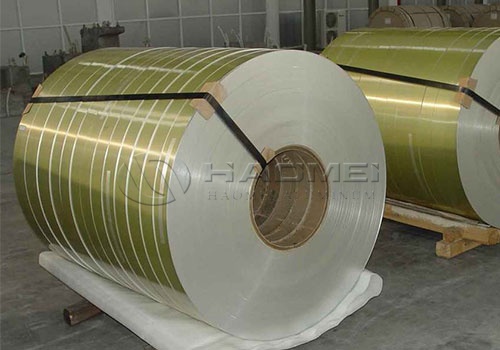
| Coil outer diameter | Up to approximately 1,800 mm | Depends on thickness and coil weight |
| Surface | Mill finish, bright, embossed, lacquered, coated | Surface must be clean and suitable for intended conversion |
| Edge condition | Slit edge or trimmed edge | Burr control is important for narrow tape slitting |
| Flatness | Agreed by application | Important for laminating and adhesive coating |
| Oil level | Light, dry, or controlled | Specified to support bonding and storage requirements |
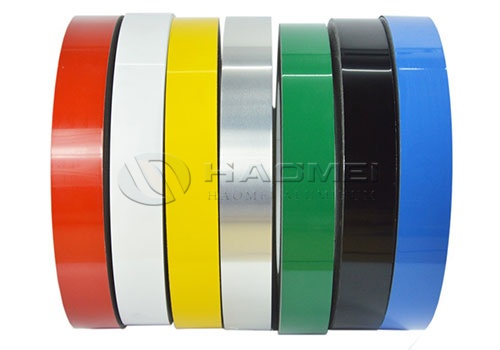
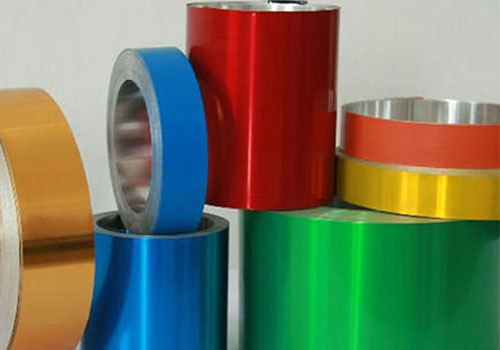
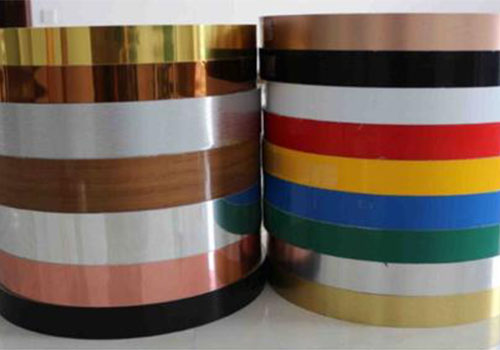
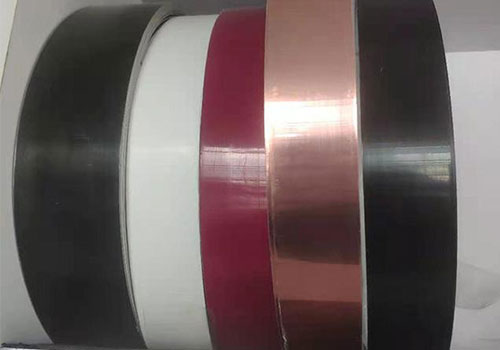
For decorative or identification-focused tape products, colored coatings can be applied to the strip surface. A Color Coated Aluminum Strip can provide visual differentiation for insulation systems, cable marking, equipment labeling, and architectural protection applications.
Applicable Standards and Quality References
The finished tape and the aluminium backing are often governed by different standards. Aluminium strip standards define alloy chemistry, mechanical properties, dimensions, and tolerances. Adhesive tape standards may define peel adhesion, tack, shear resistance, flame behavior, aging performance, and service temperature.
| Standard | Scope | Relevance to 8011 aluminium strip aluminium tape |
|---|---|---|
| ASTM B209 | Aluminium and aluminium-alloy sheet and plate | Common reference for alloy, temper, dimensions, and properties |
| EN 573-3 | Chemical composition of wrought aluminium alloys | Reference for AA/EN AW-8011 chemistry |
| EN 485 | Tolerances and mechanical properties for sheet and strip | Used for dimensional and temper-related requirements |
| GB/T 3190 | Chemical composition of wrought aluminium alloys | Chinese standard reference for alloy composition |
| GB/T 3198 | Aluminium and aluminium-alloy foil | Relevant to thin foil backing and foil conversion |
| ISO 9001 | Quality management systems | Supports traceability and process control at the production site |
Common Applications of 8011 Aluminium Tape
8011 aluminium tape is frequently used in HVAC duct sealing because its metallic backing conforms well to duct joints and insulation seams. When combined with a suitable adhesive, it helps create a durable seal against moisture, dust, and air leakage.
Thermal insulation systems use aluminium tape to close foil-faced insulation boards, rock wool facings, glass wool blankets, and reflective barriers. The bright surface assists radiant heat reflection, while the tape protects exposed seams from handling and environmental contact.
In cable and wire manufacturing, 8011 strip can serve as a shielding or wrapping layer. Its low weight and good workability support high-speed forming around cable cores. Packaging converters also use thin 8011 foil for lids, flexible laminates, pharmaceutical packaging structures, and food-contact constructions when the complete material system meets relevant regulations.
| Application field | Typical strip condition | Main requirement |
|---|---|---|
| HVAC duct tape | O, H14 | Flexibility, sealing support, moisture resistance |
| Insulation facing tape | O, H14, embossed | Heat reflection and seam protection |
| Cable wrap | O, H14 | Formability and conductive shielding layer |
| Protective surface tape | H14, H16 | Tear resistance and abrasion protection |
| Packaging laminate | O temper foil | Barrier performance and laminate compatibility |
| Decorative or marking tape | Coated H14 | Color stability and clean appearance |
Handling and Selection Considerations
Successful tape performance depends on more than the aluminium alloy alone. The adhesive should be matched to the operating temperature, substrate condition, humidity, ultraviolet exposure, and required service life. Acrylic adhesive systems are often selected for aging and temperature resistance, while rubber-resin systems can provide strong initial tack on selected surfaces.
Store 8011 aluminium strip in a dry, ventilated area away from condensation, corrosive chemicals, and direct contact with wet materials. Coils should remain protected from dents and edge damage, since narrow tape slitting requires stable coil edges. Before production, confirm thickness tolerance, temper, surface cleanliness, coil dimensions, and adhesive compatibility through trial conversion.
8011 aluminium strip aluminium tape combines a robust metallic barrier with flexible converting performance. With the proper temper, surface condition, adhesive system, and dimensional control, it provides a reliable solution for sealing, insulation, wrapping, shielding, packaging, and industrial protection.