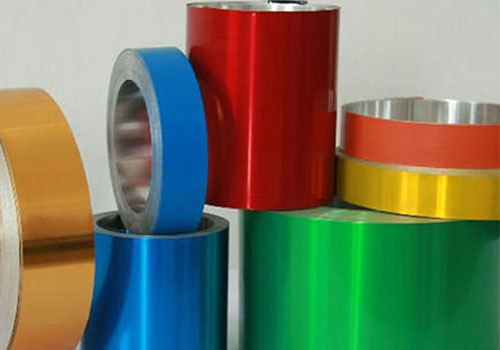
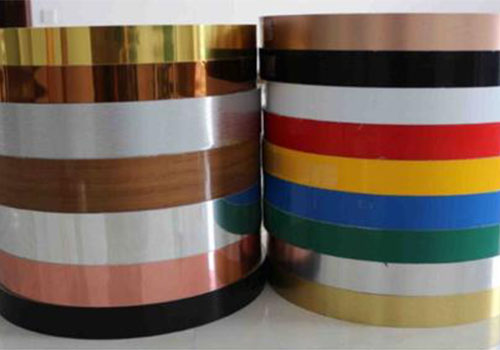
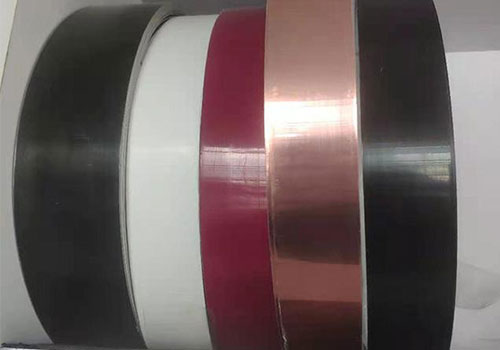
4mm 0.3mm PVDF Coated Aluminium Strip
A Small Strip Built for Demanding Surfaces
A 4mm x 0.3mm PVDF coated aluminium strip may look like a minor component, yet its role is often highly visible. This narrow, pre-finished material is used where edges, trim lines, decorative seams, insulated panels, electrical accessories, appliance details, and compact architectural parts need both accurate dimensions and long-term color stability.
The value of this strip is not simply its aluminium base. It is the coordination between a thin metal substrate, controlled slitting accuracy, surface pretreatment, and a fluoropolymer coating system that continues to perform after exposure to heat, humidity, ultraviolet light, dust, and industrial atmosphere.
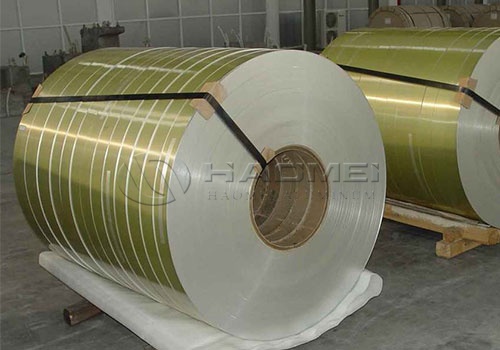
For projects requiring a weather-resistant painted surface, PVDF Coated Aluminum Strip provides a stronger outdoor-oriented solution than ordinary painted aluminium. At 4mm wide, the strip is especially suitable for precision fabrication where coating consistency must remain reliable across a very narrow band.
Understanding the 4mm x 0.3mm Format
The designation generally refers to a strip width of 4mm and a base aluminium thickness of 0.3mm, excluding or including coating thickness according to the purchase agreement. Because paint films are measured in microns, customers should clearly state whether the 0.3mm requirement applies to the bare substrate or the final coated strip.
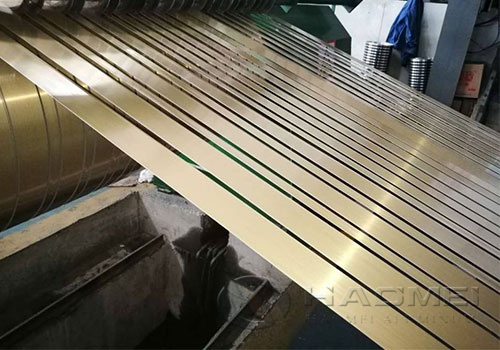
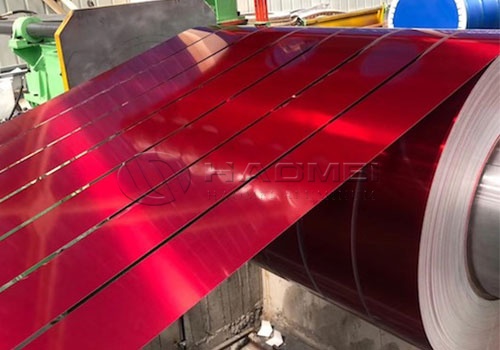
A 0.3mm aluminium strip is light, flexible, and easy to form into gentle curves. At the same time, the 4mm width demands careful slitting. Burrs, edge waviness, telescoping, and coating damage can become more apparent on narrow coils than on wider sheet products. A properly produced coil should have clean edges, stable winding tension, minimal camber, and a coating surface free from pinholes, scratches, wrinkles, or exposed metal.
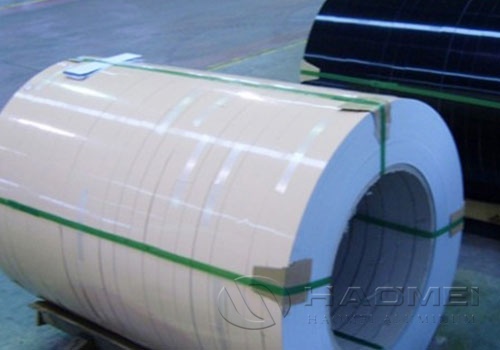
Typical coil inner diameters, outer diameters, coil weight, and packing style can be tailored to the customer's unwinding equipment. For compact automated lines, smaller coils may improve handling. For continuous roll-forming or high-volume assembly, larger coils can reduce coil-change downtime.
Typical Product Parameters
| Property | Common Requirement or Range |
|---|---|
| Product name | 4mm x 0.3mm PVDF coated aluminium strip |
| Width | 4mm, with tolerance subject to agreement |
| Base metal thickness | 0.30mm |
| Thickness tolerance | Commonly ±0.02mm, subject to alloy and mill capability |
| Alloy options | 1050, 1060, 1100, 3003, 3004, 3105, 5052 |
| Temper options | O, H14, H16, H18, H24, H26, H32 |
| Coating type | PVDF fluorocarbon coating, commonly based on 70% PVDF resin |
| Coating structure | Primer plus PVDF topcoat; optional back coat |
| Dry film thickness | Usually 20-35 μm total, customizable |
| Surface finish | Gloss, matte, textured, metallic, solid color, embossed pattern |
| Coil form | Slit coil, pancake coil, traverse wound coil, or cut length |
| Application environment | Exterior trim, industrial components, decorative edges, equipment parts |
Alloy and Temper Selection
The aluminium alloy should be chosen according to the strip's working condition rather than appearance alone. A narrow coated strip can be bent, stamped, bonded, laminated, wrapped, or inserted into a profile. Each operation places different demands on strength and formability.
Alloy 1050 or 1060 is widely selected when high aluminium purity, excellent workability, and a smooth painted appearance are needed. These grades are suitable for general decorative uses and light forming. Alloy 1100 has similarly good corrosion resistance and is frequently used for painted trim materials.
For applications needing more strength, 3003 and 3105 are practical choices. Manganese improves strength while retaining good forming behavior. These alloys are commonly used for architectural color-coated products because they balance processing performance, corrosion resistance, and economical production.
Temper O provides the softest condition and is suitable for deep bending or shapes with a tight radius. H14 and H16 offer moderate hardness for applications that need better dimensional stability. H18 provides a harder strip but has reduced forming capacity. H24 and H26 are often selected when a controlled combination of strength and bend performance is required.
For a 4mm-wide strip, overly hard tempers may increase the risk of edge cracking during sharp bends. The forming radius, coating thickness, and part geometry should be reviewed before selecting a temper.
Chemical Composition of Common Aluminium Alloys
The chemical makeup of the substrate influences corrosion behavior, mechanical strength, and forming response. The values shown are typical maximum or nominal limits in percent by weight, with aluminium as the remaining balance.
| Alloy | Si | Fe | Cu | Mn | Mg | Zn | Ti | Al |
|---|---|---|---|---|---|---|---|---|
| 1050 | 0.25 | 0.40 | 0.05 | 0.05 | 0.05 | 0.05 | 0.03 | Balance |
| 1060 | 0.25 | 0.35 | 0.05 | 0.03 | 0.03 | 0.05 | 0.03 | Balance |
| 1100 | Si + Fe 0.95 max | - | 0.05-0.20 | 0.05 max | - | 0.10 max | - | Balance |
| 3003 | 0.60 | 0.70 | 0.05-0.20 | 1.0-1.5 | - | 0.10 | - | Balance |
| 3105 | 0.60 | 0.70 | 0.30 | 0.30-0.80 | 0.20-0.80 | 0.40 | 0.10 | Balance |
| 5052 | 0.25 | 0.40 | 0.10 | 0.10 | 2.2-2.8 | 0.10 | - | Balance |
Why PVDF Coating Matters on Narrow Strip
PVDF coating is valued for its resistance to sunlight, fading, chalking, moisture, and many chemicals. In outdoor use, this stability helps the strip retain a more consistent appearance over years of exposure. A well-designed PVDF system normally includes substrate cleaning, chemical conversion treatment, primer application, topcoat application, and controlled oven curing.
The pretreatment layer is especially important. It improves adhesion between aluminium and paint while helping the substrate resist under-film corrosion. The primer supports bonding and flexibility, while the PVDF topcoat delivers color, gloss, and weatherability.
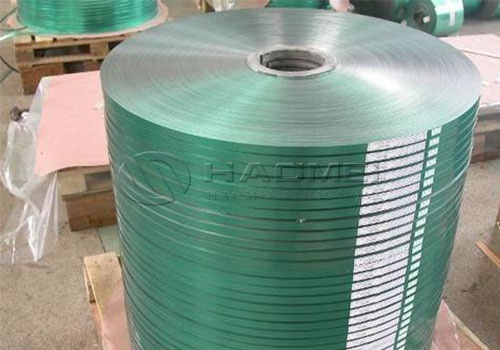
For indoor products with limited ultraviolet exposure, PE coatings can be a cost-effective alternative. However, for façades, outdoor trims, solar-related components, transportation parts, and high-exposure installations, PVDF is generally the more durable coating option. Customers comparing paint systems can also review Color Coated Aluminum Strip selections for different colors, surface styles, and application conditions.
Standards and Quality Conditions
Production can be assessed against widely used aluminium and coil-coating standards, depending on the destination market and project specification. Common references include ASTM B209 for aluminium sheet and strip, EN 485 for aluminium wrought products, EN 573 for alloy chemical composition, and EN 1396 for coil-coated aluminium products.
For architectural fluoropolymer coating performance, AAMA 2605 is frequently referenced. This standard addresses demanding exterior coating performance, including color retention, chalk resistance, adhesion, impact resistance, humidity resistance, and weathering behavior. Project requirements may also specify bend testing, T-bend results, pencil hardness, coating thickness, gloss tolerance, color difference, salt spray resistance, and boiling-water adhesion.
A practical purchase specification should identify alloy, temper, final dimensions, color code, gloss level, coating thickness, front and back coating requirements, coil direction, allowable burr condition, protective film needs, and packing method. These details help ensure the delivered 4mm x 0.3mm strip enters production smoothly rather than requiring adjustment at the assembly stage.
Processing and Storage Advice
PVDF coated aluminium strip should be formed with clean tooling to avoid marking the painted face. Protective film can be considered for decorative surfaces, although it should be removed within the recommended period to prevent adhesive residue. During bending, a suitable radius should be maintained to reduce stress on the coating film.
Store coils in a dry, ventilated area away from direct moisture, corrosive chemicals, and rapid temperature changes. Coils should remain wrapped until use. Condensation trapped between layers may cause water staining or corrosion, particularly if the packaging is damaged.
A well-specified 4mm x 0.3mm PVDF coated aluminium strip combines precision dimensions with an exterior-grade surface. When alloy, temper, coating construction, and slitting quality are matched to the final process, this small-format material can deliver a clean appearance and dependable service life in demanding applications.