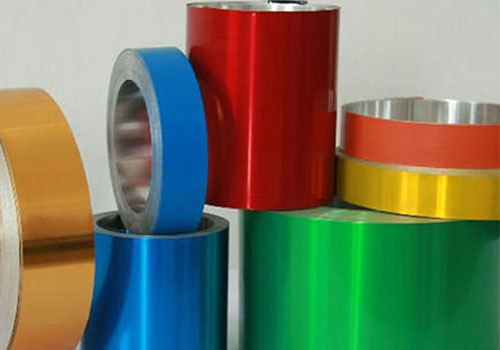
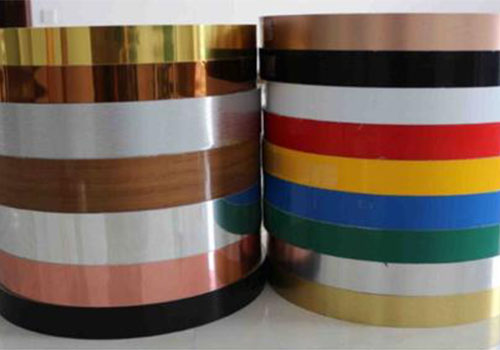
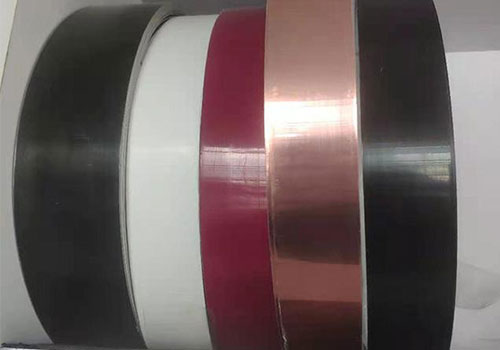
3mm 0.21mm PVDF Coated Aluminum Strip
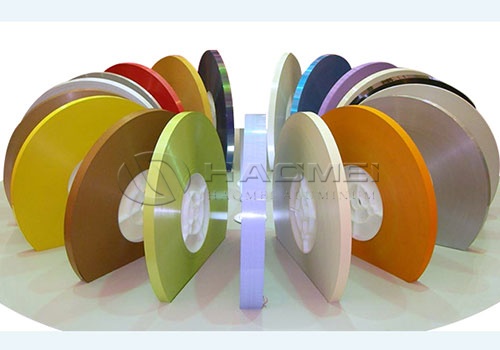
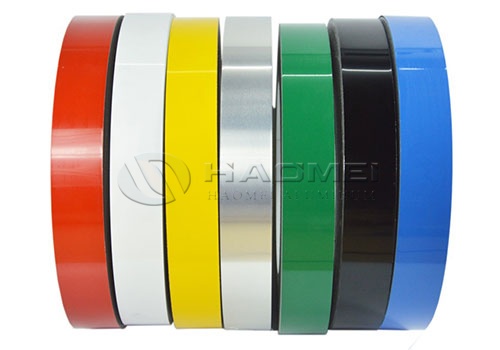
A 3mm 0.21mm PVDF coated aluminum strip may look like a minor material in a finished product, but it often performs a highly visible job. Used for decorative edging, narrow trim, sealing details, insulated panel accessories, appliance parts, signage components, and formed profiles, this slim strip must remain straight, clean, colorful, and stable during processing.
Its value comes from the balance between a thin aluminum base and a high-performance fluorocarbon coating. At only 0.21mm thick, the strip is light enough for tight bending and precise stamping. At 3mm wide, it is designed for applications where broad sheet material would create unnecessary waste or require extra cutting. The PVDF finish gives this narrow strip the weathering resistance normally expected from architectural exterior materials.
What the 3mm x 0.21mm Specification Means
The specification usually describes a strip with a nominal width of 3mm and an aluminum substrate thickness of 0.21mm before or according to the agreed coating measurement method. Because the strip is narrow, width consistency matters as much as thickness. A slight burr, wandering slit edge, or inconsistent tension can affect automatic feeding, roll forming, wrapping, and decorative assembly.
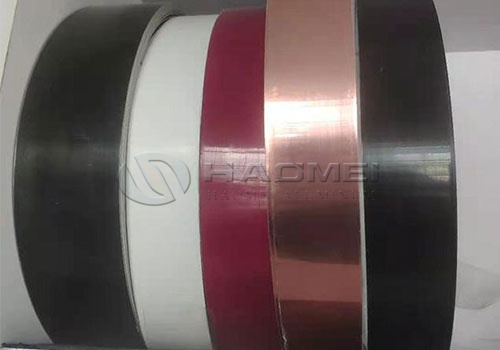
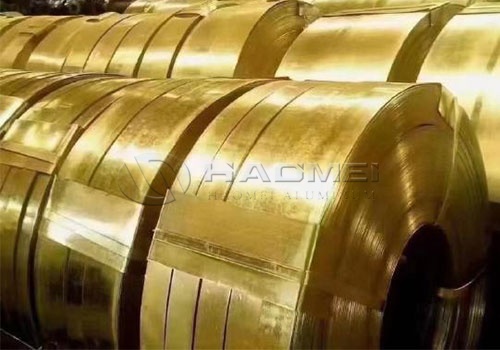
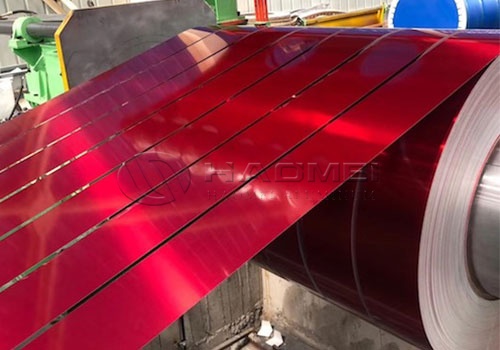
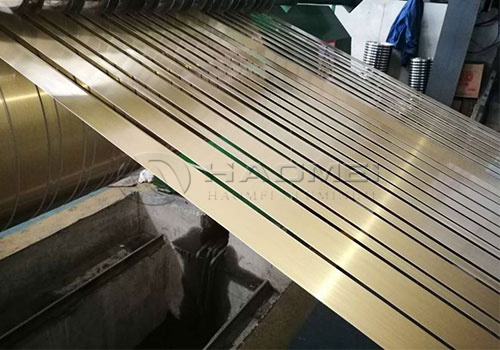
The product is commonly supplied in coil form. The coil is slit from a wider prepainted aluminum coil after coating, curing, inspection, and controlled rewinding. This production route preserves the continuous finish while making the narrow strip easier to integrate into high-speed manufacturing lines.
| Parameter | Typical Requirement | Notes |
|---|---|---|
| Nominal width | 3mm | Other slit widths can be produced to order |
| Nominal thickness | 0.21mm | Tolerance is agreed according to alloy and application |
| Substrate alloy | 1100, 3003, 3105 | 3003 and 3105 are common for coated strip |
| Temper | H14, H16, H18, H24, H26 | Selected according to bending and stiffness needs |
| Coating type | PVDF fluorocarbon | Usually a two-coat or three-coat system |
| Coating thickness | 20-35 μm typical | Can be adjusted for service conditions |
| Surface finish | Gloss, matte, embossed, smooth | Color matched to approved samples or RAL references |
| Coil inner diameter | 150mm, 300mm, 405mm, 508mm | Chosen for the customer's equipment |
| Edge condition | Deburred or lightly trimmed | Important for narrow strip handling |
Why PVDF Changes the Service Life
PVDF, or polyvinylidene fluoride, is a fluorocarbon resin valued for its resistance to ultraviolet radiation, moisture, airborne contaminants, and many chemical exposures. In a coil coating system, the aluminum surface is first cleaned and chemically pretreated. A primer improves adhesion, followed by the PVDF topcoat. The strip passes through a curing oven where the coating develops its intended hardness, adhesion, and film continuity.
A practical PVDF coating system normally contains a high proportion of PVDF resin combined with weather-resistant pigments. This creates a surface that holds color better than conventional polyester finishes in demanding outdoor environments. It is especially suitable where narrow exposed trim must match façade panels, shutters, roof accessories, or exterior decorative lines for many years.
For projects with long-term sun exposure, salt-laden air, industrial pollution, or repeated wet-dry cycles, a PVDF Coated Aluminum Strip provides a more durable finish than standard interior-grade painted strip. The coating does not make the aluminum structurally stronger, but it protects the metal surface and helps preserve the intended visual appearance.
| PVDF Film Property | Typical Test Reference | Expected Performance |
|---|---|---|
| Coating adhesion | ASTM D3359 | No significant peeling after cross-hatch testing |
| Pencil hardness | ASTM D3363 | Commonly HB to 2H, depending on coating design |
| Impact resistance | ASTM D2794 | No cracking at the agreed impact level |
| Gloss measurement | ISO 2813 | Produced to the approved gloss range |
| Color difference | ASTM D2244 | Controlled against customer-approved standard |
| Salt spray resistance | ASTM B117 | Evaluated according to exposure duration and edge criteria |
| Solvent rub resistance | MEK rub test | Confirms proper curing of the coating film |
Alloy Chemistry and Temper Selection
The aluminum grade should be chosen from the way the strip will be used, rather than from price alone. Alloy 1100 offers excellent formability and a high aluminum content. It is appropriate for gentle shapes and decorative components. Alloy 3003 adds manganese for improved strength while retaining good workability. Alloy 3105 is often preferred for coated building materials because it offers a useful balance of strength, formability, and paint compatibility.
| Element, % | 1100 | 3003 | 3105 |
|---|---|---|---|
| Aluminum, Al | 99.00 min | Remainder | Remainder |
| Silicon, Si | Si + Fe 0.95 max | 0.60 max | 0.60 max |
| Iron, Fe | Included with Si | 0.70 max | 0.70 max |
| Copper, Cu | 0.05-0.20 | 0.05-0.20 | 0.30 max |
| Manganese, Mn | 0.05 max | 1.00-1.50 | 0.30-0.80 |
| Magnesium, Mg | - | 0.05 max | 0.20-0.80 |
| Zinc, Zn | 0.10 max | 0.10 max | 0.40 max |
| Titanium, Ti | 0.05 max | 0.10 max | 0.10 max |
H14 and H24 tempers are widely used when the strip requires a practical middle ground between stiffness and bending ability. H16, H18, H26, and similar harder tempers can improve flatness and resistance to handling deformation, but excessively hard material may crack when formed around very small radii. For this reason, the bend radius, stamping depth, winding tension, and assembly method should be confirmed before mass production.
Standards and Quality Control Conditions
The aluminum substrate can be produced with reference to ASTM B209, EN 485, EN 573, GB/T 3880, or an agreed equivalent material standard. Chemical composition and mechanical properties should correspond to the selected alloy and temper. For prepainted products intended for architectural exposure, coating requirements may be evaluated with reference to AAMA 2605 or project-specific fluorocarbon coating specifications.
A reliable Coated Aluminum Strip should also be checked for coating thickness, color consistency, gloss, adhesion, surface cleanliness, coil telescoping, edge burr, and slit-width stability. For a 3mm strip, the edge is not a minor detail. A rough edge can scratch adjacent parts, interfere with automated insertion, or initiate coating damage during tight forming.
Packing should protect the coil from moisture, dust, and pressure marks. Export coils are generally wrapped with moisture-resistant paper, plastic film, edge protection, and strong pallets or wooden cases. Storage should be dry, ventilated, and away from corrosive chemicals. Condensation trapped between coil layers can stain aluminum even when the painted face remains intact.
A Better Way to Specify Narrow PVDF Strip
When ordering 3mm 0.21mm PVDF coated aluminum strip, provide the full processing condition rather than only the width and thickness. The most useful details include alloy, temper, color code, gloss level, coating thickness, front and back coating arrangement, coil weight, inner diameter, edge requirement, and intended forming operation.
This approach prevents a common mismatch: a strip may meet dimensional requirements but still be unsuitable for a tight bend, sharp stamping operation, or long-term outdoor installation. When alloy temper, coating system, and slit quality are aligned, this small aluminum strip becomes a dependable finishing material with strong visual and protective performance.