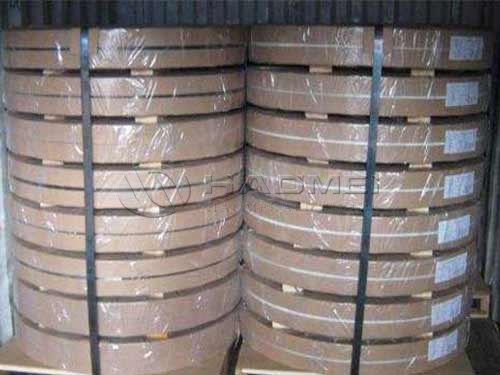
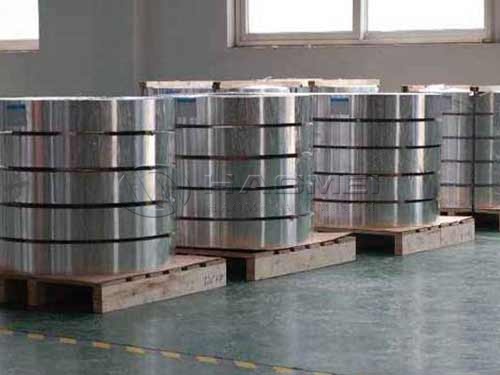
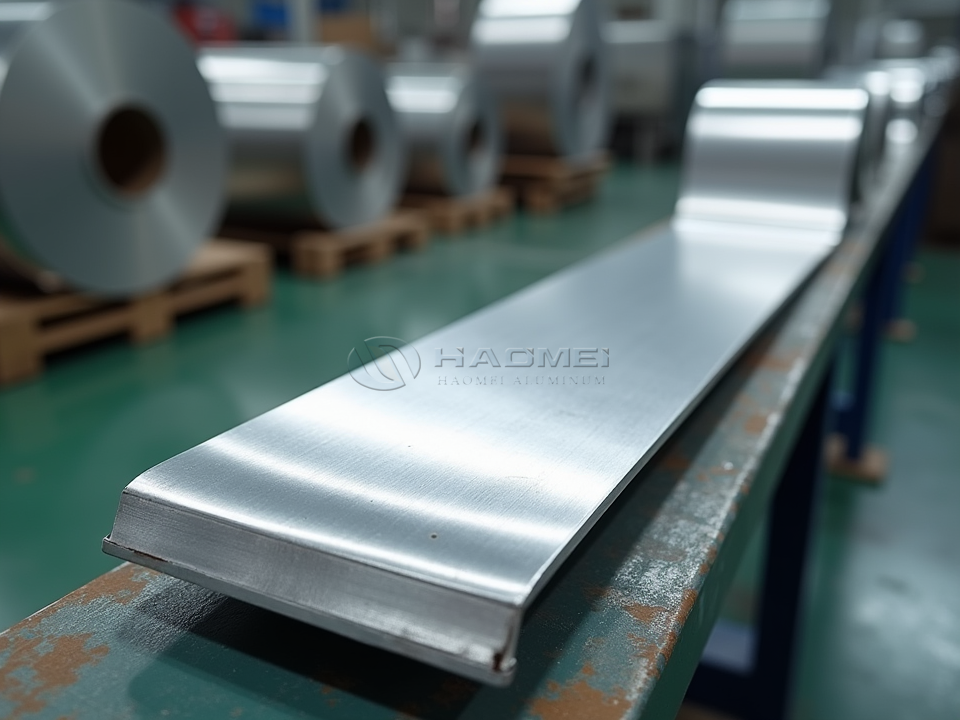
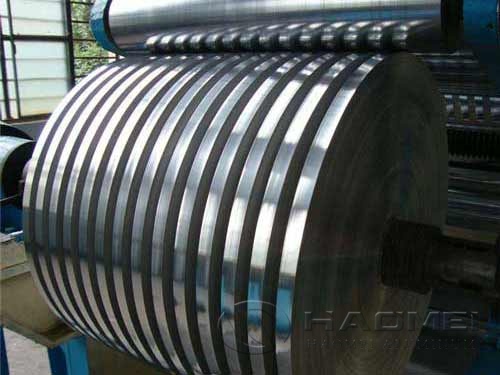
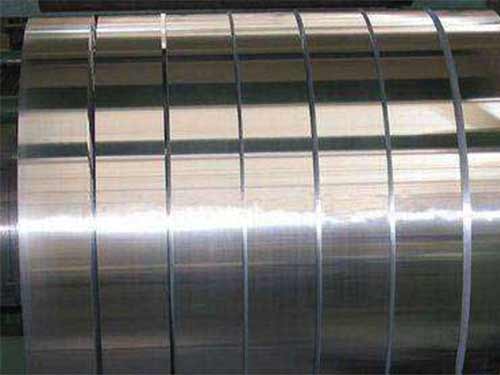
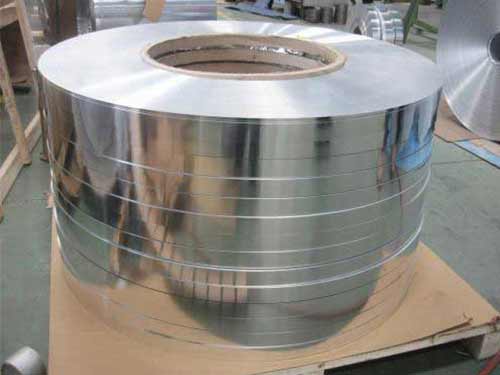
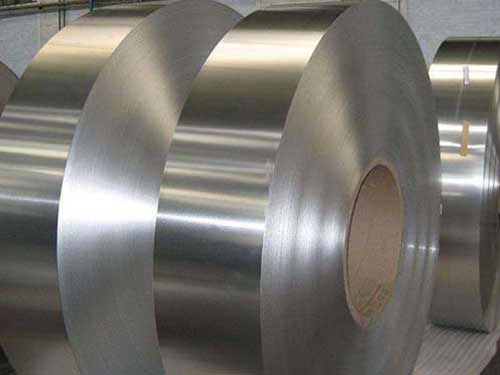
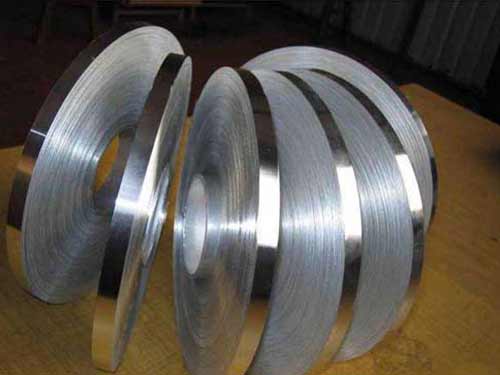
3105 Lacquered Aluminium Strip for Soft Drink Caps
3105 Lacquered Aluminium Strip: Built for the Demands Behind Every Soft Drink Cap
A soft drink cap may be small, but it performs several demanding tasks at once. It must protect carbonation, resist moisture, survive high-speed forming, carry branding clearly, and open with a predictable feel. 3105 lacquered aluminium strip for soft drink caps is engineered as a functional packaging material rather than simply a thin metal coil. Its alloy structure supplies controlled strength, while the lacquer layer creates a barrier between aluminium, beverage vapors, inks, and the cap-forming process.
The most useful way to understand this material is to view it as a layered working system. The 3105 aluminium substrate delivers shape and mechanical consistency. The internal lacquer protects the metal and supports food-contact requirements where specified. The outer coating can improve printability, appearance, lubrication, and resistance to handling damage. Together, these layers allow cap producers to turn coil into millions of reliable closures with stable press performance.
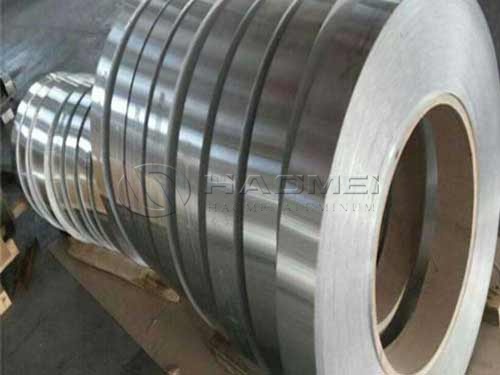
Why 3105 Alloy Fits Beverage Closure Production
3105 is an Al-Mn-Mg alloy in the 3xxx series. Compared with commercially pure aluminium, it offers higher strength while retaining the ductility needed for blanking, shell drawing, knurling, threading, and skirt formation. This balance matters in soft drink cap production, where excessive softness may cause deformation and inconsistent thread definition, while excessive hardness can increase splitting risk during forming.
The alloy is commonly supplied in H14, H16, H18, H19, or customer-agreed tempers. For many cap shells, H14 or H16 provides a practical combination of formability and dent resistance. Harder tempers may be selected for designs requiring greater stiffness, provided the cap-making line, tool geometry, and final draw depth are suitable.
For related uncoated coil options, 3105 Aluminum Strip can be specified with dimensions and temper matched to downstream lacquering or forming operations. When comparing alloy families for different packaging or industrial uses, Alloy Aluminum Strip provides a broader material reference.
What the Lacquer Actually Does
Lacquer is not merely a decorative paint. In cap stock, it performs several production and service functions. The inner lacquer acts as a protective film that reduces direct contact between the aluminium and the closure environment. This is particularly valuable where condensation, acidic residues, flavor compounds, or moisture may challenge an unprotected metal surface.
External lacquer can serve as a base for printed decoration, colored finishes, or varnish systems. It also helps maintain a smoother surface through conveying, stacking, and capping. Depending on the selected chemistry, the coating may be epoxy-phenolic, polyester, acrylic, BPA-NI, or another food-packaging-approved system. The correct choice depends on the beverage type, cap design, sterilization conditions, print process, and regional compliance requirements.
A well-controlled lacquer layer must adhere strongly without becoming brittle during stamping. It should not crack along folded or knurled regions, transfer excessively to tooling, or interfere with liner application. Coating performance is therefore assessed not only by dry-film thickness but also by flexibility, cure level, adhesion, wettability, and resistance to the intended process environment.
Typical Supply Parameters
The final specification should be agreed according to cap diameter, closure profile, tooling, and lacquer system. The following values represent common commercial ranges for 3105 lacquered aluminium strip used in beverage-cap conversion.
| Parameter | Typical Range or Requirement |
|---|---|
| Alloy | AA 3105 / EN AW-3105 |
| Temper | H14, H16, H18, H19, or agreed temper |
| Strip thickness | 0.18-0.30 mm |
| Common cap-stock thickness | 0.20-0.25 mm |
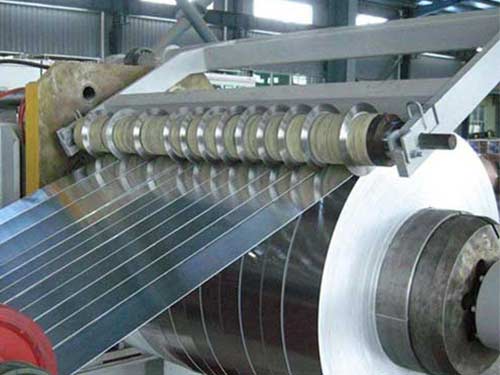
| Strip width | 20-1,600 mm, slit to customer requirement |
| Coil inner diameter | 150 mm, 300 mm, 405 mm, 508 mm, or agreed size |
| Coil weight | According to handling equipment and production line requirements |
| Surface | Mill finish with one-side or two-side lacquer coating |
| Lacquer dry-film thickness | Commonly 3-10 μm per coated side, subject to coating design |
| Edge condition | Slit edge, burr controlled for safe and stable feeding |
| Flatness and camber | Controlled to suit stamping and cap-shell production |
Thickness tolerance, width tolerance, coil telescoping limits, coating weight, color, gloss, and pinhole limits should be confirmed in the purchase specification. In high-speed cap presses, minor variation can become visible as feeding instability, uneven shell geometry, coating scratches, or tool contamination.
Chemical Composition of 3105 Aluminium Alloy
The chemistry of 3105 is designed around manganese and magnesium additions. Manganese improves strength and helps maintain workability, while magnesium contributes additional strength without turning the alloy into a difficult-to-form material.
| Element | Composition, % by Weight |
|---|---|
| Silicon, Si | 0.60 max |
| Iron, Fe | 0.70 max |
| Copper, Cu | 0.30 max |
| Manganese, Mn | 0.30-0.80 |
| Magnesium, Mg | 0.20-0.80 |
| Zinc, Zn | 0.40 max |
| Titanium, Ti | 0.10 max |
| Other elements, each | 0.05 max |
| Other elements, total | 0.15 max |
| Aluminium, Al | Balance |
Actual mill certificates should accompany production material where traceability is required. Chemical composition is only one part of cap-stock suitability; grain structure, surface cleanliness, mechanical properties, and coating integrity are equally important.
Mechanical Behavior and Temper Selection
Mechanical values vary with thickness, rolling practice, and temper. H14 is often selected when the cap design needs reliable deformation during drawing and threading. H16 provides higher strength for improved resistance to handling dents while remaining suitable for many forming operations. H18 and H19 may be used for applications with limited draw requirements or when increased rigidity is needed.
A cap producer should evaluate temper through the actual forming sequence, not tensile strength alone. The metal must flow evenly at the cap skirt, preserve coating adhesion at stressed areas, and maintain dimensional repeatability after threading or knurling. Material that appears strong on a test certificate may still be unsuitable if it causes springback, edge cracking, or lacquer disruption in the production press.
Standards and Implementation Conditions
3105 lacquered aluminium strip can be manufactured with reference to standards such as ASTM B209/B209M for aluminium and aluminium-alloy sheet and strip, EN 485-2 for mechanical properties, and EN 573-3 for chemical composition. Dimensional tolerances may also be agreed in accordance with EN 485-4 or customer-specific packaging material specifications.
For food-contact uses, the lacquer system should be selected and documented for the intended market. Requirements may involve applicable FDA regulations in the United States, EU Framework Regulation (EC) No 1935/2004, Regulation (EU) No 10/2011 where relevant, or other local food-contact provisions. Compliance depends on the complete coated material system, migration testing conditions, intended beverage contact scenario, and curing process.
Practical Applications Beyond the Cap Shell
The primary application is soft drink bottle closures, including screw caps and aluminum shell components that receive an internal sealing liner. The material can also support caps for sparkling water, flavored beverages, energy drinks, juice drinks, and other non-alcoholic packaged products. Its lacquered surface is particularly valuable where visual branding and barrier protection must operate together.
In production, the strip is uncoiled, lubricated if required, blanked, drawn into shells, decorated or printed, cured, lined, and formed into the final closure. Stable coil winding, low burr, clean surfaces, and uniform lacquer are essential from the first feed stroke to the finished cap.
3105 lacquered aluminium strip gives soft drink caps a carefully balanced foundation: enough strength to protect the package, enough formability to run efficiently, and enough coating performance to support product safety, appearance, and reliable closure function.