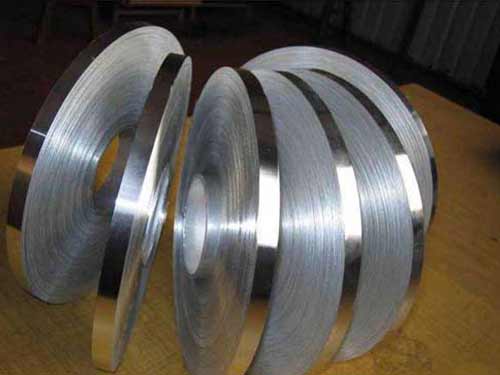
3003 Widely Aluminum Strip Gutter
Rain gutters are often treated as simple roof accessories, yet they work in one of the harshest environments around a building. They collect acidic rainwater, face sunlight, endure freeze-thaw movement, and must carry water without leaking at seams or deforming under installation stress. For this reason, 3003 widely aluminum strip gutter material is valued not merely as a metal coil, but as a carefully balanced forming material for continuous drainage systems.
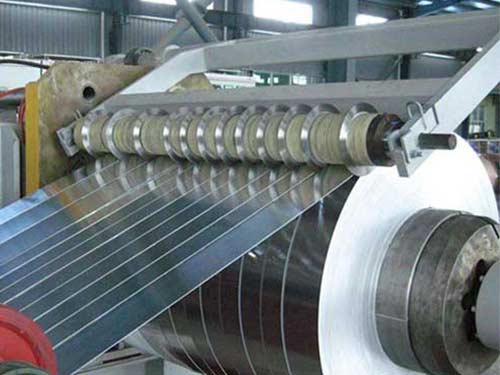
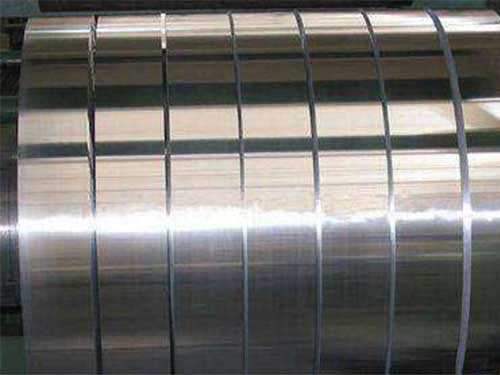
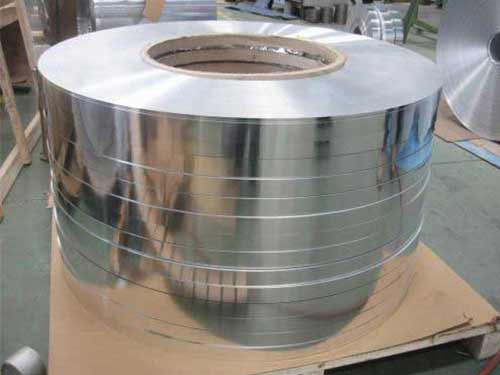
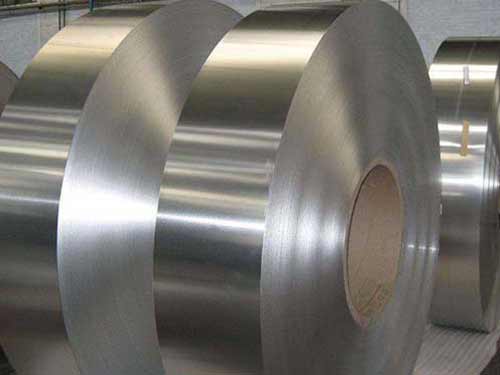
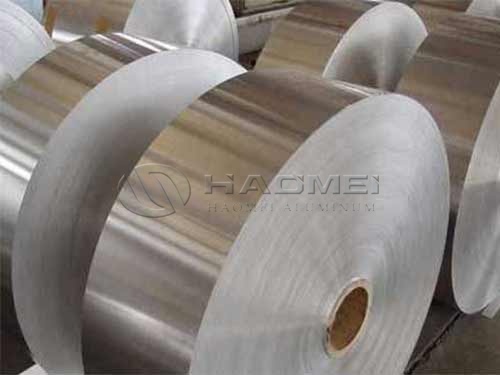
The term "widely aluminum strip" commonly refers to wide slit aluminum coil designed for roll forming, press bending, gutter profiling, and long-length fabrication. Alloy 3003 is especially suitable where fabricators need a practical combination of moderate strength, corrosion resistance, surface stability, and workability.
Why 3003 Alloy Performs Well in Gutter Profiles
3003 aluminum belongs to the Al-Mn alloy family. Its manganese content gives it greater strength than commercially pure aluminum grades such as 1050 or 1060, while preserving the flexibility needed to create complex gutter cross-sections. A gutter blank may be shaped into K-style, half-round, box, fascia, or custom drainage profiles. The alloy must tolerate multiple bends without excessive cracking at corners.
For rainwater systems, strength alone is not enough. The material must also resist wet-dry cycling and ordinary atmospheric corrosion. Aluminum naturally forms a dense oxide film that protects the surface. In 3003 alloy, this natural protection combines with good coating compatibility, making the strip appropriate for mill finish, painted, polyester-coated, PVDF-coated, embossed, or stucco-finished gutter products.
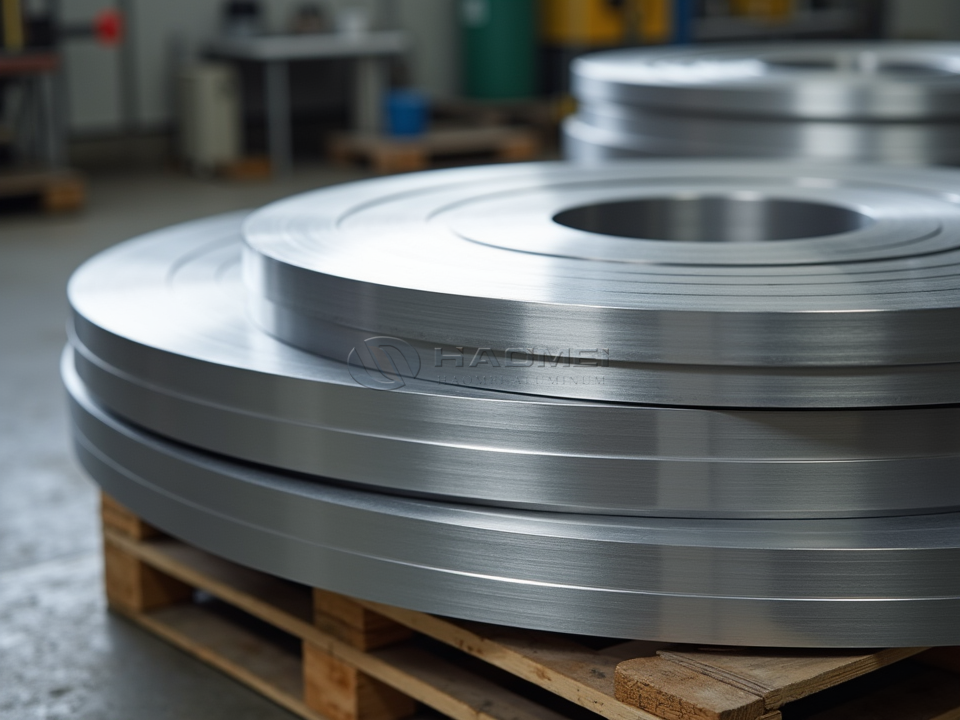
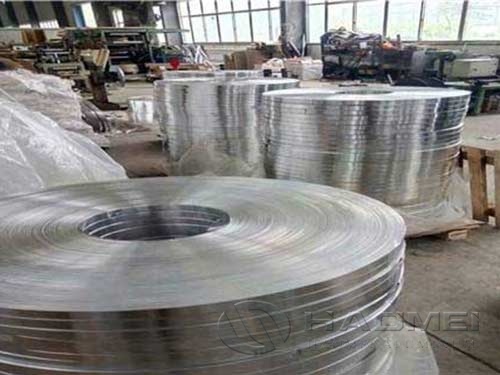
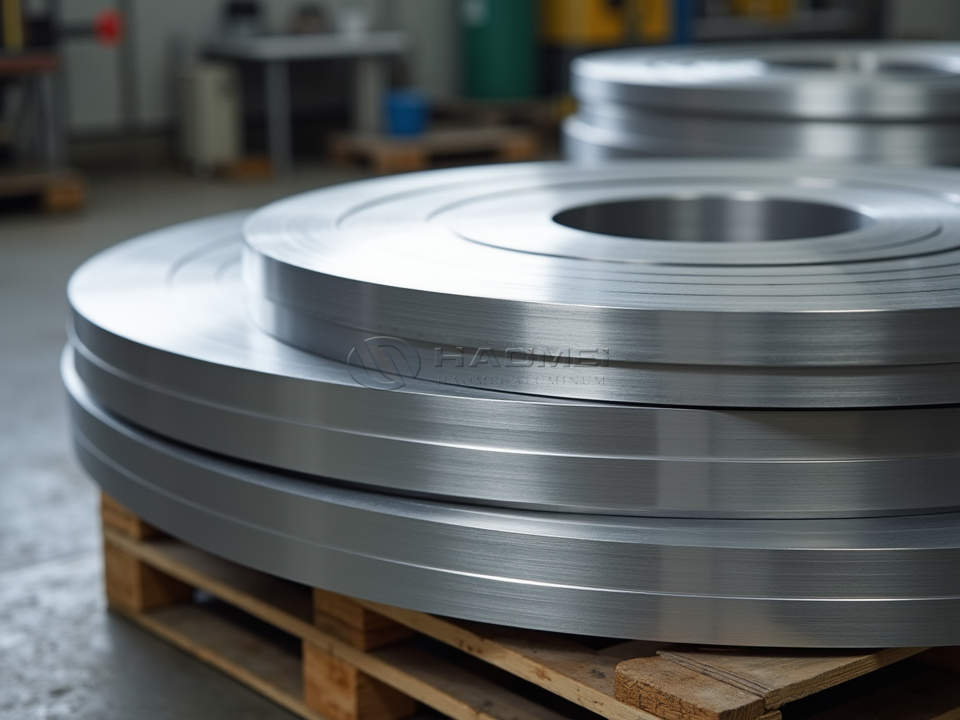
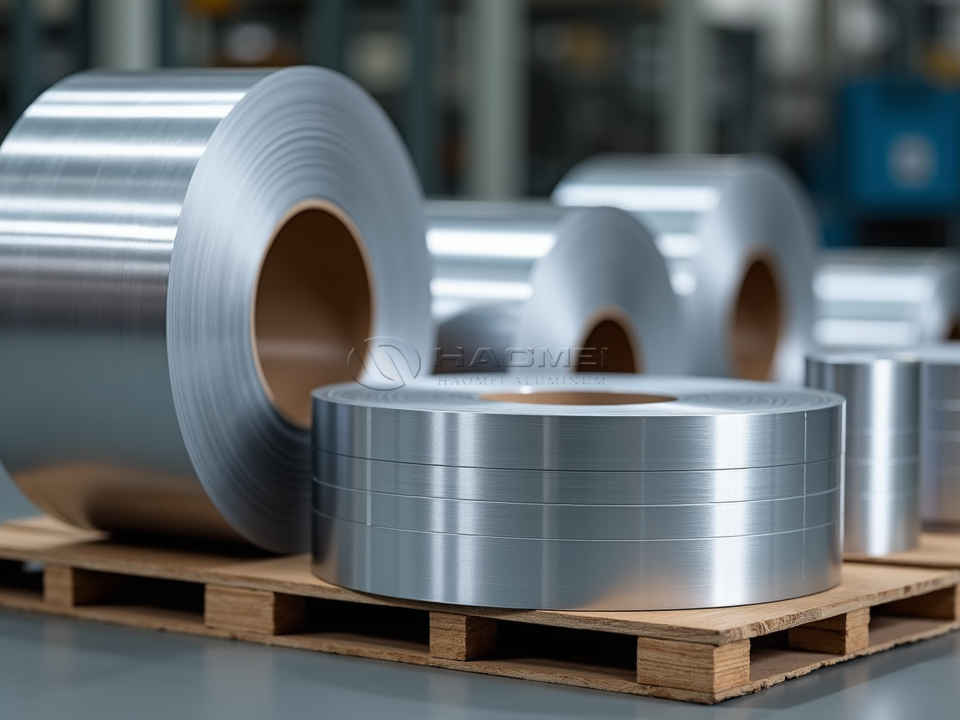
Fabricators choosing a standard 3003 Aluminum Strip can specify width, thickness, temper, edge condition, surface finish, and coil weight around their production equipment. This helps reduce trimming waste and supports consistent gutter geometry from coil to finished section.
Typical Parameters for 3003 Widely Aluminum Strip Gutter
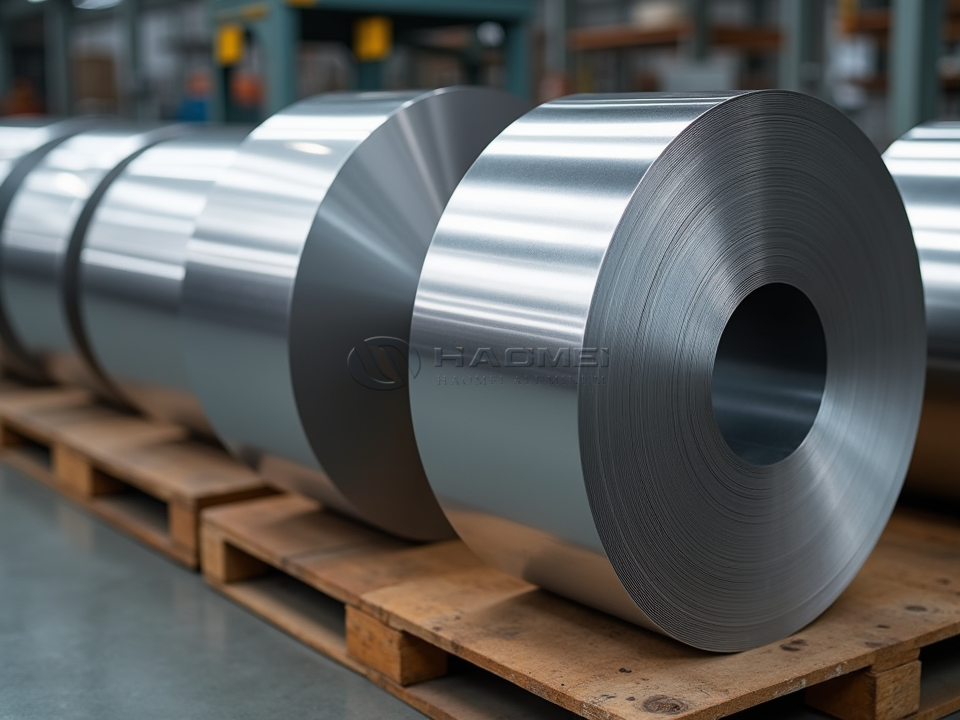
The ideal specification depends on gutter depth, profile design, local snow load, installation spacing, and coating system. Wide strip is generally delivered in coil form, with a slit width selected to match the roll-forming line.
| Parameter | Common Range or Condition |
|---|---|
| Alloy | AA 3003 / EN AW-3003 |
| Temper | H14, H16, H18, H24, O |
| Thickness | 0.50 mm to 1.50 mm |
| Common gutter thickness | 0.60 mm to 0.90 mm |
| Width | 100 mm to 1,600 mm, customized slit widths available |
| Coil inner diameter | 300 mm, 405 mm, 508 mm, or customized |
| Coil weight | Usually 1 to 8 tonnes, depending on equipment capability |
| Surface | Mill finish, color coated, embossed, protective film optional |
| Edge | Slit edge or deburred edge |
| Density | Approximately 2.73 g/cm³ |
| Electrical conductivity | Approximately 49% IACS |
For seamless gutter machines, the strip width is calculated from the developed width of the finished profile, allowing for bends, hems, bead details, and forming tolerances. A 125 mm half-round gutter, for example, needs a considerably wider blank than its visible face width. Accurate coil slitting prevents excess scrap and reduces roller adjustment time.
Chemical Composition of 3003 Aluminum Strip
The chemical composition of 3003 is controlled to deliver stable mechanical behavior and reliable corrosion performance. Manganese is the principal alloying element, while copper is present in a limited amount.
| Element | Content, % by Weight |
|---|---|
| Aluminum, Al | Balance |
| Silicon, Si | 0.60 max |
| Iron, Fe | 0.70 max |
| Copper, Cu | 0.05 to 0.20 |
| Manganese, Mn | 1.00 to 1.50 |
| Magnesium, Mg | 0.05 max |
| Zinc, Zn | 0.10 max |
| Other elements, each | 0.05 max |
| Other elements, total | 0.15 max |
This composition supports a material that is more durable than pure aluminum strip but easier to form than many higher-strength alloys. It is not heat-treatable. Its strength is developed mainly through cold working, which is why temper selection matters so much in gutter production.
Temper Selection for Gutter Manufacturing
H14 is frequently chosen for aluminum gutter coil because it provides a balanced condition. It has enough stiffness to keep a clean gutter shape while remaining workable during roll forming and bending. H24 offers similar strength with a partially annealed condition, which can improve forming comfort for profiles with tighter radii.
H16 and H18 provide higher hardness and strength. These tempers may suit designs requiring better resistance to denting, but they demand more careful forming control. If the gutter has sharp folds, tightly closed hems, or deep decorative embossing, overly hard material can raise the risk of edge cracking.
O temper is fully annealed and highly formable, but it is softer and easier to scratch or dent during transport and installation. It is more often selected for special deep-drawing or complex fabrication rather than standard continuous gutter roll forming.
| Temper | Practical Character | Typical Gutter Use |
|---|---|---|
| O | Soft, highly formable | Special formed components and deep bends |
| H14 | Medium-hard, balanced | Common roll-formed gutters |
| H16 | Stronger, moderately formable | Profiles requiring added rigidity |
| H18 | Harder, higher dent resistance | Limited use where forming radii are generous |
| H24 | Strain-hardened and stabilized | Coated gutters and controlled-forming applications |
Applicable Implementation Standards
Production and inspection of 3003 gutter strip can be aligned with widely recognized aluminum standards. The final purchase specification should state which standard governs dimensional tolerances, mechanical properties, surface quality, and testing requirements.
| Standard | Application |
|---|---|
| ASTM B209 | Aluminum and aluminum-alloy sheet and plate requirements |
| EN 485-1 | Technical inspection and delivery conditions for wrought aluminum products |
| EN 485-2 | Mechanical property requirements for sheet, strip, and plate |
| EN 485-4 | Tolerances on shape and dimensions for cold-rolled products |
| EN 573-3 | Chemical composition and alloy designation requirements |
| GB/T 3880 | Aluminum and aluminum alloy sheet and strip requirements |
For coated gutter coil, coating thickness, color tolerance, adhesion, pencil hardness, gloss, salt-spray performance, and resistance to UV exposure should be agreed separately. The alloy quality is important, but the coating system often determines long-term visual performance on exposed rooflines.
Practical Details That Affect Service Life
A well-made gutter begins with a clean coil edge. Burrs can interfere with roll forming, create sharp handling hazards, and affect painted surfaces near folds. Deburred slit edges are useful when the finished gutter includes exposed hems or when operators handle coil frequently.
Surface protection also matters. Protective film can reduce scratches during profiling, especially on color-coated strip. It should be compatible with the coating and removed within the recommended period, since film left outdoors too long may become difficult to peel away.
Fasteners and adjacent metals deserve attention as well. Direct contact with copper, untreated steel, or incompatible materials can create galvanic corrosion in wet conditions. Proper separation layers, compatible fasteners, and sound drainage design help preserve the aluminum surface.
For projects needing a broader range of material options, Alloy Aluminum Strip selections can be compared according to strength, forming behavior, coating requirements, and environmental exposure.
A Material Chosen from the Installer's Perspective
The real test of 3003 widely aluminum strip gutter is not only its laboratory data. It is how smoothly the coil feeds through a gutter machine, how cleanly it forms at the corners, how stable the painted surface remains, and how quietly the finished channel manages years of rainfall.
With properly selected thickness, H14 or H24 temper, controlled slit width, suitable protective coating, and compliance with relevant standards, 3003 aluminum strip provides a dependable foundation for residential, commercial, and light industrial gutter systems. It offers the practical balance gutter manufacturers need: easy processing in the workshop and durable performance on the roof.