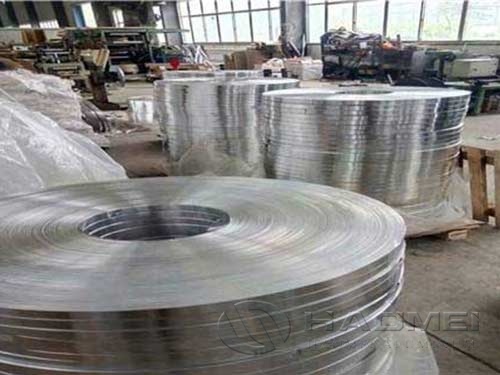
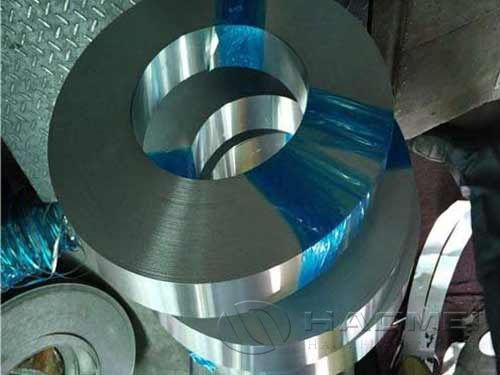
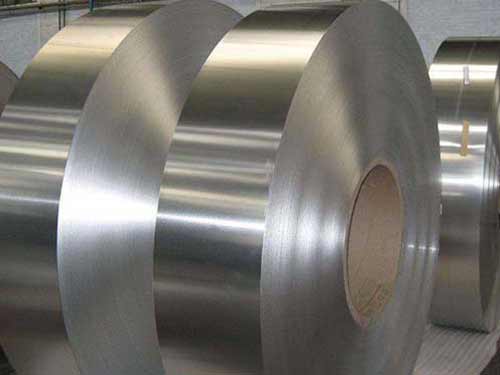
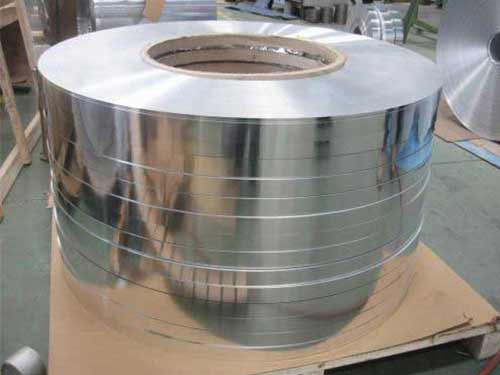
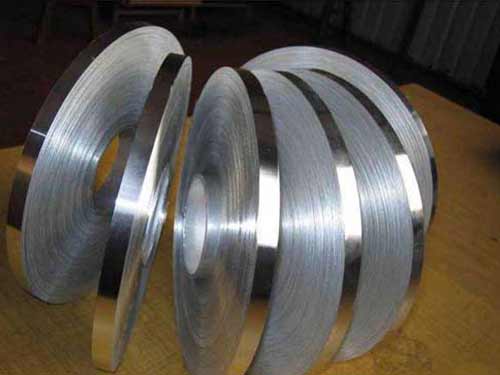
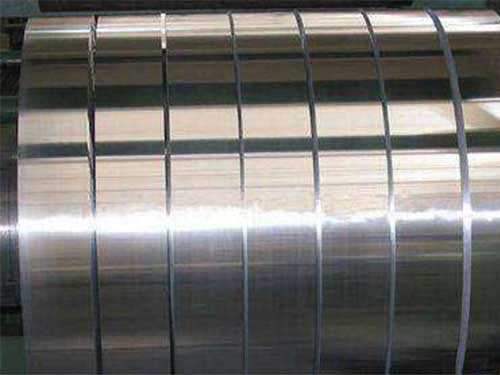
3005 3003 Anodized Thin Aluminum Strip
3005 and 3003 anodized thin aluminum strip combine the practical strength of manganese-containing aluminum alloys with the clean, durable appearance created by anodizing. Produced in narrow coils or precision-slit strips, these materials are widely used where low weight, smooth forming, corrosion resistance, and an attractive metallic finish are required.
Compared with untreated aluminum, anodized strip has a controlled oxide layer bonded to the metal surface. This layer improves surface hardness, provides better resistance to staining and weathering, and supports consistent decorative color. Both 3003 and 3005 are non-heat-treatable 3xxx series alloys, strengthened primarily through manganese and cold working.
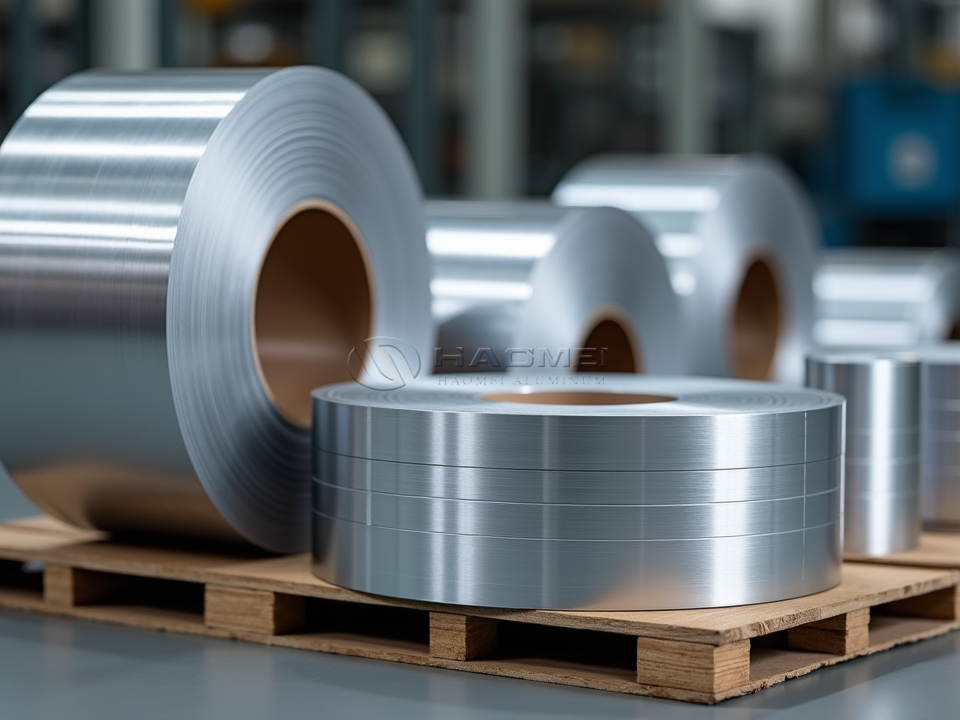
Material Characteristics
3003 anodized thin aluminum strip is valued for its dependable workability. It bends, stamps, rolls, and draws effectively, making it suitable for complicated profiles and light-gauge formed components. Its moderate strength and good corrosion resistance make it a practical choice for indoor and general-purpose industrial applications.
3005 anodized thin aluminum strip contains magnesium in addition to manganese. This gives it a modest strength advantage over 3003 while retaining excellent formability. It is often selected for architectural trim, appliance panels, coated or anodized building products, and parts that need better dent resistance.
| Property | 3003 Anodized Strip | 3005 Anodized Strip |
|---|---|---|
| Alloy family | Al-Mn | Al-Mn-Mg |
| Relative strength | Moderate | Moderate to higher |
| Forming ability | Excellent | Excellent |
| Corrosion resistance | Very good | Very good |
| Decorative anodizing response | Good | Good |
| Recommended use | Deep forming, general trim | Structural trim, panels, stronger formed parts |
Chemical Composition
The controlled composition of 3003 and 3005 supports stable rolling performance, predictable mechanical behavior, and a uniform anodized surface. Values shown are common AA alloy composition limits by weight.
| Element | 3003 Aluminum Strip, % | 3005 Aluminum Strip, % |
|---|---|---|
| Aluminum | Balance | Balance |
| Manganese, Mn | 1.0-1.5 | 1.0-1.5 |
| Magnesium, Mg | - | 0.20-0.60 |
| Copper, Cu | 0.05-0.20 | 0.30 max |
| Silicon, Si | 0.60 max | 0.60 max |
| Iron, Fe | 0.70 max | 0.70 max |
| Zinc, Zn | 0.10 max | 0.25 max |
| Other elements | 0.05 each, 0.15 total max | 0.05 each, 0.15 total max |
The manganese content provides solid-solution strengthening and helps preserve strength after forming. In 3005, magnesium contributes additional strengthening, helping the strip withstand handling, bending, and minor impact more effectively.
Available Dimensions and Delivery Conditions
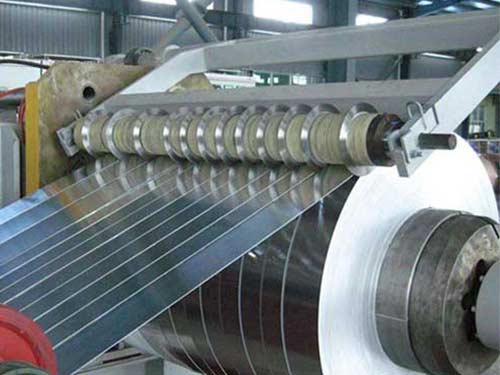
Thin anodized aluminum strip can be supplied as mill-finished strip for later anodizing or as pre-anodized coil with a finished surface. Precision slitting supports efficient feeding into stamping presses, roll-forming lines, bending equipment, and automated assembly systems.
| Parameter | Typical Supply Range |
|---|---|
| Alloy | 3003, 3005 |
| Thickness | 0.20-2.00 mm |
| Common thin-gauge range | 0.30-1.20 mm |
| Strip width | 10-1,600 mm |
| Narrow slit width tolerance | Available according to width and thickness |
| Coil inner diameter | 150 mm, 300 mm, 405 mm, 505 mm, or customized |
| Coil weight | Customized for processing equipment |
| Temper options | O, H12, H14, H16, H18, H22, H24 |
| Anodized film thickness | Commonly 5-25 μm |
| Surface options | Natural silver, bronze, black, champagne, brushed, embossed, matte |
For projects requiring a standard general-purpose 3xxx alloy, 3003 Aluminum Strip provides a reliable base material for forming and decorative treatment. Customers needing broader grade selection can also review Alloy Aluminum Strip options for application-specific requirements.
Mechanical Performance
Mechanical properties vary with thickness, temper, production route, and final anodizing condition. Softer tempers are preferred for deep drawing and complex bending, while H14 and H24 tempers provide a balanced combination of rigidity and fabricability.
| Alloy and Temper | Tensile Strength, MPa | Yield Strength, MPa | Elongation, % | Typical Processing Suitability |
|---|---|---|---|---|
| 3003-O | 95-130 | 35 min | 25 min | Deep drawing, shaping, folding |
| 3003-H14 | 145-185 | 115 min | 5 min | General stamping and trim |
| 3003-H24 | 130-170 | 95 min | 8 min | Moderate forming with stiffness |
| 3005-O | 110-145 | 45 min | 20 min | Deep forming and curved profiles |
| 3005-H14 | 150-190 | 125 min | 5 min | Panels, roll forming, appliance parts |
| 3005-H24 | 135-175 | 105 min | 8 min | Balanced bending and dent resistance |
Anodized Surface Performance
Anodizing converts the naturally occurring aluminum oxide into a thicker, more stable protective layer. Unlike paint, the anodized film is integrated with the metal rather than simply sitting on top of it. This creates a refined metallic finish that will not peel under normal service conditions.
| Performance Factor | Anodized Strip Benefit |
|---|---|
| Corrosion protection | Improved resistance to moisture, oxidation, and many indoor contaminants |
| Surface hardness | Better scratch and abrasion resistance than bare aluminum |
| Appearance | Clear metallic luster with consistent color options |
| Color stability | Suitable for controlled decorative finishes and architectural trim |
| Maintenance | Easy cleaning with mild detergent and soft cloth |
| Coating adhesion | Can support selected secondary treatments when properly prepared |
| Recyclability | Aluminum remains highly recyclable after service life |
Anodizing quality depends on pretreatment, alloy chemistry, film thickness, sealing method, and color process. For visible decorative parts, customers may specify color tolerance, gloss range, film thickness, protective interleaf paper, and surface inspection requirements before production.
Application Possibilities
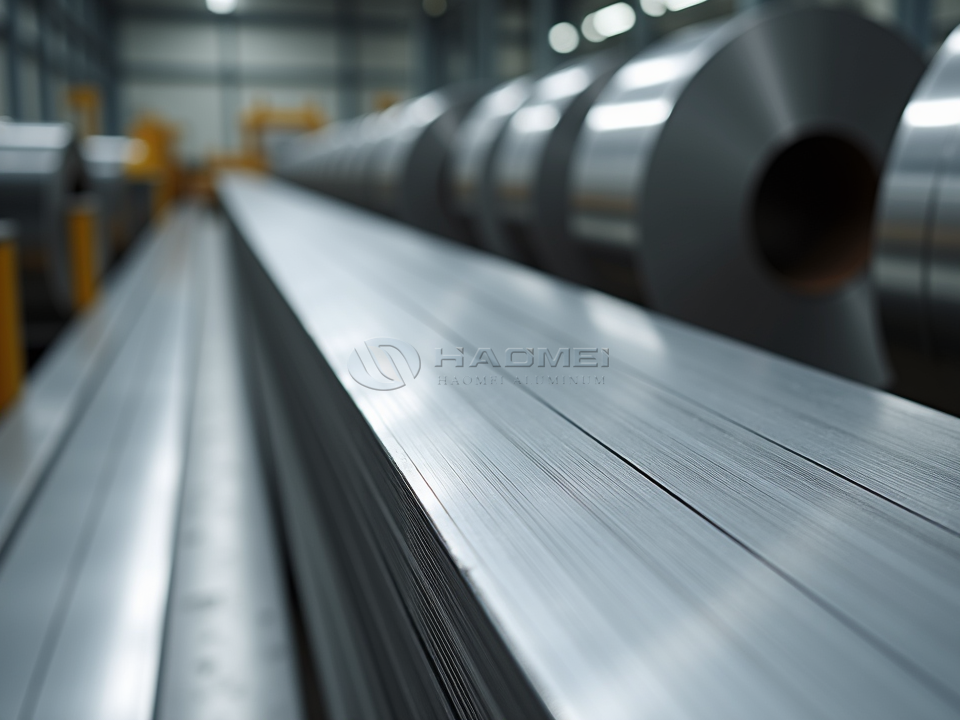
3005 3003 anodized thin aluminum strip serves industries that need a material capable of performing as both a functional substrate and a finished decorative surface.
| Application Area | Typical Parts | Preferred Alloy Consideration |
|---|---|---|
| Architecture | Ceiling trim, wall edging, window accessories, louvers | 3005 for improved panel stiffness |
| Home appliances | Refrigerator trim, cooker panels, air-conditioner parts | 3005 for dent resistance and appearance |
| Lighting | Lamp housings, reflector trim, LED channel covers | 3003 for easy forming and clean finish |
| Transportation interiors | Decorative strips, luggage trim, cabin fittings | 3005 where added strength is needed |
| Electronics | Device frames, control-panel borders, enclosures | Either alloy depending on forming depth |
| Furniture | Cabinet edge banding, drawer trim, display profiles | 3003 for economical shaping |
| Signage and displays | Frames, nameplate borders, retail fixtures | Anodized finish for durable visual appeal |
Benefits for Fabricators and Product Designers
Thin-gauge anodized aluminum strip reduces finishing steps by arriving with a surface that is already decorative and corrosion resistant. It can lower painting requirements, avoid paint-chipping concerns, and create a more premium metal appearance in consumer-facing products.
The low density of aluminum also helps reduce component weight. This is beneficial for transport equipment, portable appliances, modular furniture, and large decorative assemblies. With proper temper selection, the strip can be roll formed into channels, folded into edges, stamped into shallow shapes, or slit to narrow widths for continuous production lines.
For demanding forming operations, select a softer temper and confirm the minimum bend radius through trial production. For exposed surfaces, protect coils from abrasion with suitable packaging, interleaf paper, and clean handling practices. Film-coated or paper-interleaved coils are especially useful when the anodized surface must remain free from handling marks.
Selection Guidance
Choose 3003 anodized thin aluminum strip when high formability, economical production, and general corrosion resistance are the main priorities. Choose 3005 anodized thin aluminum strip when the finished part needs somewhat higher strength, better resistance to deformation, or more reliable performance in panel and trim applications.
A suitable specification should define alloy, temper, thickness, slit width, edge condition, coil dimensions, anodized color, film thickness, surface protection, and inspection criteria. With these details established, 3005 and 3003 anodized thin aluminum strip deliver a durable, lightweight, and visually refined solution for modern fabricated products.