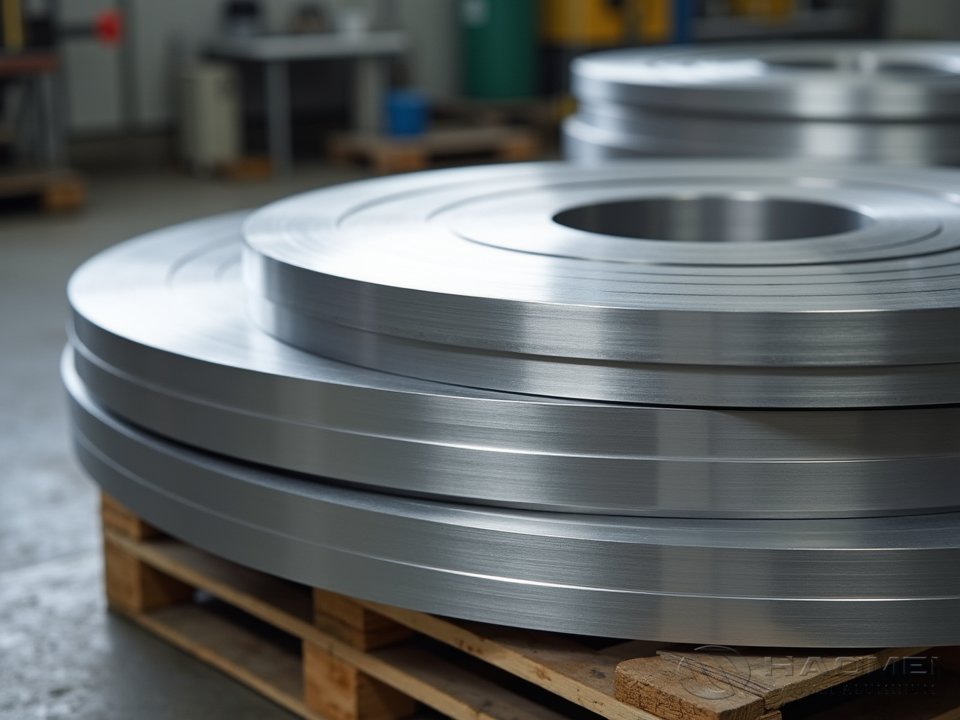
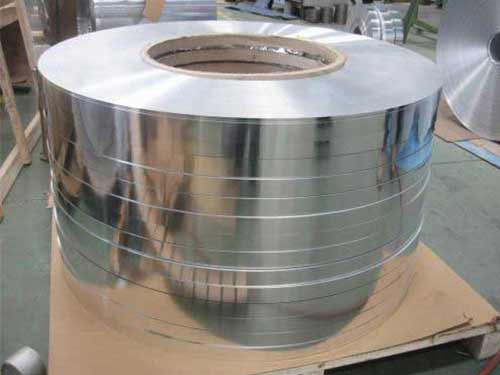
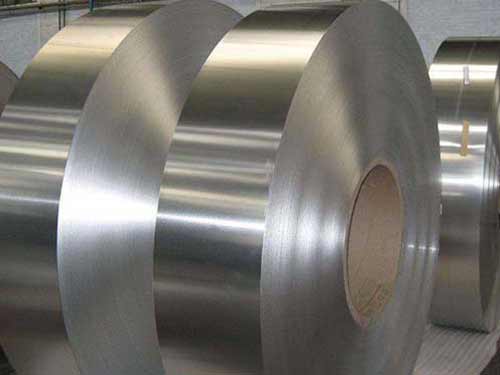
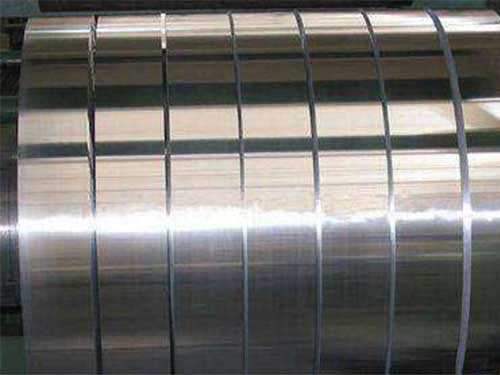
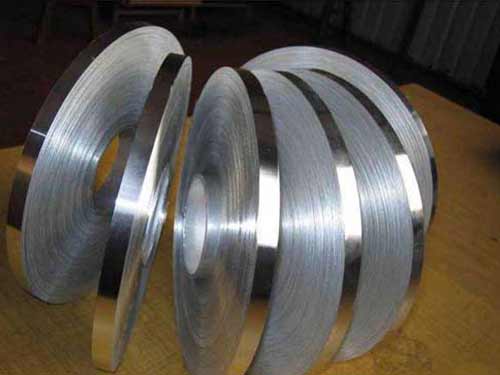
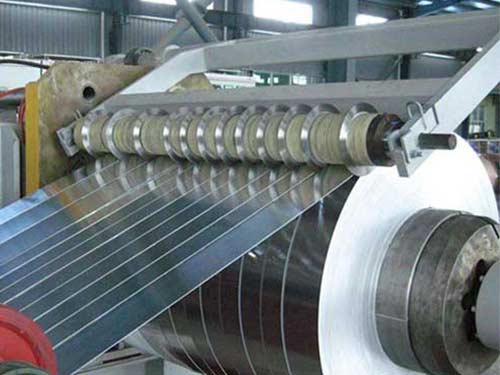
3003 H14 Aluminum Strip
3003 H14 aluminum strip is often chosen when a project needs more strength than pure aluminum, but still requires clean forming, stable dimensions, and dependable corrosion resistance. Instead of treating it only as a coil of metal, it is better to see it as a carefully balanced material: manganese gives it firmness, cold working gives it shape control, and the H14 temper keeps it workable without feeling too soft in production.
For buyers, engineers, and purchasing teams, this balance matters. A strip that is too soft may wrinkle during stamping or lose flatness during assembly. A strip that is too hard may crack during bending. 3003 H14 sits in the comfortable middle, making it suitable for heat exchangers, lamp parts, battery shells, cable wrapping, decorative trim, transformer components, packaging parts, and general fabricated products.
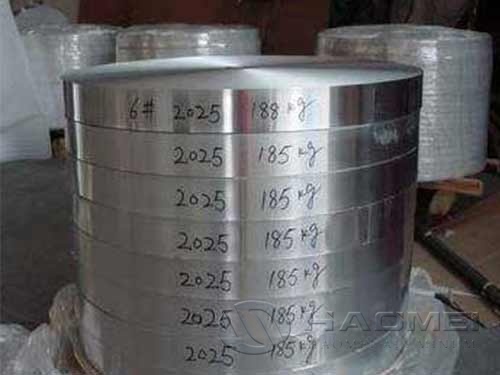
What Makes 3003 H14 Different in Daily Manufacturing
The 3003 alloy belongs to the Al-Mn series. It is not heat-treatable, which means its strength does not come from solution heat treatment and aging. Instead, it gains strength mainly through cold rolling. In the H14 temper, the strip is strain-hardened to a half-hard condition. This gives the metal better stiffness than annealed O temper while retaining enough ductility for bending, shallow drawing, roll forming, and light stamping.
Compared with 1050 or 1060 aluminum strip, 3003 H14 provides higher mechanical strength because of its manganese content. Compared with harder alloys such as 5052, it is easier to form and usually more economical for moderate-duty applications. Customers who need a broader grade selection can compare it with Alloy Aluminum Strip options, but when the requirement is stable forming plus good corrosion resistance, 3003 H14 is one of the most practical choices.
Typical Product Parameters
Actual supply ranges depend on mill capability and order quantity, but the following values represent common commercial specifications for 3003 H14 aluminum strip.
| Item | Common Range or Requirement |
|---|---|
| Alloy | 3003 |
| Temper | H14, half-hard strain-hardened condition |
| Thickness | 0.20 mm to 3.00 mm, custom ranges available |
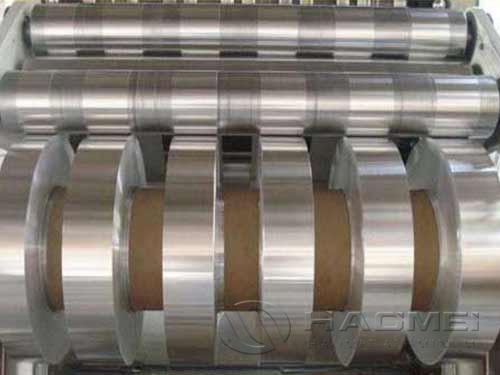
| Width | 10 mm to 1600 mm, slit to customer demand |
| Coil inner diameter | 76 mm, 150 mm, 300 mm, 405 mm, 505 mm |
| Coil outer diameter | Usually 800 mm to 1800 mm, depending on weight |
| Surface | Mill finish, bright finish, degreased, coated, or laminated |
| Edge condition | Slit edge, trimmed edge, deburred edge on request |
| Flatness | Controlled according to thickness, width, and application |
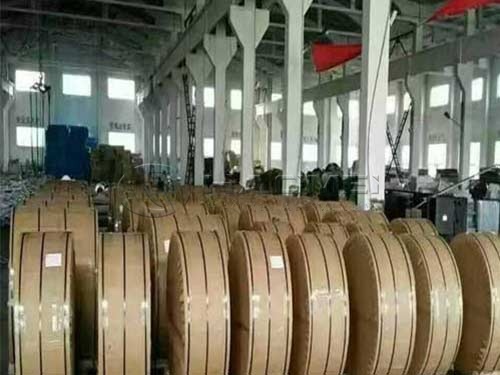
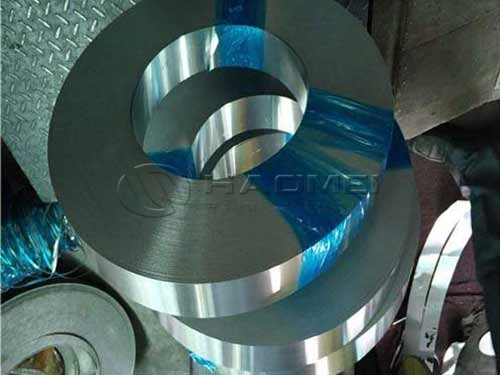
| Packaging | Eye-to-wall or eye-to-sky coil packing with moisture protection |
For precision stamping, edge burr, width tolerance, surface oil, and coil tension are not minor details. They directly affect feeding stability and die life. A narrow strip for automated production must unwind smoothly, keep consistent camber, and avoid sudden hardness variation along the coil.
Chemical Composition of 3003 Aluminum Strip
The personality of 3003 H14 aluminum strip begins with its chemistry. Manganese is the main strengthening element, while copper is limited and controlled. The alloy keeps the corrosion resistance of aluminum while gaining better mechanical performance than commercially pure grades.
| Element | Chemical Composition, % |
|---|---|
| Aluminum, Al | Balance |
| Manganese, Mn | 1.00 - 1.50 |
| Iron, Fe | 0.70 max |
| Silicon, Si | 0.60 max |
| Copper, Cu | 0.05 - 0.20 |
| Zinc, Zn | 0.10 max |
| Other elements, each | 0.05 max |
| Other elements, total | 0.15 max |
This chemistry gives 3003 H14 aluminum strip a useful mix of strength, corrosion resistance, and formability. The alloy performs well in atmospheric environments, indoor structures, roofing accessories, insulation jacketing, and many light industrial settings. It is not normally selected for high-load structural parts, but it is excellent where moderate strength and reliable forming are more important than maximum hardness.
Temper Meaning: Why H14 Matters
The temper code H14 tells a practical story. The letter H means the material is strain hardened. The first digit, 1, indicates the strip has been strengthened by cold working only. The final digit, 4, means half-hard.
In production terms, H14 offers a useful resistance to deformation without becoming difficult to shape. It can accept bending, roll forming, light pressing, and shallow drawing when the tooling radius is suitable. If a part requires very deep drawing, O temper may be better. If a part requires higher rigidity and less deformation after forming, H16 or H18 may be considered. For many ordinary fabricated components, however, H14 reduces the need to compromise between easy processing and finished-part strength.
A commonly referenced mechanical property range is shown here. Final values should always be confirmed by the mill certificate.
| Property | Typical Value for 3003 H14 |
|---|---|
| Tensile strength | 140 - 180 MPa |
| Yield strength | 115 MPa min, typical |
| Elongation | About 3% - 8%, depending on thickness |
| Density | 2.73 g/cm³ |
| Melting range | About 643 - 654°C |
| Electrical conductivity | Around 40% IACS |
| Modulus of elasticity | About 69 GPa |
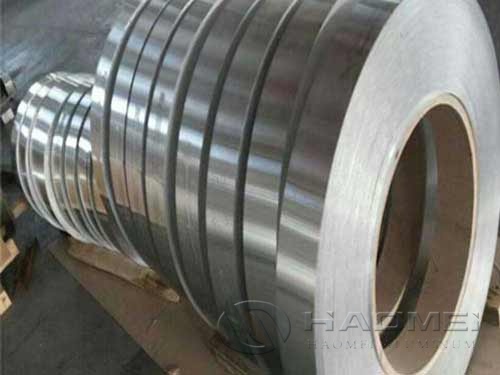
Standards and Supply Conditions
Reliable supply of 3003 H14 aluminum strip depends on clear standards. International buyers often request production and inspection according to ASTM B209/B209M, EN 485, GB/T 3880, or JIS H4000. These standards help define chemical composition, mechanical performance, dimensional tolerances, surface requirements, and inspection methods.
| Standard | Region or Use | Related Content |
|---|---|---|
| ASTM B209/B209M | International, especially North America | Aluminum and aluminum-alloy sheet and plate requirements |
| EN 485 | European market | Sheet, strip, and plate technical conditions |
| GB/T 3880 | China and export production | Wrought aluminum alloy plate, sheet, and strip |
| JIS H4000 | Japanese market | Aluminum sheets, plates, and strips |
When placing an order, customers should state alloy, temper, thickness, width, coil weight, inner diameter, surface condition, edge requirement, tolerance standard, and intended use. A request such as "3003 H14 aluminum strip, 0.8 mm x 120 mm, ASTM B209, slit edge, ID 300 mm, for stamping" is far clearer than simply asking for a 3003 strip coil.
Surface and Edge Details That Affect Performance
Many purchasing problems come from ignoring surface and edge conditions. For decorative parts, the surface should be smooth, clean, and free from serious scratches, black lines, corrosion marks, and roller impressions. For stamping parts, a controlled oil film may help feeding and forming. For bonding, coating, or printing, the surface may need degreasing or chemical pretreatment.
Edge quality is equally important. A burr that looks small can still damage tooling, scratch neighboring layers in a coil, or create assembly problems. Slitting stress may also influence coil set and camber. For narrow precision strip, customers should define maximum burr height and camber tolerance before production.
Where 3003 H14 Aluminum Strip Performs Well
This material is widely used because it behaves predictably. In heat exchanger fins and spacer components, it offers corrosion resistance and stable processing. In lamp caps and lighting parts, it forms neatly while keeping a clean appearance. In packaging and container parts, it gives better rigidity than pure aluminum. In cable wrapping and insulation applications, it supplies a protective metallic layer that is light, corrosion resistant, and easy to handle.
For buyers already familiar with general 3003 material, the product page for 3003 Aluminum Strip can help connect alloy selection with available dimensions and coil supply forms.
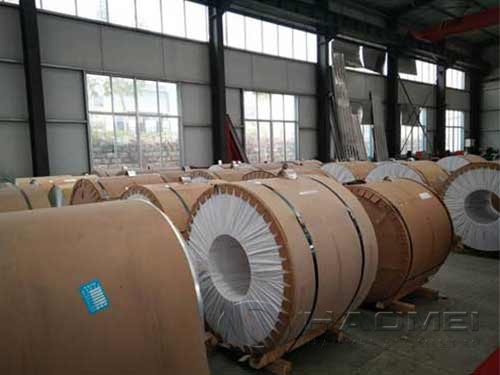
Buying Advice from a Production View
The best 3003 H14 aluminum strip is not only the coil that meets the chemical table. It is the coil that runs smoothly in the customer's process. Thickness tolerance affects forming force. Width tolerance affects feeding. Hardness consistency affects springback. Surface oil affects stamping speed. Packing affects whether the coil arrives without moisture stain or edge impact.
Before bulk purchasing, sample testing is recommended for parts with tight bending radii, visible surfaces, high-speed stamping, or special coating requirements. For export shipments, waterproof paper, plastic film, wooden pallets, desiccant, edge protection, and strong coil fixation help preserve the strip during sea transportation.
3003 H14 aluminum strip succeeds because it is not extreme. It is not the softest, not the hardest, and not the most expensive. Its value is in balance: enough strength for durable parts, enough ductility for forming, and enough corrosion resistance for long service in ordinary environments. For many factories, that balance is exactly what keeps production efficient.