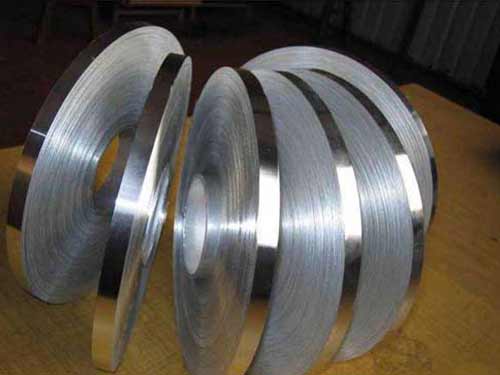
Reflector Aluminum Coil Strips For Light
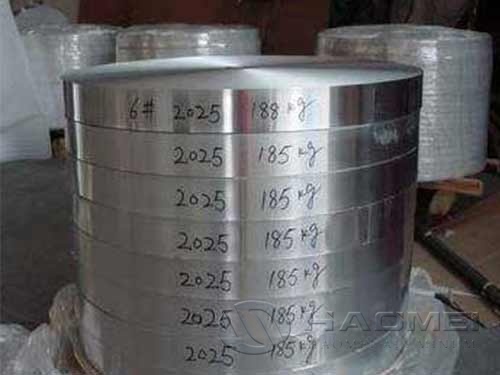
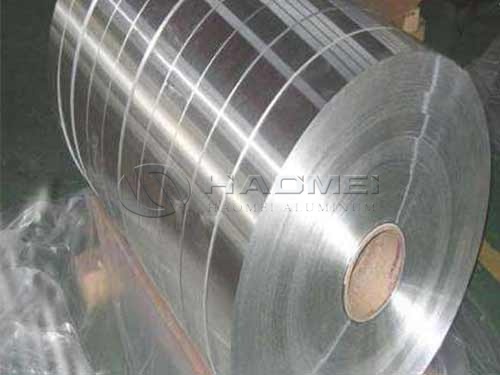
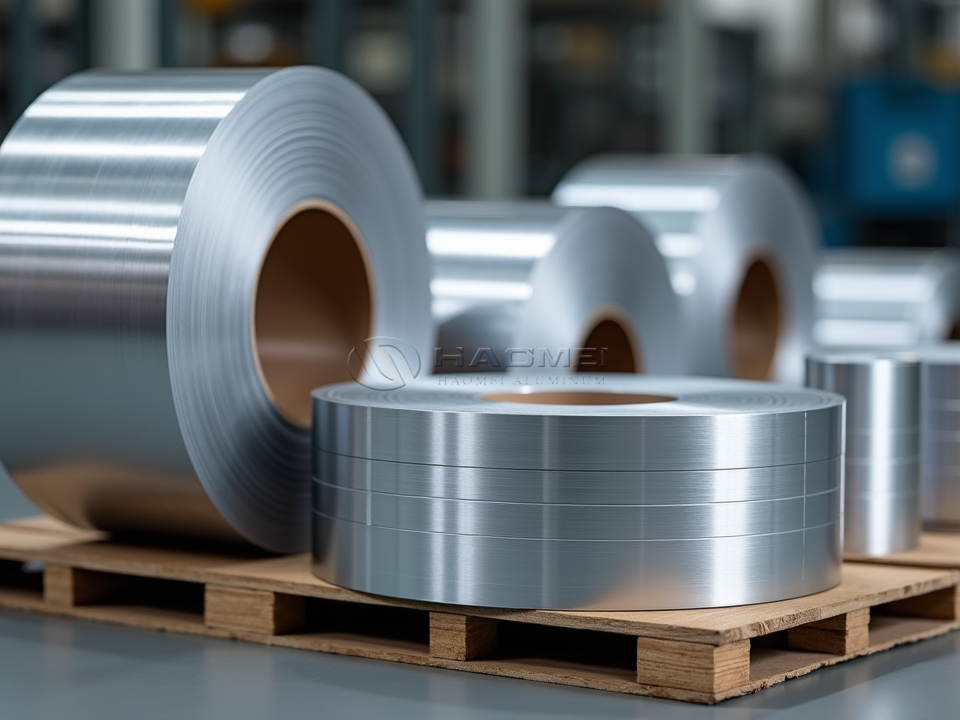
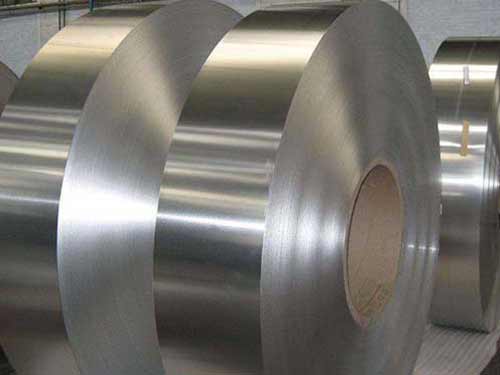
Reflector aluminum coil strips for light are precision-processed aluminum materials designed to direct, intensify, and distribute light efficiently. Used in LED fixtures, fluorescent lamps, industrial luminaires, decorative lighting, and optical reflectors, these strips combine a bright surface with low weight, reliable formability, and long-term corrosion resistance.
The material is commonly produced from high-purity 1xxx-series aluminum, especially 1050, 1060, and 1070 alloys. After rolling, the strip may receive bright finishing, mirror polishing, anodizing, or protective coating to improve reflectance and preserve surface quality during fabrication and service.
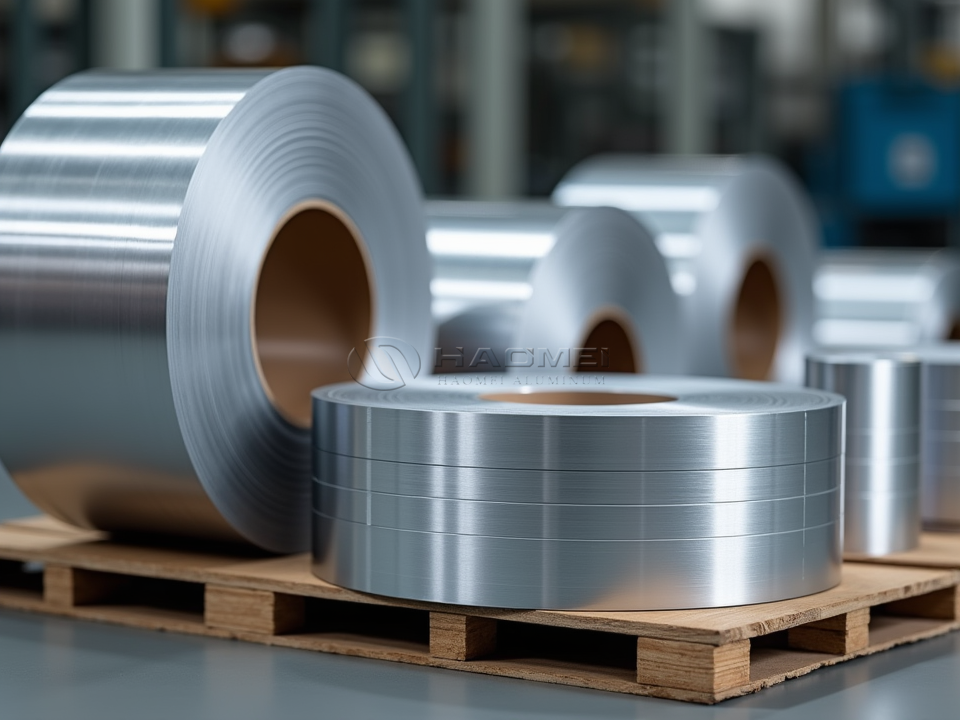
Why Aluminum Performs Well in Lighting Reflectors
A lighting reflector must do more than look bright. Its surface must guide light consistently, resist discoloration, remain stable after bending, and support economical mass production. Reflector aluminum coil strips satisfy these demands with a practical balance of optical performance and processing flexibility.
| Product advantage | Value for lighting production |
|---|---|
| High visible-light reflectance | Helps increase luminaire output and reduce light loss inside the housing |
| Smooth, bright surface | Produces more uniform beam distribution and a refined appearance |
| Low density | Reduces fixture weight, installation load, and transport cost |
| Excellent formability | Supports stamping, bending, roll forming, spinning, and shallow drawing |
| Natural corrosion resistance | Suitable for indoor fixtures and protected outdoor lighting assemblies |
| Good thermal conductivity | Assists heat transfer in LED reflector and housing structures |
| Recyclable material | Supports lower-impact lighting product design |
For standard lamp reflector production, 1050 / 1060 Aluminum Strip is widely selected because it offers high aluminum purity, stable brightness, and easy fabrication. Where additional structural strength is required for formed channels, trims, or robust lighting housings, 3003 Aluminum Strip can provide a useful alternative.
Available Surface Finishes
The selected surface finish has a direct influence on light control. Specular surfaces concentrate and redirect light, while matte or embossed finishes soften glare and widen distribution.
| Surface treatment | Typical reflectance range | Lighting effect | Typical use |
|---|---|---|---|
| Mill finish | 70% to 80% | Diffused reflection | General lamp parts and non-visible interiors |
| Bright rolled finish | 80% to 86% | Clear, efficient reflection | Standard reflector panels and lamp shades |
| Mirror polished finish | 86% to 95% | Focused, high-intensity reflection | Downlights, spotlights, optical reflectors |
| Anodized bright finish | 85% to 90% | Durable brightness with improved surface protection | Premium LED luminaires and architectural lighting |
| Matte or satin finish | 75% to 85% | Reduced glare and softer output | Office, retail, and decorative lighting |
| Embossed finish | Varies by pattern | Broader, scattered light distribution | Diffusers, decorative reflectors, anti-glare components |
Reflectance values depend on alloy, polishing level, coating type, measuring angle, and visible-light wavelength. For optical projects, reflectance should be confirmed through an agreed test method and production sample.
Typical Technical Specifications
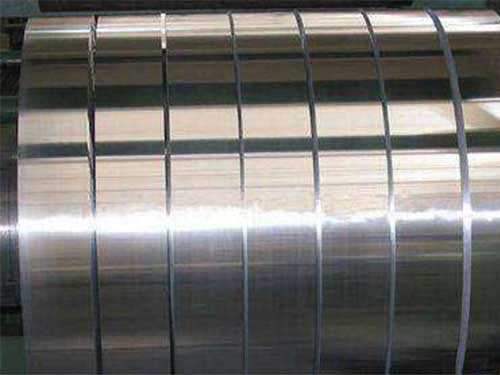
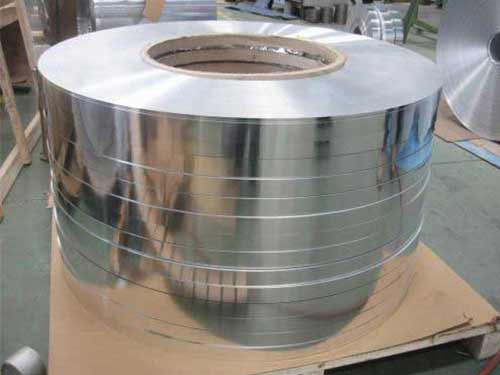
Reflector aluminum coil strips can be supplied as slit coils, traverse-wound coils, or cut strips. Dimensions and coil parameters can be tailored to the stamping die, forming line, and final lighting component.
| Parameter | Typical range | Notes |
|---|---|---|
| Alloy | 1050, 1060, 1070, 1100, 3003 | High-purity alloys are preferred for bright reflection |
| Temper | O, H12, H14, H16, H18 | H14 is commonly used for balanced forming and stiffness |
| Thickness | 0.20 mm to 1.20 mm | Thinner gauges suit lamp shades; thicker gauges suit structural reflectors |
| Width | 20 mm to 1,600 mm | Narrow slit coils available for automated production |
| Coil inner diameter | 150 mm, 300 mm, 400 mm, 500 mm | Selected to match customer decoiling equipment |
| Coil weight | 100 kg to 5,000 kg | Depends on width, thickness, and handling needs |
| Surface protection | Interleaving paper, PE film, protective coating | Helps prevent scratches during transport and stamping |
| Edge condition | Mill edge or slit edge | Burr-controlled slit edges support safer processing |
| Flatness | Controlled according to strip width and temper | Important for reflector alignment and clean forming |
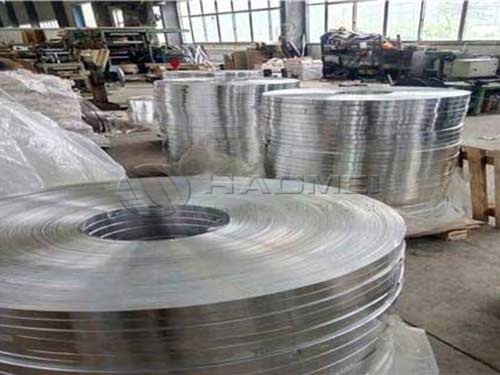
Chemical Composition of Common Reflector Grades
High aluminum content supports brightness, corrosion resistance, and stable anodizing response. The figures shown are typical composition limits in percent by weight.
| Alloy | Aluminum | Silicon + Iron | Copper | Manganese | Magnesium | Other elements |
|---|---|---|---|---|---|---|
| 1050 | 99.50 min | 0.40 max | 0.05 max | 0.05 max | 0.05 max | 0.03 max each |
| 1060 | 99.60 min | 0.35 max | 0.05 max | 0.03 max | 0.03 max | 0.03 max each |
| 1070 | 99.70 min | 0.25 max | 0.04 max | 0.03 max | 0.03 max | 0.03 max each |
| 1100 | 99.00 min | 0.95 max | 0.05 to 0.20 | 0.05 max | - | 0.05 max each |
| 3003 | Balance | 0.70 max | 0.05 to 0.20 | 1.0 to 1.5 | - | 0.05 max each |
Mechanical and Physical Performance
The exact properties vary with alloy, thickness, and temper. These values are representative of commonly used lighting reflector materials.
| Property | 1060-H14 typical value | 3003-H14 typical value | Benefit in lighting components |
|---|---|---|---|
| Tensile strength | 95 to 125 MPa | 130 to 170 MPa | Maintains shape after forming |
| Yield strength | 75 MPa min | 115 MPa min | Supports dimensional stability |
| Elongation | 3% to 10% | 4% to 10% | Allows bending and stamping without cracking |
| Density | 2.70 g/cm³ | 2.73 g/cm³ | Enables lightweight fixture construction |
| Thermal conductivity | Approx. 230 W/m·K | Approx. 190 W/m·K | Helps manage heat near LED assemblies |
| Electrical conductivity | Approx. 60% IACS | Approx. 49% IACS | Useful where conductive reflector designs are needed |
| Melting range | Approx. 650°C | Approx. 643°C to 654°C | Supports conventional fabrication processes |
Lighting Applications
Reflector aluminum coil strips are used wherever a lighting system needs controlled reflection, visual brightness, or a clean metallic surface. Narrow strips are especially efficient for continuous stamping and roll-forming operations.
| Application | Material role | Preferred surface style |
|---|---|---|
| LED downlights | Inner reflector cup or trim ring | Mirror or anodized bright |
| Linear LED fixtures | Reflector channel and light guide backing | Bright rolled or matte |
| Fluorescent lamp fittings | Reflective interior panel | Bright rolled |
| High-bay lighting | Wide reflector panels for industrial spaces | Bright or embossed |
| Street and tunnel lights | Reflective chamber components | Anodized or coated bright finish |
| Decorative pendant lamps | Visible metallic shade or trim | Mirror, satin, or embossed |
| Automotive interior lamps | Compact reflector elements | High-brightness polished finish |
| Emergency and exit lighting | Light-directing panels | Bright rolled finish |
Processing Benefits for Fixture Manufacturers
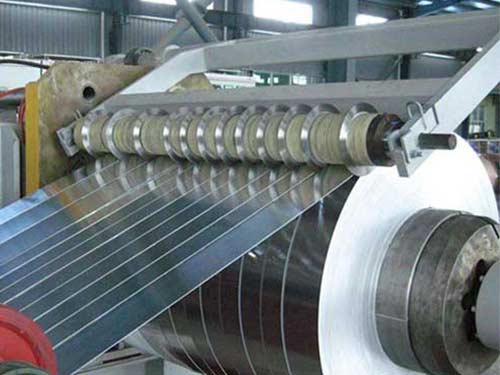
Reflector aluminum strip is suitable for high-speed conversion into lamp components. It can be slit to narrow widths, stamped into reflector blanks, bent into channels, or shaped into circular and conical forms. A controlled temper prevents excessive springback while retaining enough strength for stable assembly.
Surface handling is particularly important for mirror-finish material. Protective film, soft interleaving paper, clean tooling, and burr-controlled edges help preserve reflectance from coil processing through final luminaire assembly. For exposed decorative surfaces, manufacturers often specify a film-protected coil to reduce handling marks before forming.
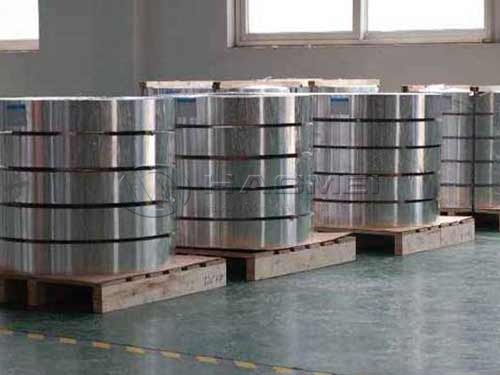
Selection Guidance
Choose 1050, 1060, or 1070 reflector aluminum when maximum brightness, easy forming, and economical production are the priority. Select 3003 when the reflector also serves as a stronger structural part or requires improved resistance to deformation. Mirror-polished and anodized surfaces are well suited to focused light applications, while satin, matte, and embossed finishes are preferred where visual comfort and glare control matter more than concentrated reflection.
Reflector aluminum coil strips for light offer a dependable material route for creating lighter, brighter, and more energy-efficient luminaires. With the right alloy, temper, surface treatment, and coil dimensions, they support consistent lighting performance from the first stamped component to long-term field use.