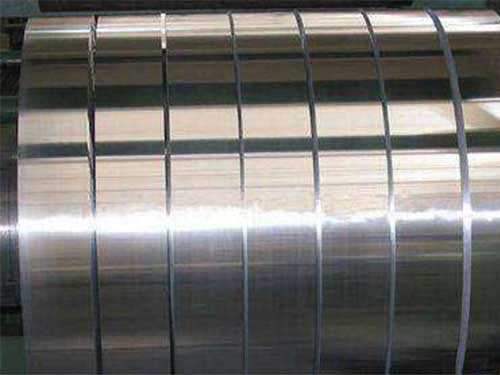
Mirror Gold Aluminum Strip for 3D
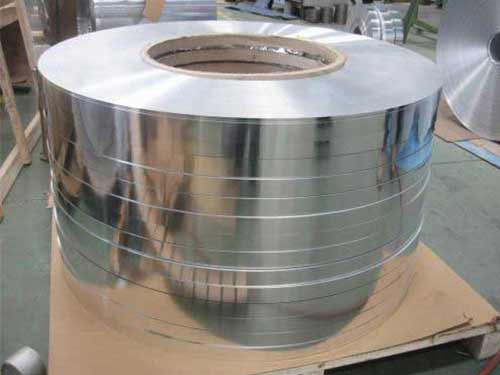
Mirror gold aluminum strip for 3D applications is not merely a narrow metal coil with a bright finish. It is a design-facing material that turns edges, contours, returns, frames, and raised lettering into visual focal points. When light reaches its highly reflective gold surface, the strip adds depth to a 3D form without adding unnecessary weight. This makes it an appealing option for channel letters, advertising signs, decorative edging, display fixtures, furniture accents, elevator panels, and architectural interior details.
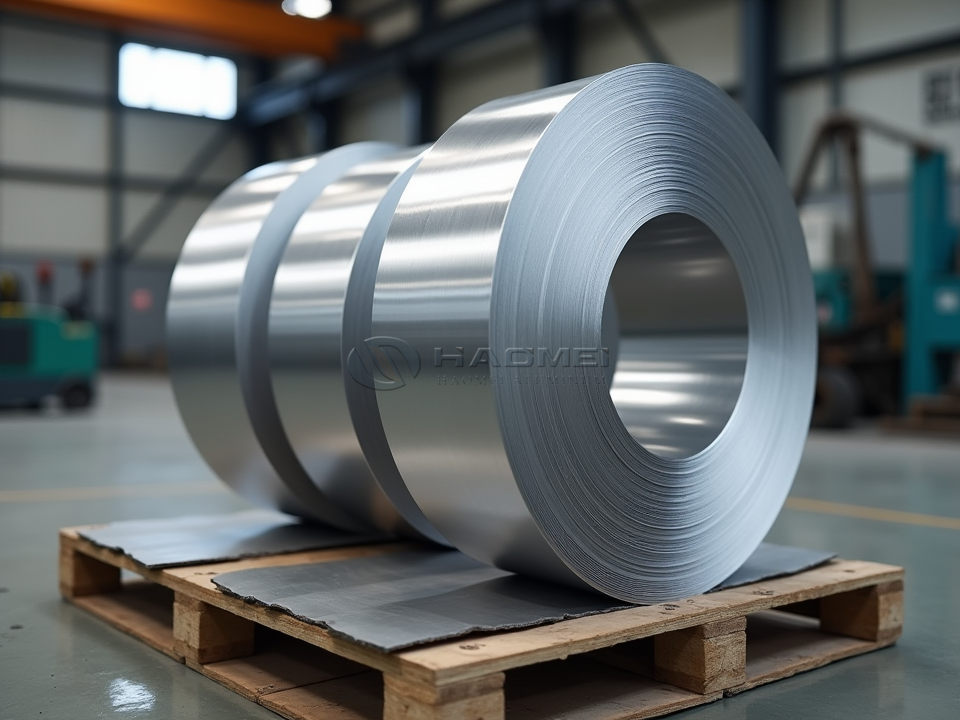
The value of a mirror gold finish lies in the relationship between color, reflection, and forming performance. Gold creates a warm, premium appearance, while the mirror surface reflects surrounding light and colors. On a three-dimensional sign or profile, this reflection changes as the viewer moves, giving the finished object a more dynamic presence than ordinary painted metal.
What Creates the Mirror Gold Surface
The base aluminum strip is rolled to controlled thickness and surface flatness. It is then mechanically polished, chemically brightened, anodized, coated, or laminated depending on the requested finish system. An anodized mirror gold surface is commonly selected for its metallic depth, adhesion, and improved resistance to oxidation. A coated or laminated surface can provide special shades, fingerprint resistance, or protective films for fabrication.
Mirror quality depends on more than brightness. A reliable strip should show consistent color between coils, low waviness, controlled surface defects, clean slit edges, and stable reflection across the width. For 3D lettering, even a small variation in gold tone can become visible when separate letters are installed side by side.
The surface is normally protected with a removable PE film. This film should remain in place during slitting, bending, routing, and transport, then be removed after final installation. Removing it too early exposes the mirror layer to scratches from tools, dust, gloves, and stacked components.
Suitable Alloys for 3D Forming
For decorative 3D work, alloy selection is guided by the balance between brightness, bendability, stiffness, and corrosion resistance. Pure aluminum grades are often preferred when tight curves and clean returns are required. Manganese-containing alloys provide additional strength for wider profiles or panels.
1050 / 1060 Aluminum Strip is a popular base material for mirror gold strips used in channel-letter returns. Its high aluminum content supports excellent ductility, making it easier to bend around logos, curves, and small-radius shapes. It also provides a smooth foundation for polished and anodized finishes.
For projects needing greater rigidity, such as deeper sign returns or decorative trims that must resist distortion, 3003 Aluminum Strip can be considered. Its manganese content raises strength while retaining practical forming performance. However, for very tight bends, the temper must be selected carefully to prevent cracking or surface stress marks.
| Alloy | Main Characteristic | Typical 3D Use | Recommended Temper |
|---|---|---|---|
| 1050 | High purity, excellent formability | Small channel letters, curved trims | O, H14, H16 |
| 1060 | Smooth surface, high ductility | Mirror-finish lettering and edging | O, H14, H18 |
| 1100 | Good corrosion resistance and workability | Decorative profiles and lighting components | O, H14 |
| 3003 | Higher strength with good workability | Wide returns, panels, structural decoration | H14, H16 |
Chemical Composition Requirements
Chemical composition affects the aluminum strip's forming behavior, polish response, and final visual consistency. High-purity 1xxx alloys generally offer the most reliable reflection and flexibility. The composition values shown are typical maximum limits or controlled ranges based on common ASTM and EN alloy definitions.
| Alloy | Al | Si + Fe | Cu | Mn | Mg | Zn | Other Elements |
|---|---|---|---|---|---|---|---|
| 1050 | 99.50 min | 0.40 max | 0.05 max | 0.05 max | 0.05 max | 0.07 max | 0.03 each, 0.03 total |
| 1060 | 99.60 min | 0.35 max | 0.05 max | 0.03 max | 0.03 max | 0.05 max | 0.03 each, 0.03 total |
| 1100 | 99.00 min | 0.95 max | 0.05-0.20 | 0.05 max | - | 0.10 max | 0.05 each, 0.15 total |
| 3003 | Balance | 0.70 max | 0.05-0.20 | 1.0-1.5 | - | 0.10 max | 0.05 each, 0.15 total |
The balance of iron and silicon is especially important for a mirror-finish product. Excessive intermetallic particles may affect polishing uniformity and produce subtle visual differences under strong lighting. This is why decorative mirror gold aluminum strip should be sourced with surface-finish requirements clearly stated, rather than specified only by alloy and thickness.
Dimensions and Ordering Parameters
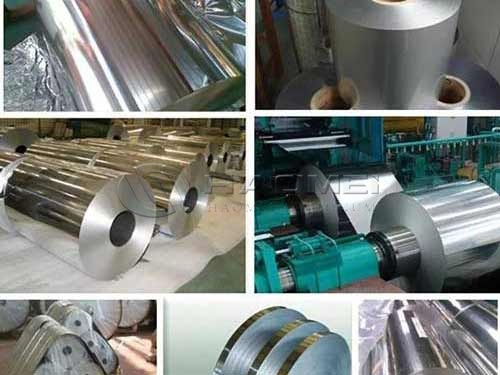
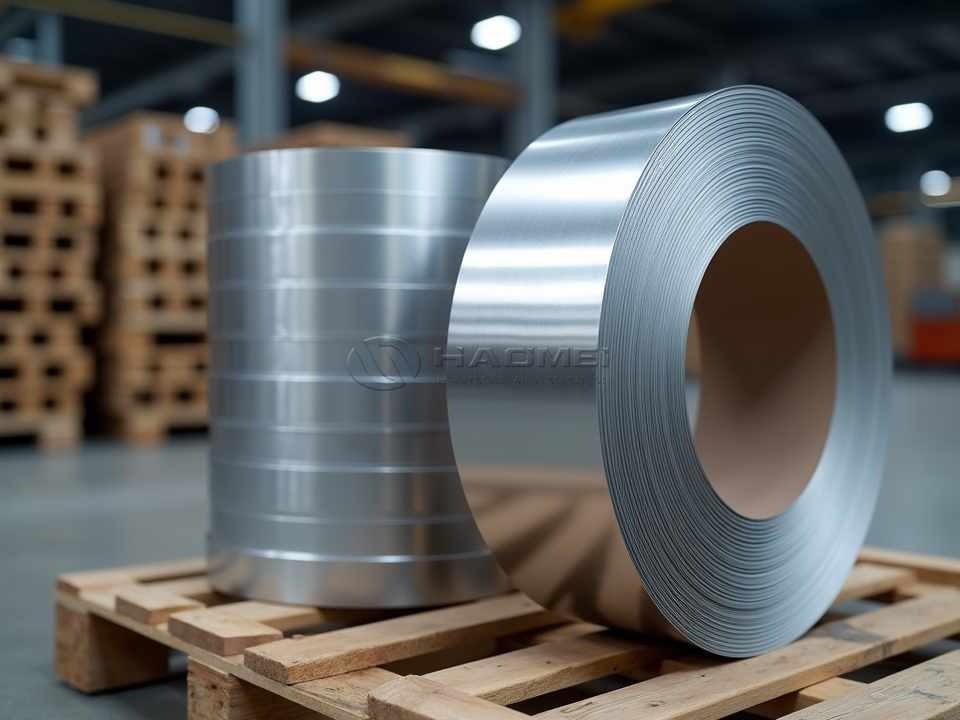
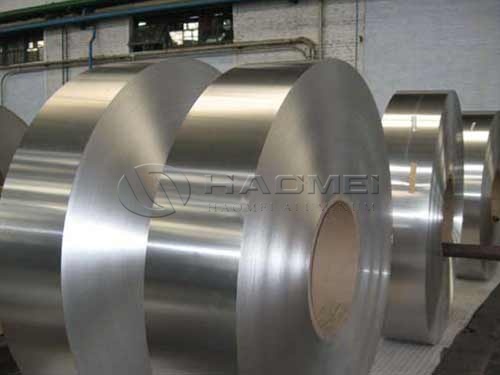
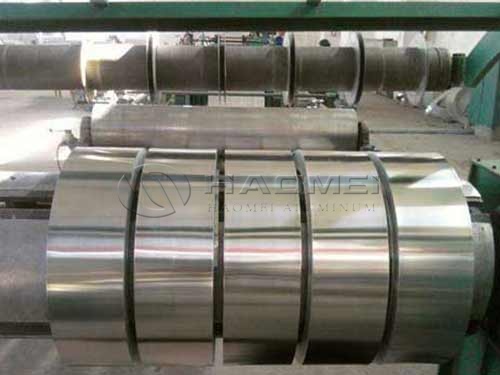
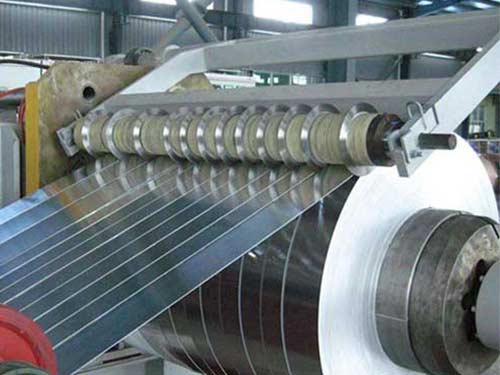
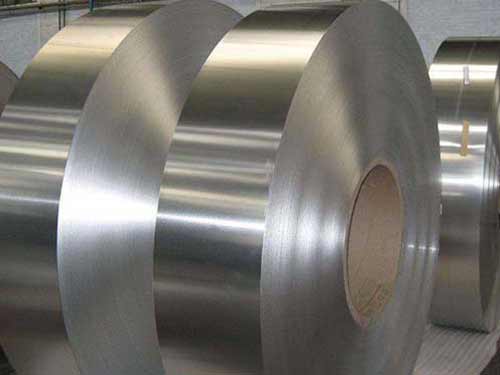
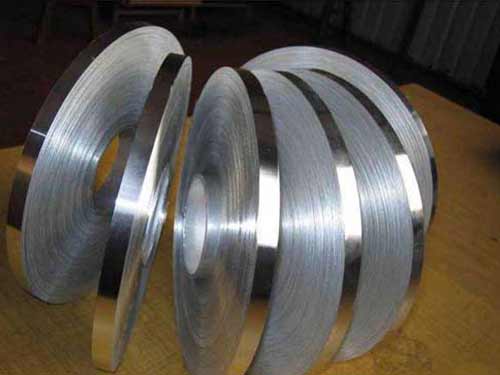
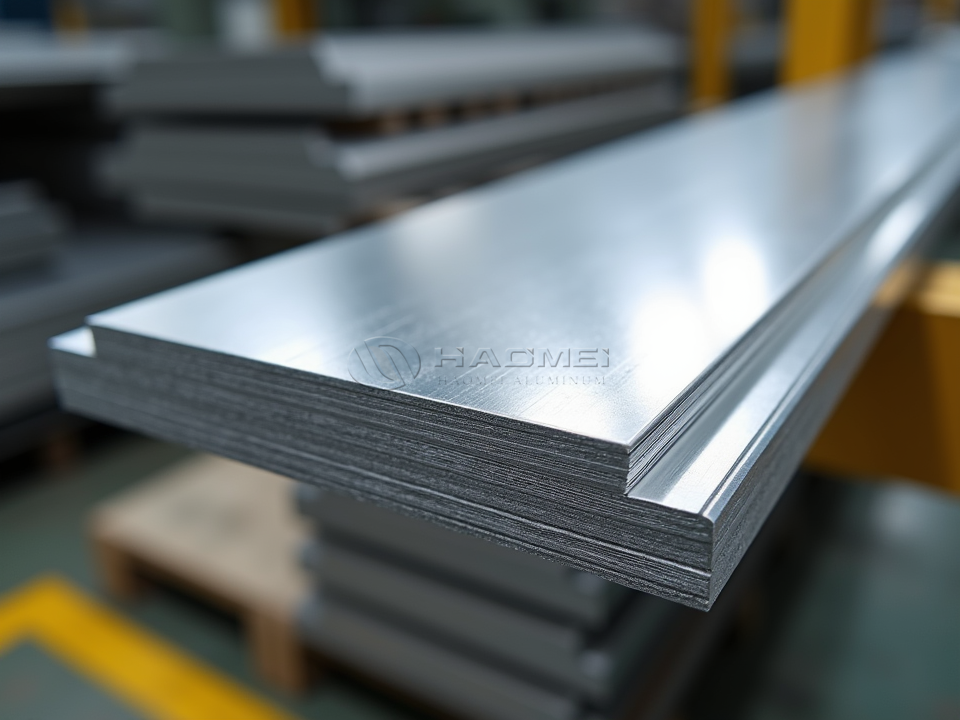
Mirror gold aluminum strip is generally supplied in coils slit to the width required by the fabrication process. Narrow strips reduce waste for channel-letter bending, while wider material may be cut into decorative profiles or embossed components.
| Parameter | Common Range | Notes |
|---|---|---|
| Thickness | 0.20-1.20 mm | 0.30-0.80 mm is common for 3D letters |
| Width | 10-1,500 mm | Narrow slit widths are available for returns |
| Coil weight | 100-3,000 kg | Determined by equipment capacity and handling needs |
| Inner diameter | 150 mm, 300 mm, 405 mm, 505 mm | Customized to uncoiler requirements |
| Surface finish | Mirror gold anodized, coated, laminated | Confirm color sample and protective film type |
| Protective film | PE film, typically 30-80 microns | Film adhesion should suit forming conditions |
Thickness should be chosen according to letter height, return depth, bending radius, and installation environment. Thin material forms easily but may show dents on large exposed surfaces. A thicker strip produces a firmer profile but requires more bending force and may need a softer temper for detailed shapes.
Temper and Fabrication Behavior
Temper is the practical language of metal behavior. An O temper strip is annealed and soft, offering the best performance for intricate curved letters, hand-bent returns, and deep contour work. H14 is a half-hard temper that provides a workable middle ground between shape retention and bendability. H16 and H18 offer increased rigidity but are better suited to straighter trims or applications with larger bending radii.
For CNC channel-letter machines, H14 is frequently selected because it feeds smoothly and maintains a clean profile after bending. For manual fabrication or highly detailed logos, O temper may reduce the risk of edge cracking. When a mirror gold surface is involved, tooling must be clean and properly adjusted. Excessive roller pressure can leave marks that become highly visible under showroom or daylight illumination.
Applicable Standards and Quality Controls
Mirror gold aluminum strip can be produced in accordance with recognized material standards, depending on the destination market and project documentation. Common references include ASTM B209 for aluminum and aluminum-alloy sheet and strip, EN 485 for tolerances and mechanical properties, EN 573 for chemical composition, and GB/T 3880 for aluminum plates, sheets, and strips.
In addition to base-metal compliance, decorative projects should confirm finish-related controls. These may include color difference, gloss level, coating thickness, anodic film thickness, adhesion, bend performance, protective-film behavior, coil camber, edge condition, and surface inspection under specified lighting. A mirror surface is less forgiving than a brushed or matte finish, so visual acceptance criteria should be agreed upon before production.
Practical Handling for Long-Lasting Gold Reflection
Store coils indoors in a dry, ventilated space and avoid direct contact with moisture, cement dust, acids, or alkaline materials. Use soft gloves when handling cut pieces. During fabrication, keep worktables free from metal chips and avoid sliding one finished panel across another. The best mirror gold aluminum strip retains its reflective character only when production discipline protects the surface from the first slit coil to final installation.
For 3D applications, this material delivers a rare combination of lightweight construction, elegant color, and shape-responsive reflection. With the correct alloy, temper, thickness, and finish specification, mirror gold aluminum strip can make a sign, trim, or decorative profile appear more dimensional, refined, and memorable.