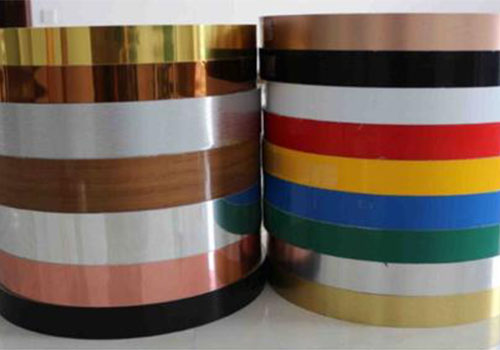
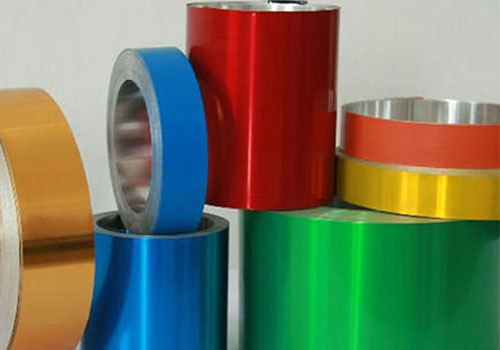
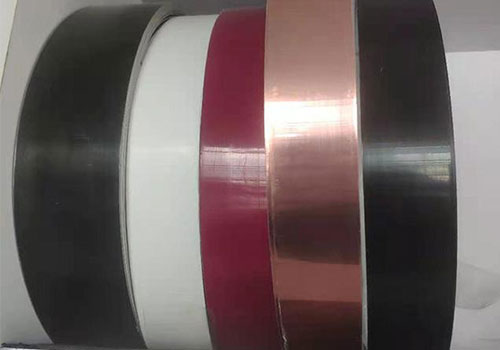
Color Ful Wall Panel Aluminum Strip
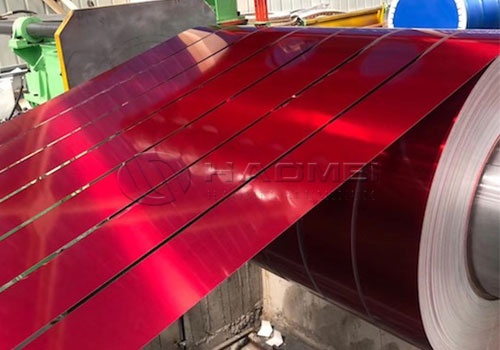
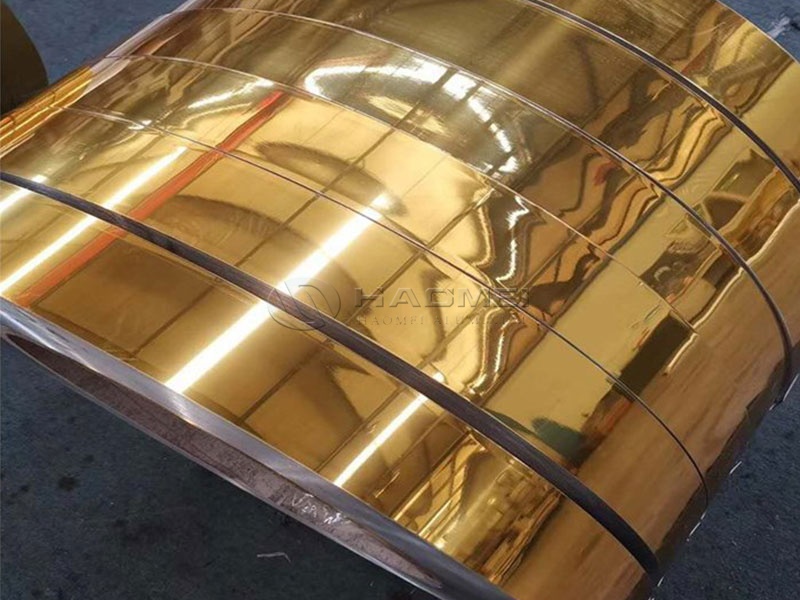
Color ful Wall Panel Aluminum strip is a prepainted aluminum material engineered for decorative and protective wall panel production. It combines a lightweight aluminum substrate with a factory-applied coating system, creating panels that are visually vivid, corrosion resistant, easy to fabricate, and practical to maintain. From commercial façades to clean interior partitions, this strip provides a stable base for roll forming, bending, pressing, profiling, and composite panel lamination.
Unlike heavy steel sheet, aluminum strip reduces panel weight while retaining dependable stiffness after proper panel design. Its colored finish eliminates much of the post-fabrication painting work, helping fabricators achieve cleaner production lines and more consistent appearance across large projects.
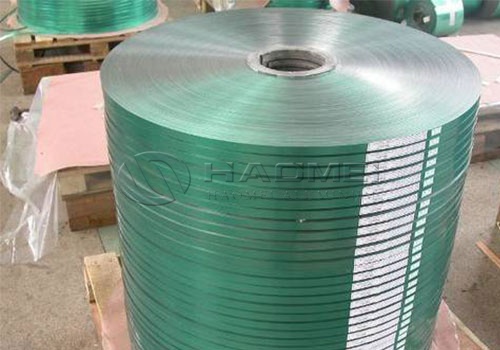
Material Structure and Product Advantages
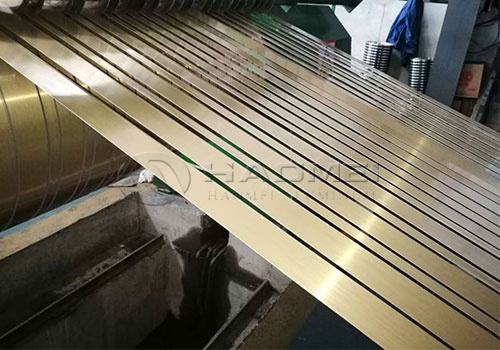
The strip is normally produced from aluminum alloys such as 3003, 3105, or 5052, selected according to forming demand, panel geometry, environmental exposure, and required strength. The metal is cleaned, chemically treated, primed, and coated continuously before being slit into customer-required widths.
| Product Feature | Customer Benefit |
|---|---|
| Low density aluminum substrate | Reduces wall system dead load and simplifies handling |
| Continuous color coating | Delivers even color, gloss, and film thickness across the coil |
| Good bendability | Supports corner folding, roll forming, embossing, and shaped panel profiles |
| Corrosion resistance | Helps protect panels in humid, urban, and light industrial environments |
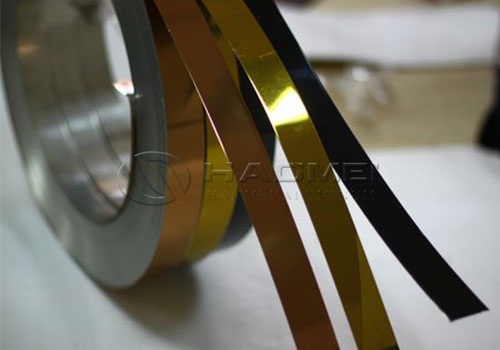
| Broad color selection | Supports solid shades, metallic tones, woodgrain effects, and customized finishes |
| Clean surface finish | Reduces onsite painting, odor, drying time, and maintenance demand |
| Recyclable metal base | Supports resource-efficient building material selection |
For projects requiring an economical decorative surface in sheltered or moderate environments, PE Coated Aluminum Strip offers flexible processing and an attractive painted finish. For demanding exterior façades exposed to strong sunlight, rain, salt-laden air, or major temperature changes, a fluorocarbon coating system is often the preferred choice.
Chemical Composition of Common Aluminum Substrates
The chemical composition influences corrosion behavior, strength, ductility, and compatibility with forming operations. The values shown are typical nominal ranges and can be adjusted according to the governing alloy standard and order agreement.
| Element, wt.% | AA 3003 | AA 3105 | AA 5052 |
|---|---|---|---|
| Silicon, Si | 0.60 max | 0.60 max | 0.25 max |
| Iron, Fe | 0.70 max | 0.70 max | 0.40 max |
| Copper, Cu | 0.05-0.20 | 0.30 max | 0.10 max |
| Manganese, Mn | 1.0-1.5 | 0.30-0.80 | 0.10 max |
| Magnesium, Mg | 0.05 max | 0.20-0.80 | 2.2-2.8 |
| Chromium, Cr | 0.10 max | 0.20 max | 0.15-0.35 |
| Zinc, Zn | 0.10 max | 0.40 max | 0.10 max |
| Aluminum, Al | Balance | Balance | Balance |
AA 3003 is widely used for general wall cladding because it provides balanced formability and moderate strength. AA 3105 is a common choice for painted architectural sheet and strip. AA 5052 brings higher magnesium content and improved strength, making it suitable for panels that need greater dent resistance or enhanced corrosion performance.
Technical Specifications
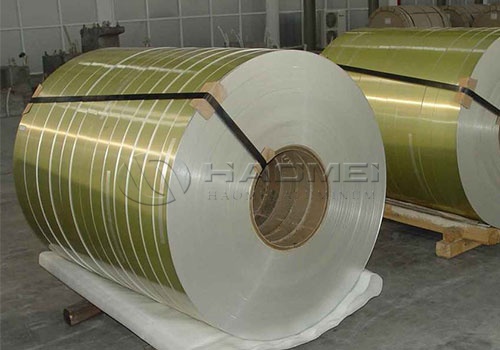
Color ful Wall Panel Aluminum strip can be supplied in coils, slit coils, or cut-to-length sheets. Exact dimensions should match the panel machine, forming radius, backing material, and installation design.
| Parameter | Typical Range | Notes |
|---|---|---|
| Alloy | 3003, 3105, 5052 | Selected by exposure and forming requirement |
| Temper | H14, H16, H18, H24, H26 | Softer tempers support more complex forming |
| Thickness | 0.20-1.20 mm | Common wall panel range: 0.40-0.80 mm |
| Width | 20-1,600 mm | Slit width can match roll-forming equipment |
| Coil inner diameter | 150 mm, 300 mm, 405 mm, 505 mm | Subject to machine compatibility |
| Coil weight | Up to 8 metric tons | Depends on thickness and handling limits |
| Coating type | PE, HDP, SMP, PVDF | Chosen according to service environment |
| Top coating thickness | 15-35 μm | Higher thickness improves protection potential |
| Back coating thickness | 5-15 μm | Protects the reverse side during fabrication |
| Surface finish | Glossy, matte, textured, metallic | Custom color matching available |
Mechanical and Coating Performance
Mechanical properties vary with alloy, temper, thickness, and testing direction. The following data represent practical reference values for commonly used architectural grades.
| Performance Item | AA 3003 H24 | AA 3105 H24 | AA 5052 H32 |
|---|---|---|---|
| Tensile strength | 145-185 MPa | 145-190 MPa | 210-260 MPa |
| Yield strength | 115 MPa min | 110 MPa min | 160 MPa min |
| Elongation | 4-10% | 4-10% | 5-12% |
| Density | 2.73 g/cm³ | 2.72 g/cm³ | 2.68 g/cm³ |
| Bend performance | 1T-3T typical | 1T-3T typical | 2T-4T typical |
| Coating Test | Typical Expectation | Value to the End User |
|---|---|---|
| Pencil hardness | HB to 2H, coating dependent | Helps resist minor handling marks |
| Adhesion | 0-1 grade after cross-hatch test | Reduces peeling risk during bending |
| Impact resistance | No visible cracking under specified impact | Supports transport and panel assembly |
| MEK resistance | 50-100 double rubs, coating dependent | Indicates curing quality and solvent resistance |
| Salt spray resistance | 500-1,500 hours, system dependent | Assists durability assessment for corrosive environments |
| Color retention | Stronger with PVDF systems | Preserves façade appearance over long service periods |
For high-rise façades, coastal construction, transit terminals, or buildings with prolonged UV exposure, PVDF Coated Aluminum Strip provides advanced weathering resistance and long-term color stability.
Typical Applications
Color ful Wall Panel Aluminum strip adapts to both exterior architecture and interior decoration. Its low weight allows large panel areas to be installed with less load on the supporting structure, while its coating provides a finished surface ready for visible use.
| Application Area | Typical Use |
|---|---|
| Exterior wall cladding | Cassette panels, corrugated panels, rainscreen systems, soffits |
| Interior wall systems | Hotel lobbies, retail walls, office partitions, elevator surrounds |
| Ceiling products | Linear ceilings, clip-in ceilings, baffle ceilings, perforated panels |
| Commercial buildings | Shopping centers, airports, hospitals, schools, exhibition halls |
| Residential projects | Balcony panels, porch ceilings, decorative siding, garage trim |
| Industrial facilities | Equipment enclosures, clean wall panels, insulated panel facing sheets |
Processing Guidance for Panel Fabricators
A clean fabrication process helps preserve the coating and visual quality. Keep forming rolls free of sharp debris, use protective film where required, and select a bend radius suitable for the alloy-temper combination. Tight bends on harder tempers may cause coating stress, particularly with thick films or textured finishes.
During storage, coils should be kept dry, ventilated, and away from direct ground contact. Condensation trapped between wraps can lead to water staining. Protective film should be removed within the recommended period after installation so that adhesive residue does not remain on the painted face.
Color matching deserves attention when panels are installed across wide elevations. Panels should be fabricated and installed in the same rolling direction where possible. Coil batches, gloss level, metallic orientation, lighting conditions, and panel angle can all influence perceived color.
Value for Building Projects
Color ful Wall Panel Aluminum strip delivers a practical combination of appearance, durability, fabrication efficiency, and lightweight performance. It enables architects to specify vibrant visual themes while giving panel producers a stable, prefinished material for efficient conversion. With the correct alloy, temper, coating, and thickness, the strip can serve reliably in interior decorative systems, protected exterior walls, and demanding architectural cladding applications.