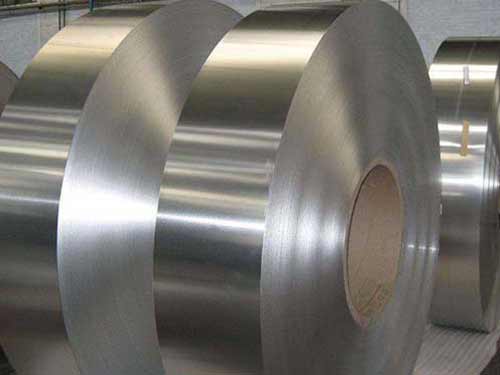
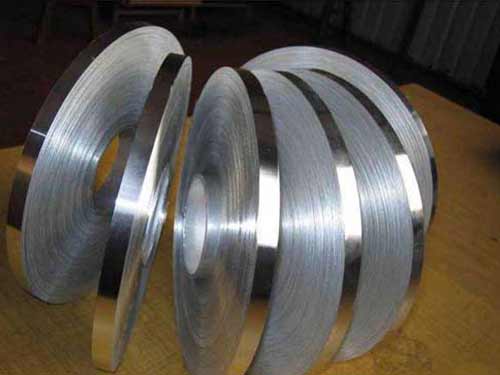
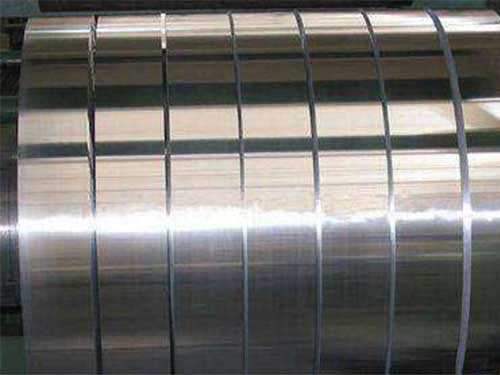
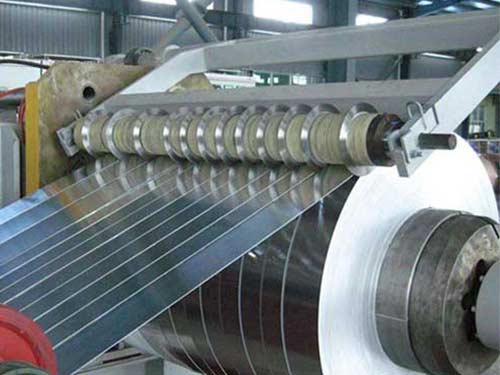
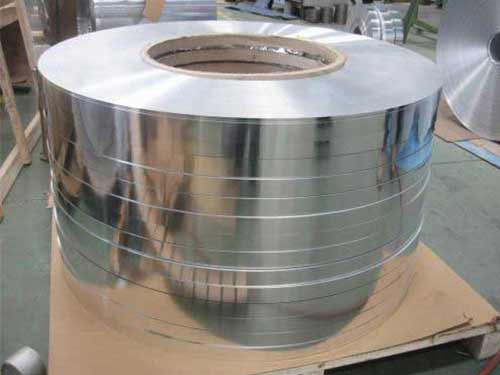
Aluminum Strip for Flexible Air Duct
In a flexible air duct, aluminum strip is not only a metal surface. It is the duct wall, the forming medium, the moisture barrier, the heat reflector, and the part that must bend thousands of times without tearing. From a manufacturing viewpoint, the strip behaves like a controlled spring: soft enough to be corrugated, spiral-wound, folded, or laminated, yet stable enough to keep the duct round when air pressure, vibration, and installation stress arrive.
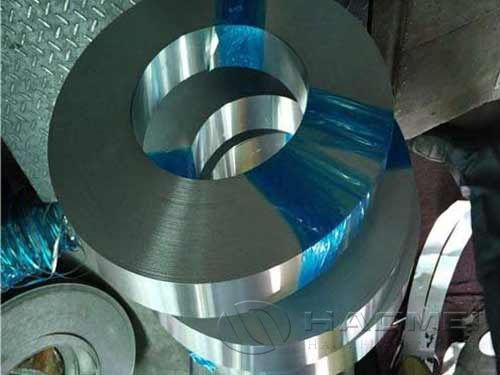
For HVAC contractors, ventilation equipment makers, and duct fabricators, choosing aluminum strip for flexible air duct is mainly about matching alloy, temper, thickness, surface condition, and slit precision to the duct design. A glossy coil may look simple, but its real value is measured in airtight seams, smooth feeding, low scrap rate, and long service life inside buildings, workshops, kitchens, vehicles, and industrial ventilation systems.
Why aluminum strip works so well in flexible ducting
The first function of aluminum strip is formability. Flexible air ducts are often produced by spiral winding, corrugation, lock seaming, or lamination with polyester film, kraft paper, glass fiber cloth, or insulation layers. Aluminum needs to accept deformation without edge cracking. This is why O temper and controlled H tempers are widely used. O temper provides maximum softness, while H14, H16, and H18 offer higher rigidity for semi-rigid ducts.
The second function is barrier performance. Aluminum has low gas permeability and natural oxidation resistance. Once exposed to air, the surface forms a compact aluminum oxide film. This thin passive layer protects the strip against many indoor moisture and condensation conditions, helping the duct maintain clean airflow and reduce surface degradation.
The third function is thermal reflection. In air-conditioning and heating ventilation, radiant heat matters. Aluminum reflects a large portion of radiant energy, which helps insulated flexible ducts improve thermal efficiency when used with glass wool, PE foam, or other insulation systems.
The fourth function is fire and hygiene performance. Aluminum is non-combustible as a metal and does not produce toxic smoke by itself. For ventilation systems in buildings, kitchens, hospitals, laboratories, and clean areas, this property supports safer duct structures when combined with compliant adhesives and jackets.
Common alloy choices for flexible air duct
For light flexible duct structures, 8011 and 3003 are especially popular. 8011 Aluminum Strip is often selected for foil-based or laminated duct products because it offers excellent softness, pinhole control, and stable rolling quality. It is suitable for thin gauges and high-speed production lines.
When the duct requires stronger shape retention, higher mechanical strength, or better dent resistance, 3003 Aluminum Strip is a strong candidate. Its manganese content improves strength compared with pure aluminum while keeping good corrosion resistance and workability.
Pure aluminum grades such as 1050, 1060, 1070, and 1100 are also used where high ductility, clean surface quality, and economical processing are preferred. For more demanding corrosion environments, some fabricators evaluate 5005 or 5052, although these are less common for standard flexible duct because of cost and forming requirements.
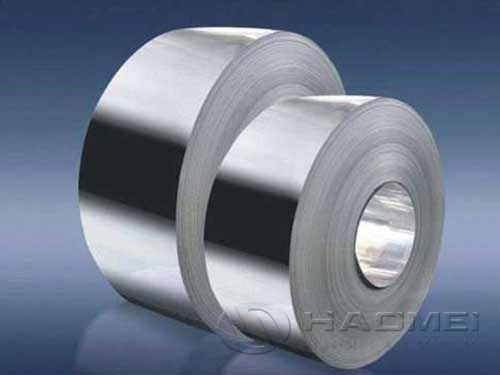
Typical technical parameters
| Item | Common range for flexible air duct use | Manufacturing note |
|---|---|---|
| Alloy | 8011, 3003, 1100, 1060, 1050 | Selected by duct type and forming method |
| Temper | O, H14, H16, H18, H22, H24 | O for soft bending, H tempers for stiffness |
| Thickness | 0.03 mm to 0.30 mm | Thin foil for laminated duct, thicker strip for semi-rigid duct |
| Width | 20 mm to 600 mm | Narrow strip for spiral winding, wider strip for lamination |
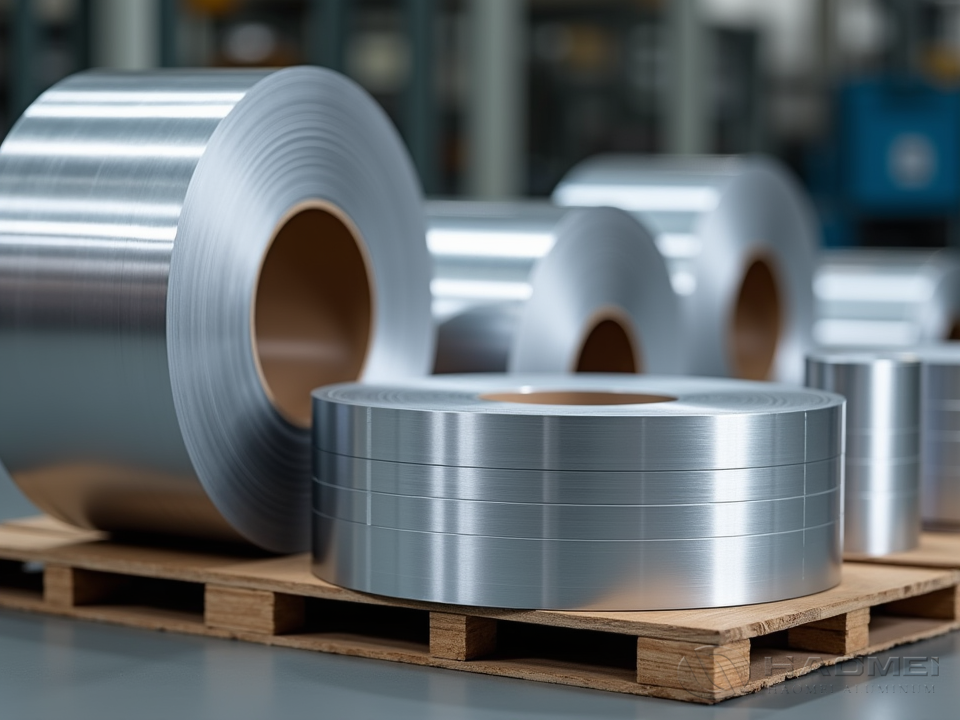
| Coil ID | 76 mm, 150 mm, 300 mm, 405 mm, 508 mm | Matched to uncoiler equipment |
| Surface | Mill finish, bright, degreased, coated, laminated | Oil level must suit adhesive or forming process |
| Edge | Slit edge, deburred edge | Low burr reduces tearing and seam leakage |
| Camber | Commonly controlled within 1 mm per meter | Important for stable high-speed feeding |
| Tensile strength | Approx. 60 MPa to 180 MPa | Depends on alloy and temper |
| Elongation | Approx. 1% to 30% | Higher elongation improves deep corrugation |
These values can be customized. In flexible duct production, even a small thickness variation can change corrugation depth, seam lock tightness, and machine tension. For this reason, thickness tolerance, width tolerance, and coil flatness should be confirmed before bulk production.
Alloy tempering and duct behavior
Temper is where the strip personality appears. O temper aluminum is fully annealed. It bends quietly, takes corrugation well, and reduces springback. This makes it suitable for flexible ducts that must be compressed for packaging or stretched during installation.
H14 and H16 tempers are strain-hardened. They resist collapse better and help semi-rigid ducts maintain a round cross-section after bending. H18 has higher hardness and is used only when the forming process can handle the reduced elongation. For laminated flexible ducts, too hard a temper may cause wrinkling, poor winding, or microcracks at folded sections.
A practical selection rule is simple: if the duct must be soft, compressible, and easy to install by hand, choose O or soft H temper. If the duct must resist crushing, vibration, and shape loss, choose a harder H temper with proper forming trials.
Chemical composition reference
| Alloy | Si | Fe | Cu | Mn | Mg | Zn | Ti | Al |
|---|---|---|---|---|---|---|---|---|
| 8011 | 0.50-0.90 | 0.60-1.00 | <=0.10 | <=0.20 | <=0.05 | <=0.10 | <=0.08 | Remainder |
| 3003 | <=0.60 | <=0.70 | 0.05-0.20 | 1.00-1.50 | - | <=0.10 | - | Remainder |
| 1100 | Si+Fe <=0.95 | Included | 0.05-0.20 | <=0.05 | - | <=0.10 | - | >=99.00 |
| 1060 | <=0.25 | <=0.35 | <=0.05 | <=0.03 | <=0.03 | <=0.05 | <=0.03 | >=99.60 |
| 1050 | <=0.25 | <=0.40 | <=0.05 | <=0.05 | <=0.05 | <=0.05 | <=0.03 | >=99.50 |
Chemical composition affects more than strength. Silicon and iron influence foil rolling behavior and pinhole performance. Manganese improves strength and anti-collapse behavior in 3003. Higher aluminum purity improves ductility and reflectivity, which is useful in soft ventilation sleeves and insulated ducts.
Standards and compliance conditions
Reliable aluminum strip for flexible air duct is usually supplied according to international and regional material standards. Common references include ASTM B209/B209M for aluminum sheet and strip, EN 573 for chemical composition, EN 485 for mechanical properties and tolerances, GB/T 3190 for alloy composition, and GB/T 3880 for aluminum plate, sheet, and strip.
For export duct materials, customers may also request RoHS, REACH, fire performance documentation, food-contact statements for kitchen exhaust applications, or surface cleanliness reports. If the strip is laminated, the total system should be checked because adhesive, film, and insulation layers also influence flame spread, smoke density, odor, and aging resistance.
Surface, oil, and edge control
A flexible duct line punishes small defects quickly. Excess rolling oil can weaken lamination. Too little lubrication may increase friction during corrugation. Sharp burrs can cut film layers or start fatigue cracks during repeated bending. Wavy edges can cause spiral seams to drift.
For stable duct production, buyers should specify a clean mill finish, controlled oil residue, tight width tolerance, and burr limits. For ducts requiring adhesive bonding, degreased or corona-treated laminated surfaces may be needed. For decorative or exposed ventilation ducts, bright finish and stain control become more important.
Applications in real ventilation systems
Aluminum strip for flexible air duct is used in residential HVAC branches, fresh air systems, bathroom exhaust ducts, dryer vent hoses, range hood ducts, industrial fume extraction, vehicle air distribution, cleanroom auxiliary ventilation, and insulated acoustic duct assemblies.
In compact apartments, the duct needs to bend around beams and cabinets without losing airflow. In commercial kitchens, it must tolerate heat, grease vapor, and cleaning cycles. In industrial workshops, it may face vibration from fans and machinery. In insulated HVAC systems, it becomes the inner air-contact layer or outer protective jacket. In every case, the strip must balance flexibility with structural memory.
Purchasing focus for duct manufacturers
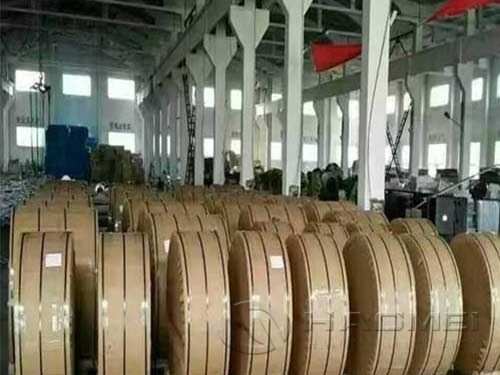
Good procurement does not start with alloy alone. It starts with the duct structure. A laminated soft duct, a semi-rigid corrugated duct, and a spiral lock-seam duct all ask for different strip behavior. Buyers should provide alloy, temper, thickness, width, coil ID, coil weight, surface requirement, edge condition, mechanical property target, and intended processing speed.
Sample testing is recommended before mass production. Check feeding stability, corrugation depth, seam tightness, duct compressibility, air leakage, crack resistance, and packaging deformation. When the strip matches the machine and duct design, production becomes faster, ducts look cleaner, and installation failures decrease.
Aluminum strip may be thin, but in flexible air duct manufacturing it carries a large technical burden. The best material is not always the hardest, softest, or brightest. It is the strip whose chemistry, temper, surface, and tolerance work together with the forming line, the duct design, and the final airflow environment.