Perforated Aluminium Strip Coated With Polypropylene
Perforated aluminium strip coated with polypropylene is designed for projects where airflow, low weight, corrosion resistance, and a protected metal surface must work together. Rather than treating perforation as a simple hole-making operation and polypropylene as a decorative layer, this material should be considered as an engineered system. The aluminium carries the structural load, the perforation controls air or liquid passage, and the polypropylene layer creates a durable barrier against moisture, chemicals, abrasion, and surface contamination.
This combination is widely used in ventilation louvers, filtration frames, battery components, acoustic panels, cable protection, appliance parts, heat-exchange accessories, and lightweight industrial screens. It is especially practical where bare aluminium may face alkaline residues, humidity, cleaning agents, dust accumulation, or repeated contact during assembly.
How the Material Is Built
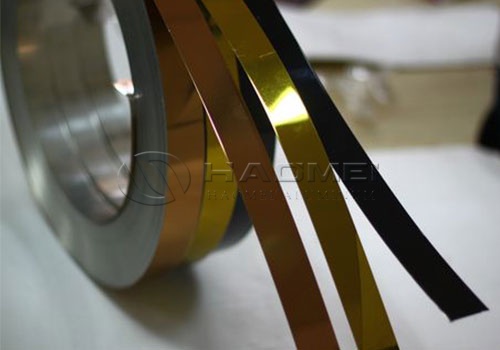
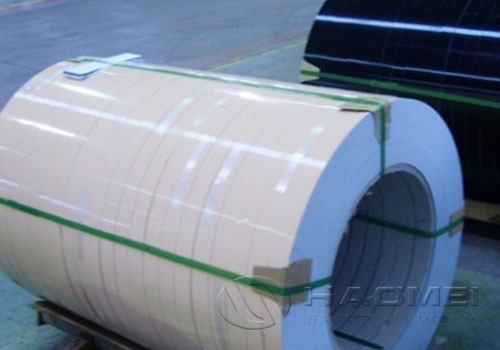
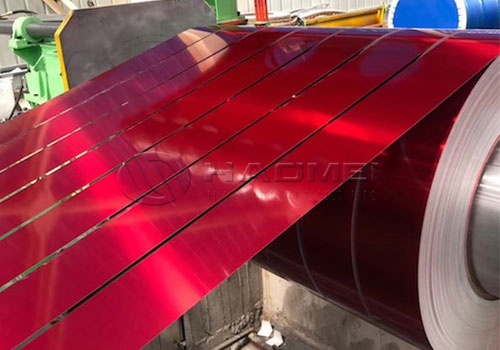
The base strip is rolled from aluminium coil, slit to the requested width, perforated with a press tool, and coated or laminated with polypropylene. Depending on the end-use environment, the PP layer may be applied on one side, both sides, or as a bonded film with an adhesive tie layer.
Polypropylene is different from liquid paint. It is a thermoplastic polymer with strong chemical stability, low moisture absorption, and good electrical insulation. Its surface is naturally smooth and non-porous, helping reduce dirt retention and making routine cleaning easier. For this reason, PP-coated perforated strip is often selected for indoor industrial environments, air-handling systems, and components exposed to mild acids, alkalis, or detergents.
The perforation pattern must be planned before coating selection. Round, square, slotted, staggered, and straight-row holes change the remaining metal area, bending behavior, open-area ratio, and coating stress around each hole edge. A coating that performs well on solid strip can crack or peel near sharp perforation edges if the substrate preparation, forming radius, or film adhesion is inadequate.
Common Product Parameters
| Parameter | Typical Range or Option |
|---|---|
| Base material | Aluminium alloy 1050, 1060, 1100, 3003, 3105, 5052 |
| Strip thickness | 0.20 mm to 2.00 mm |
| Standard strip width | 10 mm to 1,600 mm |
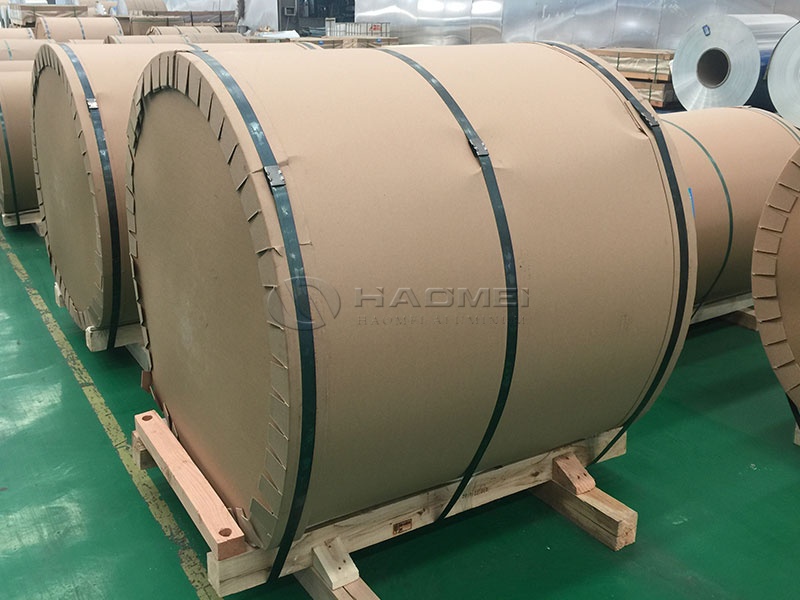
| Coil inner diameter | 150 mm, 300 mm, 405 mm, 508 mm, or custom |
| Coil outer diameter | Up to 1,800 mm, subject to weight limits |
| Hole diameter | 0.8 mm to 20 mm or custom tooling |
| Hole shape | Round, square, oval, slot, hexagonal, decorative pattern |
| Open area | Commonly 15% to 60% |
| PP coating thickness | 20 μm to 200 μm, depending on process and use |
| Coating sides | Single-side, double-side, edge-free or edge-covered design |
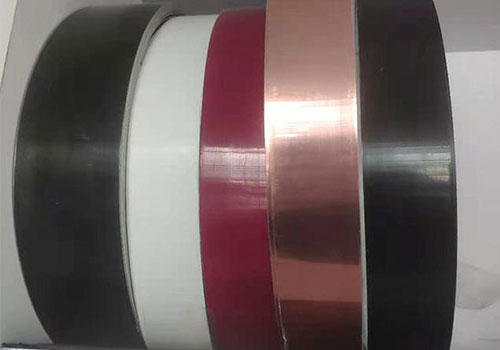
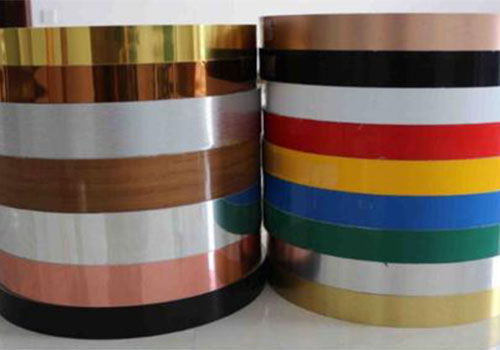
| Surface finish | Matte, smooth, embossed, anti-slip, colored film |
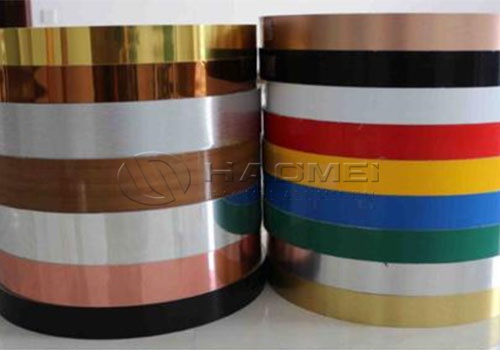
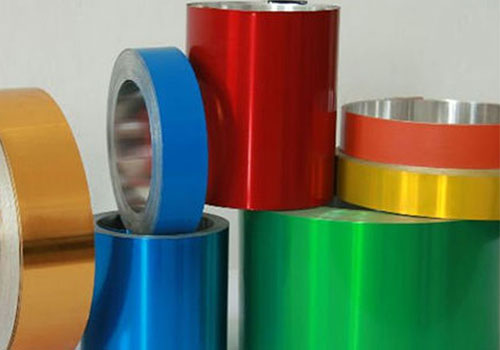
| Color | Natural, white, black, grey, blue, green, yellow, or custom |
For precise punching, the hole pitch and bridge width deserve as much attention as the hole size. Narrow bridges can raise the risk of strip distortion, while a larger open area may reduce rigidity. When the part will be bent after perforation, designers should keep heavily perforated zones away from tight bend lines whenever possible.
Suitable Aluminium Alloys and Tempers
Alloy choice determines how the strip behaves during perforation, coating, bending, and service. Pure aluminium grades offer excellent workability, while manganese- and magnesium-containing grades provide greater strength and improved resistance in demanding locations.
| Alloy | Common Temper | Practical Characteristics |
|---|---|---|
| 1050 | O, H14, H16, H18 | High aluminium purity, strong formability, good corrosion resistance |
| 1060 | O, H14, H24 | Economical, easy to perforate, suitable for general industrial panels |
| 1100 | O, H14, H24 | Good ductility and corrosion resistance for formed components |
| 3003 | H14, H24 | Better strength than pure aluminium, reliable for ventilation and appliance parts |
| 3105 | H14, H24 | Good forming balance, often used for coated strip applications |
| 5052 | H32, H34 | Higher strength and excellent corrosion resistance, suitable for humid or marine-adjacent conditions |
O temper is preferred when deep forming or complex bending is required after punching. H14 and H24 tempers are common for general-purpose perforated strip because they balance stiffness with workable formability. H18 material is harder and flatter but may require greater care during bending, especially near dense perforations.
Typical Chemical Composition
The following table gives common composition limits in percent by weight. Exact requirements should be confirmed against the requested standard and mill certificate.
| Alloy | Si | Fe | Cu | Mn | Mg | Zn | Al |
|---|---|---|---|---|---|---|---|
| 1050 | ≤0.25 | ≤0.40 | ≤0.05 | ≤0.05 | ≤0.05 | ≤0.05 | ≥99.50 |
| 1060 | ≤0.25 | ≤0.35 | ≤0.05 | ≤0.03 | ≤0.03 | ≤0.05 | ≥99.60 |
| 1100 | Si + Fe ≤0.95 | Included | 0.05-0.20 | ≤0.05 | - | ≤0.10 | ≥99.00 |
| 3003 | ≤0.60 | ≤0.70 | 0.05-0.20 | 1.0-1.5 | - | ≤0.10 | Balance |
| 3105 | ≤0.60 | ≤0.70 | ≤0.30 | 0.30-0.80 | 0.20-0.80 | ≤0.40 | Balance |
| 5052 | ≤0.25 | ≤0.40 | ≤0.10 | ≤0.10 | 2.2-2.8 | ≤0.10 | Balance |
Standards and Inspection Conditions
Material compliance can be specified according to EN 573-3 for chemical composition, EN 485 for sheet and strip mechanical properties and tolerances, or ASTM B209 for aluminium sheet and strip. Perforation dimensions, burr control, flatness, and open-area requirements are normally defined in the purchasing specification because each punched pattern has different functional limits.
For polypropylene-coated products, coating adhesion and film continuity should be checked after punching and forming. Relevant test methods may include cross-hatch adhesion, bend testing, impact resistance, coating thickness measurement, and visual examination under controlled lighting. Where corrosion performance is important, salt spray testing can be requested, although the required duration should match the actual service environment rather than being chosen arbitrarily.
Processing Guidance for Better Results
A clean, burr-controlled hole edge is essential. Excessive burrs can damage the PP film, create sharp handling hazards, and interfere with assembly. Tool clearance should match the selected alloy and thickness, while punch condition must be monitored closely in fine-hole patterns.
For parts requiring insulation or chemical shielding, double-sided polypropylene protection is often more effective than a single surface layer. However, bonding performance must be considered if the strip will later be welded, riveted, or adhesively joined. Areas intended for electrical contact or welding may need masking, selective coating removal, or a designed uncoated margin.
For customers comparing polymer finishes, PE Coated Aluminum Strip can be suitable for many economical protective applications. Polypropylene is often chosen when higher heat tolerance, stiffness, and chemical resistance are preferred. Where visual appearance is equally important, a Color Coated Aluminum Strip can provide a broader decorative finish selection.
Where PP-Coated Perforated Strip Performs Best
This material is well suited to practical environments where air movement and surface protection must coexist. In HVAC systems, it can support airflow while resisting moisture and routine maintenance chemicals. In appliance assemblies, it offers a lightweight, cleanable shield around vents or filters. In electrical and battery-related structures, polypropylene contributes insulating behavior while aluminium keeps the component light and dimensionally stable.
The strongest result comes from specifying the alloy, temper, perforation geometry, PP thickness, coating side, and forming requirement together. A perforated aluminium strip is not merely metal with holes and a plastic layer. When these details are coordinated, it becomes a dependable functional component built for long service life.