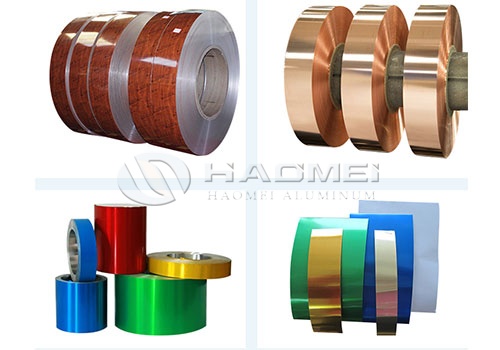
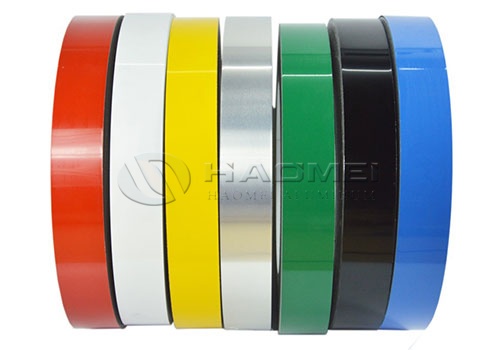
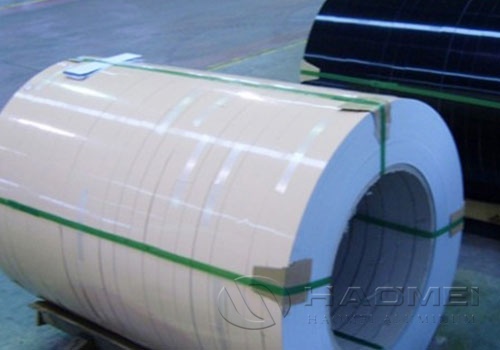
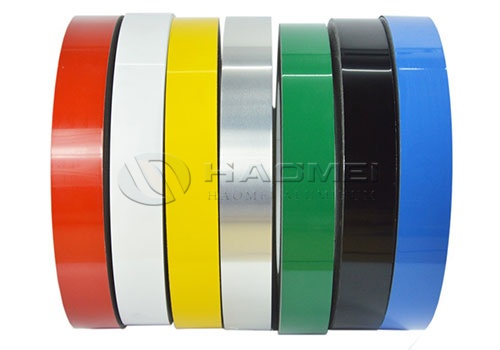
Color Coated Aluminum Strips
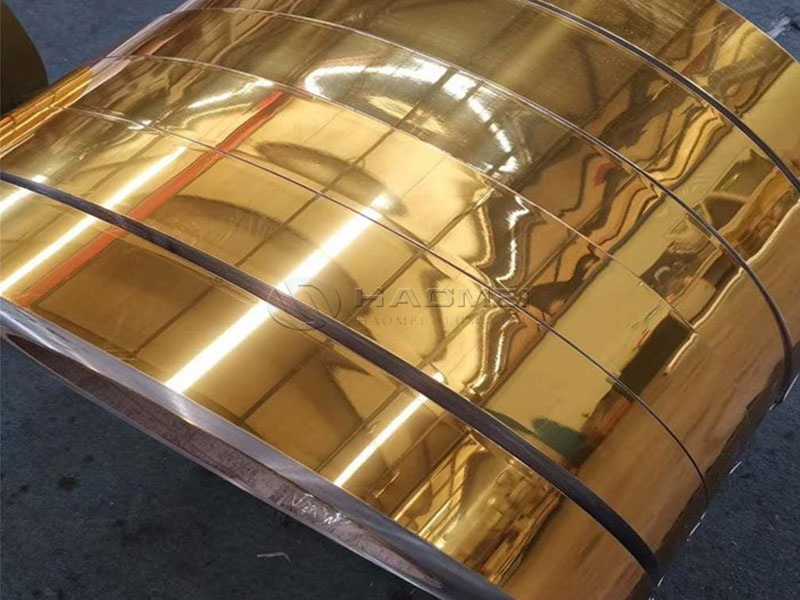
Color coated aluminum strips are often judged first by appearance, yet their real value begins where the eye stops. The colored layer is not simply paint on metal. It is a controlled functional surface that helps the strip resist moisture, chemicals, sunlight, abrasion, and repeated forming while keeping aluminum light, flexible, and easy to process.
In many products, the strip is the moving skin of the design. It is cut, bent, stamped, rolled, folded, laminated, or sealed into another assembly. A well-made Color Coated Aluminum Strip must therefore behave like a thin composite material: aluminum provides the mechanical base, pretreatment builds adhesion, primer stabilizes the interface, and the topcoat delivers color and outdoor resistance.
Color as a Working Layer
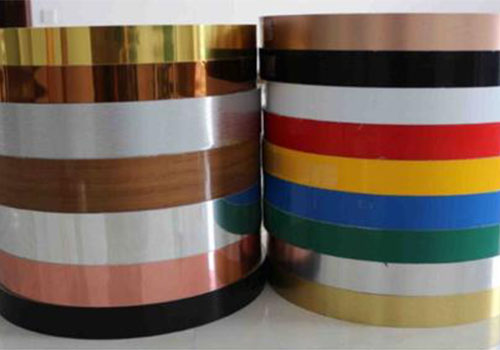
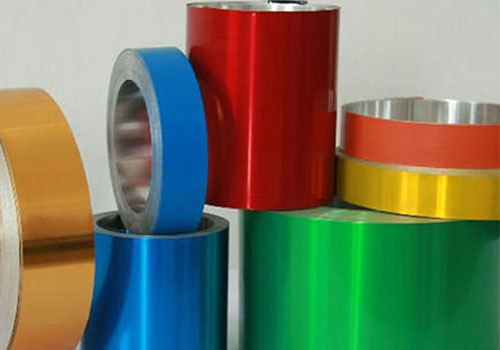
The coating system on aluminum strip performs several jobs at once. It blocks oxygen and water from reaching the metal surface, reduces staining from industrial atmospheres, provides a decorative finish, and allows the material to pass through fabrication equipment without repainting after forming. This is why color coated aluminum strips are widely used in building trim, ceiling systems, shutters, blinds, bottle caps, channel letters, roller doors, heat insulation jackets, HVAC fins, electronic housings, and automotive decorative parts.
The advantage is especially clear in narrow strip applications. When aluminum is slit into thin widths, edge quality and coating flexibility become just as important as color difference. If adhesion is weak, the coating may crack at the edges during bending. If the topcoat is too hard, it may lose flexibility. If it is too soft, it may scratch during recoiling or installation. Good strip coating is a balance between hardness, ductility, gloss, and corrosion protection.
Typical Product Parameters
| Item | Common Range or Option |
|---|---|
| Base metal thickness | 0.20 mm to 3.00 mm |
| Strip width | 10 mm to 1600 mm, slit to order |
| Coil inner diameter | 300 mm, 405 mm, 505 mm, 508 mm |
| Coating type | PE, HDPE, SMP, PVDF, epoxy, polyester primer |
| Top coating thickness | 12-25 microns for PE, 20-35 microns for PVDF systems |
| Back coating thickness | 5-15 microns, service dependent |
| Gloss range | Matt, low gloss, semi-gloss, high gloss |
| Color system | RAL, Pantone, custom color matching |
| Surface finish | Smooth, embossed, brushed effect, wood grain, stone pattern |
| Protective film | Optional, commonly 40-80 microns |
| Pencil hardness | HB to 2H, depending on coating chemistry |
| T-bend performance | Usually 0T to 3T, alloy and coating dependent |
| Salt spray resistance | Commonly 500-1500 hours, specified by environment |
For indoor decorative use, PE coating is often selected because it offers good color range, clean processing, and economical performance. For facades, roofing accessories, exterior trim, coastal use, or high UV exposure, PVDF Coated Aluminum Strip is preferred because fluorocarbon resin has better weathering stability and chalking resistance.
Alloy and Temper Selection
Aluminum alloy is not chosen only for strength. In coated strip, the alloy also affects flatness, slitting stability, bending radius, edge burr, and the way stress is released after forming.
| Alloy | Common Temper | Main Traits | Typical Applications |
|---|---|---|---|
| 1050, 1060 | O, H12, H14, H16, H18 | High aluminum purity, excellent formability, good conductivity | Caps, labels, insulation jackets, decorative trim |
| 1100 | O, H14, H24 | Soft forming, good corrosion resistance | Nameplates, blinds, heat exchange parts |
| 3003 | H14, H16, H24 | Better strength than pure aluminum, good workability | Roofing accessories, ceiling strips, duct parts |
| 3004 | H24, H26 | Higher strength, good deep drawing behavior | Closure stock, lamp bases, exterior components |
| 3105 | H14, H16, H24, H26 | Balanced strength, paintability, weather resistance | Gutters, downspouts, shutters, building trim |
| 5052 | O, H32, H34 | Magnesium alloyed, higher strength, marine atmosphere resistance | Transportation panels, electrical shells, outdoor equipment |
Temper describes the mechanical condition of the aluminum. O temper is soft and suitable for deep forming. H14 and H24 are widely used for parts needing a balance of shape retention and bendability. H18 offers higher hardness but needs careful coating flexibility control. For tight bends, alloy, temper, coating thickness, and bending direction should be confirmed together rather than separately.
Chemical Composition and Surface Behavior
The chemical composition of the substrate influences corrosion resistance, mechanical response, and coating pretreatment. Values are typical mass percentages and may vary by standard and order specification.
| Alloy | Si | Fe | Cu | Mn | Mg | Zn | Al | Surface and Chemical Notes |
|---|---|---|---|---|---|---|---|---|
| 1050 | max 0.25 | max 0.40 | max 0.05 | max 0.05 | max 0.05 | max 0.05 | min 99.50 | Very high corrosion resistance, excellent chemical conversion response |
| 1060 | max 0.25 | max 0.35 | max 0.05 | max 0.03 | max 0.03 | max 0.05 | min 99.60 | Clean surface, strong formability, suitable for thin decorative strip |
| 1100 | Si+Fe max 0.95 | included | 0.05-0.20 | max 0.05 | - | max 0.10 | min 99.00 | Good adhesion after pretreatment, stable in mild environments |
| 3003 | max 0.60 | max 0.70 | 0.05-0.20 | 1.00-1.50 | - | max 0.10 | balance | Manganese improves strength without sacrificing coating performance |
| 3004 | max 0.30 | max 0.70 | max 0.25 | 1.00-1.50 | 0.80-1.30 | max 0.25 | balance | Higher strength, needs proper cleaning before coating |
| 3105 | max 0.60 | max 0.70 | max 0.30 | 0.30-0.80 | 0.20-0.80 | max 0.40 | balance | Common painted building alloy with good exterior durability |
| 5052 | max 0.25 | max 0.40 | max 0.10 | max 0.10 | 2.20-2.80 | max 0.10 | balance | Stronger magnesium alloy, suitable for demanding corrosion conditions |
Aluminum naturally forms a thin oxide layer. Coating lines do not rely on that natural film alone. They remove rolling oil, control surface activation, and apply conversion treatment such as chrome-free passivation or chromate treatment where permitted. This microscopic interface is where long-term adhesion is built.
Manufacturing Conditions That Affect Performance
A color coated strip line usually includes uncoiling, cleaning, chemical pretreatment, drying, roller coating, baking, cooling, inspection, recoiling, and slitting. The oven stage is especially important because coating performance depends on peak metal temperature, not only air temperature. If curing is insufficient, solvent resistance and hardness may be weak. If over-baked, flexibility and color stability can be reduced.
For tight-tolerance strip, tension control matters. Uneven tension can cause camber, coil set, poor winding, or coating rub marks. Slitting blades must be selected according to thickness and temper, because a high burr can damage adjacent layers in the coil. For cap stock and precision trim, burr height, coating weight, and edge wave should be specified early.
Implementation Standards and Test Methods
| Standard or Method | Application |
|---|---|
| ASTM B209 | Aluminum and aluminum-alloy sheet and plate requirements |
| EN 485 | Aluminum sheet, strip, and plate mechanical and dimensional rules |
| EN 573 | Chemical composition of wrought aluminum alloys |
| EN 515 | Temper designations for aluminum products |
| GB/T 3880 | General specification for aluminum sheet and strip |
| ASTM D3359 | Cross-cut adhesion test for coating bonding |
| ASTM D523 | Gloss measurement |
| ASTM D2794 | Impact resistance of organic coatings |
| ASTM B117 | Neutral salt spray corrosion test |
| AAMA 2603, 2604, 2605 | Architectural coating performance grades |
| RoHS, REACH | Restricted substance compliance for selected markets |
These standards help customers compare material from different production routes. For exterior architecture, AAMA grade, resin type, coating thickness, and color warranty should be aligned. For packaging and closure use, food contact requirements, odor control, and forming simulation may be more important than outdoor weathering.
Applications Viewed by Function
In roofing and gutter systems, color coated aluminum strips provide water guidance, clean edges, and long service life with low weight. In ceilings and partitions, they offer color consistency and fire-safe metallic backing. In bottle caps and closures, coated strip supports stamping, knurling, sealing, printing, and corrosion protection against beverages or cosmetics. In HVAC and insulation, the strip acts as a moisture-resistant jacket that is easy to install around pipes and ducts.
For electronics and lighting, the material is valued for its combination of surface finish, dimensional stability, and heat dissipation. In signage, color coated aluminum strips allow letters and frames to be bent cleanly without additional painting, reducing labor and improving batch consistency.
How to Specify for Faster Purchasing
A complete inquiry should include alloy, temper, thickness, width, coating type, color code, gloss, coating thickness, surface finish, inner diameter, coil weight, tolerance, protective film, test requirement, and end use. If the strip will be bent, stamped, drawn, or exposed outdoors, sharing drawings or forming details helps the mill adjust temper and coating flexibility.
Color coated aluminum strips perform best when treated as engineered surfaces, not just colored metal. With the right alloy, temper, coating chemistry, curing condition, and standard inspection, they can bring decorative appeal, production efficiency, and reliable service life into one lightweight material.