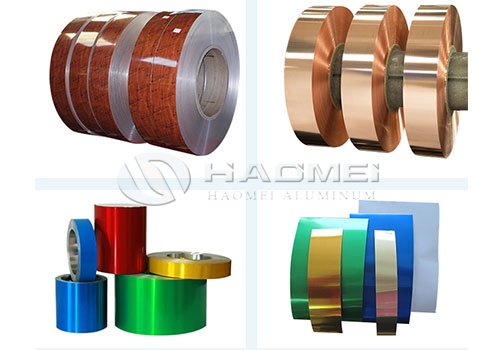
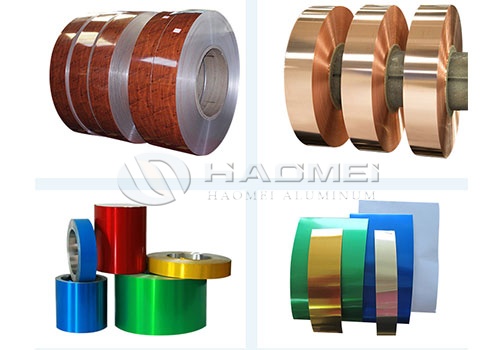
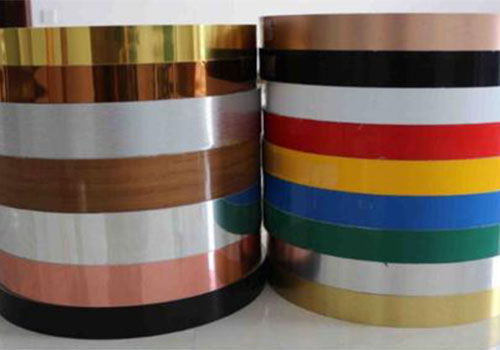
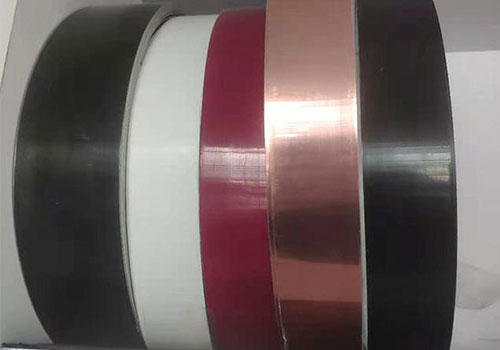
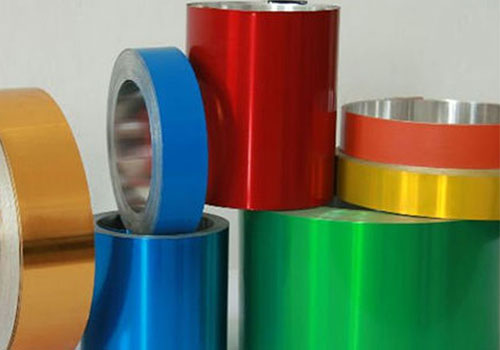
Color Coated Aluminum Strip
Color coated aluminum strip is often selected for its visual appeal, but color is only the surface expression of a carefully engineered material. Its real value lies in the balance between aluminum alloy strength, coating adhesion, forming behavior, corrosion protection, and dimensional accuracy. A strip may look identical on a coil rack, yet perform very differently after bending, stamping, rolling, or years of outdoor exposure.
For buyers, the practical question is not simply which color to choose. It is whether the strip will retain its appearance, resist cracking at bends, fit automated production equipment, and remain stable in humid, hot, coastal, or industrial environments.
How the Material Is Built
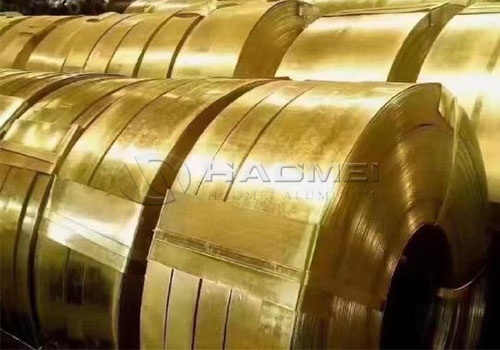
A color coated aluminum strip begins with an aluminum coil or slit strip. The metal surface is cleaned, chemically pretreated, and coated in a continuous coil-coating line. Pretreatment creates a conversion layer that improves paint adhesion and helps prevent under-film corrosion. Primer is then applied, followed by a finish coat such as polyester, silicon-modified polyester, high-durability polyester, or PVDF.
This process differs from painting a finished part. Coil coating is performed under controlled line speed, curing temperature, film thickness, and tension. The result is a more even color layer and more repeatable mechanical performance. When the material must pass through roll forming or sharp bending, paint flexibility becomes as important as color consistency.
For general indoor panels, trim, appliance parts, and decorative products, PE Coated Aluminum Strip provides an economical and flexible surface solution. For façade systems and long-term outdoor projects, PVDF coatings are generally preferred because they offer stronger resistance to ultraviolet radiation, chalking, fading, and chemical attack.
Common Product Parameters
Color coated aluminum strip can be tailored to match a production line rather than forcing production to adapt to a standard coil. Thickness, width, temper, coating weight, and coil geometry should be confirmed together.
| Parameter | Typical Range or Option | Practical Meaning |
|---|---|---|
| Base metal thickness | 0.20-3.00 mm | Thin strip supports light forming; thicker gauges improve rigidity |
| Strip width | 10-1,650 mm | Narrow slit strip is common for shutters, channels, caps, and profiles |
| Coil inner diameter | 150 mm, 300 mm, 405 mm, 508 mm | Must match the unwinding equipment |
| Coil outer diameter | Up to about 1,800 mm | Depends on thickness, weight, and handling limits |
| Coil weight | 0.5-8 tonnes, or customized | Smaller coils suit manual processing; larger coils improve line efficiency |
| Front coating thickness | 15-35 μm | Selected according to exposure and appearance requirements |
| Back coating thickness | 5-15 μm | Provides handling and corrosion protection on the reverse side |
| Surface finish | Gloss, matt, embossed, wood grain, marble, brushed | Influences appearance, scratch visibility, and cleaning behavior |
| Color reference | RAL, Pantone, custom sample | Color should be confirmed under agreed lighting conditions |
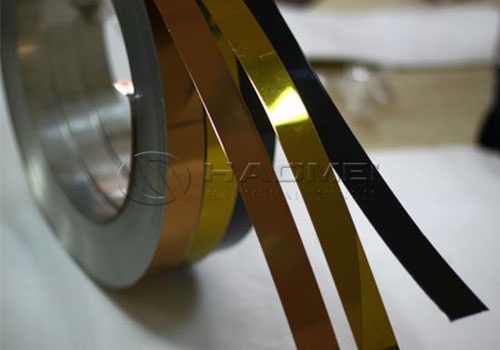
Tolerance requirements deserve special attention. A narrow strip for automated rolling may need tighter width tolerance and lower edge burr than a decorative flashing strip. Typical width tolerance can be controlled within ±0.10 mm to ±0.50 mm depending on width and application. Flatness, camber, coil telescoping, and edge quality also affect downstream yield.
Alloys and Tempers: The Hidden Drivers of Performance
The most frequently used aluminum alloys for color coated strip are 1050, 1060, 1100, 3003, 3004, 3105, 5052, and 5754. The correct selection depends on whether the finished part needs deep drawing, moderate strength, salt-spray resistance, or structural stability.
The 1xxx series is commercially pure aluminum with excellent formability and corrosion resistance. It is useful for decorative trim, insulation cladding, lighting components, and products where high strength is not essential. Alloys 3003, 3004, and 3105 contain manganese, improving strength while maintaining good workability. They are widely used in building panels, gutters, shutters, roofing accessories, and appliance casings.
Alloy 5052 offers higher strength and very good resistance to marine and humid environments because of its magnesium content. It is suitable for transport components, coastal installations, and applications exposed to more demanding service conditions. However, higher-strength tempers require greater attention to bending radius and coating flexibility.
| Alloy | Main Alloying Elements | Typical Tempers | Suitable Applications |
|---|---|---|---|
| 1050 / 1060 | Aluminum, trace silicon and iron | O, H14, H24 | Decorative strip, insulation, general fabrication |
| 1100 | Aluminum with controlled copper content | O, H14, H24 | Chemical equipment trim, lighting, forming parts |
| 3003 | Manganese | H14, H16, H24 | Roofing trim, ceiling systems, appliance panels |
| 3004 | Manganese, magnesium | H14, H24, H26 | Shutters, formed panels, beverage-related components |
| 3105 | Manganese, magnesium | H14, H16, H24 | Building profiles, gutters, fascia, siding |
| 5052 | Magnesium, chromium | H32, H34 | Marine-facing products, transport, stronger formed parts |
| 5754 | Magnesium | H22, H32 | Automotive trim, industrial panels, humid environments |
Temper indicates the hardness and work condition of the aluminum. O temper is fully annealed and highly formable. H14 is strain-hardened to a medium level, offering a useful balance of strength and bending performance. H24 has similar strength to H14 but is partially annealed after hardening, which can improve stability in certain forming operations. H32 and H34 are commonly used where stronger magnesium alloys are needed.
Chemical Composition of Typical Base Alloys
The chemical composition of the substrate affects corrosion resistance, strength, weldability, and behavior during coating and forming. Values shown are typical maximum or nominal percentages by mass. Actual material should be checked against the applicable standard and mill test certificate.
| Alloy | Si | Fe | Cu | Mn | Mg | Cr | Zn | Al |
|---|---|---|---|---|---|---|---|---|
| 1050 | 0.25 | 0.40 | 0.05 | 0.05 | 0.05 | - | 0.05 | Balance |
| 1060 | 0.25 | 0.35 | 0.05 | 0.03 | 0.03 | - | 0.05 | Balance |
| 1100 | 0.95 Si+Fe | - | 0.05-0.20 | 0.05 | - | - | 0.10 | Balance |
| 3003 | 0.60 | 0.70 | 0.05-0.20 | 1.0-1.5 | - | - | 0.10 | Balance |
| 3105 | 0.60 | 0.70 | 0.30 | 0.30-0.80 | 0.20-0.80 | 0.20 | 0.40 | Balance |
| 5052 | 0.25 | 0.40 | 0.10 | 0.10 | 2.2-2.8 | 0.15-0.35 | 0.10 | Balance |
Coating Systems and Outdoor Durability
The coating should be chosen according to service exposure, not only color. Polyester coatings are widely used for indoor products and standard outdoor uses. SMP coatings provide improved weathering and hardness. PVDF systems, usually based on fluorocarbon resin, deliver premium weather resistance for architectural panels, curtain walls, roofing, and projects exposed to intense sunlight.
A high-performance PVDF Coated Aluminum Strip is especially appropriate for exterior surfaces where gloss retention and color stability matter over many years. Coating quality should be evaluated through film thickness, pencil hardness, T-bend flexibility, impact resistance, adhesion, color difference, gloss, and salt-spray performance.
Standards That Guide Purchasing and Inspection
Implementation standards vary by region and final use. Aluminum sheet and strip may be supplied in accordance with ASTM B209, EN 485, EN 573, EN 1396, GB/T 3880, or customer-specific requirements. These standards cover alloy designation, temper, dimensional tolerance, and mechanical properties.
For painted architectural aluminum, coating performance may be assessed against AAMA 2603, AAMA 2604, or AAMA 2605. AAMA 2603 is commonly used for standard exterior coatings, while AAMA 2604 and AAMA 2605 represent more demanding levels of weathering performance. EN 13523 test methods are also frequently referenced for coil-coated metals, covering properties such as bend resistance, impact resistance, gloss, color, humidity resistance, and salt-spray behavior.
Practical Buying Notes
A well-specified color coated aluminum strip reduces waste long before it reaches the production floor. Confirm the alloy and temper according to forming severity, define both visible-side and reverse-side coating requirements, and state acceptable color tolerance. For parts with sharp bends, request bend testing on production samples rather than relying only on nominal coating thickness.
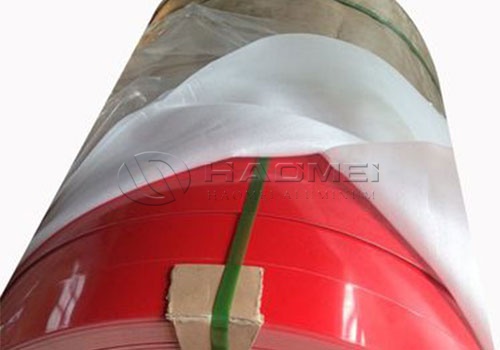
Packaging also matters. Coils should be protected with moisture-resistant wrapping, edge guards, sturdy pallets, and secure strapping. Condensation trapped during transport can damage even a premium coating system. Stored coils should remain dry, ventilated, and away from corrosive chemicals.
Color coated aluminum strip succeeds when its metal core and painted surface are treated as one coordinated system. With the correct alloy, temper, pretreatment, coating chemistry, and slitting tolerance, it becomes a reliable working material rather than merely a colorful finish.