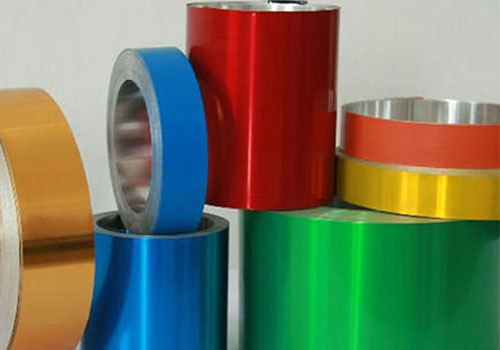
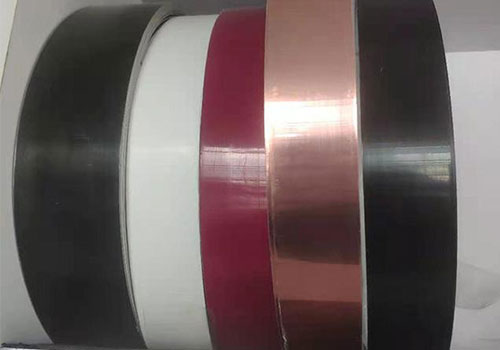
Coated Aluminium Strip Coil For Channel
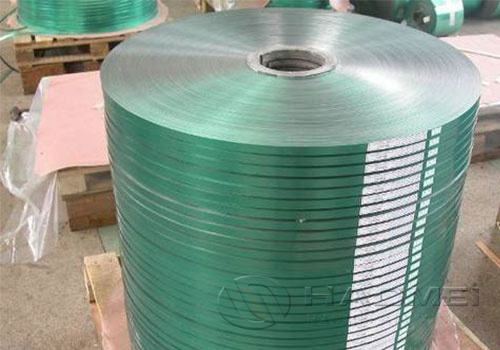
Coated aluminium strip coil for channel is a prefinished metal material engineered for bending, roll forming, press forming, and fabrication into U-channels, C-channels, edge trims, ceiling carriers, cladding profiles, cable channels, and decorative architectural sections. It combines the low weight and corrosion resistance of aluminium with a factory-applied paint system that gives the finished channel a clean, consistent surface.
Instead of painting after fabrication, processors can form the channel directly from coated coil. This approach shortens production flow, reduces solvent emissions, avoids uneven field coating, and helps maintain color consistency across large projects. With appropriate alloy, temper, coating, and film thickness selection, the strip remains stable during forming while delivering long-term visual and environmental performance.
Product Characteristics
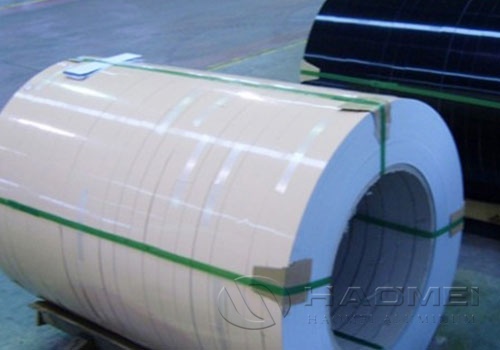
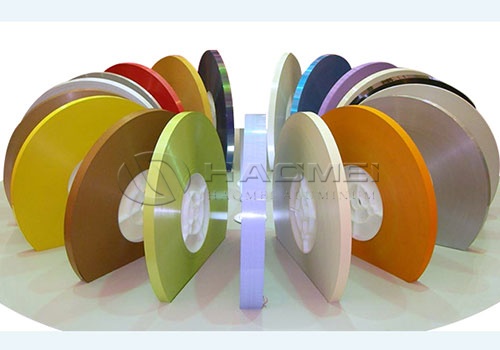
Coated aluminium strip is supplied in slit coils with controlled width, thickness, camber, edge condition, and paint-film quality. The coil is designed to pass smoothly through roll-forming lines while maintaining a uniform appearance on exposed channel faces.
| Characteristic | Practical Value for Channel Production |
|---|---|
| Low density | Reduces handling weight, support load, and transport cost compared with many steel alternatives |
| Excellent formability | Supports bending and roll forming into narrow-radius channel profiles |
| Prepainted surface | Eliminates a separate post-forming painting stage in many applications |
| Corrosion resistance | Aluminium substrate and protective coating work together in humid or outdoor settings |
| Color consistency | Continuous coil coating provides stable color across long production runs |
| Clean surface finish | Suitable for visible trims, ceiling channels, display profiles, and façade accessories |
| Recyclability | Aluminium scrap from slitting and forming can be efficiently recovered |
The coating system may be selected according to the service environment. PE coatings are economical and flexible for indoor channels, general decorative profiles, and sheltered applications. PVDF coatings provide stronger resistance to ultraviolet exposure, weathering, and color fading, making them suitable for exterior channels and façade-related profiles. For projects requiring a balanced indoor-use coating system, PE Coated Aluminum Strip is widely used because of its forming flexibility and attractive finish.
Common Applications
Coated aluminium strip coil for channel is suitable for both functional and decorative formed sections. Its versatility allows manufacturers to match channel geometry, coating color, and alloy temper to each installation environment.
| Application Area | Typical Channel Product | Recommended Coating Direction |
|---|---|---|
| Suspended ceilings | Main runners, cross channels, edge trims | PE, polyester, or textured finishes |
| Interior decoration | Partition channels, wall trim, furniture profiles | PE coatings in matte, gloss, woodgrain, or solid colors |
| Building exteriors | Fascia channels, cladding trims, rain-screen accessories | PVDF or high-weatherability coating |
| Electrical systems | Light-duty cable management channels and covers | PE coating with controlled insulation and scratch resistance |
| HVAC fabrication | Duct support channels, condensate covers, equipment trim | Corrosion-resistant coating systems |
| Retail and display | Shelf channels, sign frames, exhibition profiles | Gloss, brushed-look, metallic, or customized colors |
| Transport interiors | Lightweight trim channels and protective sections | Flexible, abrasion-resistant paint systems |
Alloy and Chemical Composition
Alloy choice influences strength, elongation, corrosion resistance, and forming behavior. AA 3003 and AA 3105 are frequently selected for coated channel coil because they offer a practical balance between strength and workability. AA 1050 or AA 1060 may be selected where deep forming and high ductility are more important than structural strength.
| Element, wt.% | AA 3003 Typical Range | AA 3105 Typical Range | Functional Effect |
|---|---|---|---|
| Aluminium | Balance | Balance | Provides low weight and natural corrosion resistance |
| Manganese, Mn | 1.0-1.5 | 0.3-0.8 | Improves strength and corrosion resistance |
| Magnesium, Mg | 0.05 max | 0.2-0.8 | Adds strength in AA 3105 |
| Iron, Fe | 0.7 max | 0.7 max | Controlled impurity element |
| Silicon, Si | 0.6 max | 0.6 max | Controlled impurity element |
| Copper, Cu | 0.05-0.20 | 0.30 max | Supports strength in AA 3003 when controlled |
| Zinc, Zn | 0.10 max | 0.40 max | Controlled to preserve corrosion behavior |
| Other elements | 0.05 each, 0.15 total max | 0.05 each, 0.15 total max | Maintains alloy consistency |
Actual chemistry should conform to the applicable alloy standard and project specification. For highly visible channels, consistent substrate quality is important because it supports even coating appearance after bending.
Technical Specifications
The following figures represent common supply ranges. Final dimensions, coating construction, and tolerances can be tailored to the channel profile and forming equipment.
| Parameter | Typical Supply Range | Notes |
|---|---|---|
| Alloy | 1050, 1060, 3003, 3105 | 3003 and 3105 are common for formed channels |
| Temper | O, H14, H16, H18, H24 | O and H24 are often selected for more demanding forming |
| Strip thickness | 0.20-1.50 mm | 0.30-0.80 mm is common for decorative and ceiling channels |
| Strip width | 20-1,600 mm | Slit to match channel development width |
| Coil inner diameter | 150 mm, 300 mm, 400 mm, 500 mm | Selected for line compatibility |
| Coil outer diameter | Up to 1,400 mm | Depends on thickness, width, and coil weight |
| Coil weight | 1-8 tonnes | Custom coil weights available for processing efficiency |
| Top coating thickness | 15-35 μm | Higher film build may be selected for harsh exposure |
| Back coating thickness | 5-15 μm | Provides handling and corrosion protection |
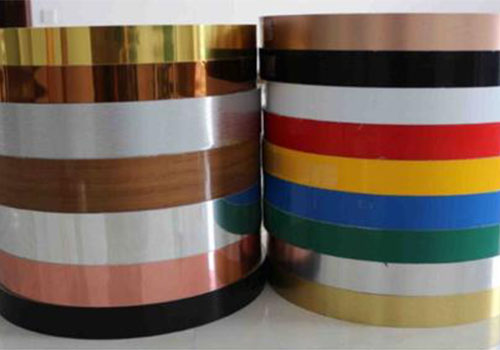
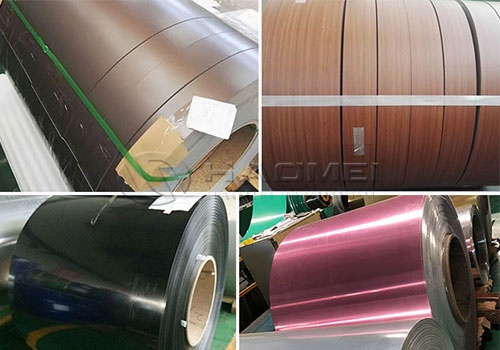
| Surface finish | Gloss, matte, embossed, brushed-look, smooth | Can be matched to architectural design requirements |
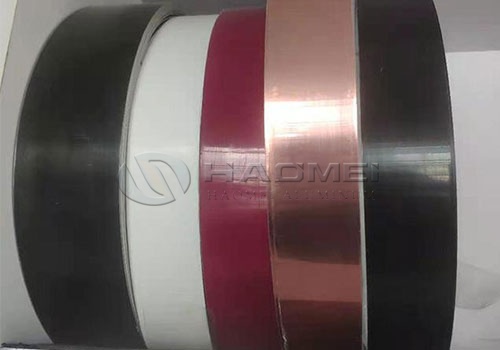
| Color | RAL, custom color, metallic, woodgrain | Color approval samples are recommended |
Mechanical and Coating Performance
Channel forming requires a strip that resists cracking at bend points without becoming too soft for handling. Temper selection must reflect channel depth, bend radius, roll-forming speed, and flange design.
| Property | Typical Value or Requirement | Importance in Channel Fabrication |
|---|---|---|
| Tensile strength, AA 3003 H24 | 145-185 MPa | Provides stable formed shape |
| Yield strength, AA 3003 H24 | 115 MPa minimum | Helps channels retain profile geometry |
| Elongation | 3-10% | Supports bending without edge cracking |
| Pencil hardness | HB to 2H | Indicates resistance to handling marks |
| T-bend performance | 0T-3T, coating dependent | Evaluates paint flexibility during folding |
| Adhesion | 0 grade after cross-hatch test | Confirms firm coating attachment |
| Impact resistance | 50 kg·cm or project requirement | Helps resist damage during fabrication and installation |
| Salt spray resistance | 500-1,000 hours, coating dependent | Indicates corrosion protection potential |
For exterior work, PVDF Coated Aluminum Strip offers enhanced weather resistance where prolonged sunlight, rain, atmospheric pollutants, and color retention are major selection factors.
Processing Guidance
Successful channel production begins with matching coil properties to the forming operation. Use clean rolls, controlled roll pressure, and suitable protective film where the exposed surface has high decorative requirements. Sharp die edges, excessive forming speed, or an unsuitable temper can create paint micro-cracks, edge deformation, or surface scuffing.
A practical bend radius should be confirmed through trial forming, especially for thicker strip, high-gloss finishes, metallic coatings, and tightly folded profiles. Protective film can be applied to the face side for polished, embossed, or premium-color channels. It should be removed soon after installation to prevent adhesive aging under heat and sunlight.
Customer Benefits
Coated aluminium strip coil gives channel manufacturers a material that is lightweight, visually refined, and efficient to process. Prepainted coil reduces secondary finishing operations, while consistent coating quality helps maintain a professional appearance across long channel lengths. Its resistance to corrosion supports reliable use in indoor humidity, commercial buildings, transport systems, and properly specified outdoor assemblies.
By selecting the right alloy, temper, thickness, and coating system, customers can produce channels that balance structural stability, easy forming, color durability, and cost control. This makes coated aluminium strip coil a dependable material choice for modern architectural and industrial channel fabrication.