Channel Letters Color Aluminum Strips
A channel letter sign is often judged from the front, but its long-term appearance is decided at the return edge. That narrow sidewall must bend smoothly, hold its shape, match the selected color, and remain attractive through sun, rain, dust, and temperature changes. Channel Letters Color Aluminum Strips are engineered for this demanding role.
Unlike general-purpose aluminum coil, sign-grade color strips are made to become the visible return of illuminated and non-illuminated letters. They need controlled hardness for bending equipment, stable width for accurate fabrication, and a coating surface that stays even after forming. A well-selected strip helps sign makers produce crisp curves, sharp corners, uniform seams, and consistent color across a complete storefront identity.
Why color aluminum strips suit channel letter returns
The return is the structural frame around an acrylic face. It supports the letter shape and creates the depth needed for LED modules, wiring, and internal reflection. Pre-painted aluminum strips eliminate much of the painting work after forming. This reduces processing time and avoids color variation that can occur when separately painted letters are installed side by side.
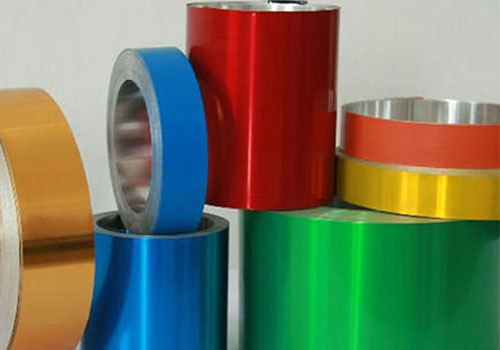
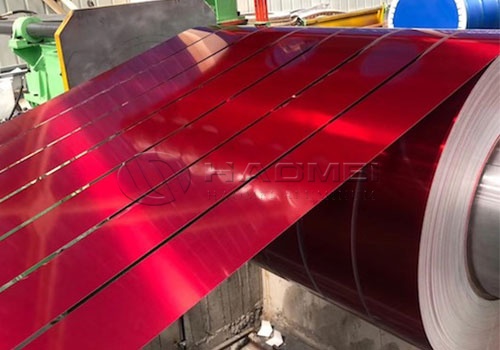
A high-quality Color Coated Aluminum Strip combines a light aluminum substrate with a bonded paint film. The material is easy to cut, notch, bend, weld, rivet, or fasten according to the fabrication method. Its lower weight compared with steel can also simplify installation on facades, pylons, retail walls, and indoor display structures.
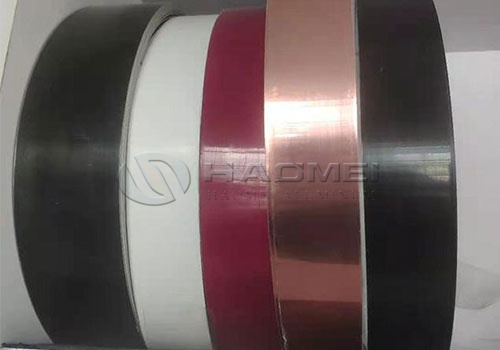
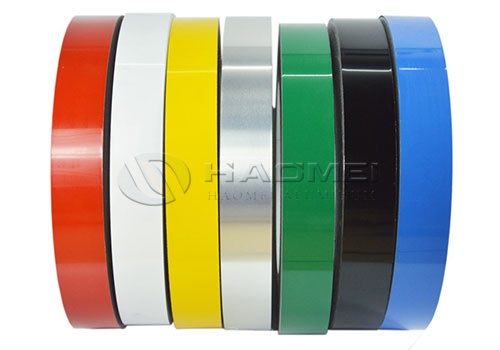
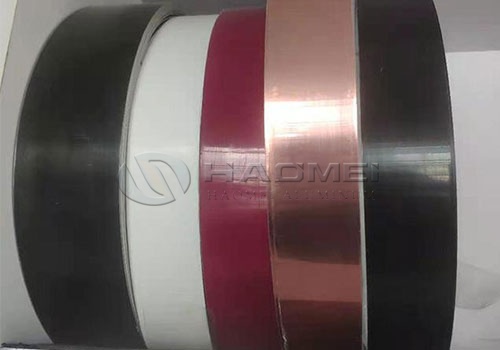
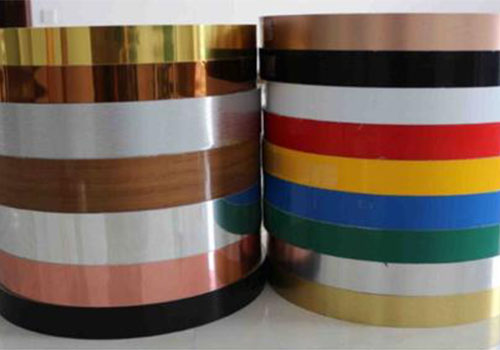
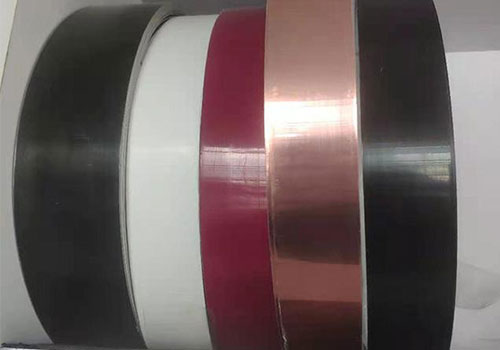
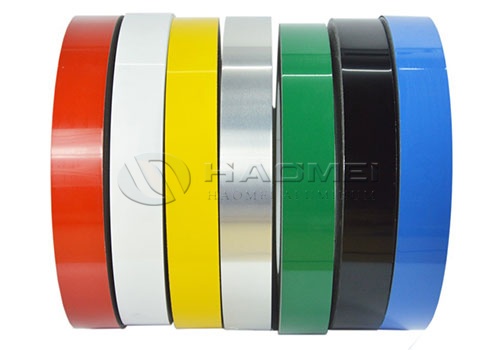
For signage, color is not merely decoration. A bright red return can reinforce a restaurant brand. Black provides a modern outline around luminous white faces. Brushed gold, dark bronze, blue, green, yellow, silver gray, and custom RAL shades allow designers to use the return as part of the visual language rather than treating it as a hidden structural element.
Common material parameters
Channel letter aluminum strips are supplied in slit coils, typically with a protective film when the finished surface requires extra protection during fabrication. Actual specifications are selected according to letter depth, bending radius, equipment type, and environmental exposure.
| Parameter | Typical Range or Option | Significance for Channel Letters |
|---|---|---|
| Alloy | 3003, 3004, 3105 | Balances formability, strength, and corrosion resistance |
| Thickness | 0.40-1.20 mm | Thinner stock suits smaller letters; thicker stock adds rigidity |
| Width | 20-200 mm | Usually selected to match the letter return depth |
| Coil inner diameter | 300 mm or 500 mm | Must fit the feeding system of the bending machine |
| Coil weight | 50-500 kg or customized | Affects handling and production continuity |
| Surface finish | Glossy, matte, satin, brushed, embossed | Creates the desired visual character |
| Coating type | PE, SMP, PVDF | Selected according to service environment |
| Color | RAL, Pantone reference, custom sample | Supports brand matching and project consistency |
| Protective film | Optional | Helps prevent scratches during processing |
Widths are normally slit with controlled edge quality. Burrs or uneven edges can interfere with automatic channel letter machines and may leave visible marks after bending. For tightly curved letters, a stable strip profile and suitable temper are more valuable than simply choosing the thickest material.
Alloy and temper conditions
Alloy 3003 is widely used for channel letter returns because manganese improves strength while preserving good workability. It is appropriate for standard indoor and outdoor signs where reliable bending performance is needed. Alloy 3105 is another practical option, often selected for painted aluminum products because it offers sound forming behavior and coating compatibility. Alloy 3004 may be considered when the sign design needs somewhat higher strength.
Temper describes the condition created by rolling and heat treatment. H14 and H24 are common choices for color aluminum strips. H14 provides moderate strain hardening, making it suitable for many standard letter profiles. H24 has a comparable strength class with additional stabilization, which can support improved dimensional consistency. H16 or H26 may be used where extra stiffness is required, though harder material is less forgiving on very tight curves.
For deep returns, large outdoor letters, or wide sidewalls, a thicker H14 or H24 strip can resist waviness after installation. For small script fonts and intricate logo contours, a thinner, more formable strip generally produces cleaner bends. The correct selection is therefore a balance between shape retention and forming freedom.
Chemical properties of typical 3003 aluminum strip
The following table shows common composition limits for AA 3003 aluminum alloy. Values may vary slightly according to the applicable material standard and production agreement.
| Element | Chemical Composition, % |
|---|---|
| Aluminum, Al | Remainder |
| Manganese, Mn | 1.0-1.5 |
| Copper, Cu | 0.05-0.20 |
| Iron, Fe | 0.70 max |
| Silicon, Si | 0.60 max |
| Zinc, Zn | 0.10 max |
| Magnesium, Mg | 0.05 max |
| Other elements, each | 0.05 max |
| Other elements, total | 0.15 max |
Manganese is especially important because it strengthens the alloy without making it excessively difficult to form. Aluminum naturally develops a thin oxide film, which contributes to corrosion resistance. The painted surface adds another barrier, helping the strip retain its appearance in ordinary outdoor conditions.
Coating performance and environmental selection
A coating system should match the location of the sign. PE finishes are widely used for indoor signs, sheltered locations, and projects with moderate weathering demands. They offer good color selection, flexibility, and cost efficiency. A PE Coated Aluminum Strip is often practical for retail interiors, shopping centers, exhibitions, and short-to-medium exposure installations.
For intense sunlight, humid coastal air, industrial zones, or projects requiring longer color stability, PVDF coating is often preferred. Its fluoropolymer chemistry provides stronger resistance to ultraviolet radiation, chalking, and fading. Coating thickness commonly ranges from 15-25 microns for PE systems and from 25-30 microns or more for PVDF systems, depending on the specified paint structure.
The back side may use a service coating or primer layer to support forming and adhesion. During production, coating adhesion, pencil hardness, bend performance, gloss, color difference, and film thickness should be checked. A good coating must remain attached when the strip passes through rollers, notching tools, and bending dies.
Implementation standards and quality expectations
Color aluminum strip for sign fabrication may be produced with reference to ASTM B209, EN 485, EN 573, GB/T 3880, or equivalent customer specifications. These standards address alloy composition, mechanical properties, dimensional tolerance, and delivery condition. Coating requirements may also reference AAMA 2603, AAMA 2604, or AAMA 2605 depending on the selected paint grade and required exterior durability.
Before fabrication, inspect the coil for color consistency, edge condition, protective-film adhesion, and surface cleanliness. Store coils in a dry indoor area, away from corrosive chemicals and standing moisture. During bending, keep tools clean and use appropriate roller pressure. Excessive pressure can mark glossy finishes, while insufficient control can create uneven return geometry.
Channel Letters Color Aluminum Strips turn a narrow metal edge into a durable design feature. When alloy, temper, thickness, width, and coating are selected for the real fabrication process and installation climate, the finished letters gain more than color. They gain clean form, dependable strength, and a surface built to represent a brand every day.