Brushed Color Aluminum Strip for Channel
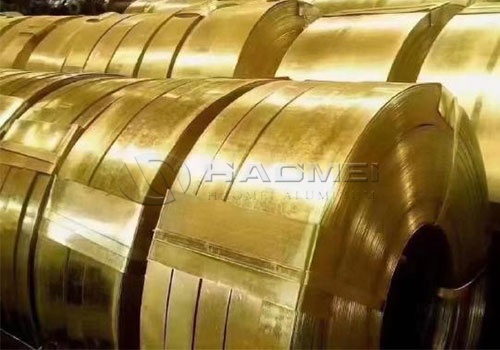
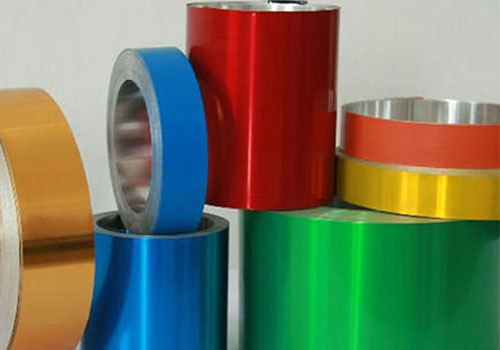
Brushed Color Aluminum Strip for Channel is a prefinished aluminum coil product designed for roll forming, press bending, slitting, and profile fabrication. Its fine directional brushed texture creates a modern metallic appearance while the color coating protects the aluminum substrate from moisture, staining, and everyday wear. The material is widely used for decorative channels, trim channels, ceiling profiles, lighting housings, cabinet edging, signage frames, wall systems, and architectural accessories.
Unlike plain painted strip, brushed color aluminum provides visual depth. The linear grain catches light softly and helps conceal minor handling marks, making it suitable for surfaces that remain visible after installation. It also offers a lighter alternative to stainless steel while maintaining an attractive metal-like finish.
Product Characteristics
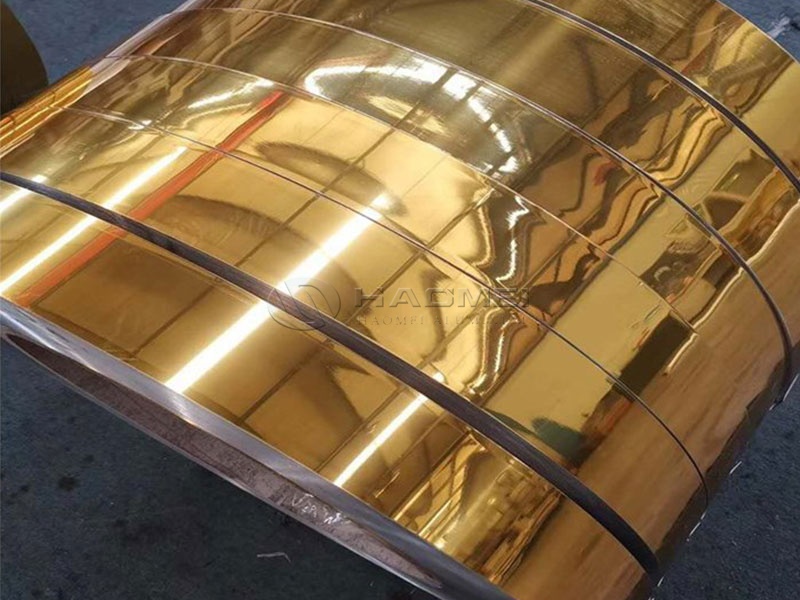
The strip is commonly produced with 3003 or 3105 aluminum alloy, selected for practical forming behavior, corrosion resistance, and coating compatibility. After cleaning and chemical pretreatment, the coil receives a brushed surface treatment and a controlled coating system in the selected color. The result is a continuous coil with stable gloss, even color, and a consistent grain direction.
| Feature | Product Value |
|---|---|
| Surface appearance | Fine linear brushed grain with colored metallic effect |
| Base metal | 3003, 3105, or comparable aluminum alloy |
| Forming capability | Suitable for bending, roll forming, punching, and channel profiling |
| Weight advantage | Approximately one-third the density of steel |
| Corrosion resistance | Strong resistance for indoor and general outdoor applications |
| Coating options | PE, SMP, PVDF, polyester, or customized systems |
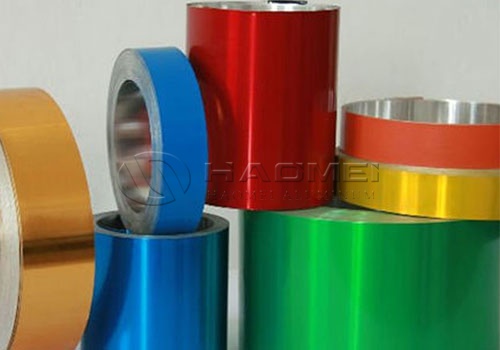
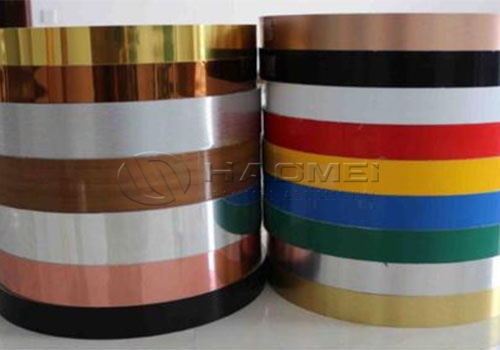
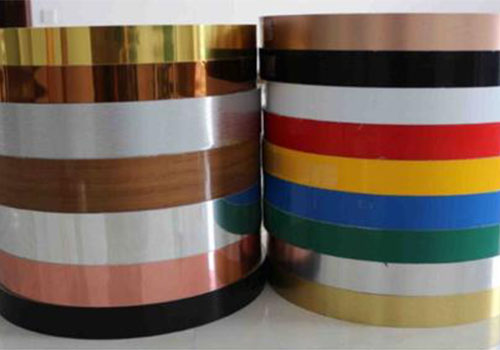
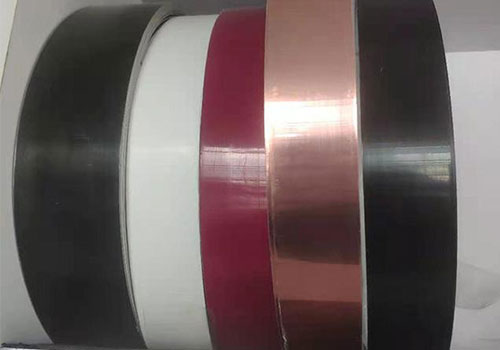
| Color selection | Silver, gold, black, bronze, champagne, grey, red, blue, green, and custom shades |
| Finish direction | Longitudinal brushing is standard; custom direction may be available |
For projects requiring a smooth painted surface instead of a textured metal effect, Color Coated Aluminum Strip can provide a broad selection of colors and gloss levels. Brushed material is preferred when the channel itself forms part of the visual design.
Technical Specifications
Brushed color aluminum strip can be tailored to the channel width, forming radius, and service environment. Narrow slit coils are frequently supplied for automated roll-forming lines, while wider coils can be processed into custom blank sizes.
| Parameter | Typical Range | Notes |
|---|---|---|
| Alloy | 3003 / 3105 | Other alloys available by application |
| Temper | H14, H16, H18, H24 | Selected according to forming demand |
| Thickness | 0.20-1.50 mm | 0.30-0.80 mm is common for decorative channels |
| Width | 20-1,600 mm | Slit width tolerance available on request |
| Coil inner diameter | 150 mm, 300 mm, 405 mm, 505 mm | Compatible with common processing equipment |
| Coil weight | 0.5-5.0 metric tons | Depends on thickness and transport requirements |
| Coating thickness | 15-35 microns | Can be increased for demanding exposure |
| Gloss level | 10-80 GU | Matte, satin, semi-gloss, or gloss finish |
| Brushed grain | Fine to medium linear texture | Consistent coil-to-coil appearance |
| Protective film | Optional | Helps prevent scratches during fabrication |
Chemical Composition of Common Substrates
The composition of the aluminum base affects strength, corrosion performance, and channel-forming behavior. Values shown are typical maximum or nominal ranges in percent by weight.
| Element | 3003 Alloy | 3105 Alloy |
|---|---|---|
| Aluminum | Balance | Balance |
| Manganese | 1.0-1.5% | 0.30-0.80% |
| Magnesium | 0.05% max | 0.20-0.80% |
| Iron | 0.70% max | 0.70% max |
| Silicon | 0.60% max | 0.60% max |
| Copper | 0.05-0.20% | 0.30% max |
| Zinc | 0.10% max | 0.40% max |
| Other elements | 0.15% max each | 0.15% max each |
3003 is frequently selected for channels requiring dependable bending and stable shape retention. 3105 is often used where a slightly stronger substrate and excellent paint performance are desired. Final alloy selection should consider channel depth, bend geometry, punching pattern, and coating specification.
Mechanical and Surface Performance
The mechanical condition must match the fabrication process. A very hard temper can improve dent resistance, while a softer temper supports tight bends and complex profile shapes. For channels with sharp corners, a suitable temper and bend radius reduce the chance of coating stress or edge cracking.
| Performance Metric | Typical Value | Practical Benefit |
|---|---|---|
| Tensile strength | 130-200 MPa | Supports profile rigidity and handling durability |
| Yield strength | 110-180 MPa | Helps channels retain formed geometry |
| Elongation | 2-12% | Supports bending and roll forming |
| Density | 2.73 g/cm3 | Reduces structure and transport weight |
| Pencil hardness | HB-3H | Helps resist light surface abrasion |
| T-bend performance | 0T-2T, coating dependent | Indicates coating flexibility during forming |
| Impact resistance | 30-50 kg·cm | Helps withstand fabrication and installation contact |
| Salt spray resistance | 500-1,500 hours | Depends on coating system and test standard |
Coating Choices for Different Environments
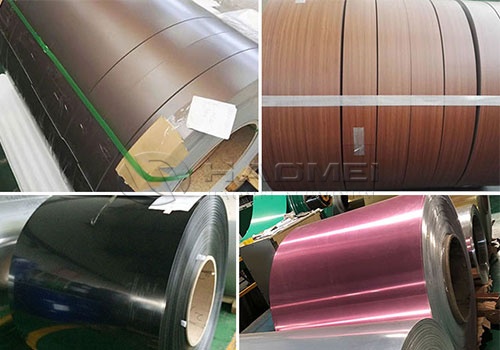
The coating system should match the location and expected exposure. PE coating is economical for interior channels, retail displays, furniture trim, and protected architectural profiles. A PVDF Coated Aluminum Strip is more suitable for exterior-facing channels, facade details, signage, and installations exposed to sunlight, rain, and temperature variation.
| Coating Type | Recommended Use | Typical Advantages |
|---|---|---|
| PE polyester | Indoor channels and general decorative trim | Good appearance, economical cost, easy processing |
| SMP | Semi-exposed architectural profiles | Improved weathering and hardness |
| PVDF | Exterior channels and premium facade systems | Strong UV resistance, color retention, chemical resistance |
| Textured or matte coating | Decorative channel faces | Reduced glare and enhanced tactile appearance |
Channel Applications
Brushed color aluminum strip gives channel products a clean, finished appearance without secondary painting. It is suitable for visible and concealed profiles where low weight, corrosion resistance, and visual coordination matter.
| Application Area | Typical Channel Product | Product Advantage |
|---|---|---|
| Lighting systems | LED channels, diffuser housings, trim profiles | Attractive finish and efficient heat-dissipating metal body |
| Interior decoration | Ceiling channels, wall trims, partition profiles | Coordinates with modern metal, wood, and glass finishes |
| Furniture | Cabinet edges, sliding-door rails, shelf channels | Scratch-resistant appearance with low maintenance |
| Signage | Letter channels, sign borders, display frames | Supports vivid color matching and precise forming |
| Retail fixtures | Display rack channels and shelf trims | Lightweight for fast assembly and replacement |
| Building envelopes | Decorative facade channels and drainage trims | Durable coated surface for demanding environments |
| Transport interiors | Trim channels and compartment edging | Weight reduction and clean visual styling |
Fabrication and Handling Guidance
To preserve the brushed pattern, channels should be processed with the grain direction aligned consistently across adjacent parts. Forming tools need clean contact surfaces, especially when protective film is not used. For narrow-radius bends, trial forming is recommended to confirm coating flexibility and prevent visible tension marks.
Material should be stored in a dry, ventilated area away from corrosive chemicals and direct ground contact. During fabrication, remove metal chips promptly and avoid dragging coil edges across painted surfaces. Protective film should remain in place until installation is complete, then be removed within the recommended period to avoid adhesive residue.
Brushed Color Aluminum Strip for Channel offers a balanced combination of decorative appeal, fabrication efficiency, low weight, and long-term surface protection. With the correct alloy, temper, coating, and slit width, it can turn an ordinary channel profile into a durable architectural or industrial finishing component.