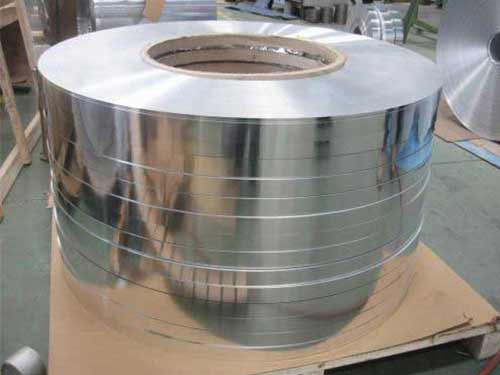
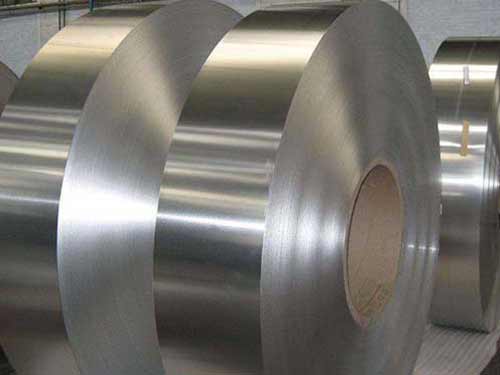
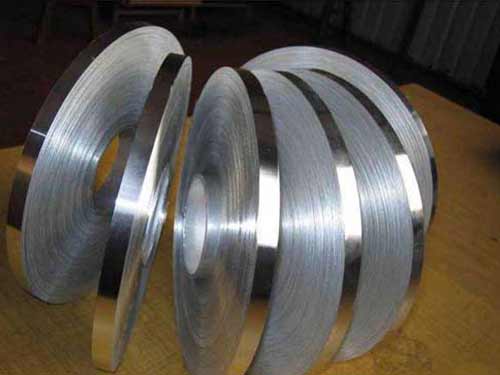
Aluminum Strip for Transformers
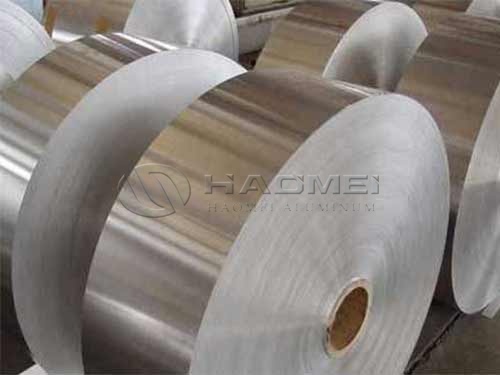
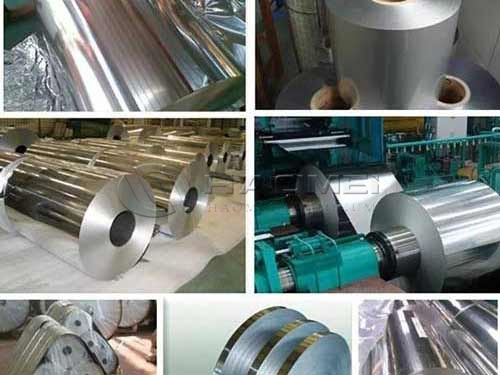
Aluminum strip for transformers is a precision-rolled conductive material used in low-voltage windings, foil coils, distribution transformers, dry-type transformers, oil-immersed transformers, reactors, and power equipment. For manufacturers who need stable electrical performance, controlled dimensions, clean surfaces, and dependable coil forming, aluminum strip offers a practical balance between conductivity, weight, processability, and cost.
In transformer production, the strip is not just a metal conductor. It becomes part of the electromagnetic heart of the unit. Its thickness tolerance, edge quality, surface cleanliness, and electrical conductivity directly influence winding compactness, heat rise, short-circuit resistance, and long-term operating reliability.
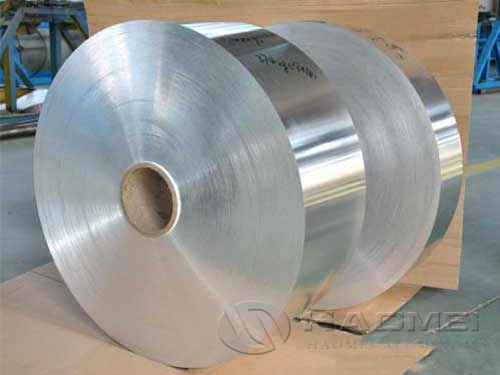
Why Aluminum Strip Works Well in Transformer Windings
Aluminum has lower density than copper, making it attractive for transformers where weight control and cost efficiency matter. With proper conductor sizing, aluminum strip can deliver excellent performance in foil-type windings. The wider contact area helps distribute current, while the flat geometry supports compact winding and good heat dissipation.
High-purity grades such as 1050, 1060, and 1070 are widely selected because they provide high electrical conductivity and good formability. In many transformer designs, 1050 / 1060 Aluminum Strip is preferred for low-voltage foil windings due to its clean surface, soft temper options, and dependable conductivity.
Compared with round wire, aluminum strip can reduce winding layers, improve space utilization, and support automated foil winding machines. Its flat shape also helps reduce axial short-circuit forces when the winding structure is designed correctly.
Main Features Customers Care About
The most important performance factor is electrical conductivity. Transformer aluminum strip is usually produced from high-purity aluminum to reduce resistance loss and heat generation. Stable conductivity across the full coil length helps maintain predictable transformer performance.
Dimensional precision is equally important. Thickness variation can cause uneven current distribution, poor coil geometry, and insulation stress. Width tolerance affects winding alignment and edge insulation. For this reason, transformer strip is rolled and slit under strict process control.
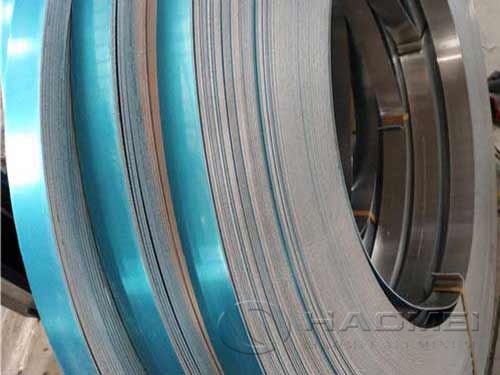
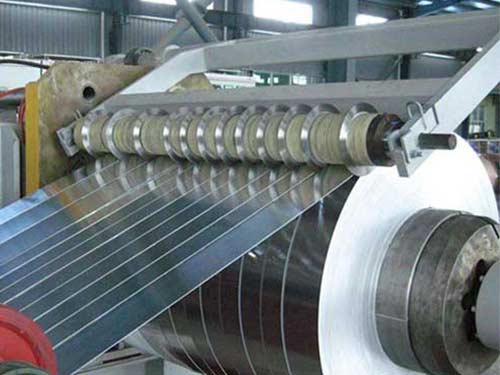
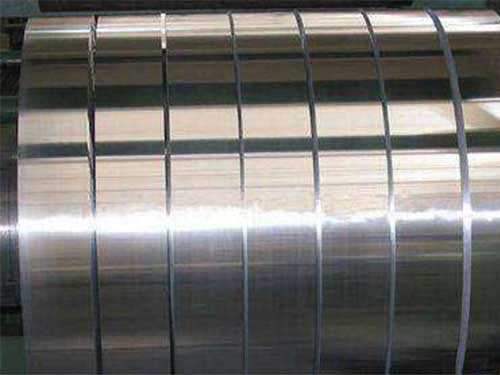
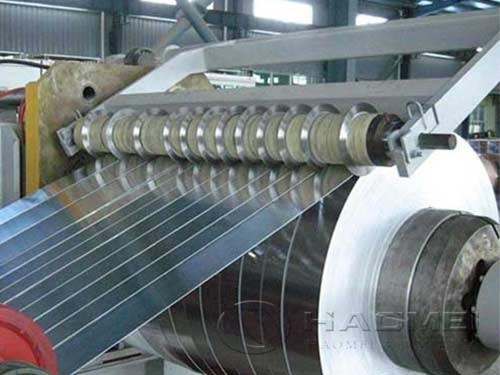
Edge quality deserves close attention. Burrs, cracks, waves, or rough edges may damage insulation paper or film during winding. High-quality transformer strip is slit with smooth edges and controlled burr height to protect insulation and support continuous winding.
Surface condition also matters. Oil stains, black spots, oxide buildup, scratches, or foreign particles can reduce insulation reliability. Transformer-grade aluminum strip should have a bright, clean, uniform surface suitable for contact with paper, Nomex, polyester film, or other insulation materials.
Common Alloy and Temper Choices
| Alloy | Typical Temper | Conductivity Character | Main Use in Transformers |
|---|---|---|---|
| 1050 | O, H12, H14 | Very high | Foil windings, dry-type transformers, distribution units |
| 1060 | O, H12, H14 | Very high | Low-voltage windings, compact coils, oil-immersed transformers |
| 1070 | O, H12 | Excellent | High-conductivity winding applications |
| 1350 | O, H12, H14 | Electrical conductor grade | Transformer and electrical equipment conductors |
| 8011 | O, H18 | Moderate to good | Shielding, insulation support, auxiliary electrical uses |
While pure aluminum grades dominate winding applications, some transformer assemblies also use 8011 Aluminum Strip for shielding, wrapping, or supporting components where formability and surface performance are more important than maximum conductivity.
Typical Technical Range
| Parameter | Common Supply Range | Customer Benefit |
|---|---|---|
| Thickness | 0.2 mm to 3.0 mm | Supports foil winding and heavy conductor designs |
| Width | 10 mm to 1600 mm | Suitable for narrow strips and wide transformer foil |
| Coil ID | 150 mm, 300 mm, 400 mm, 500 mm | Matches slitting, annealing, and winding equipment |
| Coil OD | According to order and handling limit | Improves production continuity |
| Surface | Mill finish, clean, dry, oil-free or light-oiled | Protects insulation and winding quality |
| Edge | Slit edge, deburred edge available | Reduces insulation damage risk |
| Packaging | Eye-to-wall or eye-to-sky coil packing | Protects coil during transport and storage |
Exact specifications depend on transformer design, winding machine capacity, insulation system, and required electrical performance. For high-speed winding, customers often request tighter width tolerance, low camber, and burr control.
Chemical Composition Reference
| Alloy | Al Minimum | Si | Fe | Cu | Mn | Mg | Zn | Ti |
|---|---|---|---|---|---|---|---|---|
| 1050 | 99.50% | 0.25 max | 0.40 max | 0.05 max | 0.05 max | 0.05 max | 0.05 max | 0.03 max |
| 1060 | 99.60% | 0.25 max | 0.35 max | 0.05 max | 0.03 max | 0.03 max | 0.05 max | 0.03 max |
| 1070 | 99.70% | 0.20 max | 0.25 max | 0.04 max | 0.03 max | 0.03 max | 0.04 max | 0.03 max |
| 1350 | 99.50% | 0.10 max | 0.40 max | 0.05 max | 0.01 max | 0.01 max | 0.05 max | 0.01 max |
High aluminum purity improves conductivity and helps reduce electrical loss. For demanding transformer projects, chemical control should be matched with conductivity testing, surface inspection, and mechanical property verification.
Performance in Dry-Type and Oil-Immersed Transformers
In dry-type transformers, aluminum strip is commonly used in low-voltage foil windings. These windings are often cast in resin or insulated with high-temperature films. The strip must wind smoothly without edge cracking or surface contamination. Good flatness helps achieve tight, even layers, which improves thermal transfer and mechanical stability.
In oil-immersed transformers, aluminum strip works with kraft paper, pressboard, and transformer oil. The conductor surface must be compatible with insulation paper and free from defects that can cause partial discharge or local heating. Stable strip geometry also helps maintain oil channels and coil spacing.
For distribution transformers, aluminum strip is appreciated because it supports efficient mass production. Coils can be wound quickly, conductor costs can be controlled, and the finished transformer can meet demanding grid service requirements when the design is properly engineered.
Applications Across Electrical Equipment
Aluminum strip for transformers is mainly used for low-voltage foil windings, where wide conductive layers carry large current at low voltage. It is also used in amorphous alloy transformers, compact distribution transformers, cast resin transformers, pad-mounted transformers, furnace transformers, rectifier transformers, and reactors.
Beyond the winding itself, aluminum strip may serve in electrostatic shielding, grounding components, bus connections, flexible conductive layers, and electromagnetic shielding structures. Its light weight helps reduce assembly load, and its formability makes it suitable for bending, wrapping, and layered insulation designs.
Manufacturing Points That Improve Reliability
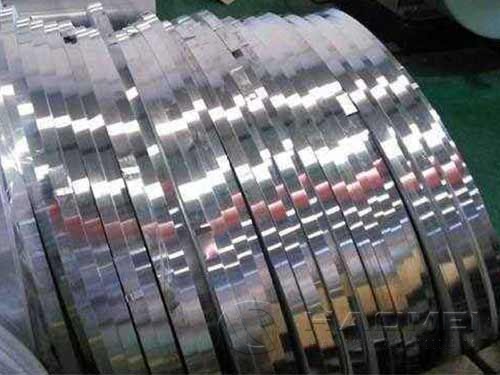
Quality begins with clean melting and controlled casting. The coil is hot rolled or cold rolled to the required gauge, then annealed when soft temper is needed. During slitting, blade condition, tension control, and coil alignment determine edge smoothness and burr level.
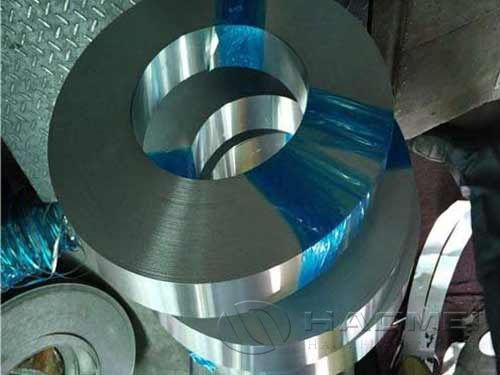
For transformer customers, coil consistency is often more valuable than appearance alone. A good strip should run steadily through the winding machine, maintain constant tension, and avoid telescoping, loose wraps, or edge waves. Packaging must prevent moisture, impact damage, and surface oxidation during sea freight or warehouse storage.
Recommended inspection items include conductivity, tensile strength, elongation, thickness tolerance, width tolerance, burr height, surface cleanliness, flatness, and coil winding condition. For export orders, protective packaging with plastic film, moisture barrier, steel or wooden pallets, and clear coil labels helps reduce handling risk.
How to Select the Right Transformer Aluminum Strip
Start with the transformer design current, voltage class, winding temperature rise, insulation system, and winding machine limits. Then confirm alloy, temper, thickness, width, coil weight, inner diameter, burr direction, and surface requirement. Soft O temper is easier to wind and bend, while H temper provides higher strength where coil rigidity is needed.
If the project is focused on low loss and high conductivity, 1050, 1060, 1070, or 1350 aluminum strip is usually the first choice. If the part is used for auxiliary shielding or wrapping, other alloys may be considered based on forming and surface needs.
Aluminum strip for transformers gives manufacturers a dependable conductor solution for efficient, lightweight, and economical power equipment. With the right alloy, tight tolerances, clean edges, and careful packaging, it supports stable winding production and reliable transformer service in power distribution, industrial systems, and renewable energy networks.