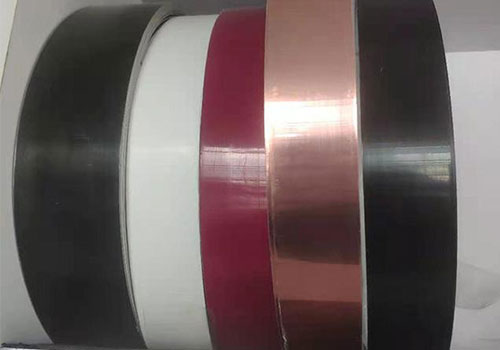
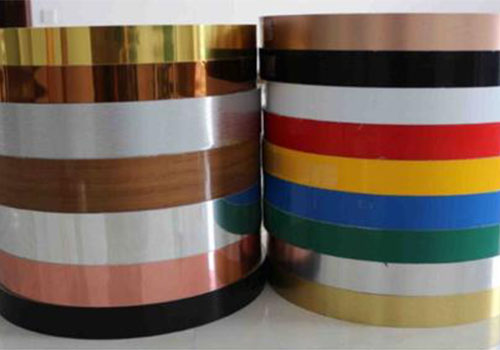
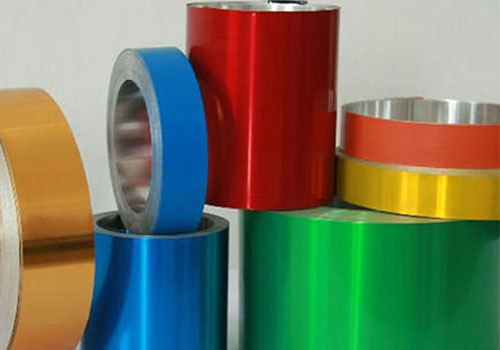
Aluminum Circle 3004 Series Color Coated Strip Pre Painted
Aluminum circles are often judged by their final appearance: a smooth cookware base, a clean lamp reflector, a colorful traffic sign component, or a decorative spun cover. Yet the quality of the finished circle begins much earlier, at the strip stage. 3004 series pre painted color coated aluminum strip gives manufacturers a practical route to combine dependable forming performance with a finished decorative surface before blanking and spinning begin.
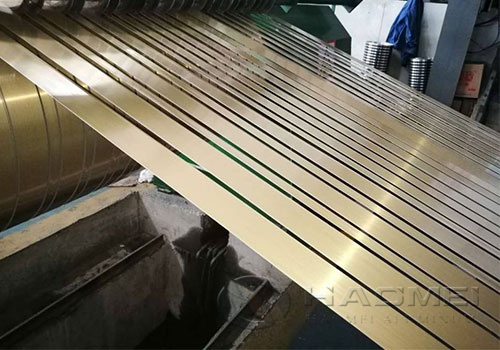
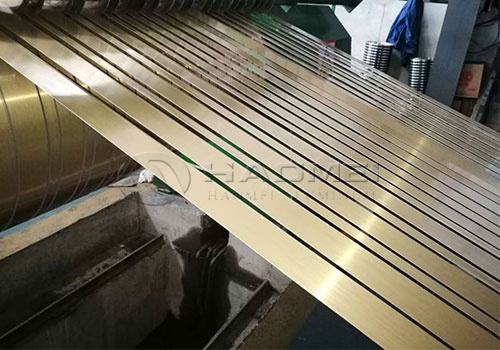
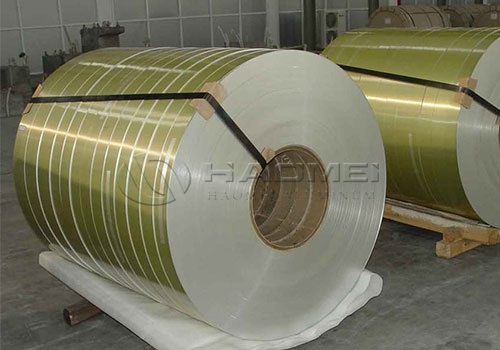
Rather than treating coating as the final cosmetic step, pre painted material makes the coating part of the production design. The strip is cleaned, chemically pretreated, coated, cured, and inspected in coil form. It can then be slit and punched into aluminum circles with less downstream painting, shorter processing routes, and more stable color consistency between production batches.
Why 3004 Alloy Fits Formed Color-Coated Parts
AA 3004 is an aluminum-manganese alloy strengthened with a controlled magnesium addition. Compared with commercially pure aluminum grades, it provides improved strength while retaining good elongation in soft tempers. This balance matters when a circular blank must undergo deep drawing, spinning, stamping, curling, or shallow pressing without visible cracking at its edge.
For manufacturers of colored circles, 3004 is particularly valuable because it supports a durable substrate beneath the coating. The metal resists ordinary atmospheric corrosion well, while the paint system adds a second protective layer. The result is a material suitable for decorative panels, appliance components, cookware exterior discs, lamp parts, signage blanks, caps, housings, and architectural accessories.
The term aluminum circle can describe a finished blank, while color coated strip describes the coil or slit material from which that blank is produced. In practice, the strip is supplied at a specified width, then punched into circles or cut into blanks according to the customer's tooling arrangement. Selecting the right temper and paint flexibility is therefore just as important as selecting the circle diameter.
Typical Product Parameters
| Parameter | Common Range or Option |
|---|---|
| Alloy | AA 3004 / EN AW-3004 |
| Material form | Coil, slit strip, circle blank |
| Thickness | 0.20 mm to 2.00 mm, subject to application |
| Strip width | 20 mm to 1,600 mm |
| Circle diameter | Commonly 80 mm to 1,200 mm after blanking |
| Temper | O, H12, H14, H16, H18, H22, H24, H26, H28 |
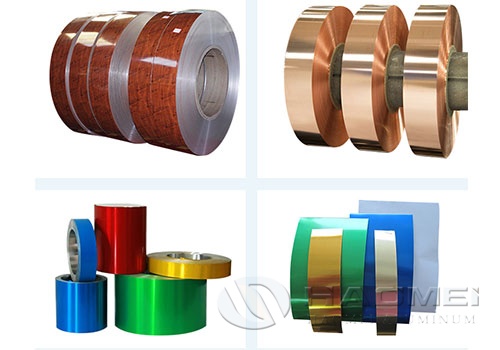
| Surface finish | Color coated, matte, gloss, embossed, brushed-look |
| Front coating | PE, HDPE, SMP, PVDF, epoxy-polyester systems |
| Back coating | Wash coat, service coat, or matching back paint |
| Coating thickness | Usually 15 to 25 microns for PE; 25 to 35 microns or more for PVDF systems |
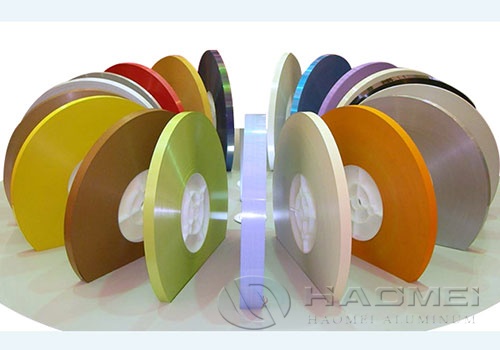
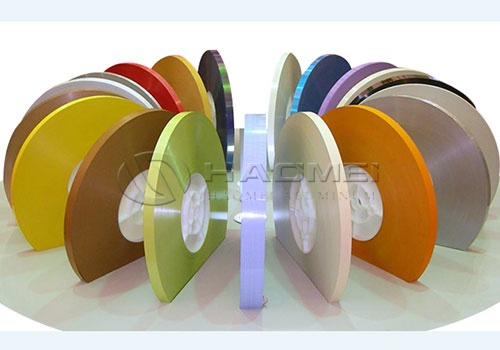
| Color options | RAL, Pantone reference, custom samples, metallic and wood-grain effects |
| Coil inner diameter | Commonly 150 mm, 300 mm, 405 mm, or 508 mm |
Actual dimensions should be matched to circle blanking equipment, drawing depth, edge quality requirements, and coating performance expectations. Thin gauges are favored for light covers and decorative uses, while thicker material is more suitable for rigid stamped parts or circles that require deeper forming.
Chemical Composition of AA 3004
The composition of 3004 aluminum is controlled to create a useful combination of formability, strength, and corrosion resistance. Values are generally expressed as mass percentage.
| Element | Content, % |
|---|---|
| Silicon, Si | 0.30 max |
| Iron, Fe | 0.70 max |
| Copper, Cu | 0.25 max |
| Manganese, Mn | 1.00 to 1.50 |
| Magnesium, Mg | 0.80 to 1.30 |
| Zinc, Zn | 0.25 max |
| Titanium, Ti | 0.25 max |
| Other elements, each | 0.05 max |
| Other elements, total | 0.15 max |
| Aluminum, Al | Balance |
Manganese contributes to strength and structural stability, while magnesium provides additional solid-solution strengthening. This chemistry makes 3004 more robust than 1xxx aluminum in many formed applications, though it still needs the correct temper for demanding drawing or spinning processes.
Temper Selection: The Quiet Factor Behind Forming Success
For heavily formed aluminum circles, O temper is usually the preferred choice. It is fully annealed, soft, and able to tolerate substantial deformation. A pre painted 3004-O strip with a flexible coating can be punched and subsequently spun or drawn with a reduced risk of paint cracking.
H12 and H14 tempers offer moderate work hardening. They are appropriate when the part requires better stiffness but only moderate forming. H16 and H18 are harder tempers often chosen for flat or lightly stamped components where shape retention matters more than deep drawability.
H22, H24, H26, and H28 refer to strain-hardened and partially annealed states. These tempers provide intermediate mechanical properties and may suit applications that need a compromise between rigidity and processing flexibility. Before ordering, manufacturers should provide details such as drawing ratio, punch radius, blank diameter, lubricating method, and whether the coated surface faces the tool. These details help determine if the coating and temper can survive the forming route.
Coating Systems Should Match the Service Environment
A color layer is not simply decoration. It is a functional barrier against moisture, staining, light exposure, and ordinary handling damage. For indoor products or cost-sensitive applications, PE Coated Aluminum Strip is commonly selected because it provides good appearance, processability, and economic value.
For exterior components exposed to strong sunlight, rain, industrial atmosphere, or long-term weathering, PVDF coating is usually a stronger option. A PVDF Coated Aluminum Strip can offer enhanced resistance to fading, chalking, and environmental aging. The chosen coating should also be tested for bendability and adhesion after blanking, drawing, or spinning.
Relevant Implementation Standards
Production and inspection commonly refer to internationally recognized aluminum and coating standards. ASTM B209 is frequently used for aluminum and aluminum-alloy sheet and strip requirements. EN 485 addresses tolerances and mechanical properties for aluminum sheet, strip, and plate, while EN 573 covers alloy designation and chemical composition. GB/T 3880 may be used for aluminum and aluminum alloy plates, sheets, and strips in markets following Chinese standards.
For coil coating quality, EN 13523 test methods are useful references for assessing properties such as gloss, coating thickness, adhesion, pencil hardness, impact resistance, solvent resistance, and resistance to humidity. A purchase specification may also define color tolerance, often expressed through Delta E, together with allowable thickness deviation, width tolerance, edge condition, coil weight, and packaging method.
Processing Guidance for Cleaner Aluminum Circles
Pre painted strip should be stored in a dry, ventilated warehouse and protected from condensation. Coil edges need careful handling because edge dents can transfer into circular blanks. During punching, sharp and well-aligned dies help maintain a smooth edge and reduce coating disturbance. During deep drawing or spinning, compatible lubricants and suitable tooling radii are essential, especially with glossy or dark-colored finishes where minor surface marks are more visible.
3004 pre painted color coated aluminum strip is best understood as a ready-to-form visual surface rather than plain metal waiting for paint. When alloy temper, coating type, substrate thickness, and forming conditions are selected together, the material delivers attractive aluminum circles with efficient processing and dependable long-term performance.