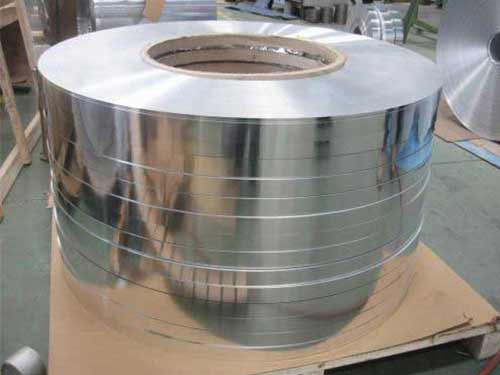
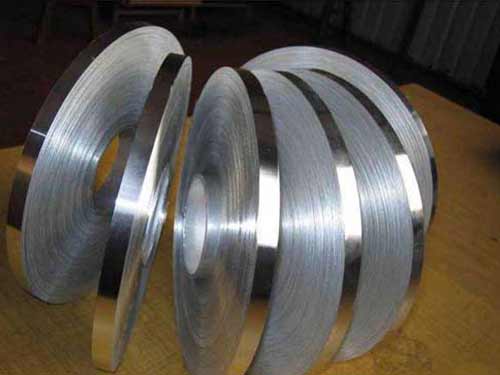
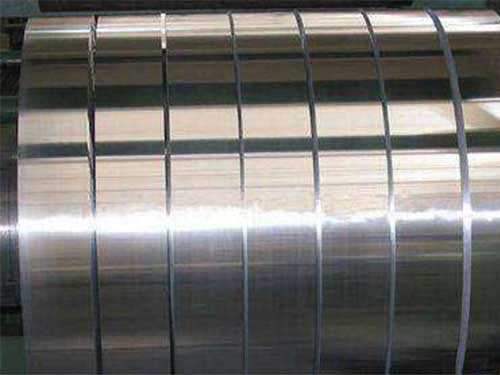
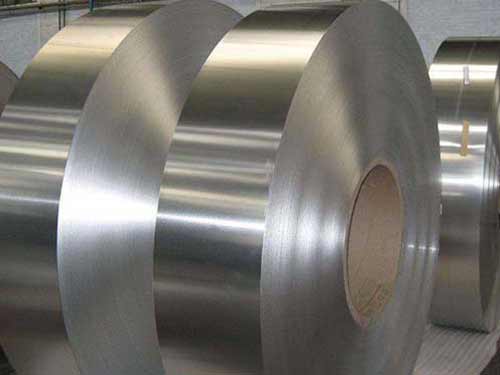
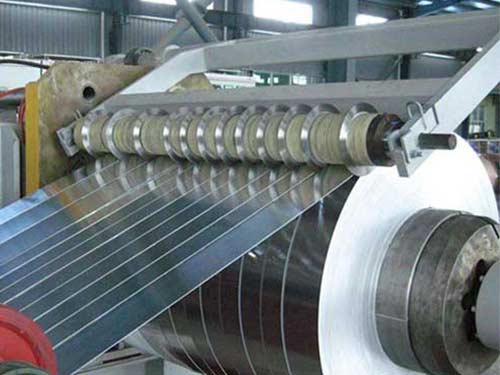
Alloy Material Coil Sheet Thin Aluminum Strips
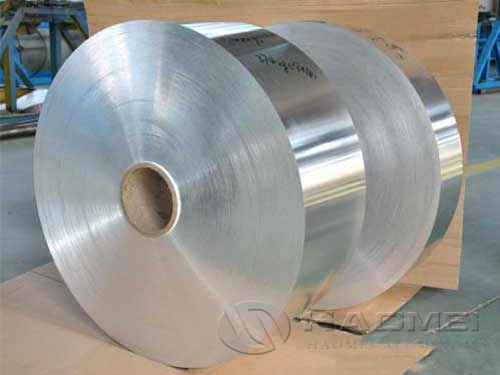
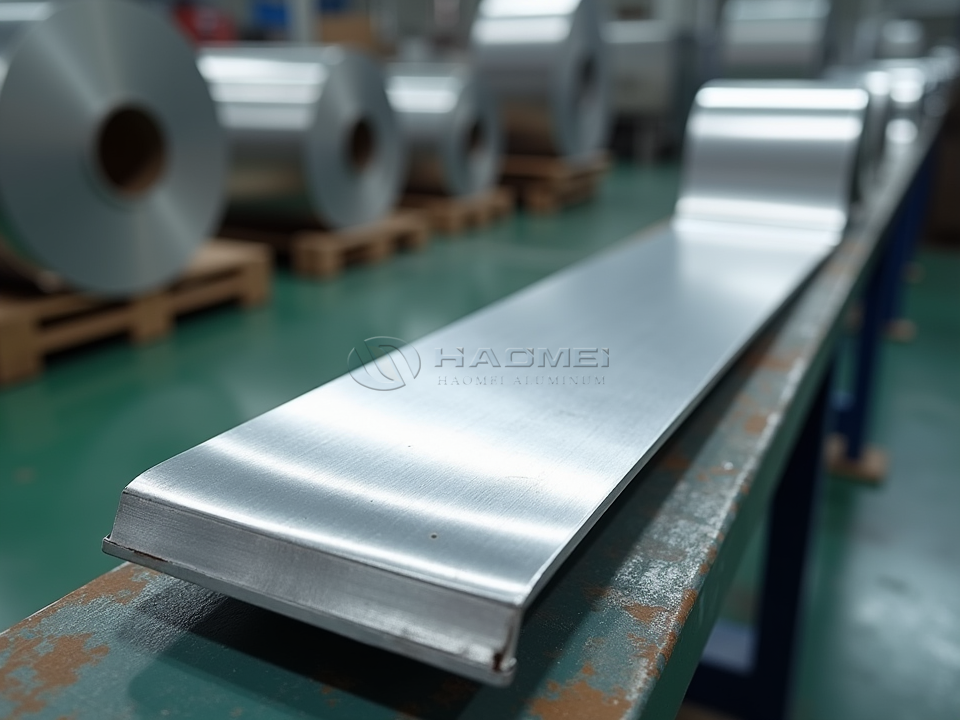
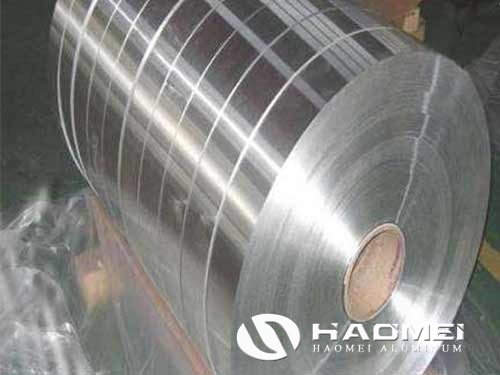
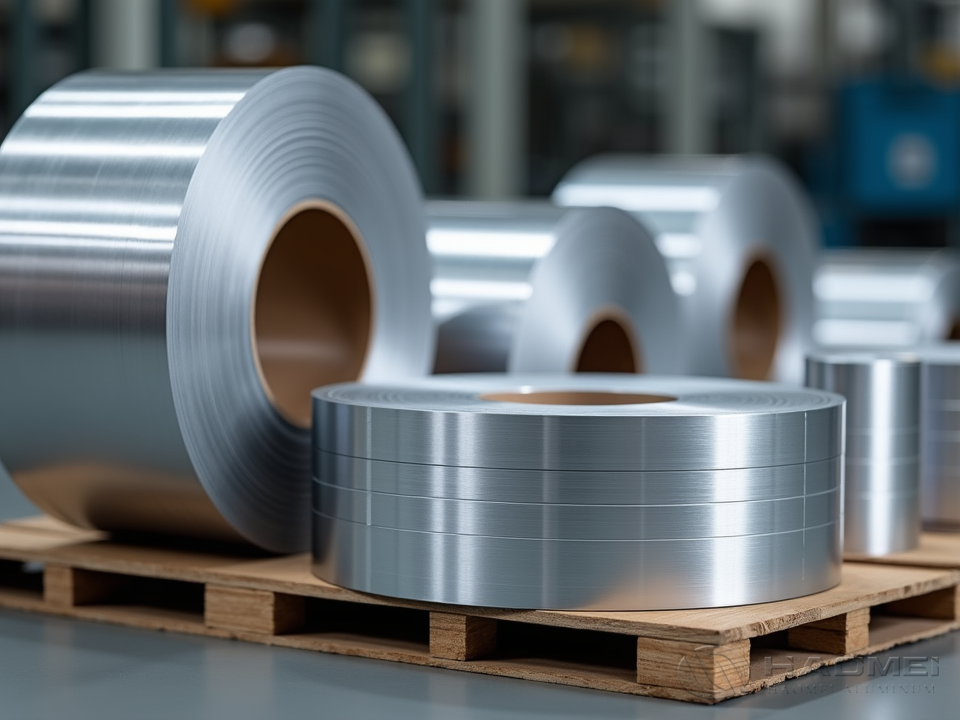
Alloy material coil sheet thin aluminum strips are flat-rolled aluminum products slit to narrow widths or supplied as thin sheets for stamping, bending, drawing, insulation, shielding, packaging, heat transfer, and electrical components. They combine low density, clean surface quality, corrosion resistance, and stable dimensional control, making them suitable for high-volume production lines where consistency matters as much as material cost.
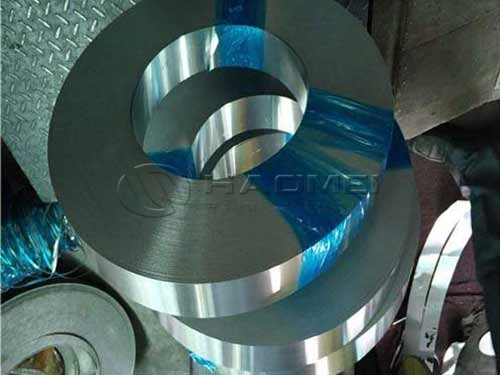
These strips are produced from selected aluminum alloys, then rolled, annealed, tension-leveled, slit, and packed according to the required width, thickness, temper, and edge condition. Depending on the application, customers can select soft O temper for deep forming, H temper for higher strength, or heat-treatable grades where structural performance is required.
Product Form and Material Character
Thin aluminum strip sits between foil and plate in practical use. It is thinner and easier to form than heavy sheet, yet stronger and more stable than very light foil. In coil form, it supports continuous feeding into presses, roll forming machines, fin lines, cable wrapping equipment, transformer winding lines, and packaging machines.
| Product Item | Common Range | Notes |
|---|---|---|
| Thickness | 0.10 mm to 3.00 mm | Ultra-thin and custom gauges available by order |
| Width | 10 mm to 1600 mm | Slit strip or full-width coil sheet |
| Coil ID | 150 mm, 300 mm, 405 mm, 508 mm | Matched to customer equipment |
| Coil OD | Up to 1800 mm | Depends on weight and packaging method |
| Surface | Mill finish, bright, matte, brushed, coated | Chosen by visual or functional demand |
| Edge | Slit, deburred, round edge | Important for stamping and winding |
| Temper | O, H12, H14, H16, H18, H22, H24, T4, T6 | Alloy-dependent |
Alloy Selection Guide
Different aluminum alloy families deliver different balances of conductivity, formability, strength, corrosion resistance, and cost. For high-conductivity commercial purity work, 1050 / 1060 Aluminum Strip is widely used in transformer winding, cable shielding, heat sinks, and flexible stamping parts. For stronger corrosion-resistant components, 5052 Aluminum Strip performs well in marine, enclosure, automotive, and formed structural parts.
| Alloy | Main Character | Typical Applications |
|---|---|---|
| 1050 | Very high purity, excellent conductivity, soft forming | Transformer strip, cable shielding, labels |
| 1060 | High conductivity, strong ductility, clean surface | Electrical parts, busbar fins, flexible connectors |
| 1100 | Good forming and weldability | Deep drawing, utensils, decorative parts |
| 3003 | Medium strength, good corrosion resistance | Heat exchanger fins, stamped covers, containers |
| 3004 | Higher strength than 3003, good forming | Lamp caps, packaging parts, roll formed profiles |
| 5005 | Decorative surface, anodizing response | Trim, panels, signage, appliance parts |
| 5052 | High corrosion resistance, higher strength | Marine parts, enclosures, brackets, fuel tanks |
| 6061 | Heat-treatable, structural strength | Machined strips, frames, precision components |
| 8011 | Good barrier behavior and forming | Closures, packaging, fins, seals |
Chemical Composition Reference
The final chemistry is controlled according to international standards such as ASTM, EN, or customer-specific requirements. The values shown are typical reference ranges and should be confirmed for project approval.
| Alloy | Si | Fe | Cu | Mn | Mg | Zn | Al |
|---|---|---|---|---|---|---|---|
| 1060 | 0.25 max | 0.35 max | 0.05 max | 0.03 max | 0.03 max | 0.05 max | 99.60 min |
| 1100 | Si+Fe 0.95 max | Si+Fe 0.95 max | 0.05-0.20 | 0.05 max | -- | 0.10 max | 99.00 min |
| 3003 | 0.60 max | 0.70 max | 0.05-0.20 | 1.00-1.50 | -- | 0.10 max | Balance |
| 5052 | 0.25 max | 0.40 max | 0.10 max | 0.10 max | 2.20-2.80 | 0.10 max | Balance |
| 6061 | 0.40-0.80 | 0.70 max | 0.15-0.40 | 0.15 max | 0.80-1.20 | 0.25 max | Balance |
| 8011 | 0.50-0.90 | 0.60-1.00 | 0.10 max | 0.20 max | 0.05 max | 0.10 max | Balance |
Mechanical and Performance Data
Mechanical values depend on thickness, temper, annealing route, and testing direction. Thin strip production places special attention on coil flatness, burr height, grain structure, and surface cleanliness because these factors directly affect feeding, punching, drawing, and winding stability.
| Alloy and Temper | Tensile Strength MPa | Elongation % | Performance Strength |
|---|---|---|---|
| 1060-O | 60-95 | 20-35 | Excellent deep forming and conductivity |
| 1060-H18 | 120-160 | 2-6 | Higher hardness for stable winding |
| 3003-H14 | 140-180 | 3-10 | Balanced strength and corrosion resistance |
| 5052-O | 170-215 | 12-25 | Good forming with high corrosion resistance |
| 5052-H32 | 210-260 | 4-12 | Stronger strip for enclosures and brackets |
| 6061-T6 | 260-310 | 6-12 | Structural strength and machinability |
Surface, Flatness, and Slitting Control
A thin aluminum strip must run smoothly through automated equipment. Even a small burr or wave can cause feeding errors, tool wear, scratches, or winding defects. Good processing control includes rolling oil removal, surface inspection, tension leveling, accurate slitting, and protective interleaving when required.
| Quality Item | Standard Control Target | Customer Benefit |
|---|---|---|
| Thickness tolerance | As tight as +/-0.005 mm on selected gauges | Stable stamping depth and coil weight |
| Width tolerance | +/-0.05 mm to +/-0.20 mm | Accurate feeding and assembly fit |
| Burr height | Usually less than 0.03 mm | Less tool wear and safer handling |
| Flatness | Controlled by tension leveling | Reduced jamming and better laminating |
| Surface defects | Free from heavy oil stain, black lines, dents | Better appearance and bonding |
| Coil winding | Tight, even, no collapsed core | Easier unwinding on production lines |
Practical Use Cases
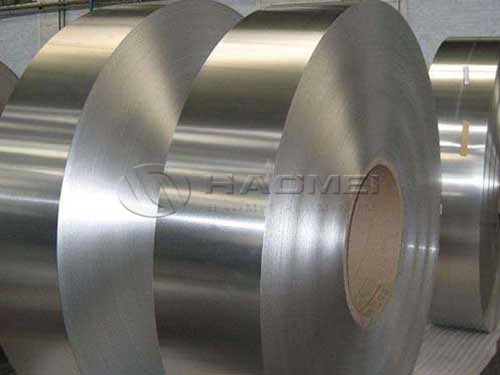
Alloy material coil sheet thin aluminum strips are found in many industries because they are easy to process and lightweight. Electrical manufacturers use pure aluminum strips for transformer windings, capacitor shells, cable armoring, electromagnetic shielding, and conductive tabs. The low electrical resistivity of 1050 and 1060 helps reduce energy loss while keeping component weight low.
In packaging, 8011 and 3004 strips are used for closures, seals, caps, and container parts. These grades support clean forming, printing, coating, and sealing operations. For lamp caps and small stamped shells, the strip must have uniform hardness so every part forms to the same depth without cracking.
Automotive and appliance producers often choose 3003, 5005, and 5052 for heat shields, decorative trim, brackets, nameplates, battery components, and enclosure parts. The weight advantage of aluminum helps reduce assembly mass, while corrosion resistance supports long service life in humid or outdoor conditions.
Heat transfer applications use thin strip in fins, spacers, and radiator components. Good thermal conductivity and controlled gauge help improve heat exchange efficiency. For deep drawing, soft temper material with stable grain size reduces orange peel, splitting, and earing.
Benefits for Production Buyers
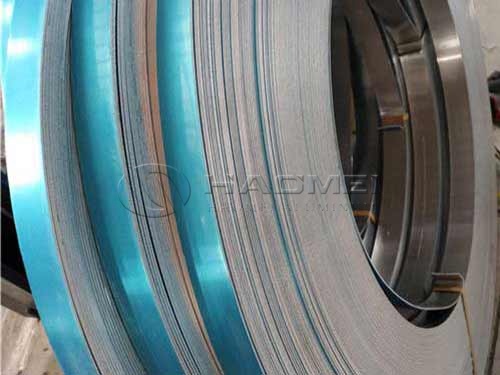
The value of thin aluminum strip is not only the alloy itself. It comes from the way the material behaves on the customer line. A consistent coil reduces downtime, improves yield, and keeps tooling conditions predictable. Accurate slit width supports tight assembly design. Stable temper improves part repeatability. Clean surface condition supports coating, painting, bonding, printing, and anodizing.
| Buyer Concern | Aluminum Strip Advantage |
|---|---|
| Weight reduction | About one-third the density of steel |
| Corrosion resistance | Natural oxide film protects the surface |
| Forming efficiency | Soft and half-hard tempers support stamping and bending |
| Conductivity | Pure aluminum grades serve many electrical applications |
| Cost control | Coil supply improves continuous processing efficiency |
| Recyclability | Aluminum can be recycled with strong material recovery value |
Ordering Information
To specify the right alloy material coil sheet thin aluminum strips, customers should provide alloy, temper, thickness, width, coil inner diameter, maximum coil weight, surface finish, edge demand, tolerance standard, and final application. For demanding stamping or winding work, sample testing is recommended before mass production.
A well-selected aluminum strip improves forming quality, reduces scrap, and supports faster manufacturing. Whether the project requires soft deep-drawing strip, high-conductivity transformer coil, corrosion-resistant enclosure material, or decorative sheet strip, aluminum offers a practical balance of strength, processability, and long-term performance.