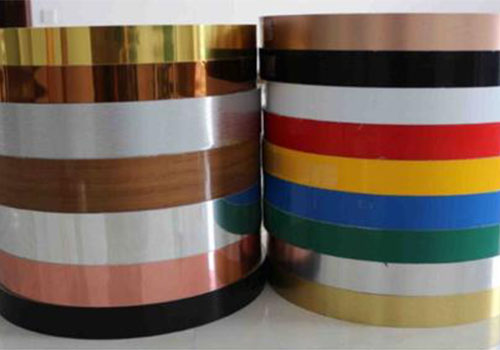
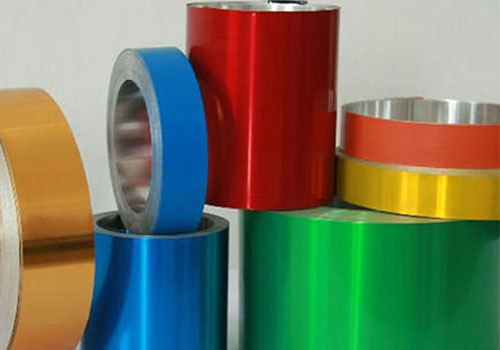
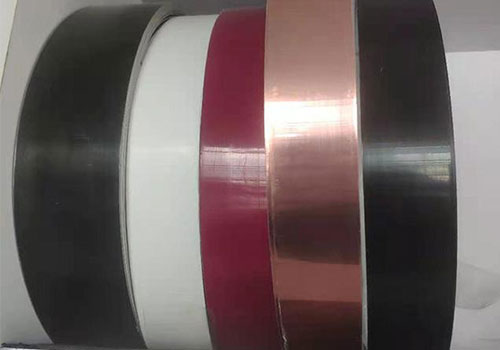
3003 Prepainted Color Aluminum Strip
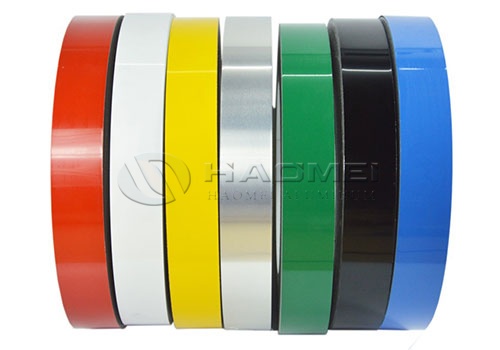
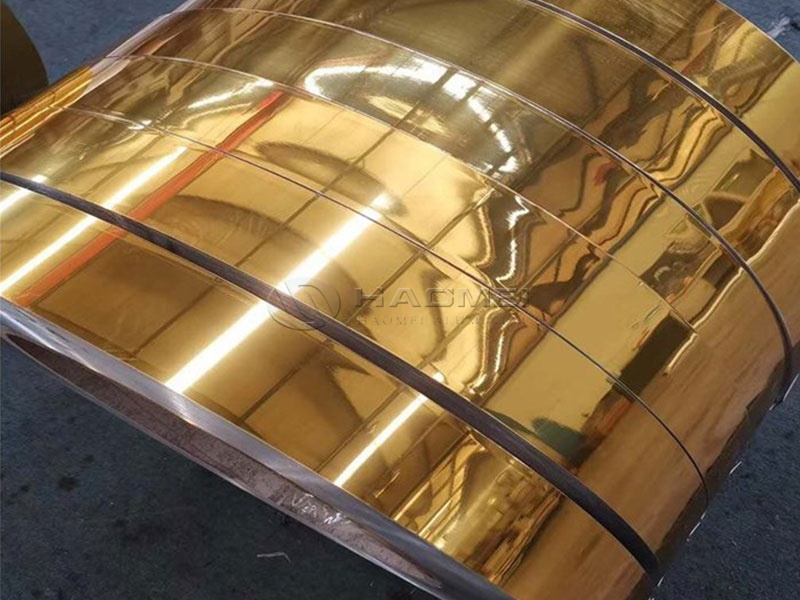
3003 Prepainted Color Aluminum Strip is more than a decorative metal coil. It is a ready-to-form material designed to bring color, corrosion resistance, and practical mechanical strength into the same production step. Instead of painting fabricated parts after cutting, bending, or roll forming, manufacturers can process a coil that already carries a controlled, cured finish.
This changes the role of the aluminum strip. The metal becomes both the structural substrate and the visible surface, helping fabricators shorten production cycles, reduce paint waste, and maintain a more consistent appearance across large batches.
Why 3003 Alloy Works Well for Prepainted Strip
Alloy 3003 belongs to the aluminum-manganese series. Its manganese content provides higher strength than commercially pure 1100 aluminum while preserving the formability needed for bending, stamping, profiling, and light drawing operations. This balance is especially valuable when the finished product needs shaped edges, folded hems, curved surfaces, or tightly controlled coil-fed processing.
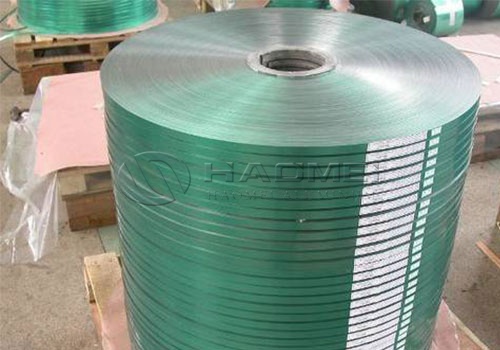
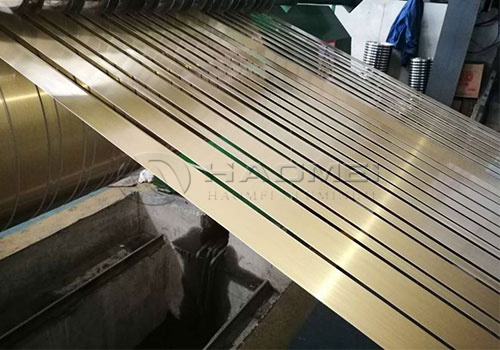
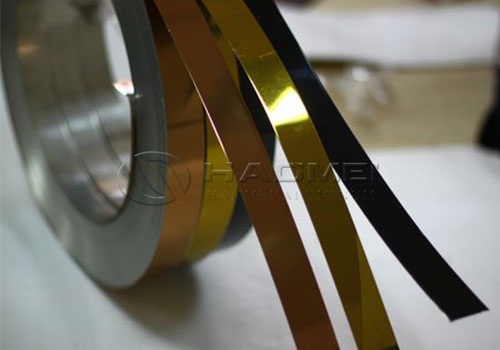
The prepainted surface is applied through a continuous coil-coating process. The aluminum strip is cleaned, chemically pretreated, coated with primer and finish paint, then oven cured. This process creates a more even coating film than many post-fabrication spray-paint methods. The resulting strip can be slit to narrow widths for component production without requiring a separate finishing line.
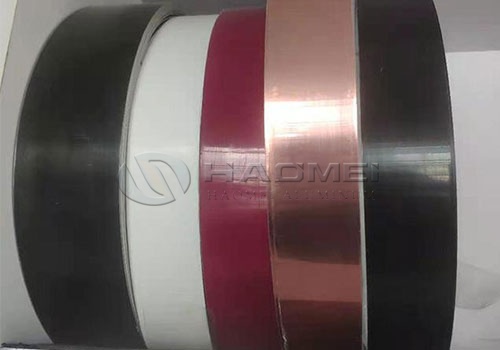
For projects requiring a broad selection of finishes, a Color Coated Aluminum Strip can be specified in solid colors, metallic colors, woodgrain patterns, brushed effects, or customized color systems matched to project requirements.
Chemical Composition of 3003 Aluminum Alloy
The chemical balance of 3003 is built around manganese. Manganese improves strength and supports stable performance during forming, while aluminum remains the major element and preserves the alloy's low density and natural corrosion resistance.
| Element | Content, % by Weight |
|---|---|
| Aluminum, Al | Balance |
| Manganese, Mn | 1.0-1.5 |
| Copper, Cu | 0.05-0.20 |
| Iron, Fe | 0.70 max |
| Silicon, Si | 0.60 max |
| Zinc, Zn | 0.10 max |
| Magnesium, Mg | 0.05 max |
| Other elements, each | 0.05 max |
| Other elements, total | 0.15 max |
The small copper addition assists alloy strength, while restricted levels of iron and silicon help maintain formability and surface consistency. Since 3003 is non-heat-treatable, its mechanical properties are mainly adjusted through cold working rather than solution heat treatment and aging.
Common Parameters for 3003 Prepainted Color Aluminum Strip
Production parameters should be matched to the end product, the forming method, exposure conditions, and visual expectations. A thin strip may suit trim and shutter slats, while a heavier gauge can be selected for ceiling systems, appliance panels, or architectural profiles.
| Parameter | Typical Range or Condition |
|---|---|
| Alloy | AA 3003 / EN AW-3003 |
| Thickness | 0.20-1.20 mm |
| Common strip width | 20-1,300 mm |
| Coil inside diameter | 150 mm, 300 mm, 405 mm, 508 mm or customized |
| Coil weight | Typically 1-5 tonnes, subject to width and handling limits |
| Temper | H14, H16, H18, H22, H24, H26, H28 |
| Surface finish | Smooth, matte, gloss, embossed, brushed, patterned |
| Coating system | PE, SMP, HDP, PVDF, epoxy primer systems |
| Top-coat thickness | Commonly 15-30 microns |
| Back-coat thickness | Commonly 5-15 microns |
| Color control | RAL, Pantone, sample matching, custom formulation |
Actual dimensions, coating thickness, gloss level, and tolerances should be confirmed before production. Narrow slitting requires particular attention to burr control and edge protection because exposed cut edges may be subject to more demanding environments than the painted face.
Temper Selection as a Forming Decision
Temper is not merely a hardness label. It determines how the strip behaves during fabrication. H14 is a half-hard temper commonly chosen where moderate strength and reliable bending are needed. It suits many decorative panels, insulation cladding, shutters, signage parts, and general roll-formed profiles.
H24 has a similar strain-hardened condition with partial annealing and can provide improved forming behavior for components with more demanding bends. H18 and H28 are harder conditions intended for applications requiring increased stiffness, though they have less tolerance for severe drawing or tight-radius folding.
For highly shaped parts, the bend radius, coating flexibility, and temper must be considered together. A tough metal substrate with an overly rigid paint film can lead to coating cracks at the bend. Conversely, a flexible paint system paired with a suitable H14 or H24 strip can retain a clean appearance after profiling.
Coating Choice Determines the Service Environment
The aluminum substrate provides the forming platform, but the coating system determines much of the visible and environmental performance. PE coatings are widely used for indoor products and general exterior applications where moderate weather resistance is sufficient. They offer economical color options and smooth processing performance.
SMP and HDP coatings offer stronger color retention and weathering resistance for more demanding exterior exposure. PVDF coatings are commonly specified for architectural applications where long-term UV resistance, gloss retention, and protection against harsh weather are important. A PVDF Coated Aluminum Strip is particularly appropriate for exterior trim, façade-related accessories, roofing details, and exposed building components.
Coating performance should be assessed through film thickness, adhesion, pencil hardness, impact resistance, T-bend performance, solvent resistance, and salt-spray testing. The correct standard depends on the market and project specification.
Applicable Standards and Quality References
3003 prepainted aluminum strip may be produced or inspected in accordance with several recognized standards. The selected standard should reflect the customer's regional requirements and final application.
| Standard | Typical Relevance |
|---|---|
| ASTM B209 | Aluminum and aluminum-alloy sheet and plate requirements |
| EN 485 | Tolerances, mechanical properties, and designations for aluminum sheet and strip |
| EN 573 | Chemical composition and alloy designation of aluminum alloys |
| EN 1396 | Coil-coated aluminum sheet and strip for general applications |
| ASTM D3359 | Coating adhesion test methods |
| ASTM D2794 | Resistance of organic coatings to rapid deformation or impact |
| AAMA 2604 | Performance requirements for high-performance organic coatings |
| AAMA 2605 | Higher-performance fluoropolymer coating requirements |
Applications Where Finished Surface and Formability Meet
The strongest advantage of 3003 Prepainted Color Aluminum Strip appears in products that need both shaping and a visible finish. Common uses include roller shutter slats, ceiling channels, lighting reflectors, decorative trims, HVAC insulation cladding, rainwater systems, appliance edging, cable wrapping, sign frames, furniture components, door and window accessories, and packaging closures.
In building applications, the strip can be roll formed into profiles with consistent color continuity from coil to coil. In appliance production, it can create clean decorative edges without an additional paint stage. In insulation systems, it supplies a lightweight protective jacket that resists corrosion while providing a finished appearance.
The material is also practical for high-volume fabrication because coil-fed equipment can cut, punch, bend, and profile it continuously. This reduces handling between operations and helps manufacturers control output consistency.
Practical Processing Notes
Protective film can be applied when the finished face requires extra protection during stamping or bending. Tooling should be clean and smooth to avoid scratching the coating, while bending radii should be verified through trial forming. For exterior products, matching sealants, fasteners, and adjacent materials should be selected to limit galvanic corrosion and staining.
3003 Prepainted Color Aluminum Strip offers a useful combination: a manganese-strengthened aluminum base, a factory-cured decorative coating, and coil dimensions suited to efficient fabrication. When alloy temper, paint system, thickness, and forming method are specified together, the result is a component material that performs well before and after it becomes part of the final product.