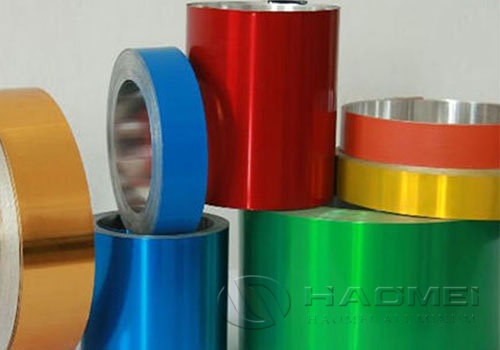
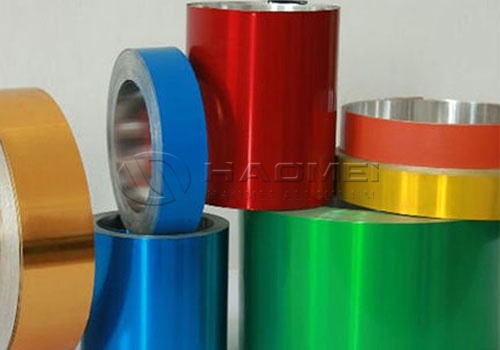
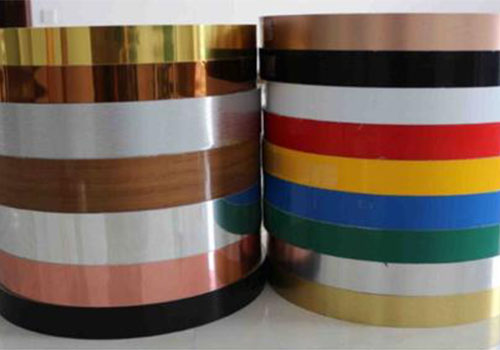
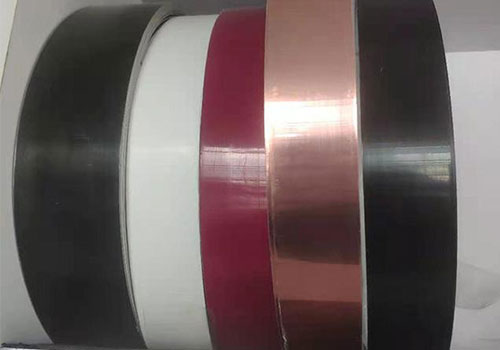
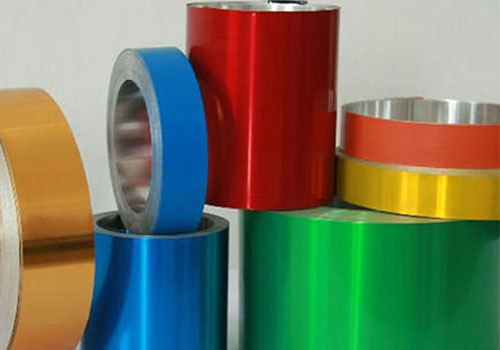
3003 3004 5052 PE PVDF Color Coated Aluminum Strip
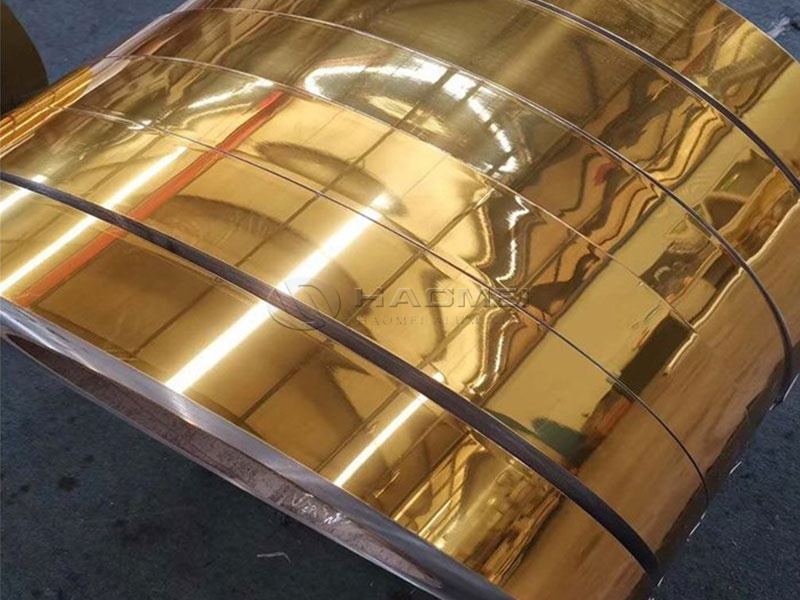
A color coated aluminum strip looks simple from the outside: a narrow coil, a smooth painted surface, a selected color. In production, however, it behaves more like a finished component waiting to be shaped. The alloy decides how the strip bends, the temper decides how it springs back, and the PE or PVDF coating decides how long the surface keeps its appearance after rain, heat, cutting, stamping, or daily handling.
For many buyers, 3003, 3004, and 5052 are the three practical choices because they cover most real application needs. 3003 is stable, economical, and easy to form. 3004 offers higher strength while keeping good workability. 5052 brings stronger corrosion resistance, especially where humidity, salt, or chemical exposure may appear.
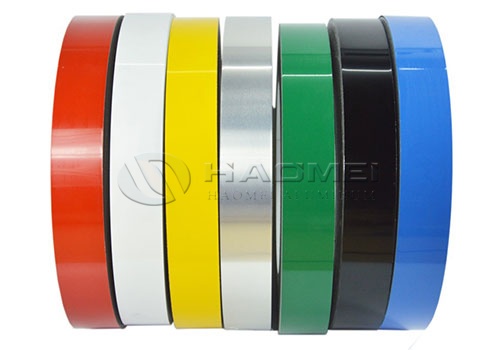
How the Three Alloys Feel in Real Processing
3003 color coated aluminum strip is often selected when the part must be bent, rolled, or formed without demanding high structural strength. Its manganese content improves strength compared with pure aluminum, while the strip still remains friendly to equipment. It is widely used for blinds, ceiling systems, bottle caps, decorative edging, signage, insulation jackets, and indoor panels.
3004 color coated aluminum strip can be seen as a stronger working material. With magnesium and manganese, it suits parts that need better resistance to denting and better shape stability. It is common in shutters, lamp holders, roofing accessories, automotive trim, and formed profiles where the strip must look clean after processing.
5052 color coated aluminum strip is the preferred option when the environment is less forgiving. Its magnesium-rich chemistry gives better corrosion resistance than 3003 and 3004, especially for marine-adjacent, transportation, outdoor cabinet, and building envelope uses. When paired with PVDF paint, 5052 becomes a strong candidate for long service life in exposed conditions.
Customers comparing specifications often begin with Color Coated Aluminum Strip because it covers the broad range of alloys, colors, coatings, and coil sizes used in industrial fabrication.
PE and PVDF Coating: Two Surface Personalities
PE coating, or polyester coating, is valued for color richness, flexibility, and cost control. It is suitable for interior decoration, indoor ceilings, sign panels, appliance parts, and products where moderate outdoor exposure is acceptable. PE painted aluminum strip normally offers good adhesion and smooth processing during slitting, bending, and roll forming.
PVDF coating is chosen when the surface must resist ultraviolet light, chalking, fading, and aggressive weather for a longer period. It is widely used in building facades, roofing accessories, exterior louvers, curtain wall trim, and outdoor metal components. A PVDF Coated Aluminum Strip is not just a painted coil; it is a weathering system built on pretreatment, primer, fluorocarbon topcoat, and controlled curing.
A simple way to choose is to look at the final environment. PE is practical for indoor and general decorative use. PVDF is stronger for exterior architectural and high-exposure applications. For coastal or industrial atmospheres, 5052 plus PVDF is often the safer combination.
Typical Product Parameters
| Item | Common Range or Requirement |
|---|---|
| Alloy | 3003, 3004, 5052 |
| Temper | O, H12, H14, H16, H18, H22, H24, H26, H32, H34 |
| Thickness | 0.15 mm to 3.0 mm, according to application |
| Width | 20 mm to 1600 mm, slit width can be customized |
| Paint system | PE, HDPE, PVDF, primer plus topcoat, optional back coat |
| Front coating thickness | PE commonly 16-25 microns, PVDF commonly 25-35 microns |
| Back coating thickness | 5-15 microns, or as specified |
| Coil inner diameter | 150 mm, 300 mm, 405 mm, 505 mm, 508 mm |
| Surface | Smooth, matte, high gloss, embossed, wood grain, stone pattern available by agreement |
| Color | RAL, Pantone, custom color matching |
| Protective film | Optional, commonly 30-80 microns |
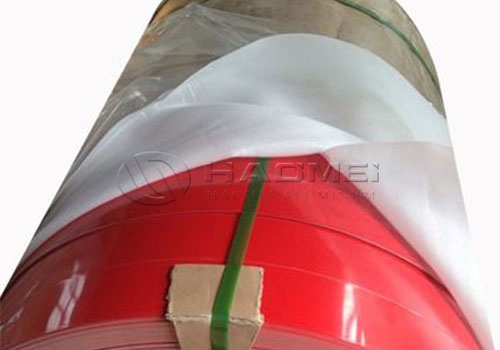
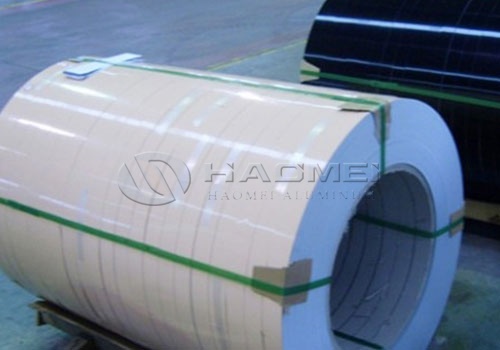
| Packaging | Eye-to-wall or eye-to-sky coils, moisture-proof export packing |
These values are typical commercial ranges. Final supply should be confirmed by drawing, tolerance, coating grade, forming method, and end-use environment.
Alloy Tempering and Forming Behavior
Temper selection is not only a hardness code. It changes the way the strip moves through dies, rollers, punches, and bending tools.
O temper is the softest condition and suits deep forming, tight bending, and parts that need maximum ductility. H14 and H24 are common choices for balanced strength and formability. H16 and H26 provide higher strength with moderate bending ability. H18 is harder and more rigid, often used where flatness and stiffness matter more than severe forming. For 5052, H32 and H34 are frequently used because they provide good strength while retaining corrosion resistance and bend performance.
| Alloy and Temper | Typical Tensile Strength | Typical Yield Strength | Elongation Character | Processing Note |
|---|---|---|---|---|
| 3003 H14 | 140-180 MPa | 115 MPa min | Good | General bending, rolling, decoration |
| 3003 H24 | 145-185 MPa | 115 MPa min | Good | Better stability after coating and forming |
| 3004 H24 | 180-230 MPa | 150 MPa min | Medium to good | Stronger formed parts, shutters, trims |
| 5052 H32 | 210-260 MPa | 160 MPa min | Good | Outdoor and corrosion-resistant parts |
| 5052 H34 | 230-280 MPa | 180 MPa min | Medium | Higher strength with controlled bending radius |
When a customer requests a very narrow strip, temper becomes even more important. A hard strip may keep its line better during continuous production, but a softer strip reduces cracking risk on tight bends. Paint flexibility must also match the metal temper, because a strong base metal with a brittle coating can fail at the bend line.
Chemical Composition Table
The chemical composition gives each alloy its working character. The values shown are common limits used for reference; mill test certificates should govern the final order.
| Alloy | Si | Fe | Cu | Mn | Mg | Cr | Zn | Ti | Al |
|---|---|---|---|---|---|---|---|---|---|
| 3003 | 0.60 max | 0.70 max | 0.05-0.20 | 1.00-1.50 | 0.05 max | - | 0.10 max | - | Balance |
| 3004 | 0.30 max | 0.70 max | 0.25 max | 1.00-1.50 | 0.80-1.30 | - | 0.25 max | - | Balance |
| 5052 | 0.25 max | 0.40 max | 0.10 max | 0.10 max | 2.20-2.80 | 0.15-0.35 | 0.10 max | - | Balance |
Manganese helps 3003 and 3004 gain strength while maintaining workable ductility. Magnesium in 3004 and especially 5052 improves strength and corrosion resistance. Chromium in 5052 supports stable corrosion behavior and helps the alloy perform better in harsh environments.
Implementation Standards and Quality Checks
Common base metal standards include ASTM B209, EN 485, EN 573, GB/T 3880, and JIS H4000. Coated aluminum strip may also be supplied with reference to EN 1396 for coil coated aluminum. For architectural coating performance, AAMA 2603 is often associated with standard polyester systems, while AAMA 2604 and AAMA 2605 relate to higher outdoor coating performance, with AAMA 2605 commonly linked to premium PVDF weathering requirements.
Practical inspection normally includes thickness tolerance, width tolerance, diagonal or camber control, coating thickness, color difference, gloss, pencil hardness, T-bend, impact resistance, adhesion by cross-cut, solvent resistance, salt spray resistance, boiling water resistance, and accelerated weathering when required.
For cutting and roll forming, edge quality deserves special attention. Burrs may damage dies, scratch the painted face, or create installation problems. Good slitting keeps edges clean, winding tension stable, and coil layers even.
Where This Material Creates Value
3003, 3004, and 5052 PE PVDF color coated aluminum strip is used in ceiling strips, venetian blinds, roller shutters, channel letters, lamp components, gutters, roofing trim, aluminum composite panel edge material, cable wrap, packaging closures, decorative profiles, and exterior building accessories.
The best purchase is not always the thickest strip or the hardest temper. It is the combination that fits the part: alloy for environment, temper for forming, coating for exposure, tolerance for equipment, and packaging for safe arrival. When those conditions are matched correctly, color coated aluminum strip reduces secondary painting, improves appearance consistency, and helps manufacturers produce cleaner parts with fewer steps.