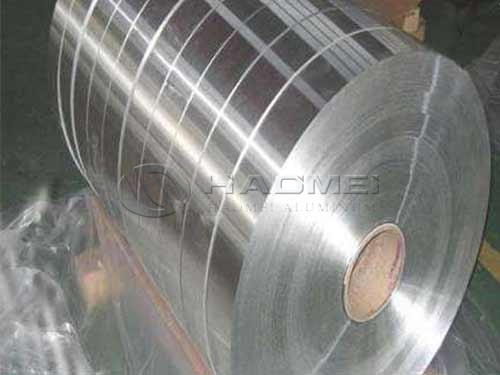
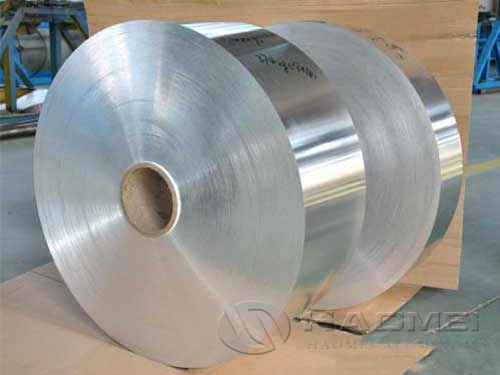
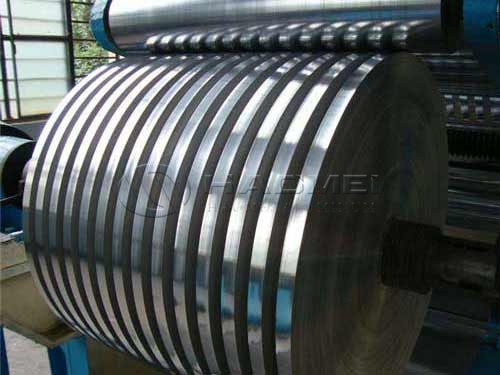
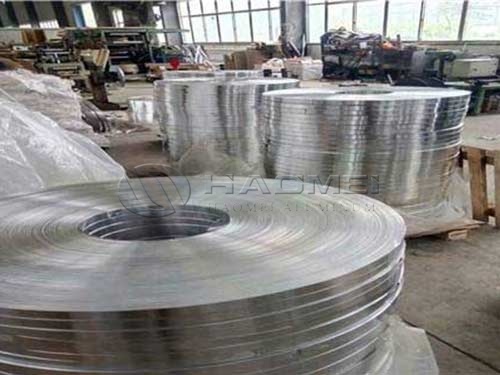
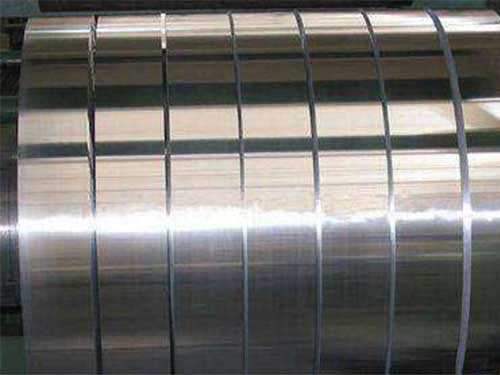
1070 Aluminium Strips
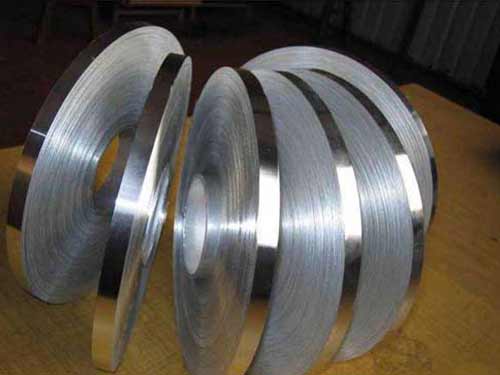
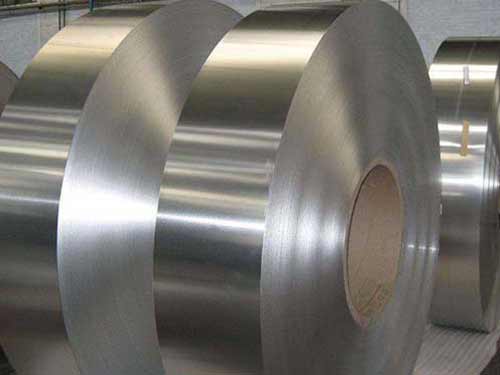
1070 aluminium strips are commercially pure aluminium products valued for their bright surface, high electrical conductivity, excellent formability, and dependable corrosion resistance. With a minimum aluminium content of 99.7%, this grade belongs to the 1000-series aluminium family and is widely selected where conductivity and processing flexibility matter more than high mechanical strength.
Supplied in slit coils or cut lengths, 1070 aluminium strip can be produced in a broad range of widths, thicknesses, tempers, and surface conditions. It performs smoothly in bending, stamping, spinning, shallow drawing, and roll forming operations, helping fabricators create consistent parts with low risk of cracking in suitable tempers.
Material Characteristics
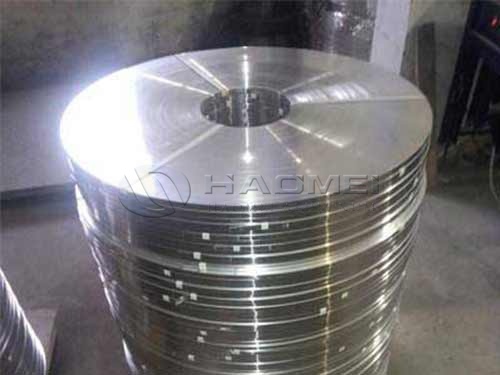
The composition of 1070 aluminium strip is intentionally simple. Its very high aluminium content gives it a soft, clean-working character and supports stable electrical and thermal transfer. Compared with heat-treatable aluminium grades, 1070 does not gain strength through solution heat treatment. Its mechanical properties are adjusted mainly through cold rolling and annealing.
| Chemical Element | Typical Requirement, % by Weight |
|---|---|
| Aluminium, Al | 99.70 min |
| Silicon + Iron, Si + Fe | 0.20 max |
| Copper, Cu | 0.04 max |
| Manganese, Mn | 0.03 max |
| Magnesium, Mg | 0.03 max |
| Zinc, Zn | 0.04 max |
| Titanium, Ti | 0.03 max |
| Other elements, each | 0.03 max |
The low alloying content is especially useful when stable conductivity, light weight, and a readily formable strip are required. The metal naturally develops a thin aluminium oxide film in air, offering sound resistance to normal atmospheric exposure and many non-alkaline environments.
Physical and Mechanical Performance
1070 aluminium strip is lightweight and easy to process on high-speed equipment. Annealed material is preferred for deep forming and intricate shapes, while H-series tempers provide better stiffness for applications requiring improved handling or dimensional stability.
| Property | Typical Value or Condition |
|---|---|
| Density | Approx. 2.71 g/cm3 |
| Electrical conductivity | Approx. 61-62% IACS |
| Thermal conductivity | Approx. 225-235 W/m.K |
| Melting range | Approx. 643-657 C |
| Elastic modulus | Approx. 69 GPa |
| Corrosion resistance | Very good in normal atmospheric conditions |
| Weldability | Very good with suitable aluminium welding methods |
| Formability | Excellent, especially in O temper |
| Common Temper | Typical Tensile Strength | Typical Elongation | Processing Character |
|---|---|---|---|
| O / H0 | 60-95 MPa | High | Soft, highly formable, suitable for deep drawing |
| H12 / H14 | 75-115 MPa | Medium | Balanced strength and bending performance |
| H16 / H18 | 100-145 MPa | Lower | Harder strip for more rigid formed products |
Actual values vary with thickness, rolling practice, coil width, and applicable production standard. For critical stamped or electrical products, the required temper, conductivity level, burr condition, and dimensional tolerances should be confirmed before production.
Product Forms and Available Specifications
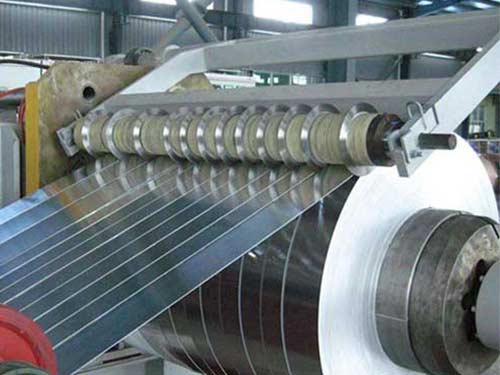
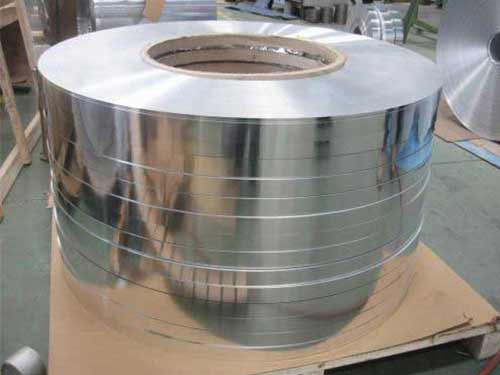
1070 aluminium strips are commonly made by rolling aluminium sheet or coil to the desired gauge and then precision slitting it into narrow widths. Clean edges and controlled coil winding are important for automated feeding, insulation wrapping, stamping, and cable-related processing.
| Item | Typical Range |
|---|---|
| Thickness | 0.10-6.00 mm |
| Width | 10-1,600 mm, slit to requirement |
| Coil inner diameter | Commonly 300 mm, 405 mm, 505 mm, or customized |
| Coil weight | According to handling and processing requirements |
| Surface | Mill finish, bright finish, degreased, coated, or laminated as required |
| Edge condition | Mill edge, slit edge, deburred edge |
| Packaging | Export seaworthy packing with moisture protection |
A smooth and oil-controlled surface is particularly important for lamp components, decorative parts, insulation laminating, and adhesive bonding. For electrical uses, customers may also request conductivity testing, controlled surface cleanliness, and tightly managed thickness variation across the coil.
Where 1070 Aluminium Strips Perform Best
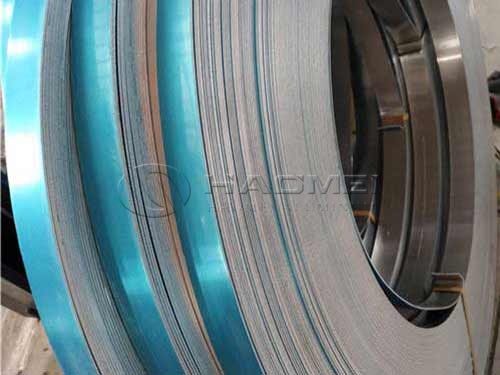
Electrical applications are among the most common uses for 1070 aluminium strips. The grade is suitable for transformer windings, electrical conductors, busbar-related components, cable shielding, capacitor parts, and other products that benefit from conductive, lightweight metal. Its favorable conductivity-to-cost balance makes it practical for many non-critical electrical pathways where copper is not required.
Lighting and lamp-cap production also use 1070 strip extensively. The material can be stamped into shells, reflectors, caps, and formed housings with a clean appearance. Its high reflectivity after appropriate finishing supports lighting and decorative uses, while its soft temper options allow smooth shaping around detailed tooling.
In packaging and closure production, 1070 strip can be formed into bottle caps, seals, cosmetic containers, and lightweight metal accessories. The surface may be lacquered, printed, embossed, or laminated to meet visual and barrier requirements. Its resistance to moisture and low weight are valuable for consumer packaging lines.
Other common uses include:
- Heat-transfer fins and thermal components
- Chemical equipment linings for compatible media
- Decorative trim and nameplate blanks
- Cookware and household product components
- Roofing accessories and insulation facings
- Stamped washers, tags, shallow-drawn cups, and small hardware
- Cable wrapping and electromagnetic shielding layers
For applications needing a similar high-purity base with modest differences in available thickness or commercial preference, 1050 / 1060 Aluminum Strip can also be considered. Where the design needs noticeably higher strength, particularly for formed panels or more demanding service conditions, 3003 Aluminum Strip is often a more appropriate alternative.
Processing Guidance
1070 aluminium strip works best when the temper matches the forming severity. O temper is the preferred choice for deep drawing, spinning, and tight-radius bending. H14 and similar half-hard tempers are frequently chosen for general stamping because they offer a practical balance between formability and rigidity. Hard tempers should be used where shape retention is more important than extensive deformation.
Standard aluminium fabrication methods such as punching, blanking, bending, riveting, and TIG or MIG welding can be applied successfully. Tooling should be clean and properly maintained to reduce surface marking. During slitting and stamping, burr height deserves attention because excessive burrs can interfere with insulation, winding, assembly, or safe handling.
Although 1070 has excellent natural corrosion resistance, it is not intended for high-load structural service. It also has limited resistance to strong alkalis and should be evaluated carefully when exposed to aggressive chemicals, galvanic contact, or elevated-temperature duty.
Choosing the Right 1070 Strip
A suitable 1070 aluminium strip specification starts with the end-use requirement. Electrical coils may prioritize conductivity, edge smoothness, and consistent thickness. Lamp-cap stamping may need a bright, low-oil surface and an O or H14 temper. Packaging components may require precise width, paint compatibility, and stable coil flatness.
When ordering, define the alloy, temper, thickness, width, coil direction, inner diameter, allowable burr, surface condition, packaging method, and relevant inspection requirements. This level of detail helps ensure the strip runs efficiently through slitting, stamping, winding, or forming equipment while delivering the appearance and performance expected in the finished product.
1070 aluminium strips remain a practical material choice for high-volume products that require purity, conductivity, corrosion resistance, and effortless shaping in one lightweight coil form.