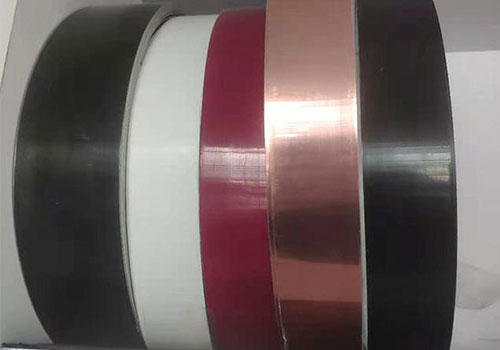
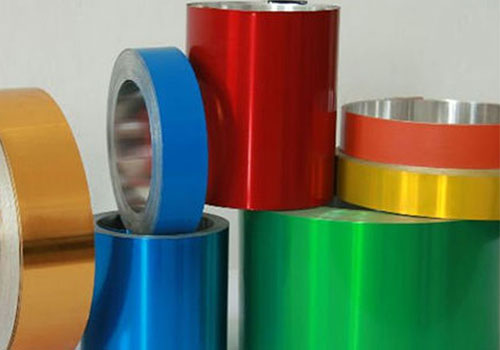
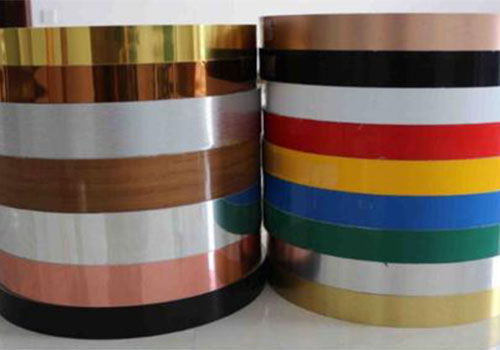
Aluminium Strips Tape 1050 1060 1070 for Capacitor Converter
Aluminium strips tape in grades 1050, 1060, and 1070 provides a dependable conductive material for capacitor converters, power-electronics assemblies, and winding-related electrical components. With high aluminium purity, stable coil geometry, clean surfaces, and excellent workability, these strips support efficient current transfer and consistent downstream processing.
For capacitor converter production, material consistency matters as much as conductivity. A strip with controlled thickness, burr-free edges, and uniform mechanical behavior helps reduce winding defects, contact resistance variation, and scrap during slitting, stamping, or forming. 1050, 1060, and 1070 alloys offer different purity levels, allowing buyers to balance electrical performance, cost, and fabrication requirements.
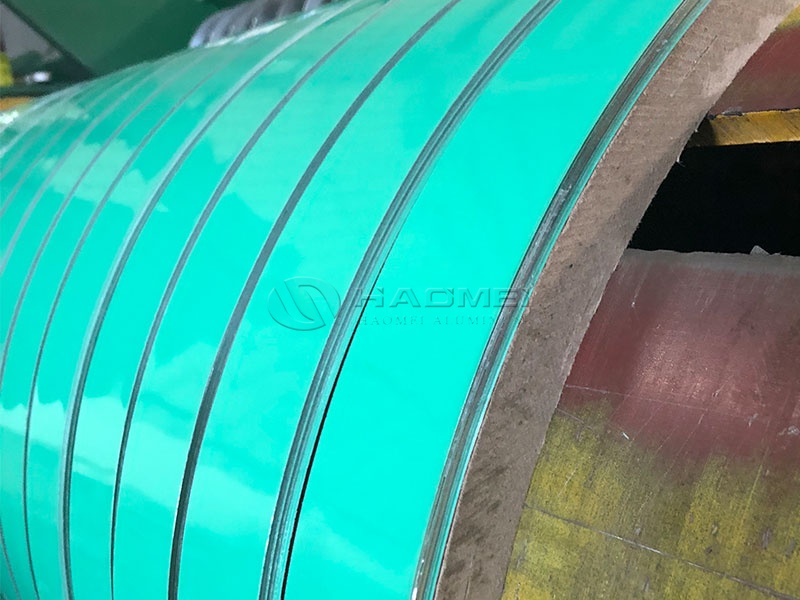
Product Characteristics
| Property | Performance Benefit for Capacitor Converter Use |
|---|---|
| High aluminium content | Supports efficient electrical conduction and low resistive loss |
| Good formability | Suitable for winding, bending, stamping, and connection-tab fabrication |
| Smooth strip surface | Helps maintain stable contact and reduces risks of surface-related defects |
| Tight dimensional control | Improves alignment during automatic feeding and coil winding |
| Light weight | Reduces component mass in converter cabinets and power modules |
| Natural corrosion resistance | Provides dependable performance in normal indoor electrical environments |
| Excellent recyclability | Supports material recovery and lower lifecycle environmental impact |
The strip tape can be supplied in soft, half-hard, or hard tempers according to the required forming radius and mechanical stability. Soft temper is commonly selected for deep bending and winding. Harder tempers can be preferred where shape retention and handling stiffness are more important.
Alloy Selection for Electrical Strip Tape
| Alloy | Minimum Aluminium Content | General Character | Suitable Converter Component Use |
|---|---|---|---|
| AA 1050 | 99.50% | Economical high-purity aluminium with reliable forming behavior | General conductive strips, connector parts, shielding, low-to-medium demand capacitor assemblies |
| AA 1060 | 99.60% | Good balance of conductivity, cost, and processability | Capacitor winding strips, current-carrying parts, transformer and converter accessories |
| AA 1070 | 99.70% | Higher purity with enhanced electrical conductivity | High-conductivity capacitor elements, precision electrical tape, sensitive converter circuits |
AA 1060 is often selected as the balanced option for capacitor converter production. It combines very good electrical performance with practical processing characteristics. AA 1070 is valuable when conductivity and purity are prioritized, while AA 1050 offers a cost-effective choice for general electrical fabrication.
Chemical Composition
Chemical limits may be adjusted according to the governing standard, customer specification, and final application. Typical values are shown in the following table.
| Alloy | Al, Min. % | Si, Max. % | Fe, Max. % | Cu, Max. % | Mn, Max. % | Mg, Max. % | Zn, Max. % | Ti, Max. % |
|---|---|---|---|---|---|---|---|---|
| 1050 | 99.50 | 0.25 | 0.40 | 0.05 | 0.05 | 0.05 | 0.07 | 0.05 |
| 1060 | 99.60 | 0.25 | 0.35 | 0.05 | 0.03 | 0.03 | 0.05 | 0.03 |
| 1070 | 99.70 | 0.20 | 0.25 | 0.04 | 0.03 | 0.03 | 0.04 | 0.03 |
Higher aluminium content generally supports better conductivity. At the same time, carefully controlled silicon and iron levels help maintain process stability, surface quality, and ductility during rolling and conversion.
Technical Specifications
| Item | Standard Supply Range | Customization Possibility |
|---|---|---|
| Alloy | 1050, 1060, 1070 | Other 1xxx series grades on request |
| Thickness | 0.02-1.50 mm | Precision gauges available by agreement |
| Width | 5-1,600 mm | Narrow slit tape and wide coil formats available |
| Coil inner diameter | 150 mm, 300 mm, 400 mm, 500 mm | Matched to customer winding equipment |
| Coil outer diameter | Up to 1,800 mm | Controlled by weight and transport requirements |
| Coil weight | 50-5,000 kg | Small coils or jumbo coils available |
| Temper | O, H12, H14, H16, H18 | Selected for forming and stiffness requirements |
| Surface | Mill finish, degreased, lightly oiled, dry | Surface cleanliness controlled for electrical use |
| Edge condition | Mill edge or slit edge | Deburred slit edge for safer handling |
| Packaging | Export seaworthy packaging | Moisture barrier and reinforced pallet options |
Mechanical and Electrical Performance
Actual values depend on alloy, thickness, temper, and rolling direction. Test data should be confirmed in the material certificate for each order.
| Grade and Temper | Tensile Strength, MPa | Elongation, % | Electrical Conductivity, Approx. % IACS | Typical Processing Suitability |
|---|---|---|---|---|
| 1050-O | 60-95 | 25-40 | 61 | Tight-radius bending and winding |
| 1050-H14 | 85-125 | 4-12 | 61 | General slitting and formed electrical parts |
| 1060-O | 60-95 | 25-40 | 62 | Flexible capacitor and conductor strip applications |
| 1060-H14 | 85-125 | 4-12 | 62 | Converter hardware requiring balanced strength |
| 1070-O | 55-90 | 28-42 | 62-63 | High-conductivity winding and contact applications |
| 1070-H14 | 80-120 | 4-12 | 62-63 | Precision electrical strips with improved rigidity |
The low density of aluminium, approximately 2.70 g/cm³, provides an additional advantage for power-conversion equipment. Compared with heavier conductive materials, aluminium strip can reduce total assembly weight while delivering dependable current-carrying capability.
Capacitor Converter Applications
Aluminium strips tape can serve several roles within capacitor converter manufacturing and associated electrical systems.
| Application Area | Function of Aluminium Strip Tape | Recommended Alloy Consideration |
|---|---|---|
| Capacitor winding components | Supports conductive layers, tabs, and related winding structures | 1060 or 1070 for higher conductivity needs |
| Converter bus connections | Transfers current between capacitor banks and power modules | 1060 with suitable temper and thickness |
| Electrical contact strips | Creates formed contacts, terminals, and conductive brackets | 1050 or 1060 for good bendability |
| EMI shielding components | Provides lightweight conductive shielding elements | 1050 or 1060 |
| Transformer and reactor accessories | Used for conductive wraps, tapes, and formed elements | 1050, 1060, or 1070 based on current demand |
| Battery and energy-storage hardware | Used in selected conductive and enclosure-related components | 1060 for balanced performance |
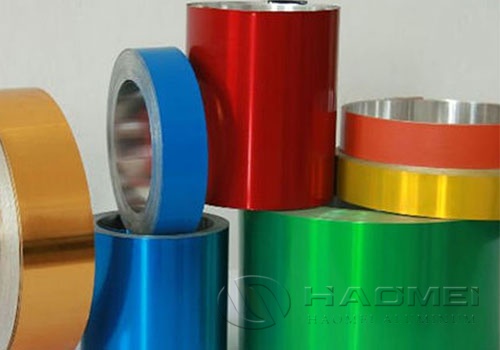
Where insulation, marking, or environmental protection is required, the strip can be paired with carefully selected coatings or laminations. For non-conductive exterior identification and protected assembly parts, Color Coated Aluminum Strip solutions may be considered separately from the bare conductive strip used within electrical circuits.
Processing Advantages
The material is designed to move smoothly through common conversion operations. Controlled flatness and coil winding reduce feeding interruptions, while stable edge quality helps prevent tearing or snagging in narrow-strip processing.
| Processing Method | Material Response | Production Benefit |
|---|---|---|
| Slitting | Clean separation with suitable tooling | Accurate narrow tape widths |
| Stamping | Good ductility in O and H12 tempers | Efficient terminal and bracket fabrication |
| Bending | Excellent in annealed condition | Reduced cracking risk at formed corners |
| Winding | Smooth surface and controlled coil shape | More stable capacitor-related winding operations |
| Welding or joining | Suitable with appropriate process controls | Dependable electrical connection design |
For applications requiring a protective polymer finish on non-current-carrying surfaces, PE Coated Aluminum Strip can provide a practical alternative for decorative, insulating, or moisture-resistant external parts.
Quality Control and Delivery Considerations
Reliable capacitor converter strip begins with disciplined inspection. Common checks include thickness measurement, width tolerance, edge burr evaluation, surface cleanliness, coil alignment, mechanical testing, and chemical analysis. Buyers may also request conductivity verification, flatness limits, specific coil weights, paper interleaving, moisture-resistant wrapping, or special labeling for traceability.
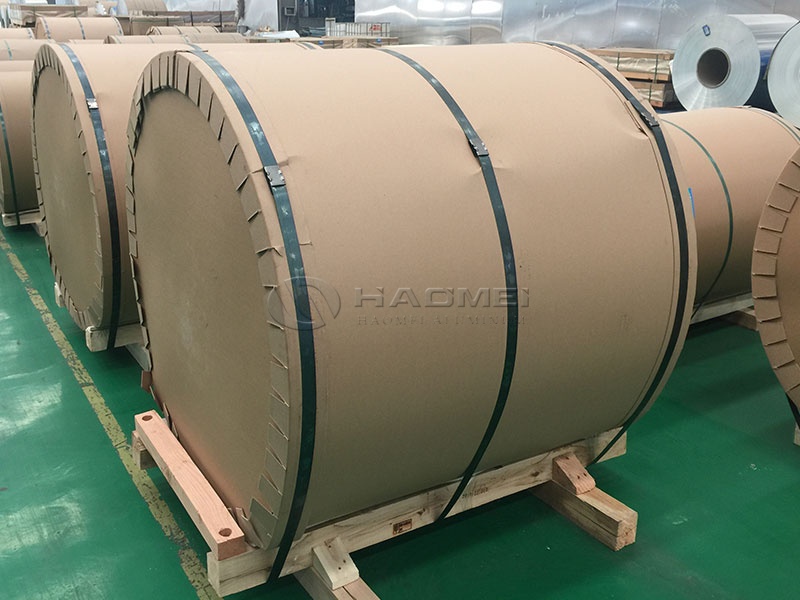
Proper packaging is particularly important for thin aluminium tape. Coils should be protected against moisture, dust, transit vibration, and edge impact. Reinforced pallets, protective corner boards, steel or plastic strapping, and sealed outer wrapping help preserve coil condition from the mill to the converter production line.
Value for Converter Manufacturers
1050, 1060, and 1070 aluminium strips tape delivers a practical combination of conductivity, formability, low weight, and dependable coil processing. By selecting the proper alloy, temper, thickness, and edge condition, capacitor converter manufacturers can improve material utilization, support stable automated production, and create durable electrical components with controlled cost.