PE Protective Film for Aluminum Strip
Aluminum strip is often judged by what customers can see first: a clean surface, consistent color, no scratches, no adhesive stains, and no pressure marks. PE protective film for aluminum strip is designed for this short but important mission. It does not become part of the final product. It works like a temporary skin during slitting, bending, stamping, storage, transport, and installation, then leaves without damaging the aluminum surface.
For buyers, the film should not be treated as ordinary packaging. A good protective film must match the alloy, temper, surface finish, coating type, processing route, and climate during storage. When the match is correct, it protects appearance and reduces rejection. When it is wrong, it may cause adhesive transfer, edge lifting, ghost marks, or difficult peeling.
Why PE Film Behaves Differently on Aluminum Strip
Aluminum strip is light, soft, and sensitive to friction. Even harder tempers can show fine scratches after contact with guide rollers, pallets, cutting tools, or dust. PE protective film uses polyethylene as the carrier layer because it is flexible, moisture resistant, chemically stable, and easy to peel. The adhesive layer is usually acrylic, rubber-based, or modified pressure-sensitive adhesive.
The important point is balance. The adhesive must be strong enough to stay attached during slitting and forming, but weak enough to peel cleanly after processing. For mirror aluminum, anodized aluminum, brushed aluminum, and color-coated aluminum, this balance changes. A high-gloss surface often needs lower adhesion, while rough or embossed surfaces may need higher tack.
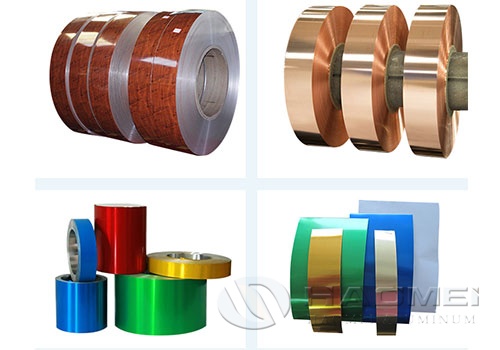
Protective film is also different from a permanent coating. For example, PE Coated Aluminum Strip refers to aluminum strip with a functional or decorative PE paint coating, while PE protective film is removable. In many projects, the two are used together: the coated surface provides long-term color and corrosion resistance, and the removable film protects it until fabrication is complete.
Typical Parameters for PE Protective Film and Aluminum Strip
The values used in production depend on customer drawings, strip width, surface grade, and forming depth. The following ranges are common in aluminum strip supply chains.
| Item | Common Range or Practice | Notes for Selection |
|---|---|---|
| PE film thickness | 30-100 microns | 40-60 microns is common for slitting and light forming |
| Adhesive type | Acrylic, rubber-based, modified PSA | Acrylic is cleaner for longer storage; rubber offers higher initial tack |
| Peel strength | 20-120 g/25 mm | Tested after lamination and after aging, not only at delivery |
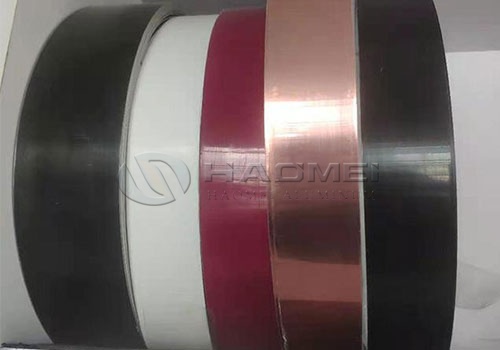
| Film color | Transparent, blue, white, black, printed | Blue and transparent are widely used for inspection visibility |
| Aluminum strip thickness | 0.2-3.0 mm typical | Thinner strip needs softer handling and stable film tension |
| Strip width | 20-1600 mm | Narrow strip requires precise edge alignment during laminating |
| Lamination temperature | 15-40 C surface temperature | Avoid condensation, oil mist, and overheated coils |
| Service temperature | -20 C to 60 C typical | Short exposure may vary by adhesive formula |
| Recommended storage | 5-35 C, dry warehouse | Avoid direct sun, high humidity, and pressure stacking |
| Clean peel period | 3-12 months | Depends on UV exposure, adhesive type, and surface coating |
Alloy Tempers and Surface Conditions
PE protective film can be used on many aluminum strip alloys, but the surface condition decides the real performance. Soft pure aluminum in O temper is easy to scratch and may need thicker film. H temper strip used for decoration, ceiling panels, channel letters, shutters, transformer winding parts, and packaging components often needs stable adhesion during cutting and bending.
Common alloys include 1050, 1060, 1070, 1100, 3003, 3004, 3105, 5005, and 5052. Tempers include O, H12, H14, H16, H18, H22, H24, H26, and H32. For decorative strip, H24 is often chosen because it provides a practical mix of formability and surface stability. For high-forming work, O or H22 may be preferred. For stiffer panels or trim, H18 or H26 may be used.
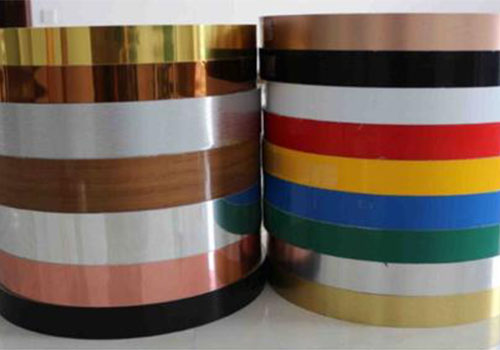
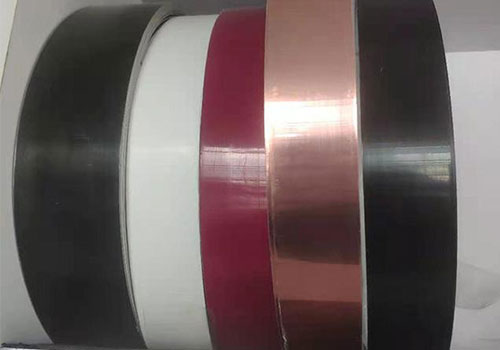
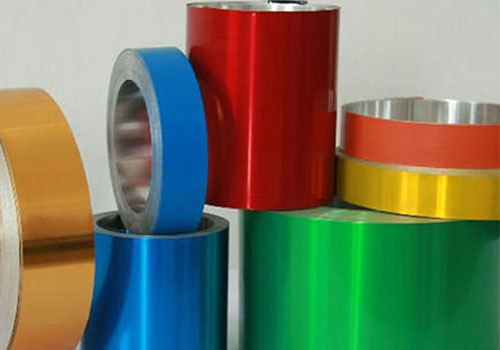
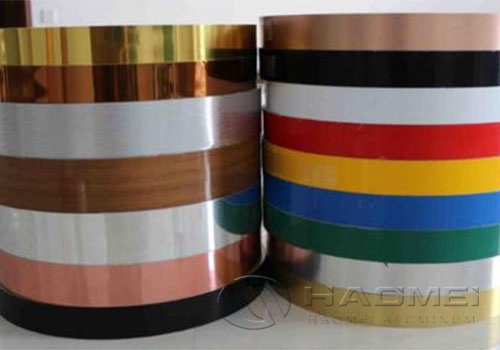
Surface conditions include mill finish, bright finish, mirror finish, brushed finish, embossed surface, anodized surface, and color-coated surface. On Color Coated Aluminum Strip, the film must be compatible with the paint system, such as PE, HDPE, SMP, or PVDF coating. Freshly coated strip should be fully cured before lamination, because residual solvent or incomplete curing can change peel strength.
Implementation Standards and Test Methods
Aluminum strip supply is often controlled by GB/T 3880, ASTM B209, EN 485, EN 573, and customer-specific dimensional tolerances. For coated aluminum strip, EN 1396 and relevant architectural coating requirements may also be referenced. Protective film itself is usually checked through film and adhesive test methods rather than aluminum standards alone.
| Test Area | Common Reference | What It Confirms |
|---|---|---|
| Aluminum strip dimensions | GB/T 3880, ASTM B209, EN 485 | Thickness, width, flatness, burr, tolerance |
| Alloy designation | EN 573, AA standards | Chemical composition and alloy identity |
| Film peel adhesion | ASTM D3330, FINAT FTM 1 | Peel force at controlled angle and speed |
| Film tensile strength | ASTM D882 | Resistance to tearing during peeling and handling |
| Adhesive residue check | Internal aging test, customer method | Clean removal after heat, humidity, or UV exposure |
| Restricted substances | RoHS, REACH | Compliance for electronics, appliances, and export use |
| Packaging and storage | Supplier specification | Coil protection, edge protection, moisture control |
A practical inspection should include lamination appearance, wrinkles, bubbles, edge lift, peel force, residue after aging, and performance after forming. Testing only a flat sample is not enough if the customer will bend, roll-form, or deep draw the strip.
Chemical Properties Table
The protective film must be chemically compatible with aluminum and the surface finish. Aluminum naturally forms a thin oxide layer, which improves corrosion resistance, but residues such as alkaline cleaner, rolling oil, fingerprints, or wet packing can still affect adhesion and appearance.
| Material or Alloy | Main Chemical Character | Typical Composition or Property | Relevance to Protective Film |
|---|---|---|---|
| 1050 aluminum | High-purity aluminum | Al >= 99.50%, Fe and Si minor | Soft surface, easily marked, needs gentle adhesion |
| 1060 aluminum | High-purity aluminum | Al >= 99.60%, good conductivity | Used for electrical and decorative strip, clean surface required |
| 1100 aluminum | Commercially pure aluminum | Al >= 99.00%, Cu about 0.05-0.20% | Good formability, often used with light protective film |
| 3003 aluminum | Al-Mn alloy | Mn about 1.0-1.5%, Cu about 0.05-0.20% | Better strength, common for coated strip and building parts |
| 3004 aluminum | Al-Mn-Mg alloy | Mn about 1.0-1.5%, Mg about 0.8-1.3% | Good forming and higher strength, film must resist forming stress |
| 5005 aluminum | Al-Mg alloy | Mg about 0.5-1.1% | Often used for anodizing and decoration, residue control matters |
| 5052 aluminum | Al-Mg alloy | Mg about 2.2-2.8%, Cr about 0.15-0.35% | Stronger alloy, used where durability is needed |
| PE carrier film | Polyethylene | Non-polar polymer, good moisture resistance | Stable temporary barrier against dust and abrasion |
| Acrylic adhesive | Pressure-sensitive polymer | Good aging resistance and low residue | Preferred for longer storage and clean peeling |
| Rubber adhesive | Tack-rich adhesive | High initial adhesion, lower heat aging than acrylic | Useful for rough surfaces or short production cycles |
PE is generally resistant to water, mild acids, and many salts. It is not suitable for long contact with strong oxidizers, aggressive solvents, or high-temperature baking after lamination. If aluminum strip needs oven curing, the protective film should be applied after curing and cooling unless a special heat-resistant film is specified.
Production Use: Where the Film Saves Cost
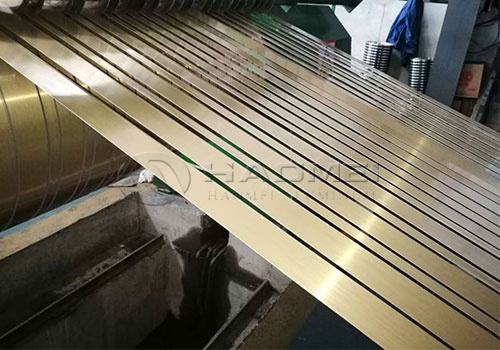
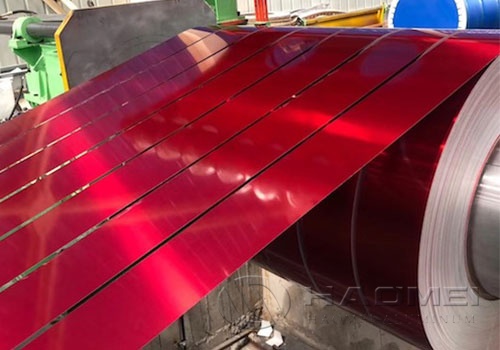
The best moment for lamination is after the aluminum surface is clean, dry, cooled, and inspected. In coil coating lines, film is often added after the paint is cured and the strip temperature has dropped. In slitting lines, film tension must be controlled so that it does not stretch, wrinkle, or pull the strip edge.
During cutting, film can reduce contact marks from separators and tools. During bending, it helps prevent die marks, although severe forming may require a thicker film with higher elongation. During transport, it protects against rubbing between layers, but it cannot replace correct coil packing, moisture-proof wrapping, and edge protection.
Buyers should pay attention to the peeling direction as well. A film that peels smoothly at 180 degrees in the factory may behave differently at low temperature on site. For outdoor installation, UV resistance is important. Standard indoor film may become brittle or leave residue after strong sunlight exposure.
Purchasing Guidance for Reliable Results
A suitable PE protective film is chosen by testing real aluminum strip, not by film thickness alone. The sample should use the same alloy, temper, coating, surface roughness, and processing method as bulk production. If the strip will be stored for several months, accelerated aging should be checked before mass order.
For bright, mirror, or anodized aluminum strip, request low-residue acrylic adhesive and controlled peel force. For embossed or textured strip, slightly higher adhesion may be needed. For color-coated strip, ask whether the paint is PE, PVDF, or another coating system, because surface energy and curing level change adhesion behavior.
A well-matched PE protective film is a small cost compared with rejected aluminum strip. It protects the part during the most vulnerable stages of its journey and disappears when its job is finished. For aluminum strip suppliers and fabricators, that quiet performance is often the difference between a coil that only meets tolerance and a coil that reaches the customer with its surface value fully preserved.