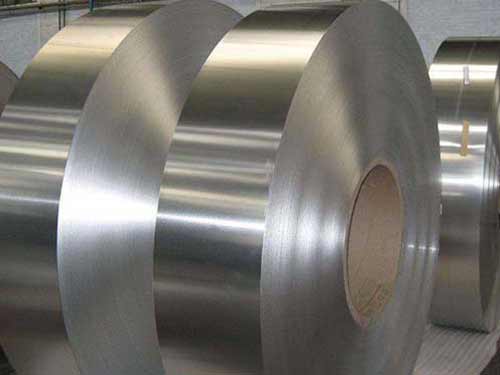
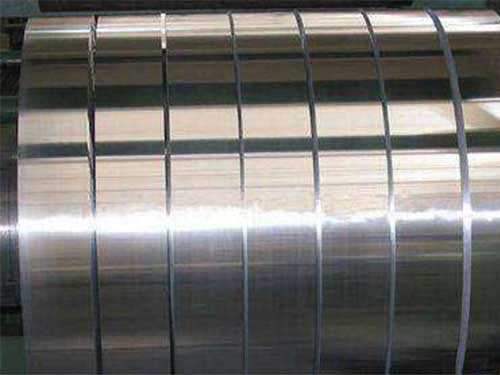
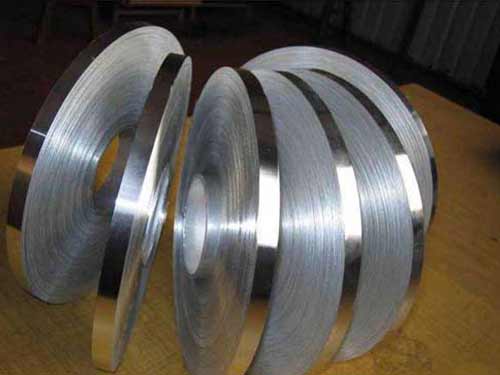
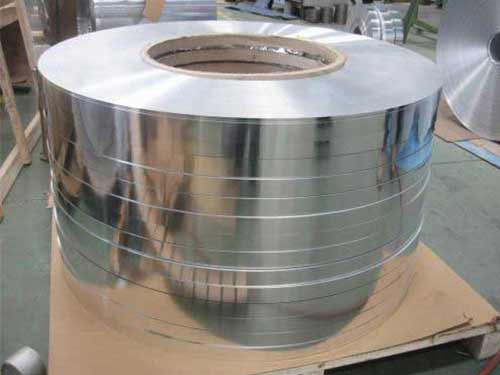
5083 Aluminum Strip
5083 aluminum strip is not selected merely because it is lightweight. It is selected when the material must remain dependable around saltwater, moisture, vibration, repeated loading, and challenging fabrication conditions. As an Al-Mg alloy from the 5xxx series, 5083 offers a strong balance of corrosion resistance, weldability, and medium-to-high strength without relying on heat treatment for its performance.
For customers manufacturing marine panels, transport components, pressure vessels, fuel tanks, cryogenic equipment, or structural assemblies, 5083 aluminum strip brings a practical advantage: it retains its character where many materials begin to compromise. The strip format also supports efficient slitting, stamping, bending, roll forming, and coil-fed production.
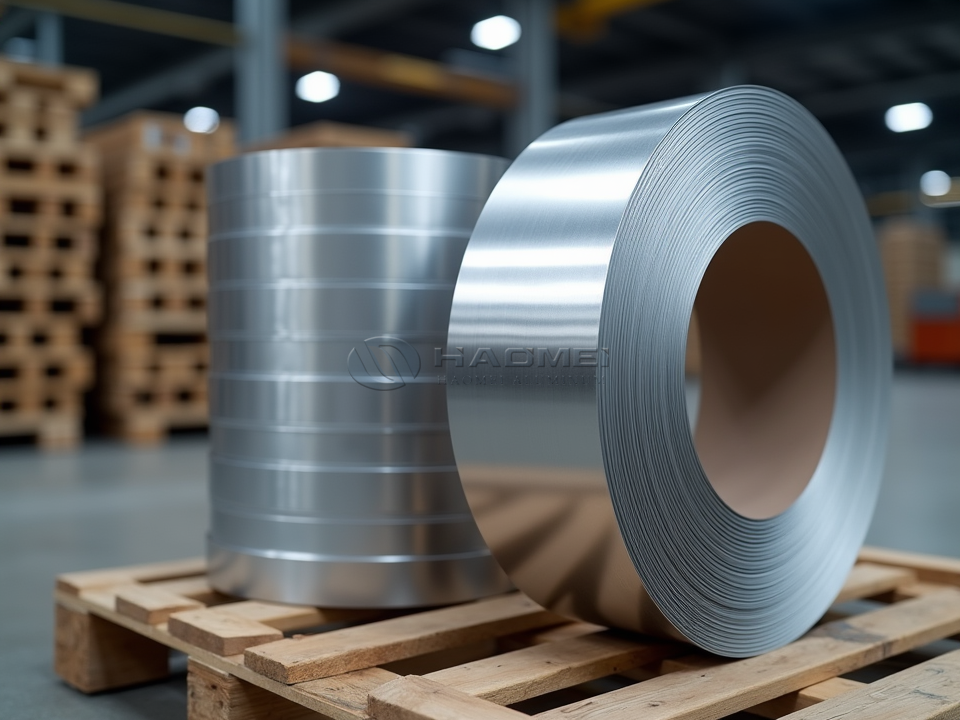
Why 5083 Aluminum Strip Performs Differently
The strength of 5083 aluminum strip comes mainly from magnesium and manganese. Magnesium provides solid-solution strengthening and supports exceptional resistance to seawater corrosion. Manganese helps control grain structure and contributes to mechanical stability. Chromium is present in a small amount to improve corrosion performance and reduce sensitivity to stress-corrosion cracking under suitable operating conditions.
Unlike 6xxx aluminum alloys, 5083 does not gain strength through solution heat treatment and artificial aging. Its tempers are created by strain hardening and, in some cases, stabilizing treatment. This makes temper selection especially important. A project that needs sharp forming radii may require O or H111 temper, while a component requiring higher tensile strength may be better suited to H116 or H321.
Compared with 5052 Aluminum Strip, 5083 generally offers higher strength and better suitability for heavily loaded marine structures. It is often chosen when corrosion resistance alone is not enough and the design also demands substantial structural performance.
Chemical Composition of 5083 Aluminum Strip
The chemistry of 5083 is tightly controlled to create dependable performance in aggressive environments. Magnesium is the dominant alloying element, while aluminum remains the balance.
| Element | Composition, % by Weight |
|---|---|
| Silicon, Si | 0.40 max |
| Iron, Fe | 0.40 max |
| Copper, Cu | 0.10 max |
| Manganese, Mn | 0.40-1.00 |
| Magnesium, Mg | 4.00-4.90 |
| Chromium, Cr | 0.05-0.25 |
| Zinc, Zn | 0.25 max |
| Titanium, Ti | 0.15 max |
| Other elements, each | 0.05 max |
| Other elements, total | 0.15 max |
| Aluminum, Al | Balance |
This magnesium-rich composition gives 5083 aluminum strip its well-known marine-grade reputation. It also means the alloy should be specified carefully for elevated-temperature service. Prolonged exposure to temperatures above approximately 65°C may affect corrosion behavior in certain conditions, particularly for highly cold-worked tempers.
Common Tempers and Their Practical Meaning
5083 aluminum strip is available in several tempers, each designed for a different balance of formability, strength, and service reliability.
| Temper | Material Condition | Typical Application Direction |
|---|---|---|
| O | Fully annealed, soft condition | Deep drawing, complex bending, formed parts |
| H111 | Slightly strain hardened | General fabrication, welded structures |
| H112 | Strain hardened from hot working | Structural and machined components |
| H32 | Strain hardened and stabilized | Moderate strength with workable forming behavior |
| H34 | Higher strain hardening level | Panels and parts needing increased rigidity |
| H116 | Strain hardened for marine environments | Hull structures, decks, saltwater equipment |
| H321 | Strain hardened and stabilized | Marine, cryogenic, and welded constructions |
H116 and H321 are frequently requested for saltwater-facing applications because these tempers are intended to provide stronger resistance to exfoliation corrosion. For marine construction, the temper should never be treated as a minor ordering detail. It influences forming behavior, welding response, flatness, and long-term corrosion performance.
Typical Parameters and Supply Conditions
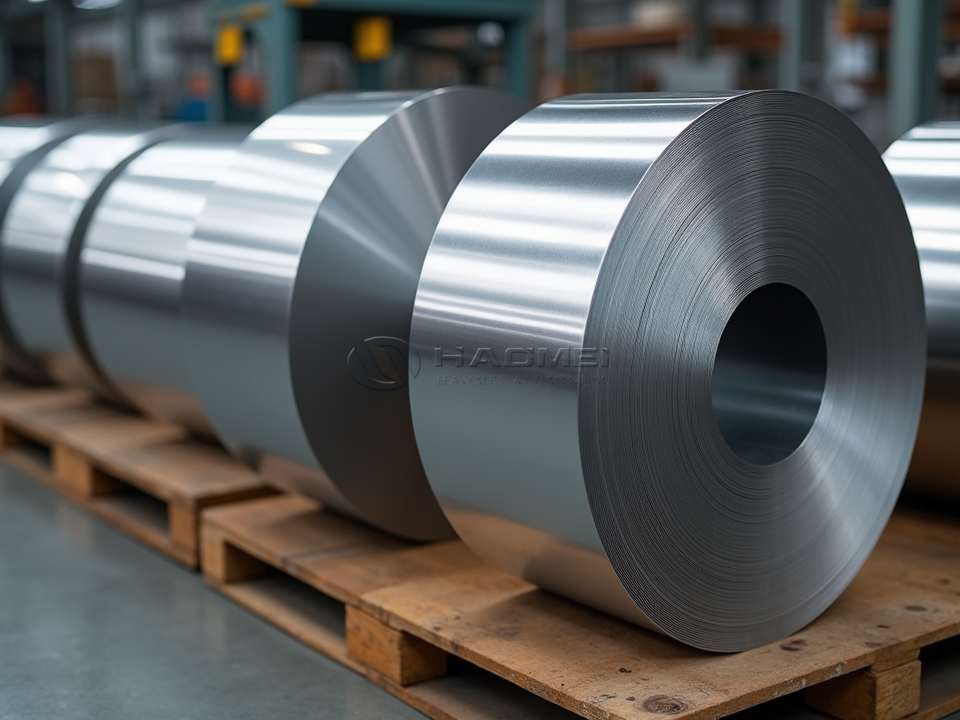
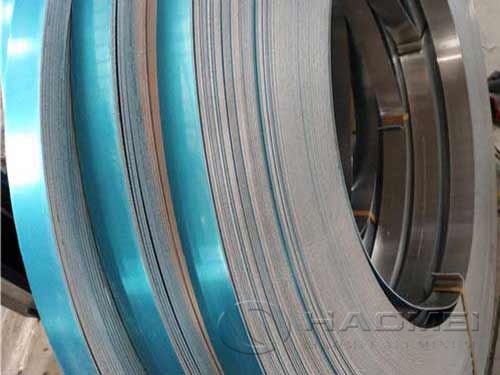
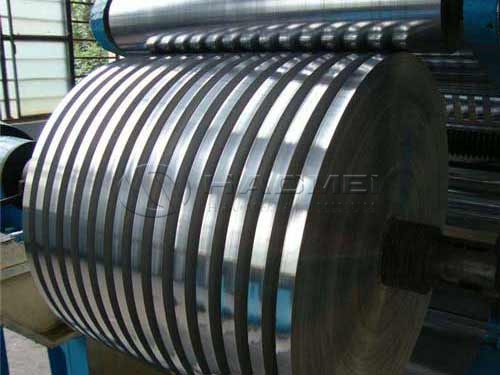
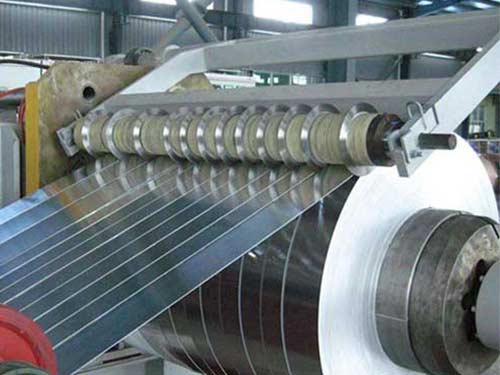
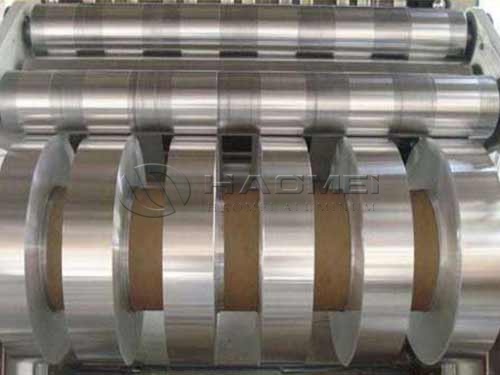
5083 aluminum strip is commonly produced by rolling wider coil and slitting it into narrower widths. This creates an economical material form for continuous manufacturing lines and parts that do not require wide sheet.
| Parameter | Typical Range or Condition |
|---|---|
| Thickness | 0.20 mm to 6.00 mm |
| Width | 10 mm to 1,650 mm |
| Coil inner diameter | 150 mm, 300 mm, 400 mm, 505 mm, or customized |
| Coil outer diameter | Subject to weight and transport requirements |
| Coil weight | Typically 1-8 tonnes, customized where required |
| Surface | Mill finish, brushed, coated, or protective-film laminated |
| Edge condition | Mill edge, slit edge, deburred edge |
| Flatness | Controlled according to thickness, width, and temper |
| Packaging | Export seaworthy packaging with moisture protection |
Tight slitting tolerances matter for automated stamping, roll forming, and profile production. Edge burr should be controlled when the strip will enter high-speed tooling, insulation wrapping, or precision assembly. For parts with exposed cosmetic surfaces, buyers should also define allowable scratches, oil residue, coil set, and surface waviness before production.
Mechanical Properties and Fabrication Behavior
Mechanical properties vary with thickness and temper, but 5083 is broadly recognized for combining meaningful strength with excellent weldability. In H116 and H321 tempers, tensile strength commonly falls around 275-350 MPa, while yield strength is often around 125-240 MPa depending on product thickness and specification.
The alloy can be welded effectively using common processes such as MIG and TIG welding. Filler alloys such as 5183 or 5356 are often considered for welded assemblies, depending on the strength and corrosion requirements of the finished component. Welding creates a softened heat-affected zone in strain-hardened material, so engineers should account for reduced local strength in structural design.
5083 aluminum strip can be bent, stamped, and formed, although the minimum bend radius must match the chosen temper. Softer O temper supports more demanding shapes. H32 and H34 offer greater rigidity but require more conservative forming geometry. Lubrication, tool cleanliness, and burr direction are important in preventing surface scoring and edge cracking.
For applications where lower strength is acceptable but excellent formability is needed, 3003 Aluminum Strip may be a useful alternative. Where marine strength, corrosion resistance, and weldability are central to the design, 5083 remains the more capable choice.
Applicable Standards for 5083 Strip
5083 aluminum strip can be manufactured and inspected according to internationally recognized standards. The exact standard should be selected based on the destination market, application, dimensional requirements, and certification needs.
| Standard | Scope |
|---|---|
| ASTM B209 | Aluminum and aluminum-alloy sheet and plate requirements, often referenced for rolled products |
| EN 485 | Tolerances and mechanical properties for aluminum sheet, strip, and plate |
| EN 573-3 | Chemical composition requirements for wrought aluminum alloys |
| EN 515 | Temper designations for wrought aluminum and aluminum alloys |
| AMS 4056 | Aerospace-oriented requirements for 5083 aluminum sheet and plate in selected tempers |
| GB/T 3880 | Chinese standard for aluminum and aluminum-alloy sheet, strip, and foil |
Material test certificates commonly report chemical composition, temper, tensile properties, dimensions, coil identification, and applicable standard. Marine or pressure-equipment projects may also require third-party inspection, ultrasonic testing, corrosion testing, or classification-society documentation.
Selecting 5083 Strip With Production in Mind
The best 5083 aluminum strip order is defined by more than alloy and thickness. A purchasing specification should consider end use, temper, slit-width tolerance, edge condition, coil direction, allowable coil weight, surface expectation, and whether protective film is needed. These details determine how smoothly the strip moves from receiving dock to finished component.
5083 excels when the material must face difficult service rather than ideal laboratory conditions. It is a resilient choice for marine fabrication, mobile equipment, welded structures, storage systems, and applications where corrosion resistance and structural confidence must work together.